LittleJudeonFood

One kid's adventures in gastronomy


Leave a comment

Papa Does Dinner

Though Mama’s a vegetarian, she does eat some seafood—and Papa’s become pretty adept at cooking it for us. For starters tonight, he sautéed some yummy bay scallops. They’re creamy white, firm, and fleshy. They can be as big as my hand or as tiny as my toes. Papa chose bite-size scallops for him and Mama (they were three-biters for me) as appetizers. I haven’t had many chances to pick up seashells on the shore, but Mama tells me that if you think of a “traditional” shell pattern, that’s what a scallop comes in! And because this round fleshy disk is attached to a shell, it sometimes comes with the connective muscle still on it. You can see it looking like a small flap alongside the muscle, and it’s very easy to peel off. If won’t hurt you if you eat it, but it is rather chewy.

A long time ago, Mama taught Papa how to sear scallops, and now he’s able to show me! There are two secrets: start with a dry scallop and a hot pan. You might be wondering how you dry your scallops since they come from the sea! If they’re very fresh, you just set them out on a paper towel, lay another paper towel on top, and let them sit for a couple minutes. If they’ve been previously frozen, it’s going to be difficult to get that crisp, golden restaurant-quality sear—but you can come close if you dust the scallops lightly with flour. Either way, be sure you salt and pepper your scallops before putting them in the pan.

Start with medium-high heat, melt a pat of butter, and add your scallops. (If your scallops are very small, they’ll cook quickly and can take a higher heat.) Now don’t move them! Leave them alone for 1–2 minutes. And if you don’t have a pair of kitchen tongs, don’t make these until you get a pair. They’re really the only way you can turn over the scallops without losing that yummy crust of deliciousness you just developed. You can very gently lift up an edge of a scallop with the tongs to check on its color, but that’s it. When ready, turn them and cook for just another minute or so, again without disturbing them. Be careful not to overcook them, or you’ll be eating rubber (though I don’t quite understand why this is a bad thing, considering all the toys I put in my mouth). This isn’t the time to be setting the table. Stay right there and man your scallops. Act like a chef and give them a gentle squeeze around the middle. If they’re supersoft, they’re not quite done. There should be a firmness with just the slightest bit of give. Scallops will continue to cook once you remove them from the pan, so you really want them to be oh-so-slightly underdone. Actually, a perfectly cooked scallop with have a small blush in its very center when you cut into it—which you should be able to do with child’s spoon.

Papa did a great job! The scallops were golden on the outside and supple on the inside. They tasted buttery and like an afternoon at the beach. I ate three of them.

Then, because it’s still halibut season, Papa decided to cook up a favorite dish of ours, something along the lines of this one. Mama apologizes for not having a picture of me eating this, but she was too busy scarfing it down herself. Of course I ate the oranges (even with all the green on it), and I had a few bites of the halibut—Papa got a good sear on it, as well—but I really took to the fennel. Did you know that it takes on a very different flavor when it’s cooked? It’s much sweeter. Mama tells me this is what licorice tastes like, and I hope I get to have some soon. What do you think my chances are?

Love, Jude

Leave a comment

Cake Pops, Baby.

Seeing as I’m just a baby, I don’t exactly know when these became “the thing,” but I find them curious. They’re cake…but they look like lollipops. Not that I have any experience with lollipops, either, but I digress.

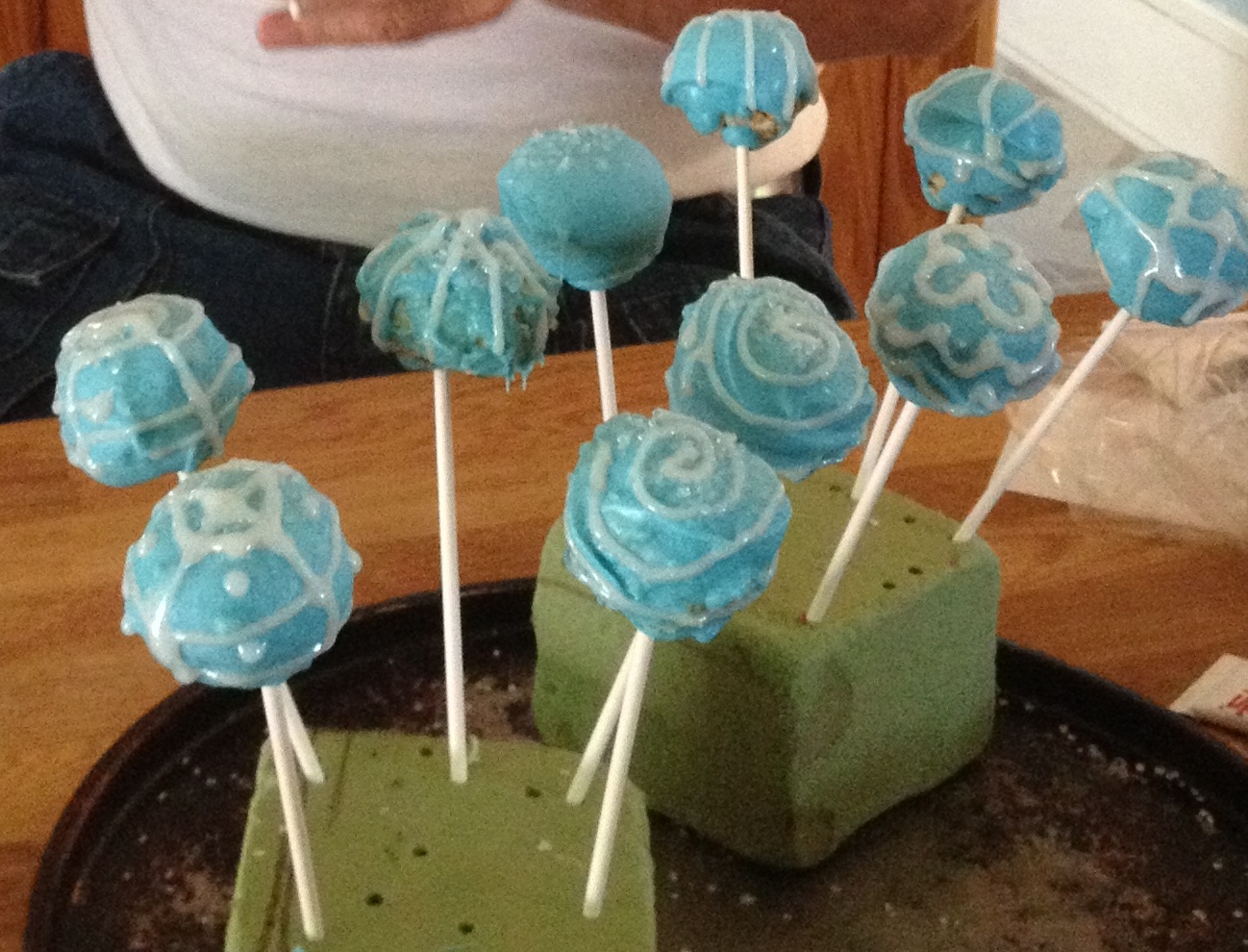
When Grandma and GeeGee were visiting, we went to a 4th of July party, and Mama thought it would be fun to give cake pops a try. My Aunt Karen is quite fond of making them, but Grandma’s never done them! Even Mama’s never made something quite like them, what with the cake mix and the canned frosting. She kept musing, out loud, that she should make the cake pops from scratch, including the lolli-stick. (What would you use?) I just wanted to get down and dirty.

So here’s what you do: Bake a 9″ x 13″ cake according to the package directions. Mama chose a white cake, but you can make whatever kind you like. Once it’s cooled, you break it up into a big bowl. Then stir in 1 cup of room temperature pre-made frosting. Again, Mama chose white, but you can choose vanilla or cream cheese or even chocolate. You wouldn’t think that 1 cup is enough, but trust me, it goes a long way.

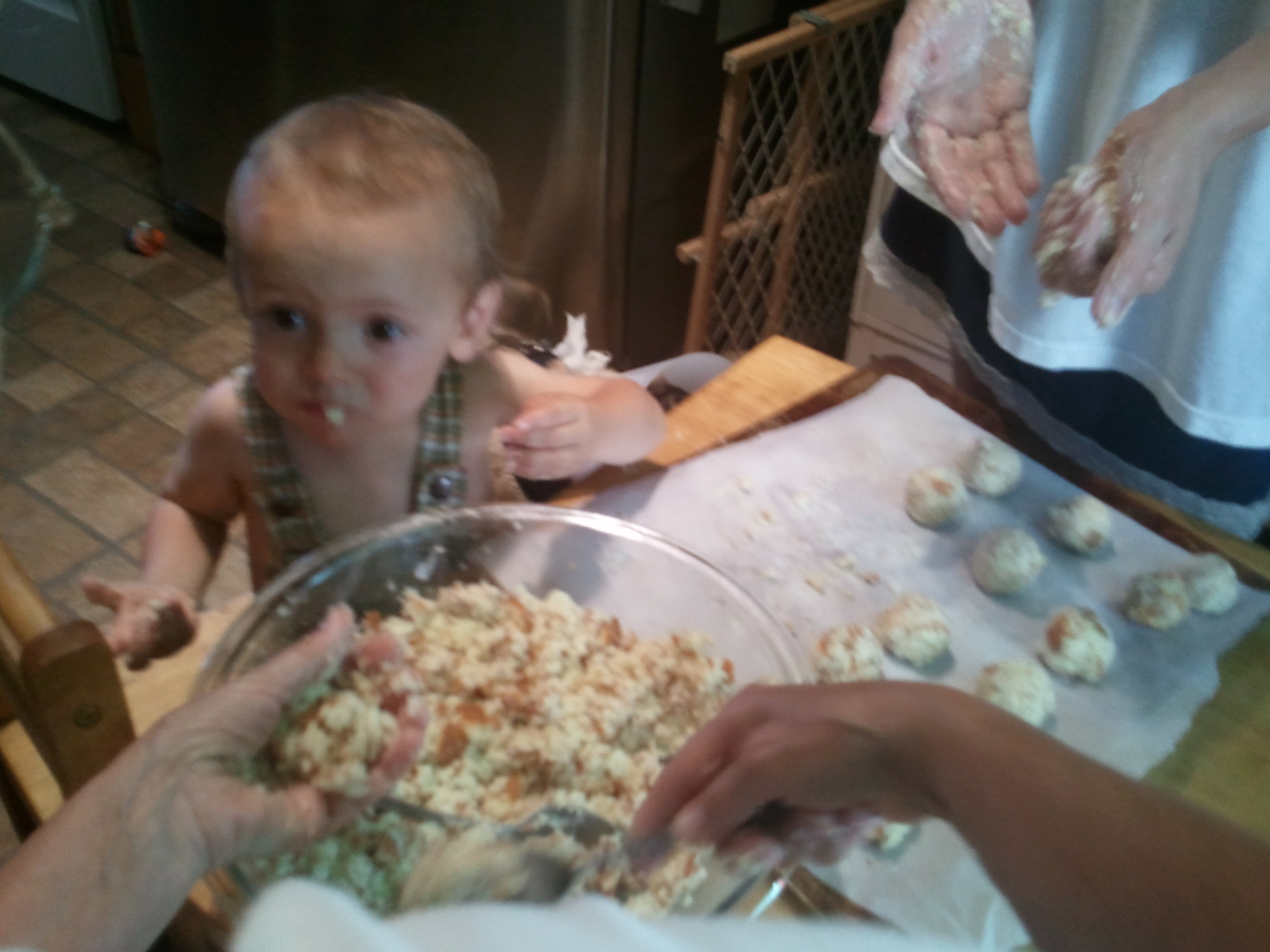
Now comes the fun part: Reach into the bowl, smoosh your fingers in the cake, then put a big glob in your mouth before your mama can stop you. Repeat as often as necessary, but in the meantime, you scoop out a bit of cake-and-frosting, give it a few squeezes to bring it all together, roll it into a ball, and set the ball on a cookie sheet lined with parchment or waxed paper. Note: Mama had only 24 lollipop sticks, so she and Grandma made the balls pretty big—perhaps too big. They were about the size of golf balls, and GeeGee thought they would’ve been better had they been a bit smaller. You’ll figure it out.

What? Am I not supposed to eat them yet?

Once you’ve made all your balls and have your hands good and messy, go after the dog, paying special attention to smearing your cakey face on her back. That way, she smells like cake the rest of the day! Then, put the cookie sheet in the freezer for about half an hour, to give the balls a chance to firm up. When you’re ready to decorate the pops, put a couple bags of candy melts—those little pastel-colored discs—in a microwavable bowl and zap them in 15-second increments until they’re melted and very smooth. (You can also use chocolate, if you prefer, and skip the microwave in favor of a double boiler, if that method suits you.) Dip the end of a lolli-stick into the melted candy, then stick the candy-coated end about half-way into a ball. Set it back on the cookie sheet and proceed with the rest. When all your cake balls are stuck, go ahead and start dipping them. (But first you might want to test out where you’re going to set the balls to dry once they’ve been dipped. Mama used foam flotation from a floral arrangement, which was kind of messy. A tall glass or vase might put the pops too close to one another—or they could topple. Experiment with a few pops before you dip them.)

Be sure you keep your coating very melty. Return it to the microwave as often as necessary to keep it flowing. Mama bought only 1 bag of blue and 1 bag of red, and we found that having more melted candy than you need is really better than having what you think is going to be just the right amount. To achieve a smooth exterior, you want to be able to swirl your cake pop in one swift stroke and set it out to harden. We ended up having to do a lot of dipping just to get the big balls coated. Depending on what you want to decorate them with—sprinkles, jimmies, or the like—you’ll want to finish that step before setting them out to harden. If you’re just going with decorator’s icing, then allow the cake pops’ coating to set up before you do that. (Mama just grabbed any ol’ thing off the store shelf, and it was something that would work much better on cupcakes. It was too wet for the pops and never set up entirely. They sure were messy!)

We left GeeGee alone with the cake pops, and he decided to start decorating them. They were a real family effort.

So, were they good? Well, people at the party—both adults and kids—went wild over them. I didn’t eat a completely finished product, but I sure did stuff a lot of the mixture in my mouth. And I’m pretty sure I caught Mama eating one…or two. She and Grandma both said they wouldn’t make these again. I hope that isn’t so!

Love, Jude


7 Comments

BJFB: Florence Edition

You all know that I was in Italy for a couple weeks this summer. Starting months before we left, Mama began speaking to me in a new way. “Are you thirsty? Hai sete?” “Here is your milk. Ecco il tuo latte.” “Where is your book? Dov’e il suo libro?” “Under the bed. Sotto il letto.” You get the idea. She and Papa kept telling me about the big airplane we would take and all the trains we would ride. (I love trains!) Did you know that we ate dinner on the airplane? And that we slept on it too? The plane was where I was introduced to my first succo di frutta (fruit juice), specifically succo di pesca (peach juice). As I don’t get to drink juice at home, I started to think I was going to like Italy!

We flew into Rome then took a train to Florence. Right away I noticed that things were different. I didn’t understand anything anyone said–even Mama, when she spoke to other people! There were so many people everywhere we went, and all kinds of crazy traffic. I’ve never seen so many cars, scooters, buses, and bicycles in one place–often crammed into the same street. Even the police sirens sounded different.

Papa had to work while we were in Florence, so Mama and I did a lot of sightseeing together. She had been there before, so that freed us up to just walk all over without an agenda, play in parks, go swimming, chase piccioni (pigeons), and eat whatever we wanted. (But boy, let me tell you how awful those cobblestones are when you’re riding in a stroller. Nearly two months later, I still think I could use a chiropractic adjustment!) We shopped at the Mercato Centrale, a large indoor market chock-full of produce, meats, flowers, and dry goods. Mama bought us lots of albicocche (apricots), mele (apples), lamponi (raspberries), banane (you know this one), and frutta secca (dried fruit).

There was so much delicious looking fruit at the Mercato Centrale, or Central Market, we couldn’t decide what to buy. And this was just one stand!

It was very hot during the day, so the gelato was plentiful. Some people think gelato is just the Italian word for ice cream,

Our first day in Florence, and I’m eating my very first gelato (strawberry and chocolate chip) alongside the Duomo.

but that’s not so. I’ve had a taste or two of ice cream in the past, and I can tell you it doesn’t even come close to the soft, creamy, lightness that is gelato. Every flavor we ate tasted just like what it was supposed to. I can’t even remember all the lovely flavors we ate because we ate that many of them. We had them in the morning, after lunch, during our evening passeggiata (stroll). Between all the little bottles of succhi di frutta and the various stops for cups of gelati, I think Mama had convinced herself that sugar was somehow less of an issue while on foreign soil. She would have me point out, however, that the fruit juice was quite different over there; it was very nearly just pureed fruit poured into a bottle.

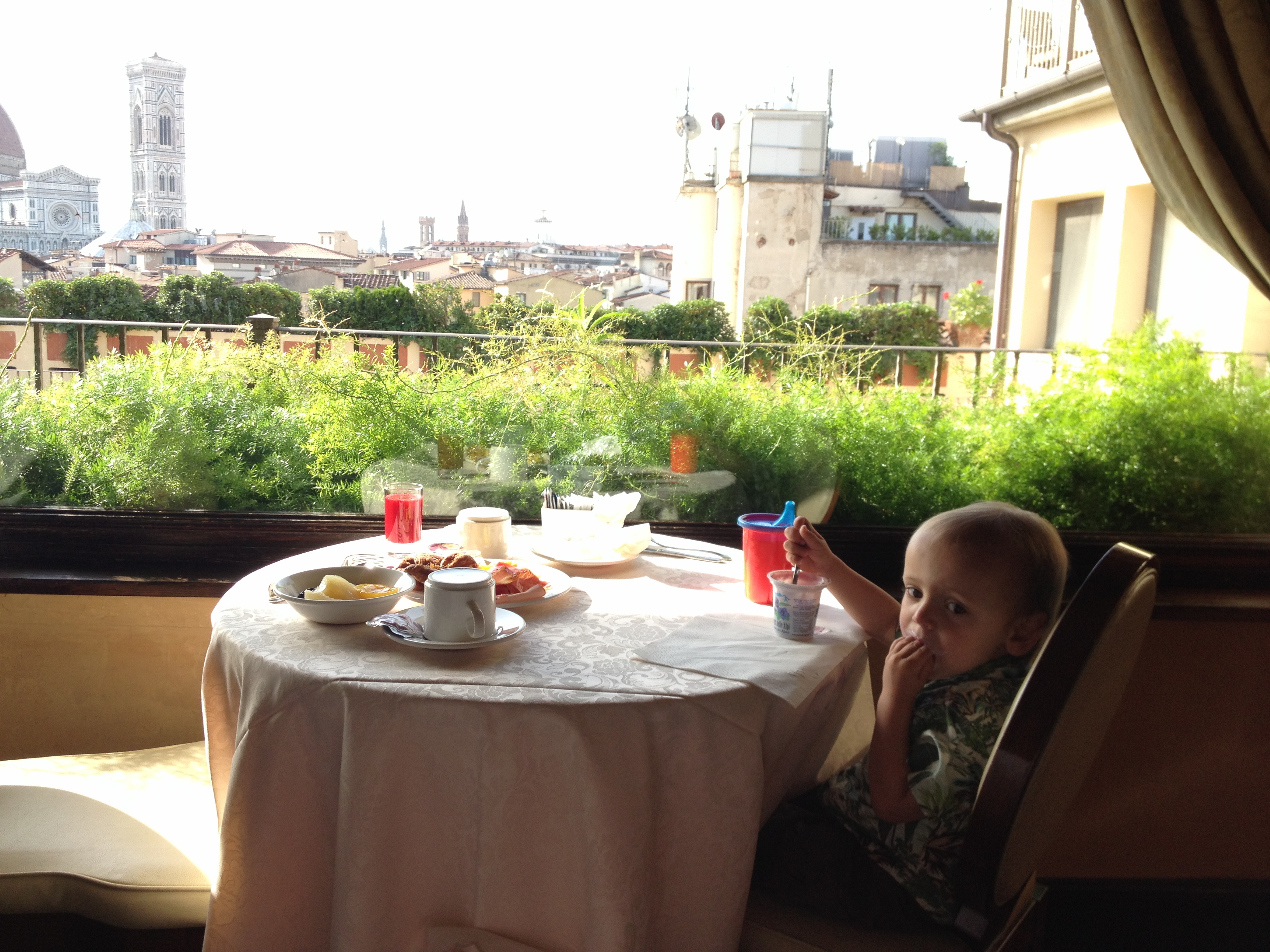
Another thing I found different in Italian cuisine was the breakfast. For starters, the yogurt is much thinner, like kefir, but it still tastes pretty much like the yogurt I eat at home. But let me tell you, it’s a whole lot more difficult to eat with a spoon when you’re just learning how to use one. I liked feeding myself the tangy flavors of yogurt while Mama gathered the rest of our breakfast at the hotel–including fried prosciutto. Oh. My. Goodness. I’ve had bacon before, and I’ve had prosciutto, but whatever I ate in Italy was a revelation. It was slightly crispy and slightly salty and tasted of perfection. How can something so simple taste so different? The other really great thing about Italian breakfasts is the cornetti, which are something like crossaints. They’re flaky and buttery and usually there’s a tasty filling inside!

I’m usually “pretty good” at restaurants, as in this photo…except shortly after this was taken I decided to make Mama’s breakfast a little more difficult. (Side note about ordering milk for your kid: everyone steams it on the espresso machine!)

Because of the change in time zone, my usual naptime was right around the time Mama and Papa would go to dinner. They found this to be a winning combination, as Italian meals take a really long time. The waiters aren’t pushing to get you fed and out the door so the next diners can take your place. Obviously, this poses a slight problem for parents of toddlers…unless the timing happens to be in your favor. As it often was for us. Sometimes I would eat my antipasti then fall asleep in time for Mama and Papa to enjoy their meals.

Mama said she enjoyed her grilled polipo (octopus) and sablefish while I kept my hand warm.

Other times, I fell asleep on the walk over and woke sometime during the meal so that I could get a few bites in my tummy.

Apparently Mama enjoyed her sole while I was sacked out.

My best meal, however, was on our last night in Florence, at a trattoria called Za-Za. I made it through my delicious antipasti before drifting off into a slumber. And what an antipasti plate! You might recall that I enjoy pâté, and the chicken pâté here was the best I’ve ever eaten (sorry, Mama). I just couldn’t eat enough. Then there was the omelette with truffles–oh my yum. Italain omelettes are different from what you might make at home or get at a diner here in the States. They’re very thin and almost oily, and cooked just enough. And there were plentiful olives (which Papa doesn’t like) and fresh mozzarella. I wish I could remember everything on that plate because it was all so delicious. My brown-butter gnocchetti arrived just as my eyes closed. Not a bad last meal in this birthplace of the Renaissance. Next stop, Sorrento!

I couldn’t eat the yummy antipasti fast enough.

Love, Jude


Leave a comment

Bison: It’s what’s for dinner

I’m not sure I know what a bison is. Mama tells me it’s the same as the buffalo I’ve seen roaming the hillside at the zoo…but I don’t really understand how that big gruffy animal is the same thing I saw on my plate tonight in the form of meatballs. Mama says you can buy ground bison meat at most groceries stores, so who am I to argue? It’s supposed to be healthier than beef, but I wouldn’t know about that. As there seemed to be a lot to do with these particular meatballs, I only paid partial attention as Mama made them. She tells me there are as many ways to make a meatball as there are to raise a kid—and everyone feels their way is the best—so I’ll relay what I can. But don’t shoot the messenger.

Start with about a pound of your ground meat. It can be beef, bison, turkey, chicken, pork, veal, or a combination of whatever you prefer. Purists might stop you here, tell you to add some salt and pepper, shape the meatballs, and cook them off. But there’s a whole world of flavor out there that you can add to your meatballs. There was very finely chopped onion (Mama noted that some people even grate it on a box grater) and minced garlic; you can cook the onion or not, but add it to the bowl with the ground meat. Some people add a tablespoon or so of tomato paste or ketchup, others go ahead and put a bit of marinara or barbecue sauce in it. There’s a filler, such as breadcrumbs (make yours fresh by grinding a slice or two of bread—the heels work great for this—in a food processor), cracker crumbs, or even something called a panada, which is bread soaked in milk. Then comes your binder—usually 1, but sometimes 2 eggs. Then you add your spices—whether it’s simply salt and pepper, a favorite herb blend, or your own combination of preferred spices.

Mix it all together. Mama says to do this gently and until everything is just combined, otherwise you’ll be packing down your meat, and your meatballs will be tough. (Incidentally, Mama says you can make a meatloaf instead, if you prefer.) Make your meatballs as big as you like, but think about how you’re going to be cooking and eating them. If they’re big, you might want to brown them in a frying pan first, then finish them in the oven. If they’re small, you could bake them or even grill them until they’re done. If they’re really small, you could simmer them in spaghetti sauce or soup. Mama sautéed these for a couple minutes then baked them for another 15.

I thought the meatballs were pretty good. What’s not to like about a food that you can roll around your plate? They were flavorful and moist. (And they were the only part of dinner that I ate.) I’m still not sure how they relate to that big old animal at the zoo, though.

Love, Jude


2 Comments

Popsicles, popsicles!

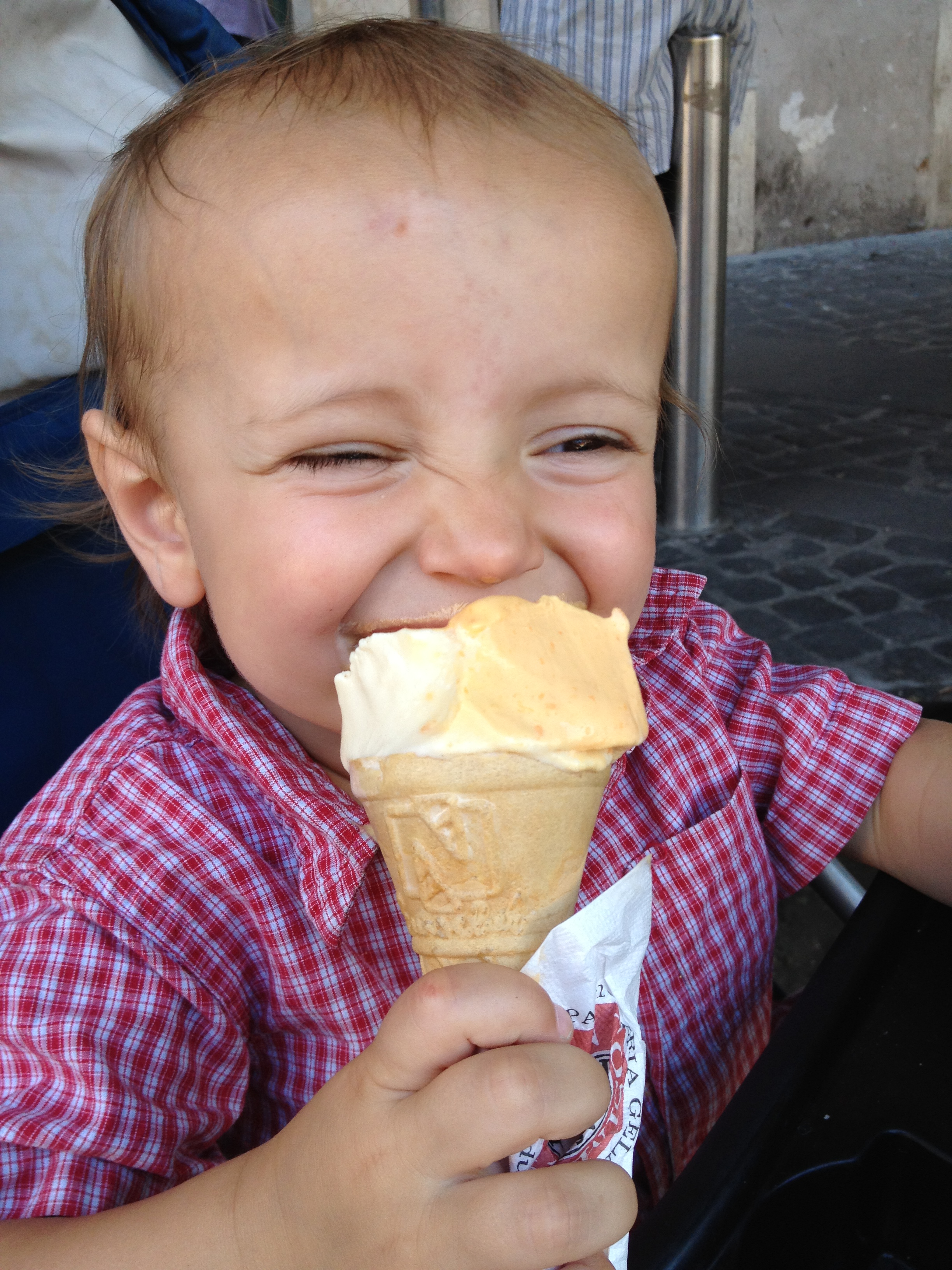
When I was in Italy, I had something I’d never eaten before: gelato. Mama and I had it every day (I think she had it twice a couple times, too, which she thinks I don’t know about). We ate gelato with pears and Nutella, gelato with basil and cantaloupe, gelato in cones, gelato in cups… I can’t even tell you all the kinds of gelato we had!

Look how well I can hold a cone of gelati.


But now that we’re home, and it’s awfully hot outside, Mama’s kept it simple and made me popsicles. They’re so easy, even I could do it…but then again, I’m pretty handy in the kitchen. The only part I needed help with was making the simple syrup (hot!) and cutting the honeydew (knife!). After that, we pureed it in the blender, Mama poured the mixture into the popsicle molds, and then she put them in the freezer. Waiting until they were frozen would have been the toughest part, if I hadn’t had to go to bed.

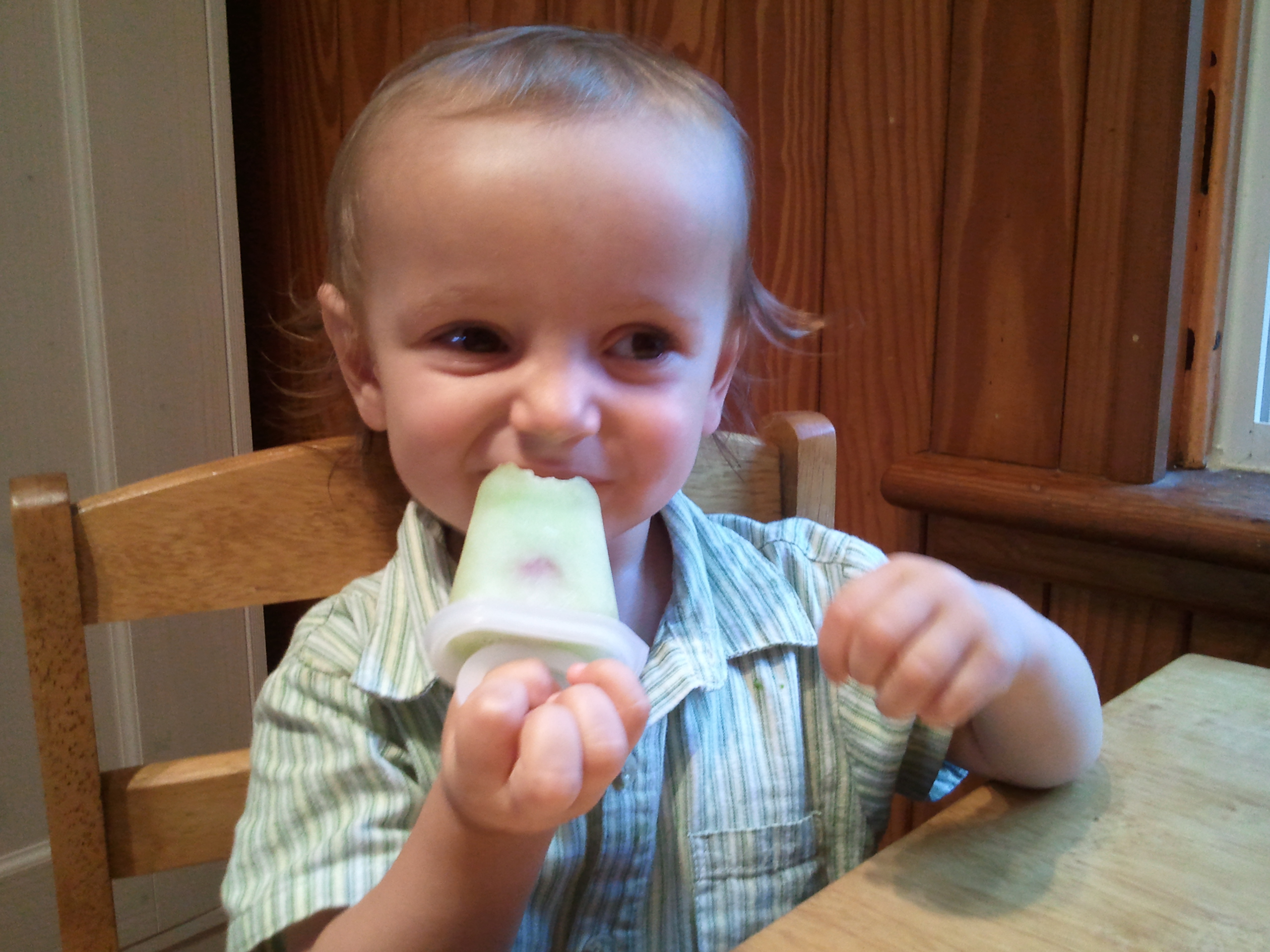
What I like about these popsicles is that I can bite them. They’re just a little bit crystally and not too hard. They’re sweet, but they mostly taste like the green melon. And I see that Mama snuck a little raspberry into each one that I have to munch may way down to. I also like that I can hold it by myself, which just means that I can offer it up to Mama (or Papa) for a taste. Just a taste, Mama.

See the raspberry Mama hid in my popsicle?

Love, Jude

Fruit Popsicles

½ cup sugar
½ cup water
Fresh fruit (about 3 cups), cleaned & prepped

Bring the sugar and water to a simmer in a small saucepan, stirring occasionally, until the sugar dissolves. Set aside and cool completely. (This is called simple syrup. You can adjust the sweetness as you prefer, but Mama likes the one-to-one ratio here. This makes a little under 1 cup.)

If you’re using a large fruit, like a honeydew or cantaloupe, peel, seed, and chop it into cubes. Smaller fruit, like berries, can be tossed in whole after being destemmed. If you’re using something like peaches, it’s really up to you if you want to peel them. Put the fruit into the blender and add the simple syrup. Puree until there are no more chunks of fruit, a minute or two. Again, if you want your popsicles less sweet, start with half the syrup, puree, then taste it. Mama says you need to have some sugar in it, though, otherwise the popsicles will freeze solid.

Pour the puree into popsicle molds—but don’t fill them all the way. If you want, drop a tiny berry in at the bottom—it looks pretty, and it’s fun to get to! Seal up the pops and freeze until set, a few hours. We got exactly 18 pops from this mixture, and I’m working my way through them.


11 Comments

Cooking lessons first, morality lessons later

When Mama was growing up, she told me she had an Italian plum tree and a sour cherry tree in her yard; later, there were apple trees. One by one, though, they began to die, but the plums and “sours” (as she calls them) continue to be among her favorite fruits. It’s probably how she came to pinch the cherries from the tree down the street from her, in the yard of an old woman whose tiny house was all that stood guard over the coveted summer crop.

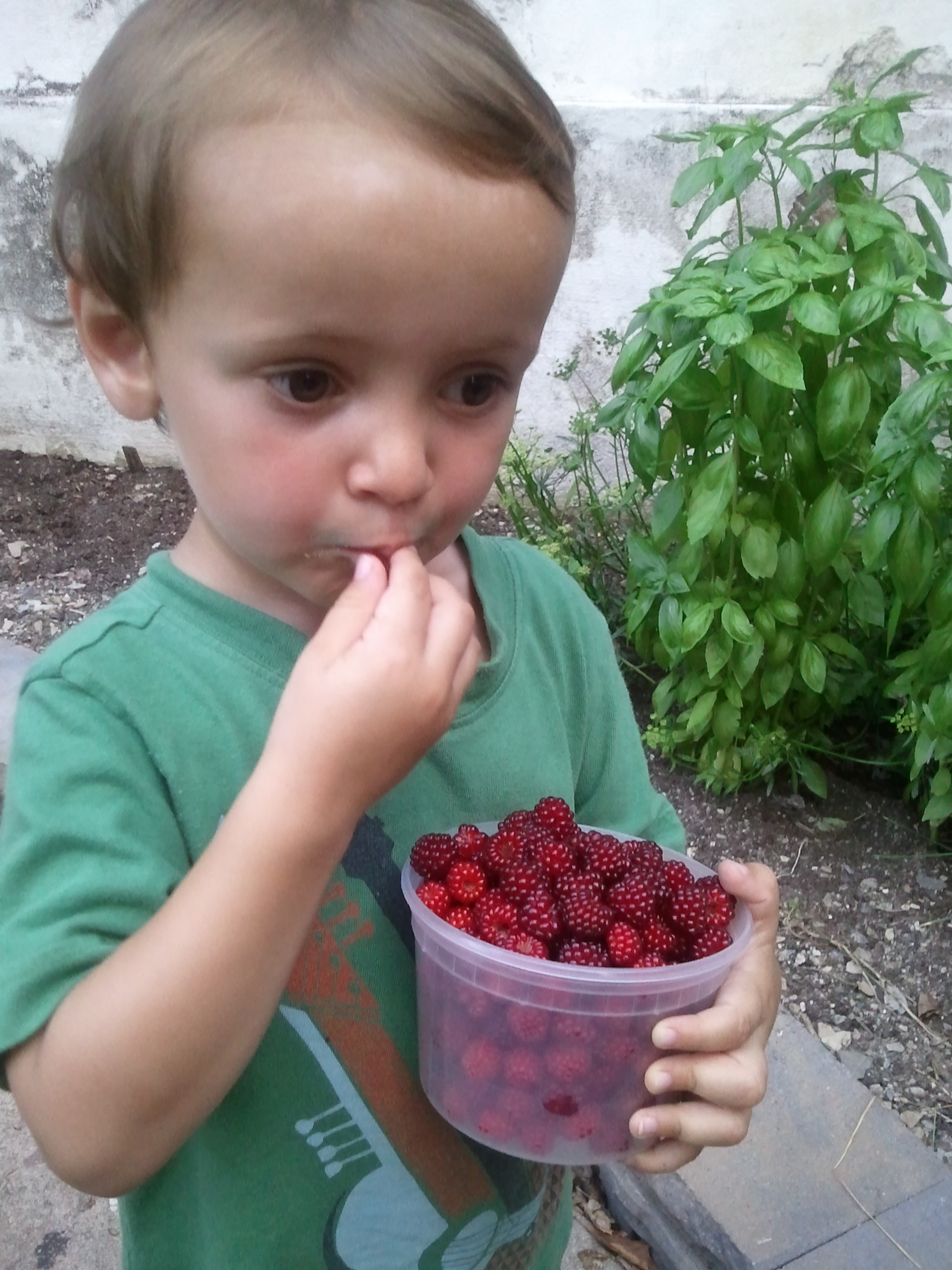
It’s a wonder, then, that it took three summers before Mama noticed the wild raspberry bush in our neighbor’s yard…especially since the house has been vacant since before I was born. When she noticed the red gems glowing in the sunlight, she darted across our semi-private mountain road with me (after looking both ways, of course) and pointed out the very reddest ones, showing me how to pick them and either pop them right into my mouth or put them in a dish. (Sometimes I pick the orange ones and throw them because that’s fun too.) She only let me get the berries closest to the edge of the bush because, as she soon discovered, the vines and leaves were positively covered in thorns of all sizes that made her skin itch.

Mama explained I can only ever pick berries when I’m with her or Papa, and only then, just the berries they say are okay to eat. (Papa later pointed out that she failed to explain that we shouldn’t be picking someone else’s berries without their permission. Mama replied, “Who’s there to ask?”) Luckily, there’s a small vine of berries on our side of the road, in front of the whistlepig’s hole, so maybe next year it will have enough fruit for us.

This is a photo from this year. We get about this many berries every other day.

This is photo was taken a year after the original post. We get about this many berries every other day.

Until then, Mama goes on a raspberry raid almost every day, though she sadly reports that they’re coming to an end. I get to eat them with my yogurt in the morning or as a snack throughout the day. They’re yummy and very sweet. I like that they’re so tiny, and Mama likes that they keep in the fridge for a couple days without spoiling. When she started picking more than we could eat, though, she decided to make a small batch of freezer jam. Because it gets very hot and can splatter, she didn’t let me near the stove when she made it. But I did get to taste the result when she spread it on a homemade flatbread that Papa grilled, then topped with arugula and dollops of ricotta. Wherever the fruit comes from, I could get used to this kind of eating.

Love, Jude

Purloined Wild Raspberry Freezer Jam 

2 cups wild raspberries (or any other berry, or a mixture)
2 cups sugar
Juice of half a lemon (or to taste, but you need some acid to make this all work)

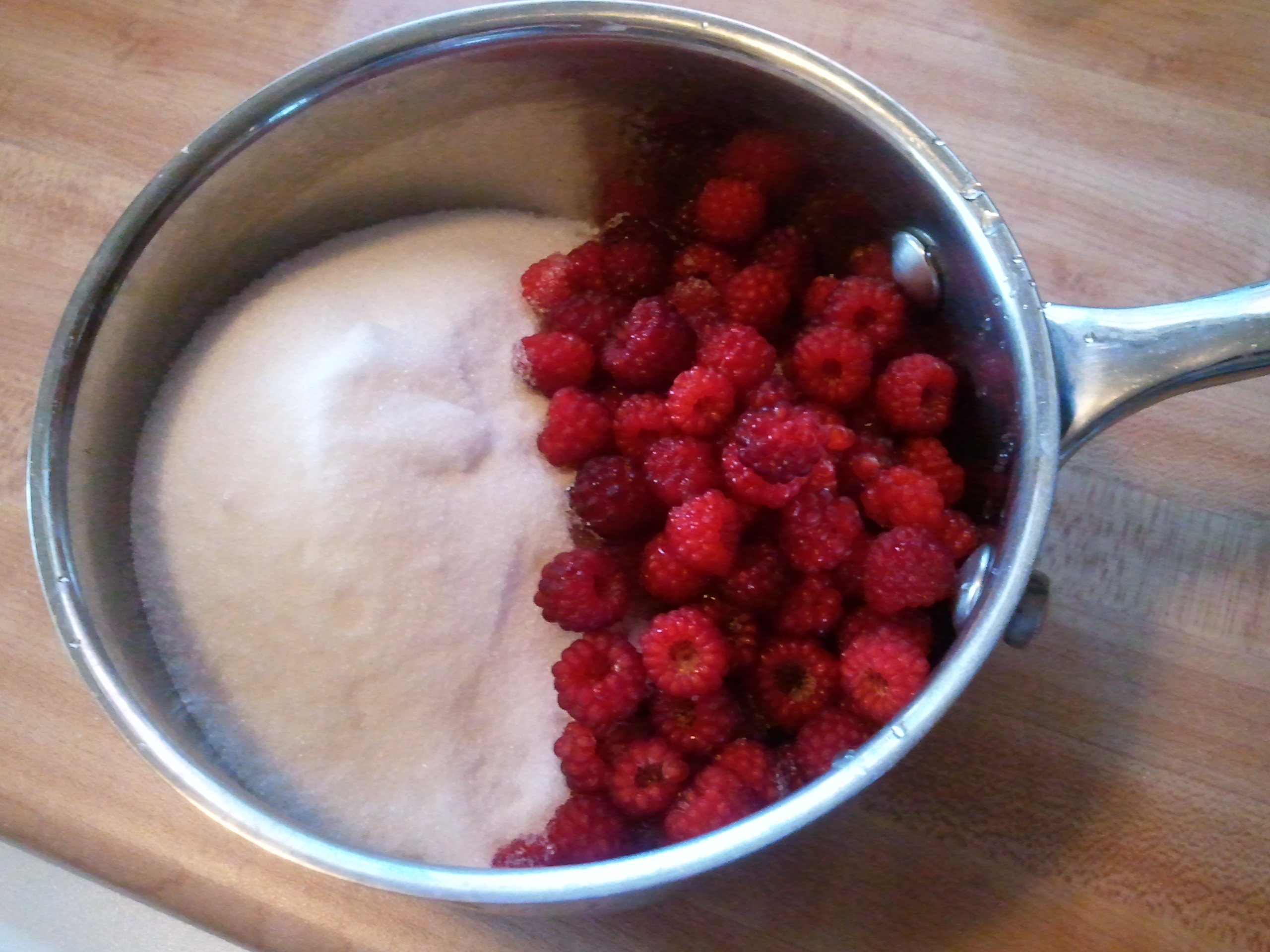
Wash and prep your berries (hull and halve strawberries, destem blueberries, etc.). Add them to a small saucepan with the sugar and lemon juice.

Equal parts fruit and sugar... I like this already.

Equal parts fruit and sugar… I like this already.

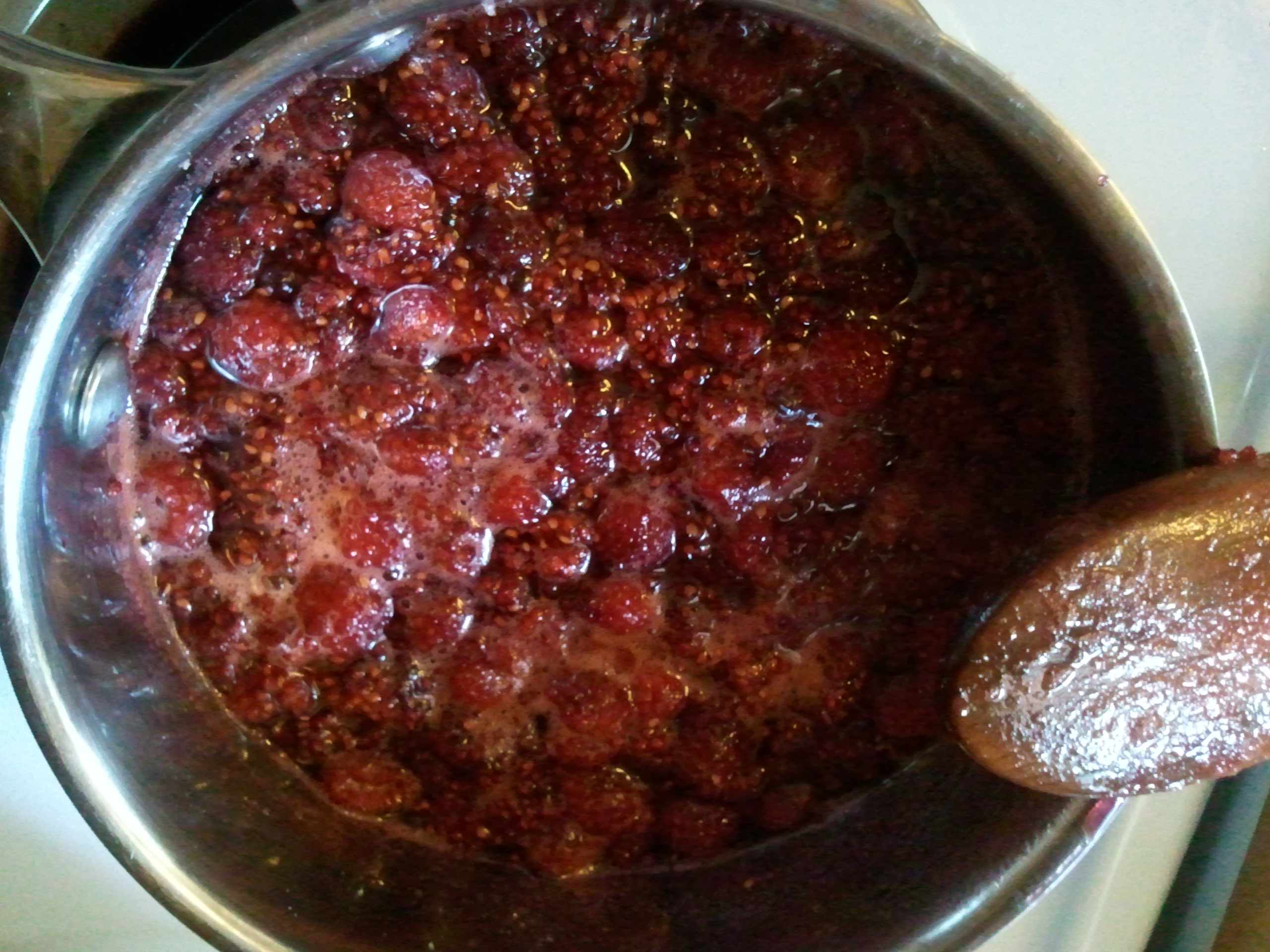
Bring it all to a gentle boil, and lightly smash your fruit. You can leave a few whole chunks, but you need to smoosh the fruit to release its pectin. Boil, stirring frequently, until the jam begins to thicken. This could take about 10 minutes—the riper and sweeter your fruit, the longer it will take.

See how it's getting all gooey and jammy?

See how it’s getting all gooey and jammy?

If you think it’s jammy enough, you can test it by spooning a bit onto a plate and sticking it in the freezer. Once it’s cool, you can tell whether it’s ready by tilting the plate—if the jam runs right off, it’s not done; if it sort of goozes the way jam should, then you’ve got yourself jam. Carefully pour the hot jam into very clean jars—this recipe makes less than 1 pint. Mama uses a Ball jar and waits to see if the seal pops shut (a time-honored tradition in my grandma’s kitchen, she tells me). Regardless of whether they seal, Mama waits until the jars are cool to the touch then puts them in the freezer. No special canning equipment or know-how required. Unfrozen, the jam will last in the fridge at least a month, but really, could you wait that long?

Note: Some people use pectin when they make jam. Mama says it’s a natural ingredient in fruit anyway, so she doesn’t add it to hers. Even though it ensures your jam will “gel” every time, she likes the simplicity of measuring sugar and fruit in equal proportions. And her jam is usually thick enough to spread between cake layers. Usually. If you decide to use pectin, she suggests buying the no-sugar-added kind, following the package directions for the amount to use, and decreasing the amount of sugar you use in this recipe. (You’ll still want to add sugar, even with this kind of pectin.) Be sure to boil your jam to activate the pectin—but not too long, or the pectin will start to break down!


1 Comment

I’m baaaa-aaaack.

Mama says I’m too young to understand that reference, but no matter. What matters is that I’m back, and I’m going to try to be more faithful about this blog. A lot has happened over the past couple months, which I’ll tell you all about in the coming weeks, from starting to talk, to going camping for the first time, from having a visit from my Grandma and Geegee, to going to Italy on a big airplane! And of course, I’ve been eating all kinds of things along the way.

In order for me to get back in the swing of things, I’m going to keep these first few posts short. I’ve been thinking about writing every day, so I just have to jump back in.

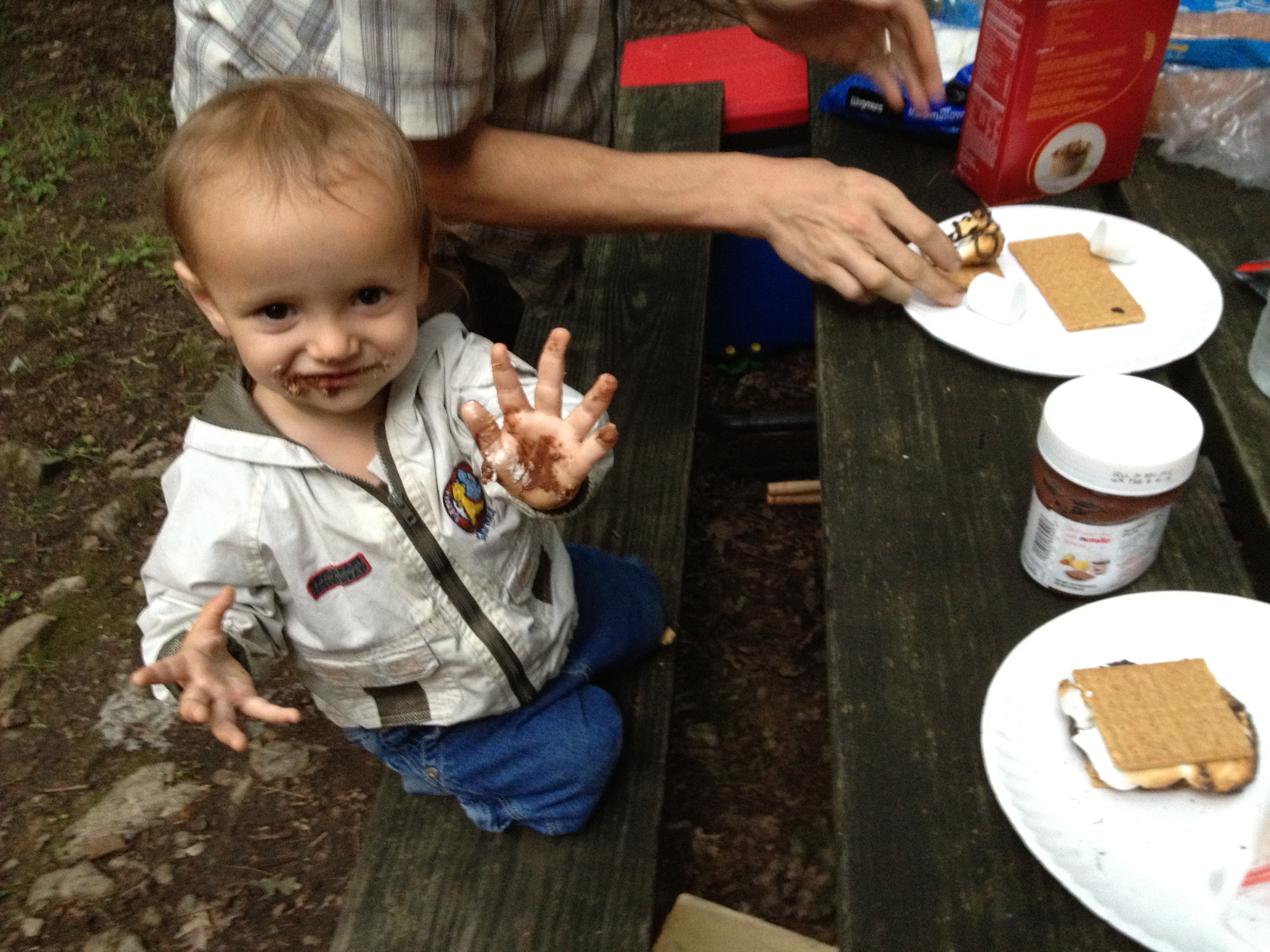
To start with, let me tell you about something called s’mores. As you might recall, I don’t eat a whole lot of sugar (though that’s really changed since I’ve been to Italy). Mama allows it some of the time now, especially since summer is ripe with all kinds of sweet fruits and cool popsicles. This past weekend, I went camping for the first time. Did you know that when you go camping, you get to be outside all the time, sleep in a tent, pee in the woods, and eat food cooked over a campfire? Well, I had the best little sandwich I’ve ever eaten. First, Papa and I scavenged some good sticks in the woods, which Papa then whittled to have finer points. Then Mama showed me how to skewer marshmallows on the ends. Since I was a little too excitable around the fire, Mama held my marshmallow stick for me. She and Papa explained that there are two schools of thought regarding marshmallows. Mama likes them to catch fire so they get all melty inside, and also so she can blow them out. Papa likes them to get toasty just by the fire’s heat.

Mama slid her marshmallow onto a graham cracker spread with Nutella, and topped it with another graham cracker for me. Papa poured Mama’s homemade chocolate sauce on the s’more he made for her, and Mama made a third s’more for Papa using a peppermint patty. Boy, were they good! They were supersweet, crunchy, yet soft. I didn’t even care that my face and hands were covered in sticky goo. Mama and Papa toasted more marshmallows for us to eat by the campfire (though they cut me off after one).

Sticky gooey goodness

I’ll have some more s’mores any time.

If this is what camping is all about, I can’t wait to go again.

Love, Jude


3 Comments

The Queen of Tarts

Mama made a tart. A leek tart, to be more precise. First, she showed me how to rinse then cut the leeks into half moons. We’ve done this before. Leeks can be very dirty, so it’s important to rinse in between all the layers. She had 3 leeks, so that was a lot of little moons to cut. These she sautéed in butter and a little olive oil—“to raise the smoke point,” she said—until they were soft. Then she peeled and grated 2 russet potatoes on the big square grater. She let me help her hold the vegetable peeler, but she said the box grater was too dangerous for my little fingers. When the leeks were soft, she added the potatoes, along with some salt and pepper and a few sprigs of thyme. The kitchen smelled so good as everything cooked!

Meanwhile, Mama did something she said chefs everywhere would shake their heads at: She took scraps from the various pies and tarts she’s made over the past couple months out of the freezer, let them thaw, and then smooshed them together to make one new tart crust. She showed me how to flour the counter surface and then roll out the dough with something called a rolling pin until it was smooth and flat. She wrapped the dough on the rolling pin, then unrolled it over the tart pan. She said you have to gently lay the dough inside the pan so as not to tear it. Then she let me prick it a few times with a fork, and we put it into the oven to bake.

And by the time it was done, the vegetables were cooked. She poured them into the hot tart shell, sprinkled some goat cheese over top and drizzled some balsamic vinegar over it, then put it all back in the oven. Not long after that, it was ready.

I don’t know what I liked more—the potatoes, the balsamic vinegar, the leeks, the goat cheese, the crust…. The whole thing was just so darn yummy, I had an entire piece. Now Mama just has to make a bunch more pies so she has more scraps for a last-minute tart.

Love, Jude


4 Comments

Lavender’s Not Just for Bath Soap

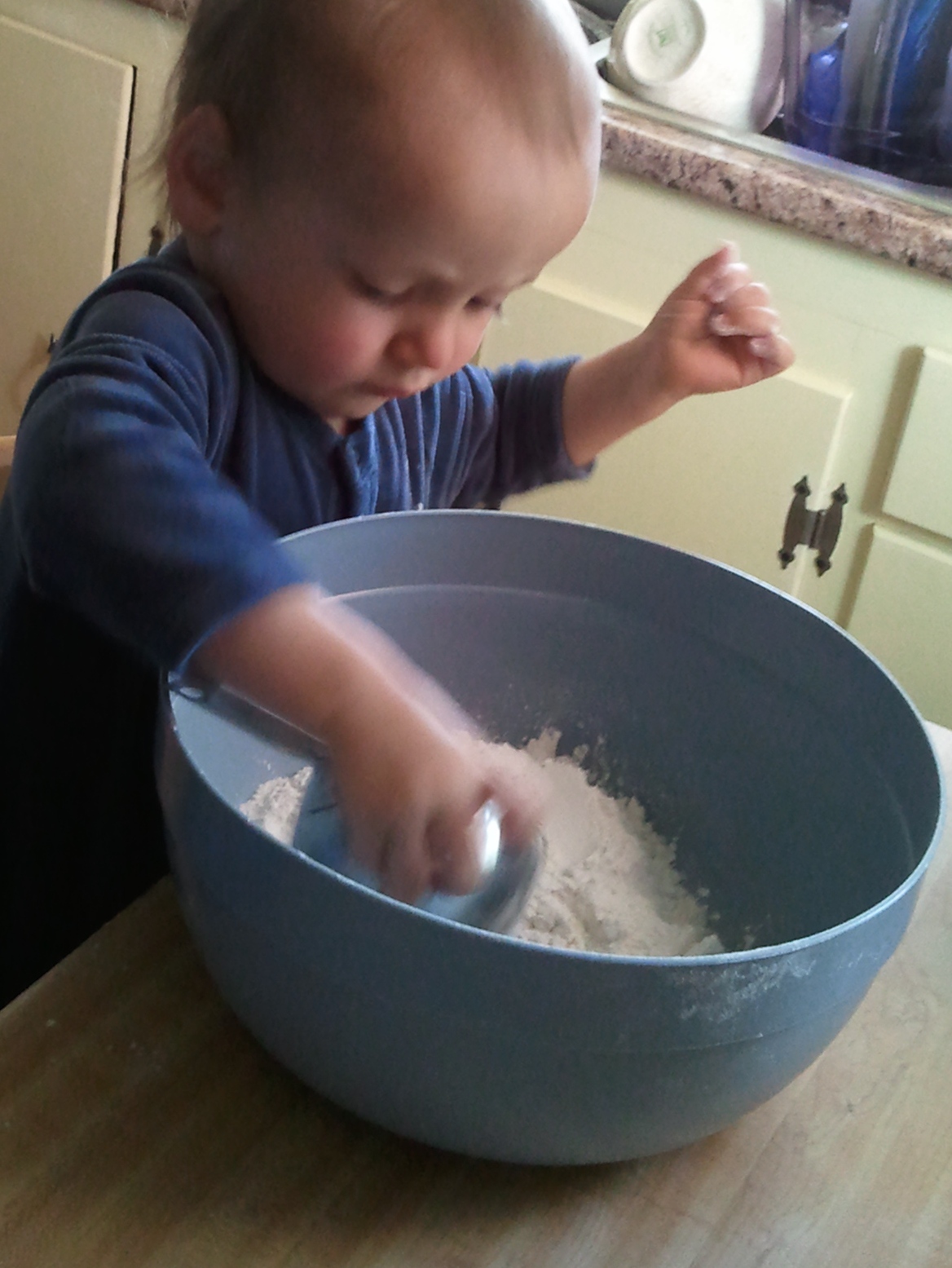
It’s for cooking, too. Mama helped me make a new kind of scone today, using dried lavender flowers. As in other recipes, we first mixed the dry ingredients. I poured flour and sugar in the big bowl and then dug my hands in there. I felt the difference between how the silky, powdery flour coated my fingers and how the grainy, shimmery sugar slid through them. Mama added the other dry ingredients, and I tried to pick out the lavender flowers. (We got them from my friend Milo’s mama, who ordered them online, but you can get them at stores if you know where to look.) She let me whisk all of it together, but sometimes I used my hands to stir it up.

Sometimes it's helpful to put the measuring cup into whatever it is you're mixing.

Then Mama thought it might be better if she mixed the wet ingredients. Because we didn’t have buttermilk, she showed me how to make “sour milk.” She first zested the lemon, since we needed it, then squeezed one-half of it into the cup of milk. That’s it! Then she showed me how to easily dice a stick of butter by using a bench scraper (a knife would work too). Then she gave me the butter cubes to put into the bowl, and I had to taste each one to be sure they were wholesome enough to go into these scones. (Mama tried getting a picture of me licking the butter wrapper, but I was too quick for her!)

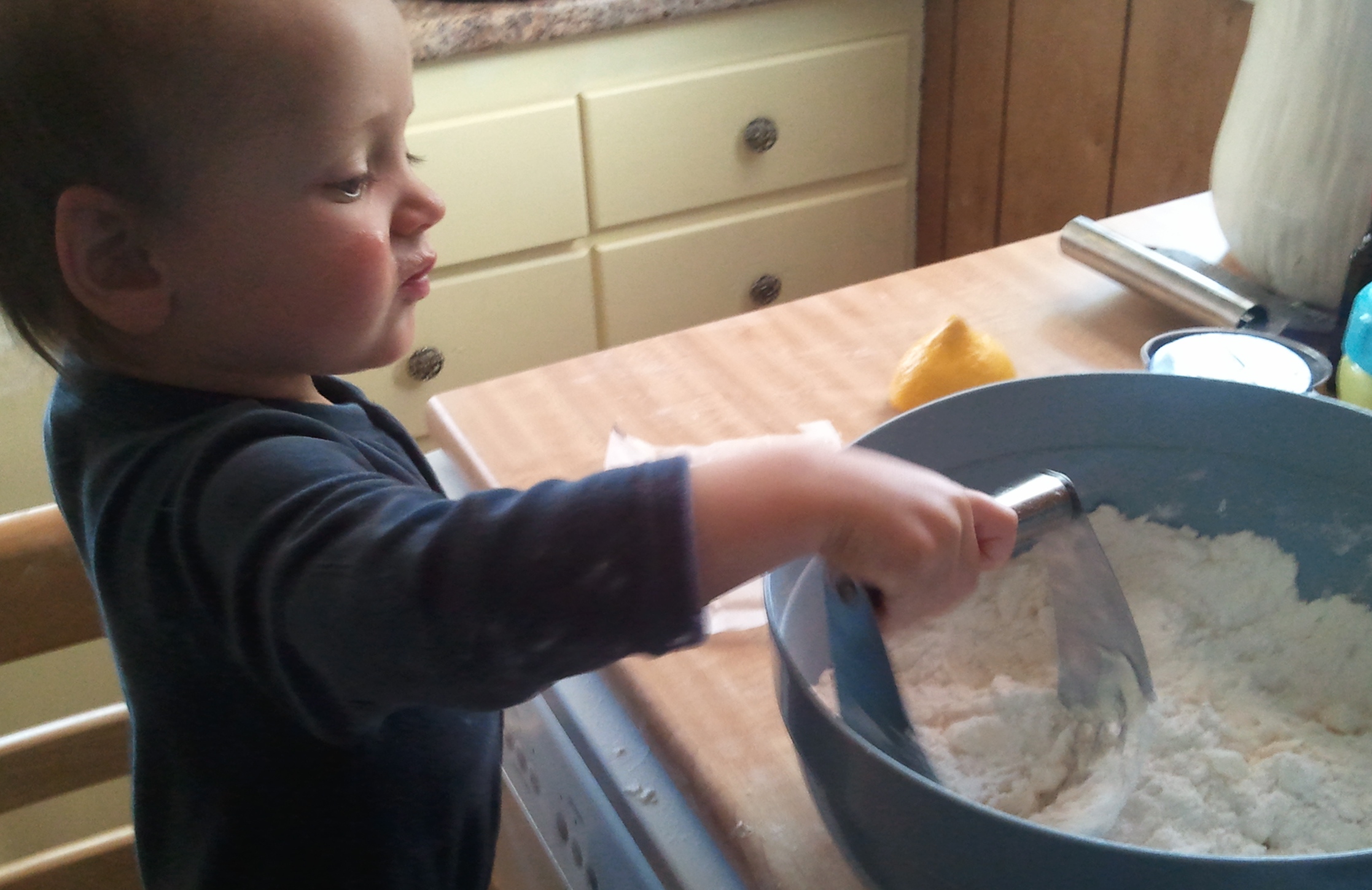
After all the butter was in the dough—another new word I can say!—Mama showed me how to work the pastry cutter, a funny looking tool that has a handle. It was a lot of work, so I let her do most of it. (She told me scones can be done in the big mixer, then you don’t have to work as hard.) Then we played with the dough, smooshing the flour into the butter. Mama then poured in the sour milk and let me stir it all.

This is called "cutting in" butter, but I liked it better when we just squished the butter with our fingers.

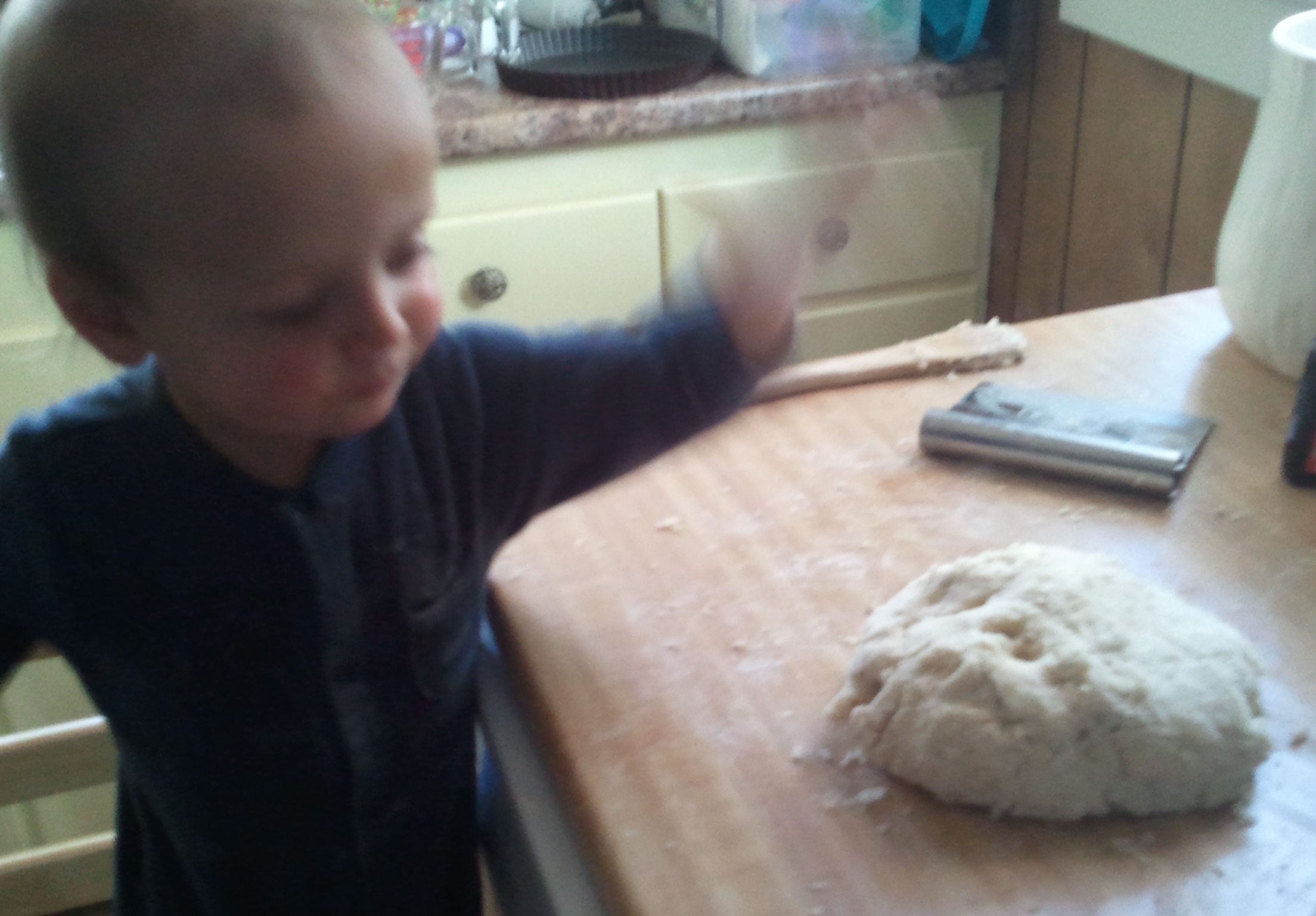
Then she took a handful of flour and threw it on the counter! It was wonderful. I spread it all over, and then some. Mama turned the bowl over, pulling the broken dough out onto the flour. She and I then squished and patted and pounded it until it formed one solid mass. Then we patted it some more.

Smack it! Next to eating the butter, this was probably my favorite part.

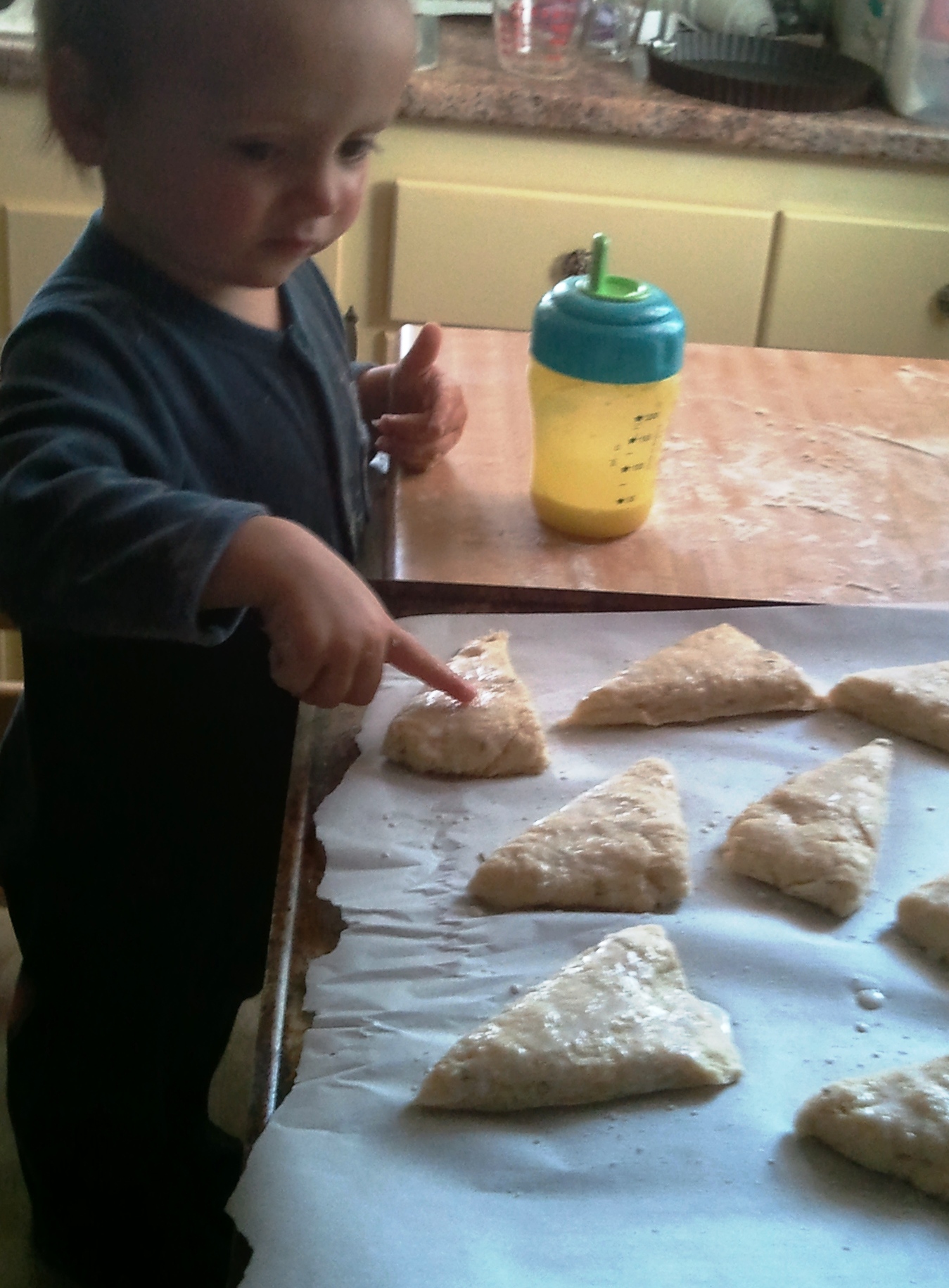
Mama said we really shouldn’t be handling the dough so much because it’s the cold butter that makes scones rise and get all flaky, but we were having fun. (And buttery dough is quite tasty.) She cut the scones with the bench scraper (being careful not to get my fingers as I kept sampling the dough) and put them on baking sheets—not too close together, she warned, because they’re going to spread. She showed me how to brush the tops of the scones with more milk before dusting them with a little bit of sugar.

The dough was so tasty, I couldn't wait for the scones to be baked.

Into the oven they went. After 7 minutes, she rotated the trays so the one on top was now on the bottom, and she turned them around too, so the backs were now in the front. But silly Mama forgot a basic rule of cooking and baking, which is to trust all your senses. She was so busy making lemon curd (which she decided to do at the last minute since she had an extra lemon), that she didn’t keep an eye (or a nose) on the scones as they baked. When the timer went again after 7 more minutes, she took one look at the scones and knew they were overdone. Not inedible-overdone, just not the perfect level of golden she prefers. All that mattered to me was that I couldn’t wait to eat them. She placed a frittata in front of me for breakfast, but all I could think of were those scones sitting on the counter, cooling. They were right there!

Finally, the moment arrived. I took a sample nibble, and yes, they were good. But I’ve had enough scones in my 20 months to know that these were a wee bit overbaked. They should be fluffier in the center and less crispy on the outside. Still, I enjoyed dipping them in the lemon curd. They work just fine for that. Mama thought the scones were on the salty side, so she’d cut back to ¾ teaspoon, if not ½, next time. And the lavender flavor was very subtle—she thinks the dough could tolerate up to another ½ teaspoon. (But that didn’t stop her from eating a second one later in the day.) So even though these didn’t turn out perfectly, I still rate them a “Hit” because we had fun making them, and I could taste their potential. And I got to think about them again when I took my bath later in the morning.

Love, Jude

Lemon Curd
(this is just a tiny batch)

¼ cup freshly squeezed lemon juice (if you get a good lemon and juice it really well, 1 should be enough)
small splash of vanilla extract
1 egg
bit of sugar (less than ¼ cup, but really, you can make it as sweet as you like)
6 tablespoons room temperature butter, cubed

Bring the lemon juice and vanilla to a boil in a small saucepan. Meanwhile, whisk the egg and sugar until well combined. When the lemon juice is boiling, begin whisking the egg and slowly pour the hot lemon juice into the egg, constantly whisking. (This is called tempering, like we did with the soufflés.) Once everything’s combined, pour it all back into the saucepan, and whisk it gently over low heat until it thickens. You’ll know when it’s thick. It will be like lotion. Take the pan off the heat and start adding the butter cubes, 2 or 3 at a time, and whisk until they’re nearly melted. (I helped with this part.) When all the butter’s added, refrigerate your curd until cold and ready to use. Yum! Stored in a closed container, this will keep quite a while, but do you really want it to last that long?


5 Comments

But we’re not French

Mama read a book on how French kids sit still at mealtimes and eat whatever’s on their plates. She thought she could implement the same system with me. (What she doesn’t know is that she almost succeeded, but then she started working, and now I eat at a very American daycare with very American kids.) But the point of this blog post isn’t to document Mama’s frustrations with me as I continue to throw food (though I do think she’s pretty funny when she’s annoyed); it’s to tell you about the lovely cake we made! The book talks about children helping out in the kitchen, something I’ve been doing for a long time now. It goes further to share a recipe for yogurt cake, or gâteau au yaourt, which is the first thing many French kids learn to bake.

I can see why. It’s so simple! Of course, there’s yogurt in it, and then almost all the other ingredients are measured with the empty yogurt containers. Mama bought lemon yogurt, which she poured into a large bowl. She spooned sugar into one container, which I dutifully dumped in. I then stirred the sugar and yogurt together, testing as I went along to make sure everything tasted right. Then Mama added a teaspoon of vanilla, a little less than a container of canola oil, and 2 eggs. She let me continue to stir but said I couldn’t taste anymore because of the eggs.

Mama had a lot of trust in me here.

Now that the eggs are in, I had to stop sampling. (Note my yogurt mustache.)

Then she spooned flour into the containers (4 of them, in total) and let me dump them into another bowl. She had to show me how to do it because I started to pour the flour towards me, instead of away from me and into the big bowl! (How was I supposed to know?) Mama added half a tablespoon baking powder and let me stir it all together. I liked using my hands to mix it, and it looked so nice on the countertop… and the chair and the floor and my clothes. After that, she added the flour to the egg bowl and stirred it really well. (She thought this might be a better job for her.)

Jude mixes up the dry stuff

I don’t know why anyone would bother with a spatula to stir a cake when a hand works so much better.

Mama showed me how to grease the cake pan with the canola oil, then she poured the cake batter into it. I smoothed out the cake, and into a 375° oven it went.

I’ve heard cake batter is pretty good, but Mama stopped me before I could taste any.

I nearly forgot about it, but I suppose it took 30–40 minutes to bake, and before I knew it, there was a cake! Mama cut a slice to share with me. She said it’s not the prettiest cake she’s ever made, but it sure tasted the best since we made it together. (To be honest, it seemed like I did most of the work.)

I'm in my play kitchen with a real cake!

It looks like I made this cake in my play kitchen, but I didn’t.

I liked the lemony taste to the cake, and it wasn’t too sweet. (It would be delicious with blueberries or raspberries!) It was heavy, though, so I didn’t feel like I needed a whole piece to myself. (Mama, however, had other designs in mind.) I like helping Mama in the kitchen, and Papa was very pleased to see we baked a cake. If this is what being a French kid is all about, then sign me up. In fact, my passport arrived last week.

Love, Jude