LittleJudeonFood

One kid's adventures in gastronomy


Leave a comment

A recipe for New Year’s Eve and New Year’s Day

First, Happy New Year! (Mama told me it’s a nice thing to say to people.)

We started today’s breakfast last night by making challah bread. We’ve made it before when Mama made angel food cake and used the leftover egg yolks for challah. Last night, we made the challah so that this morning we could have it as egg nog French toast! Mama knows only a little bit about challah’s origin, and she says it’s fitting to make the bread one night and eat it the next day.

When making bread, it’s important to gather all the ingredients first. It’s also helpful to use a scale. Mama’s made bread with standard measures, but if you’re looking to have consistent results every time, then weighing your ingredients is the “weigh” to go. (I don’t know why that’s supposed to be funny.)
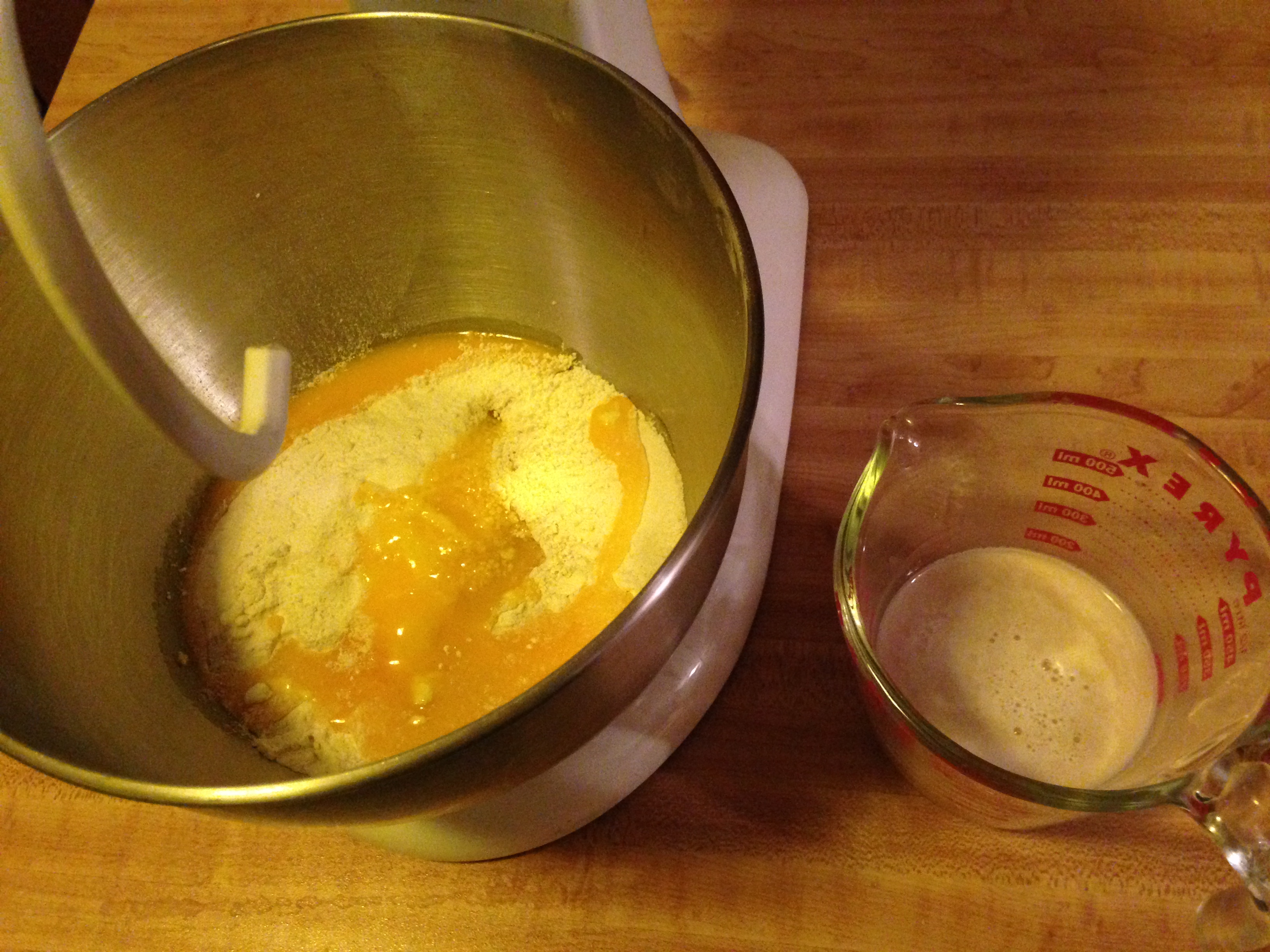
The flour, salt, milk, yolks, and oil are in the mixing bowl, and the yeast and water are getting cozy in the measuring cup.

The flour, salt, milk, yolks, and oil are in the mixing bowl, and the yeast and water are getting cozy in the measuring cup.

After you’ve mixed your dough, there’s nothing much to do except wait. And as I wasn’t allowed to stay up to ring in the new year, Mama took the waiting shift as I went off to bed.

But for breakfast, I was all-hands-on-deck. Choose any French toast recipe you like (we usually wing it) and simply substitute the milk or cream for egg nog. (I call it “donut milk” because it’s so yummy.)
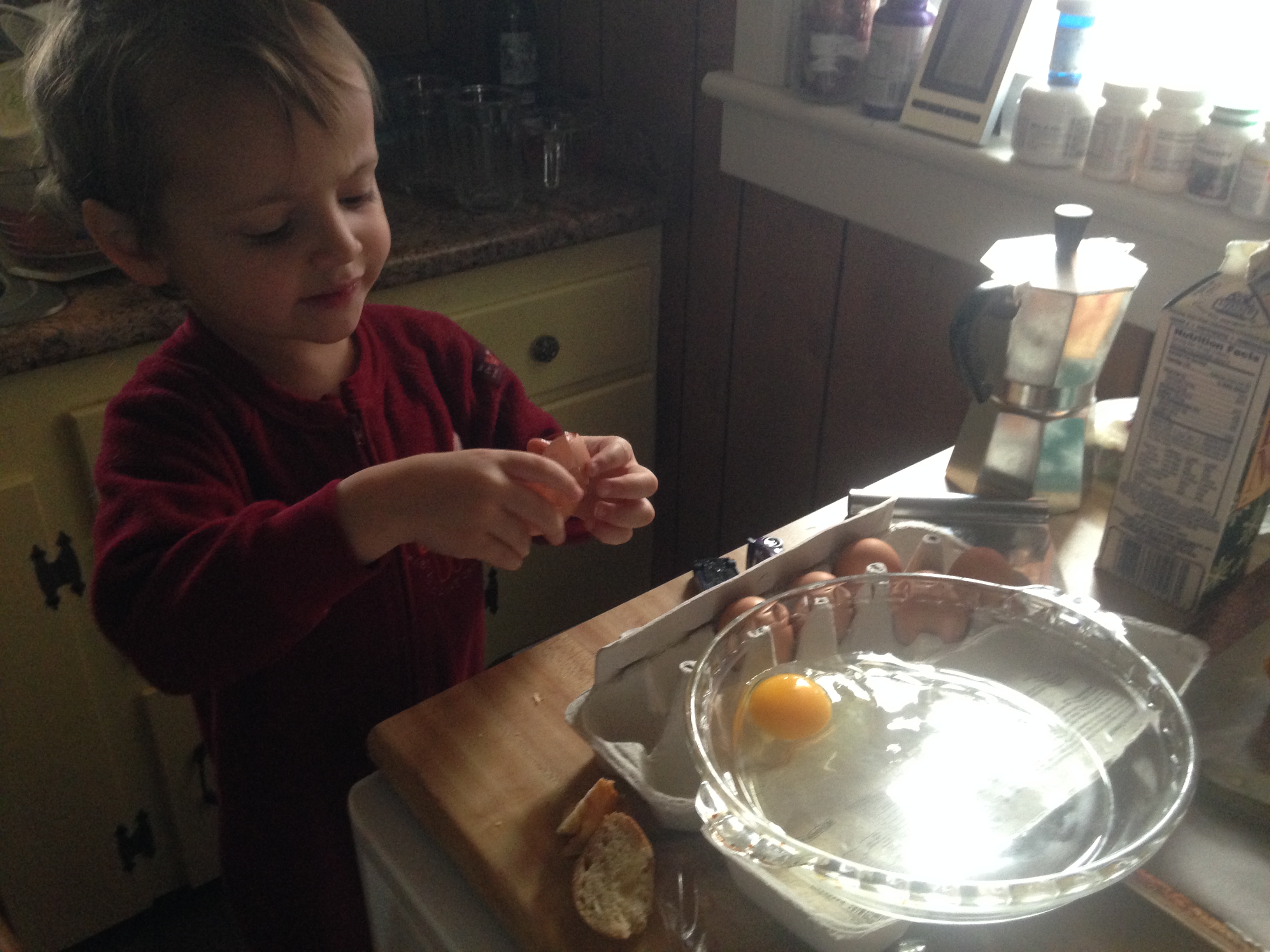
I cracked this egg by myself, and I didn't even break the yolk!

I cracked this egg by myself, and I didn’t even break the yolk!
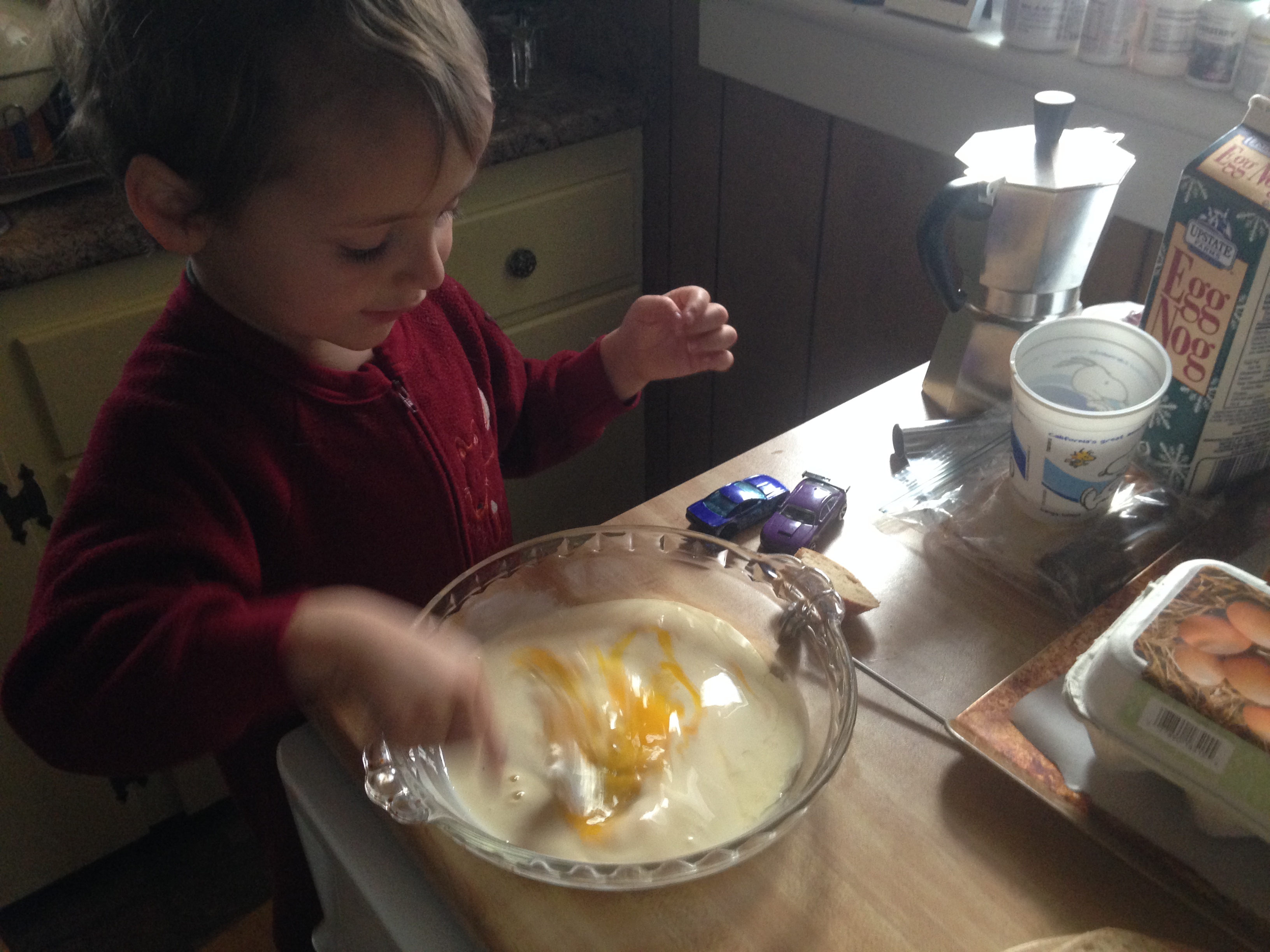
I insisted on mixing the egg and egg nog.
I insisted on mixing the egg and egg nog.

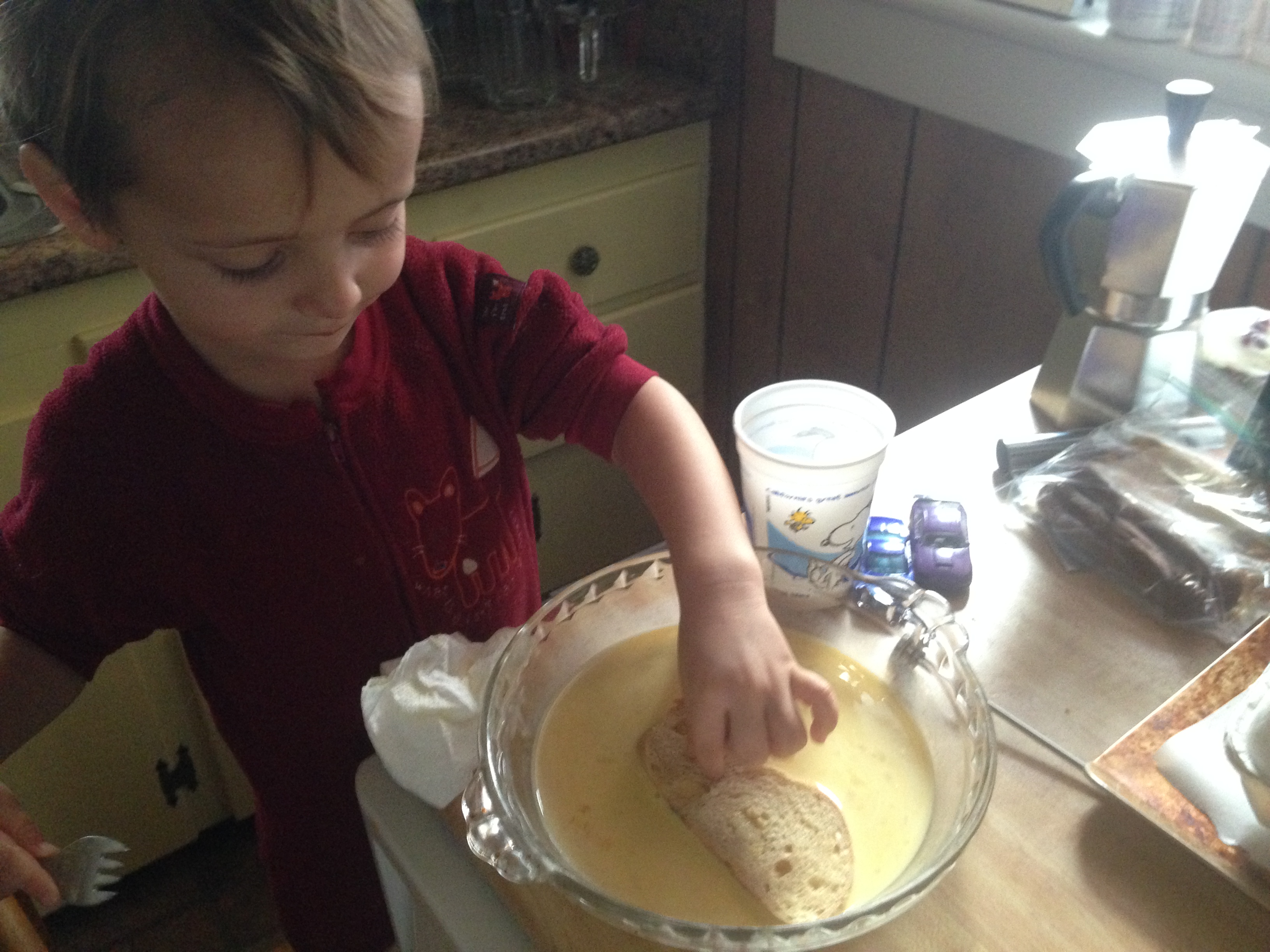
I used my hands to dip and turn the sliced bread to get it coated in nog mixture. Mama likes to use a fork.
I used my hands to dip and turn the sliced bread to get it coated in nog mixture. Mama likes to use a fork.

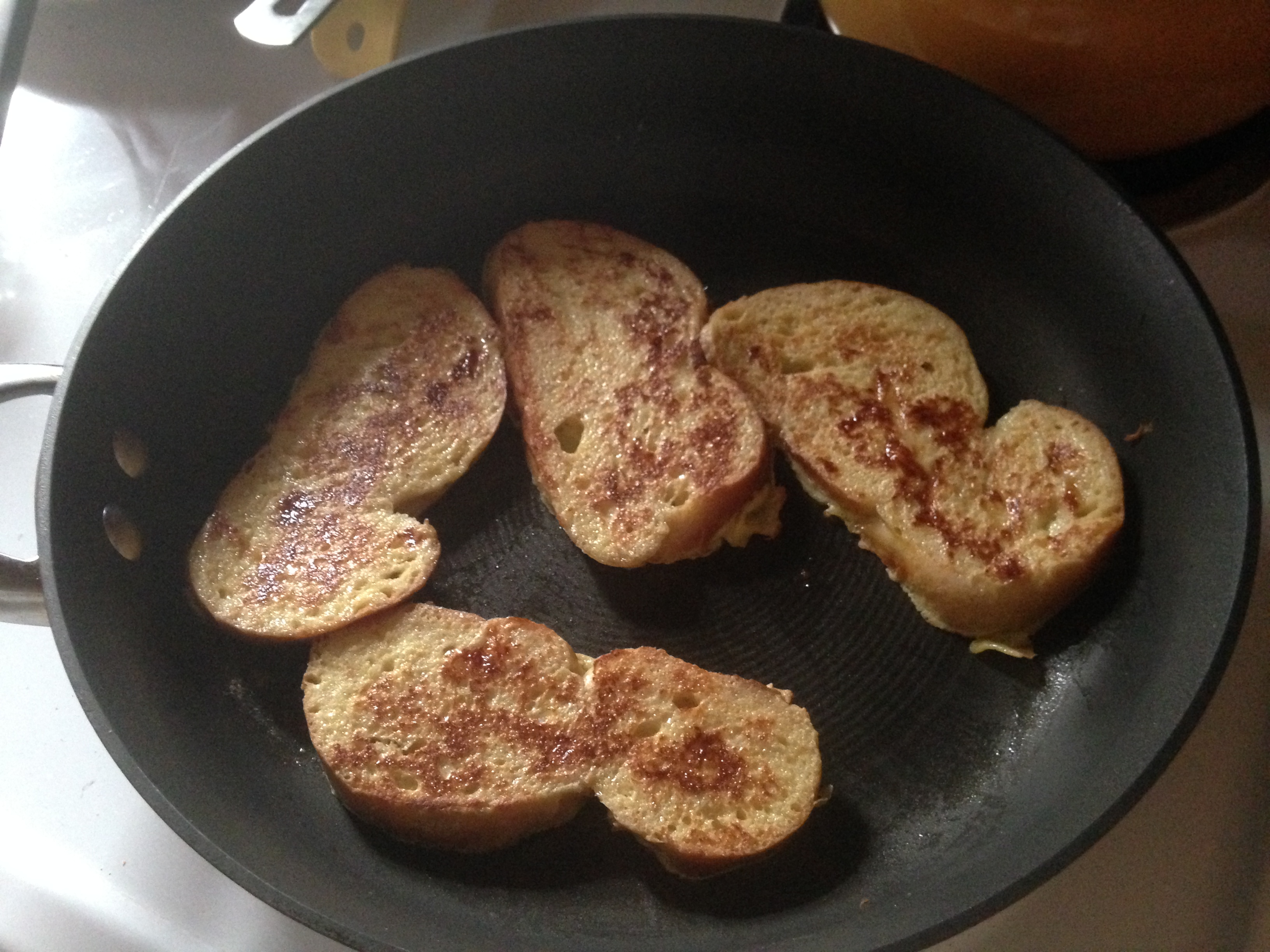
The French toast is super golden, which makes it extra yummy.
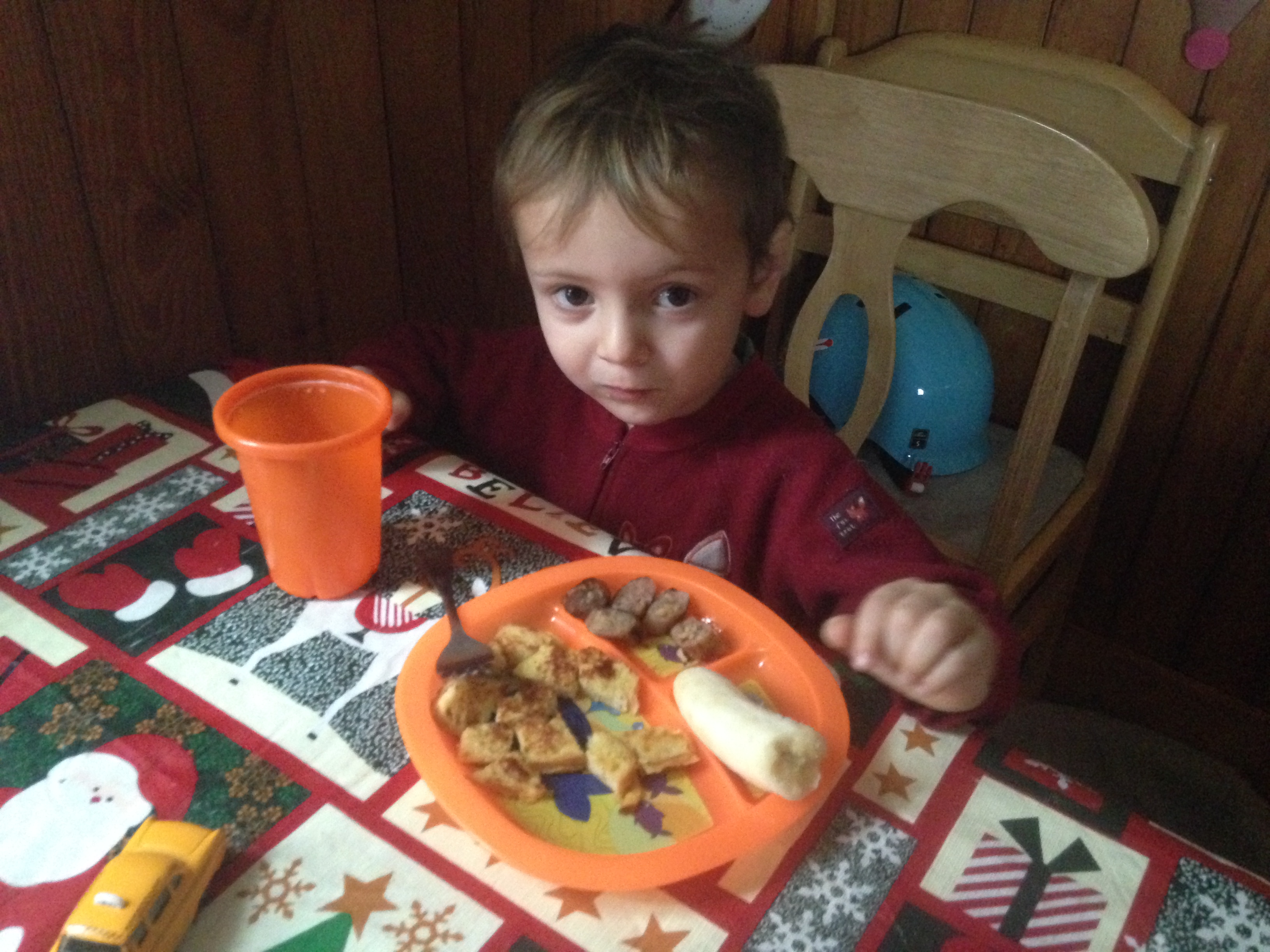
The French toast is super golden, which makes it extra yummy.

I didn't even need syrup with my egg nog French toast.

I didn’t even need syrup with my egg nog French toast.

I have to say this was a good start to 2014. I look forward to many more surprises like this one.

Love, Jude

Challah Bread

11 fluid oz warm water, 105–110°F (or, just hot enough so you can hold your finger in it without too much discomfort)
2 Tbsp active dry yeast
20 oz bread flour (Mama replaced about 4 oz. with regular whole-wheat flour)
2 tsp salt
2 Tbsp dry milk powder
1 Tbsp oil (canola works fine)
6 large egg yolks
1 egg + splash of milk for egg wash

In a glass measure or bowl, whisk together the water and the yeast until foamy. Set aside. In the bowl of a stand mixer, add the remaining ingredients (except egg wash) in the order listed. Pour yeast mixture on top. Mix with the dough hook on low speed for a minute or two to bring everything together, then increase speed to #2 for about 5 more minutes. Test the dough by stretching a small bit between your fingers. If it gives a good stretch before breaking, then you’re set.

Remove the dough to a greased sheet tray, cover with a clean towel, and allow to rest in a warm spot until doubled in size, anywhere from 1-2 hours. (You can shape the dough in to a lovely ball first, but it’ll still proof without the beauty treatment.)
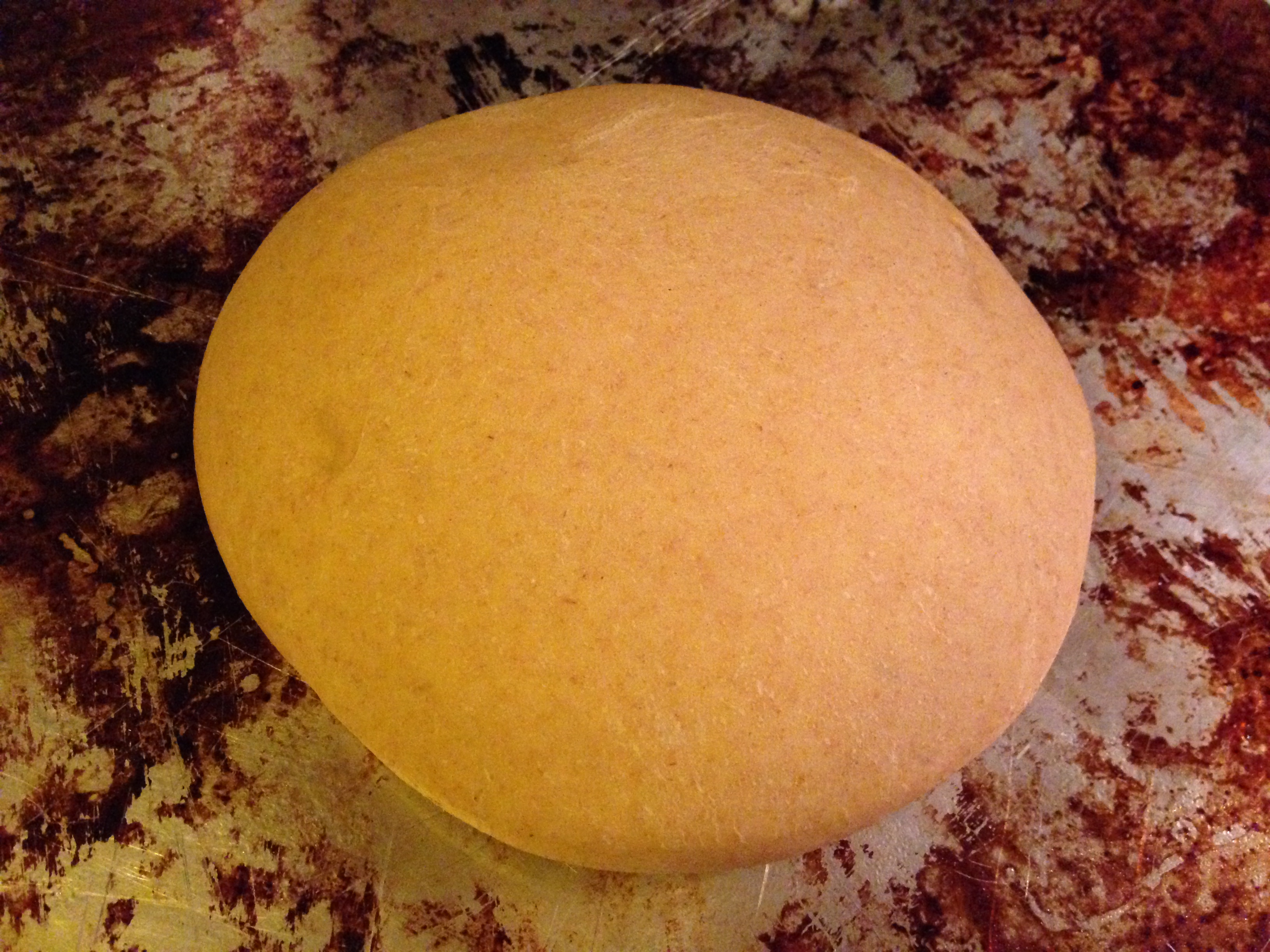
Here's the dough after it's doubled in size. It's smooth and puffy.

Here’s the dough after it’s proofed, or doubled in size. It’s smooth and puffy.

And here’s why Mama loves to make challah: you get to braid it! First, give the dough ball a few good kneads to get out all the air. Divide it into 3 equal pieces, then channel your inner 3-year-old and roll them into ropes (or snakes!).
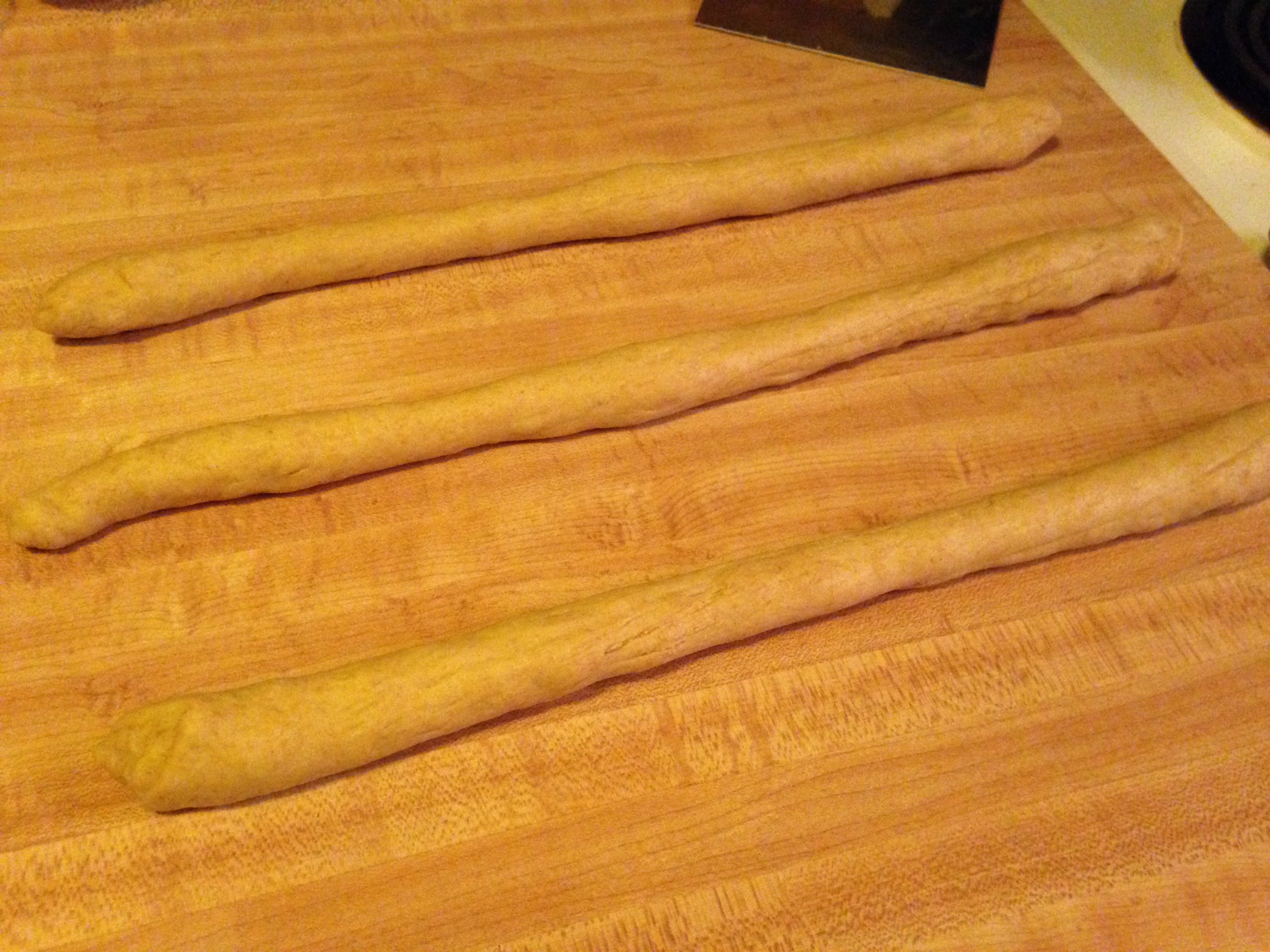
Roll these out like ropes.

Roll out each piece of dough into a rope, however long you like–just not too skinny. You’ll know when the dough has had enough.

Set the ropes on a parchment-lined baking sheet and pinch together 3 ends.
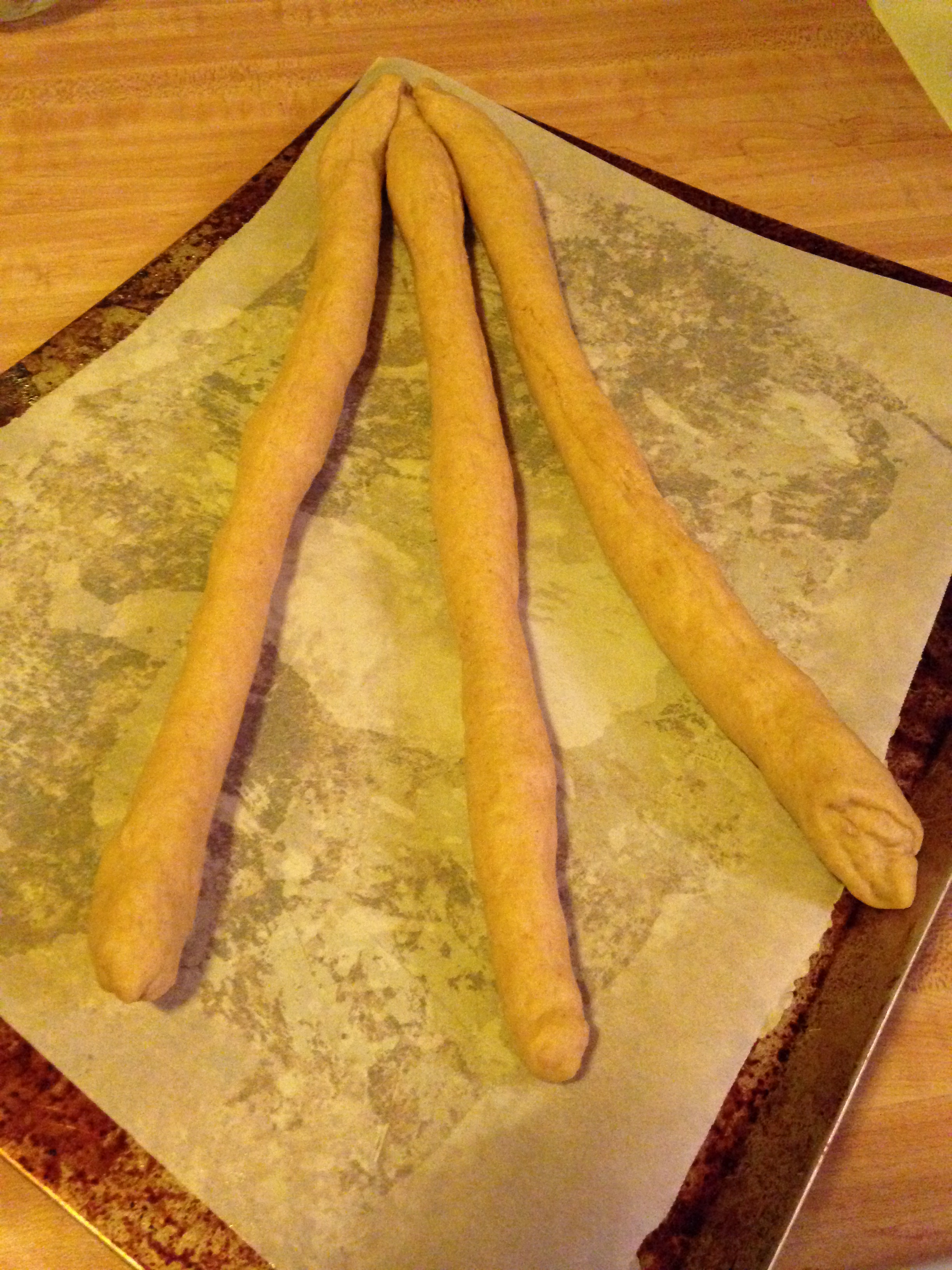
Pinch together the top of the braid.

Pinch together the top of the braid. This isn’t prom, so there’s no need to make it pretty just yet.

Mama’s left-handed, so she starts the braid with the left strand. Start it with the right if that is more comfortable for you. Gently cross the left strand over the center strand.
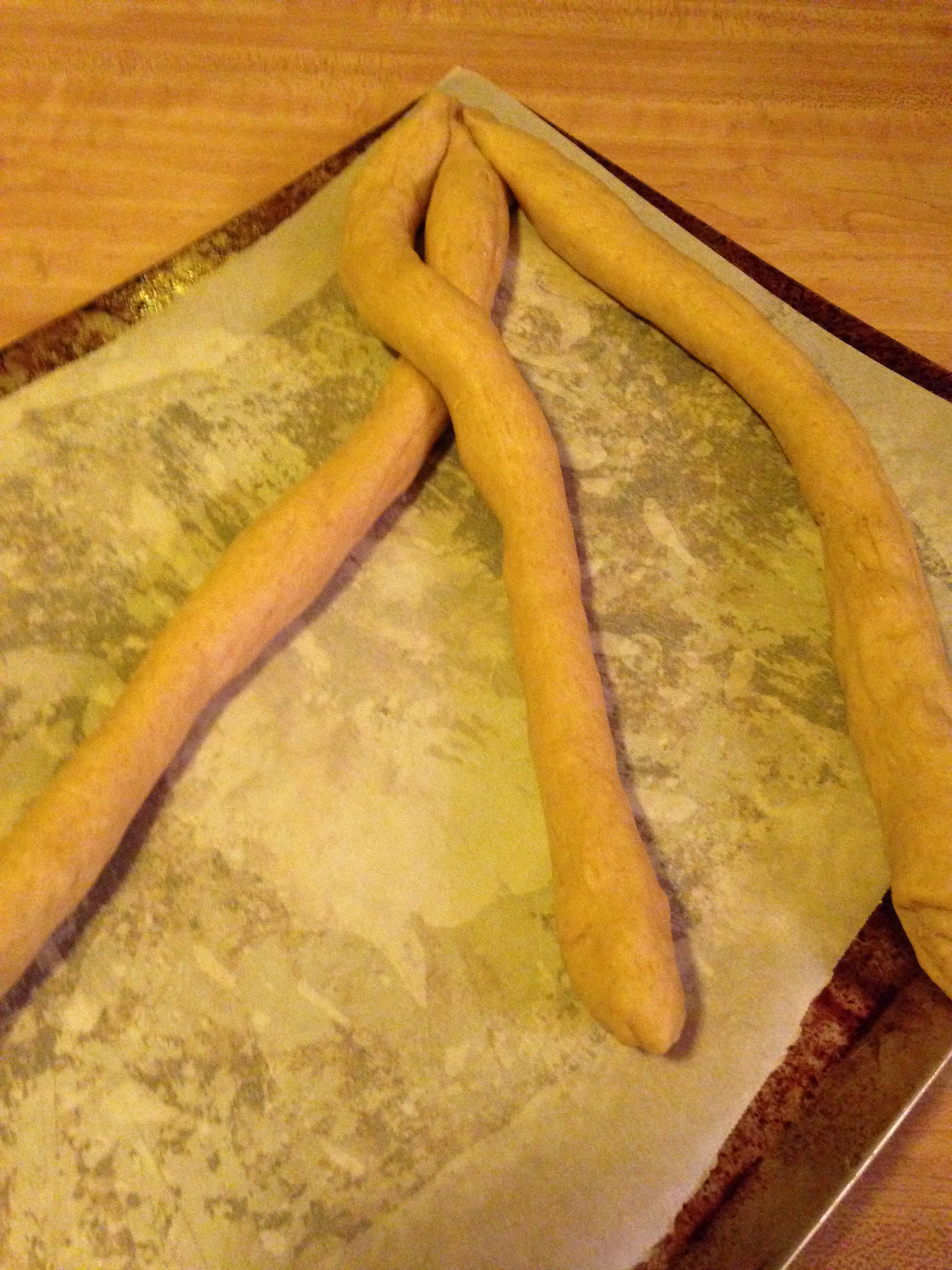
Left goes over center.

Left goes over center.

Then the right strand goes over the “new” center strand (the one that was just the left strand).
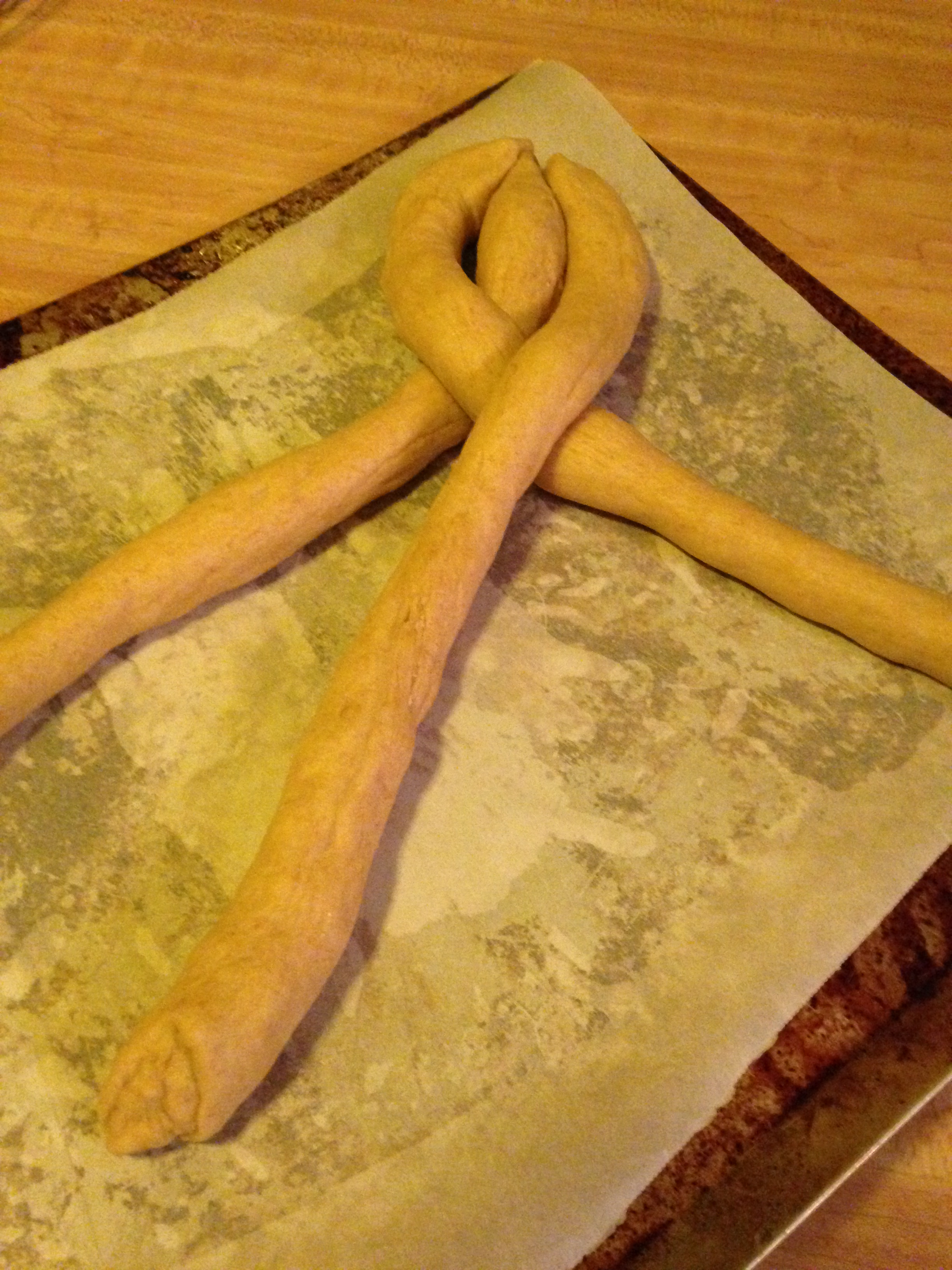
Now right goes over the center. Braid them loosely because they're going to need room to proof again.

Now right goes over the center. Braid them loosely because they’re going to need room to proof again.

And so on. When you get to the end, pinch the strands together and tuck them under a little bit.
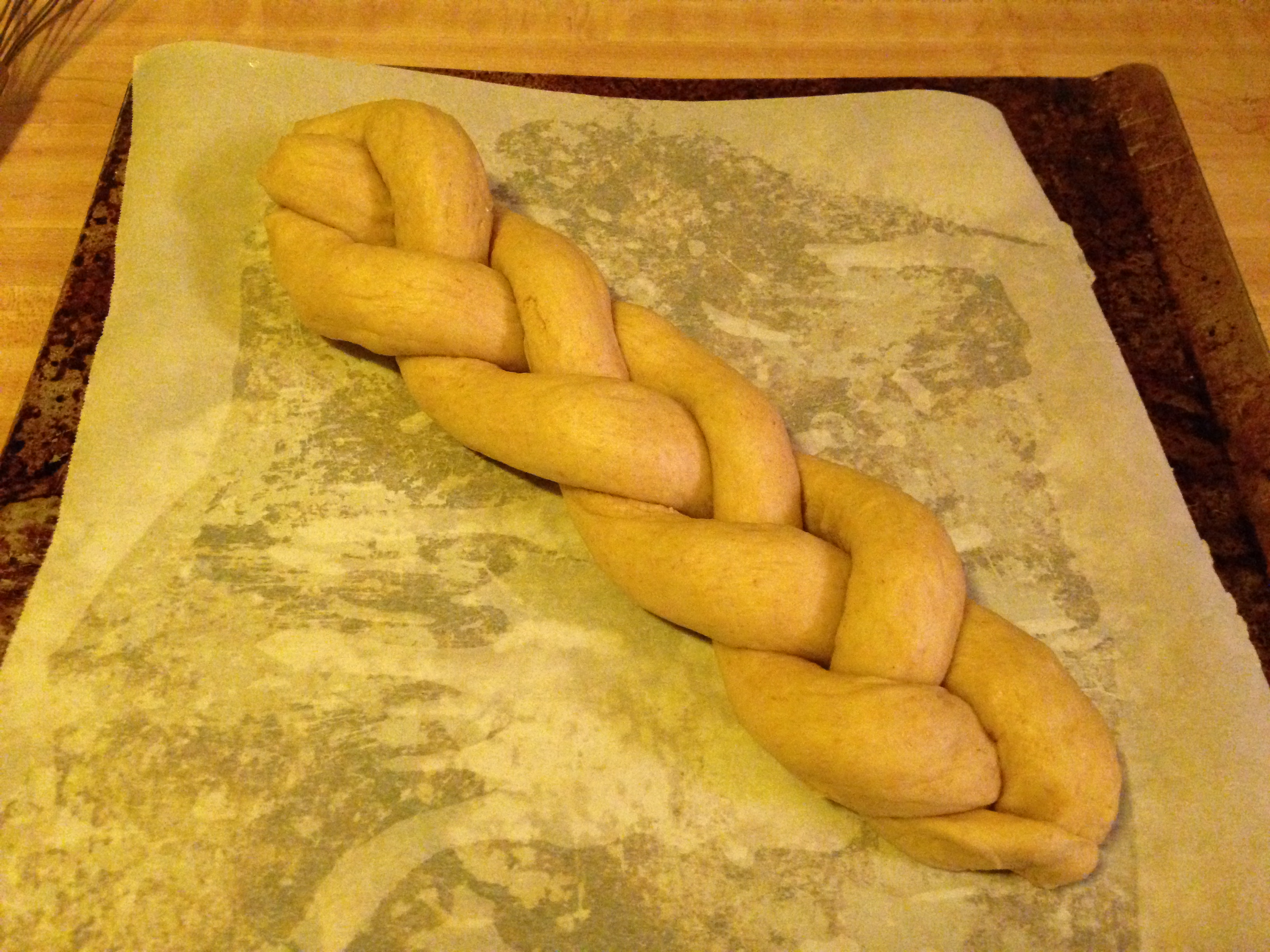
The strands are tight enough to stay together but loose enough to allow the dough room to expand.

The strands are tight enough to stay together but loose enough to allow the dough room to expand.

Because Mama divided her dough a little unevenly when she first separated it into 3, she had one strand that was a bit larger than the other two. So she lopped off a hunk of that dough and made a tiny little challah with it to decorate the bigger loaf. With or without the add-on, now’s the time to make the egg wash and gently brush it on all parts of the bread–really get it in between all those twists.
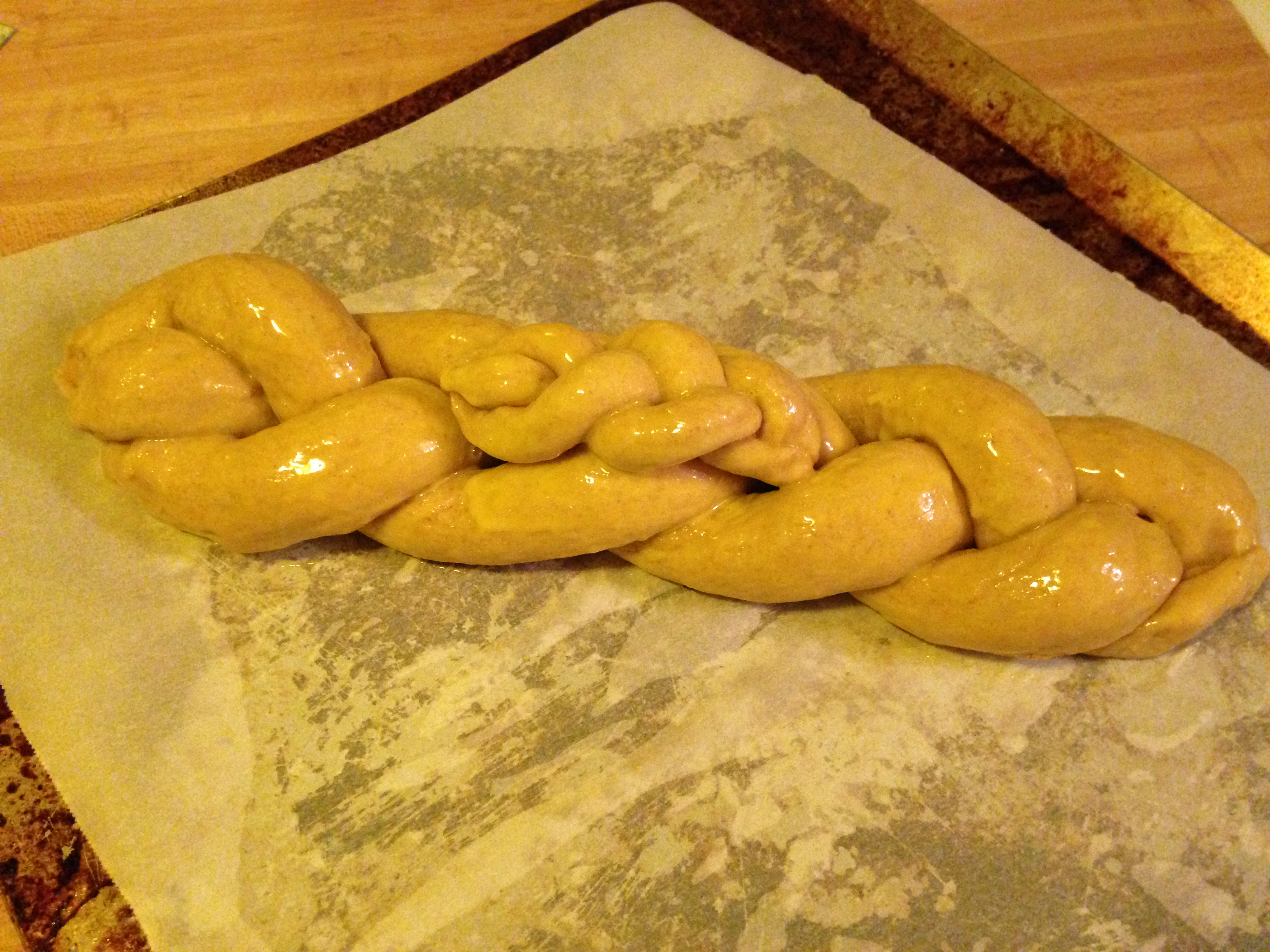
Egg wash the dough first, then adorn with any embellishments. Egg wash the add-ons, too.

Egg wash the dough first, then adorn with any embellishments. Egg wash the add-ons, too.

Allow it to proof once more, about an hour or so. Have the oven preheating to 350°F.
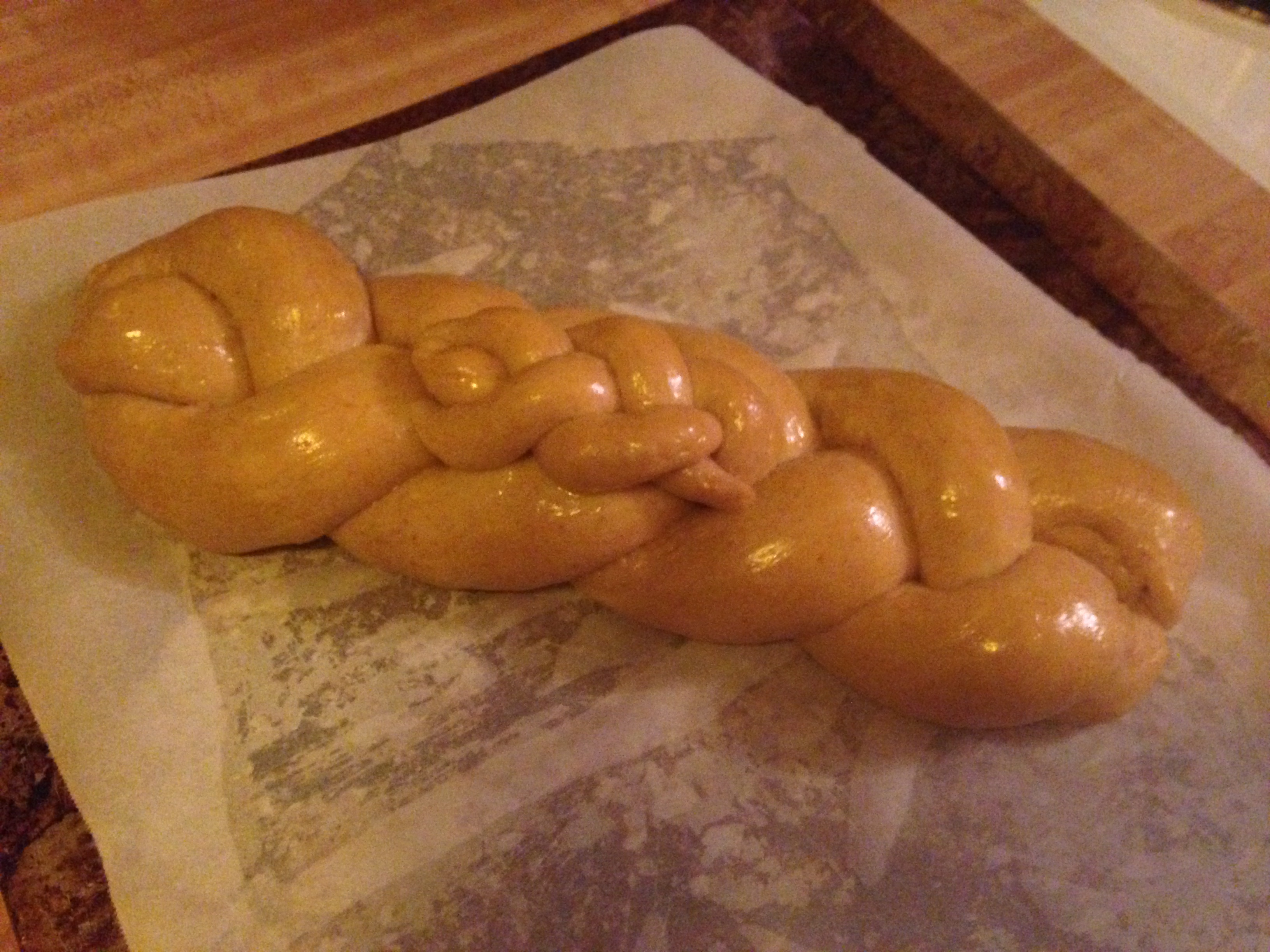
Good thing there was space between those braided strands.

Good thing there was space between those braided strands.

Egg wash again, if desired. Bake until it reaches an internal temp of 190°F or higher, 20-25 minutes. It should be beautiful and golden.
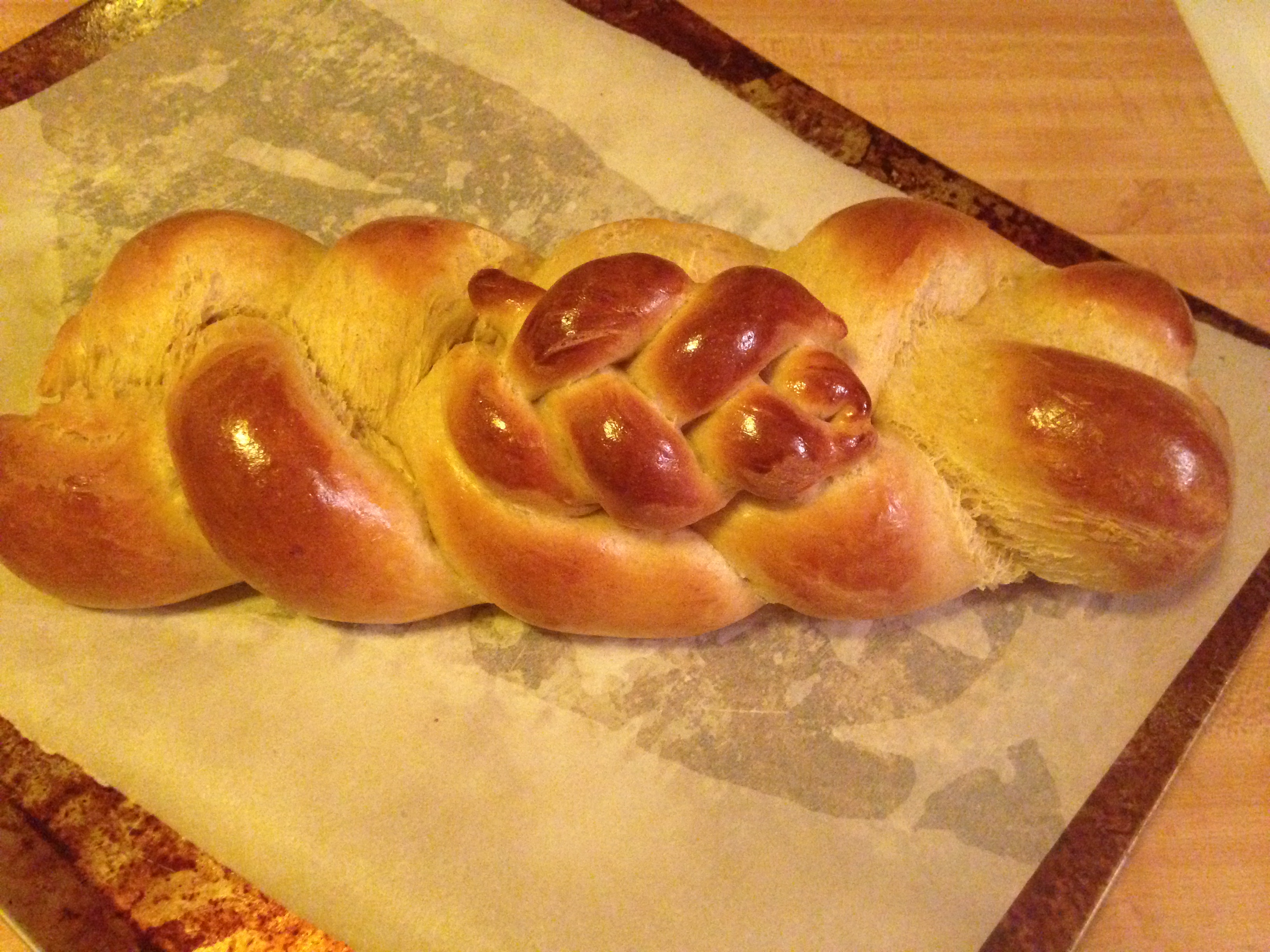
Golden on the top and light and fluffy on the inside.

Golden on the top and light and fluffy on the inside.

Try as hard as you can to let it cool before diving in. The house will smell wonderful in the meantime.

Makes 1 large loaf or 2 smaller loaves.

Leave a comment

Kimchi (no burial required)

Mama picked the last of the bok choy from her garden at work and thought it would be a good time to make a batch of kimchi. She had always been a little intimidated by it because it’s often so spicy, and traditional kimchi is buried right in the jar and left to basically rot (or rather, ferment). But then she took a class on how to make it from a nice lady named Robyn who was traveling the country promoting her book, Home Sweet Homegrown.

Kimchi is a spicy/sour Korean dish, made of vegetables (often cabbage). It’s eaten as both a side dish and a component of main dishes such as soups, scallion pancakes, fish tacos, or even eggs. Mama says that what makes it extra special is that, as a fermented food, it actually has certain health benefits, particularly in your belly. I don’t know about all that, but Mama seems to know what she’s talking about sometimes, so I’m going to go with her on this one. But you’ll forgive me for not reporting on my like or dislike of it because I don’t plan on getting anywhere near the stuff. No, thank you! (Mama thought I would eat the kimchi pancakes, but I would not.)

Love, Jude

P.S., Happy Christmas!

Kimchi

1 head bok choy, chopped into 1” pieces
1 daikon radish (about 4 ounces), sliced [Mama used watermelon radishes because that’s what was in the garden]
Kosher salt
3 cloves garlic
One 2-inch knob ginger, peeled
1/2 cup Korean red pepper powder (kochukaru/gochugaru*)
2 tablespoons sugar

Behold the beautiful bok choy:

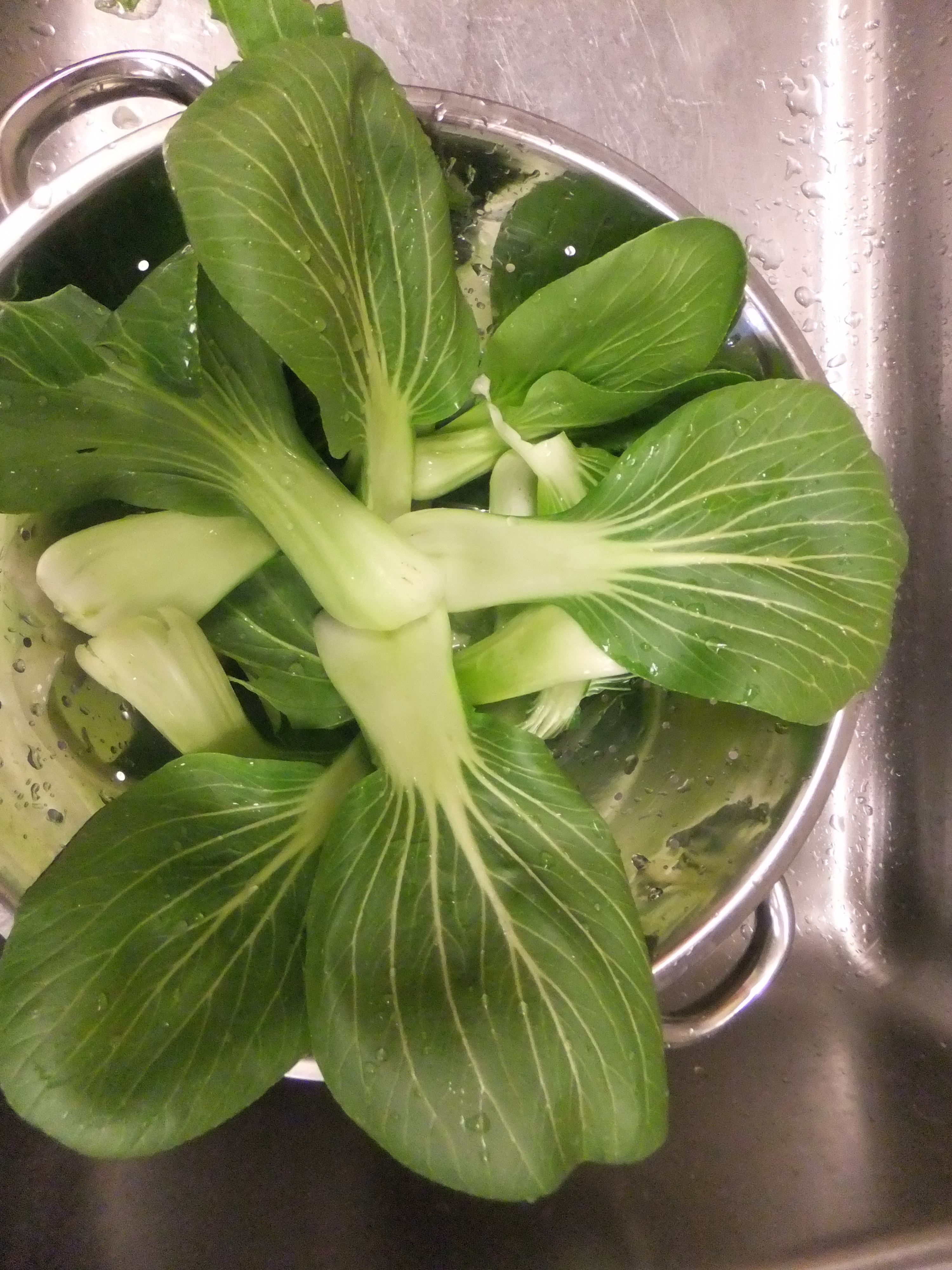
Be sure to rinse the bok choy really well to remove all the dirt.

Be sure to rinse the bok choy really well to remove all the dirt.

Place bok choy leaves and daikon in a large bowl and sprinkle with 1–2 tablespoons kosher salt. Toss to combine, cover, then let sit at room temperature until cabbage is wilted, at least 1 hour and up to 12. It should release about 1/4 to 1/2 cup liquid.

The cabbage and radish lie in their little blanket of salt.

The bok choy and watermelon radish lie in their little blanket of salt. Aren’t they pretty?

Meanwhile, combine the garlic, ginger, and red pepper powder in the bowl of a food processor or blender. Process until a rough paste is formed, about 30 seconds total, scraping down sides as necessary.

Once the bok choy is wilted, add the chili mixture and turn to coat.

Wear gloves or use a spoon to mix in the spice.

Wear gloves or use a spoon to mix in the spice.

Add 1 cup purified water to the mixture. Taste the liquid and add more salt as necessary (it should have the saltiness of sea water).

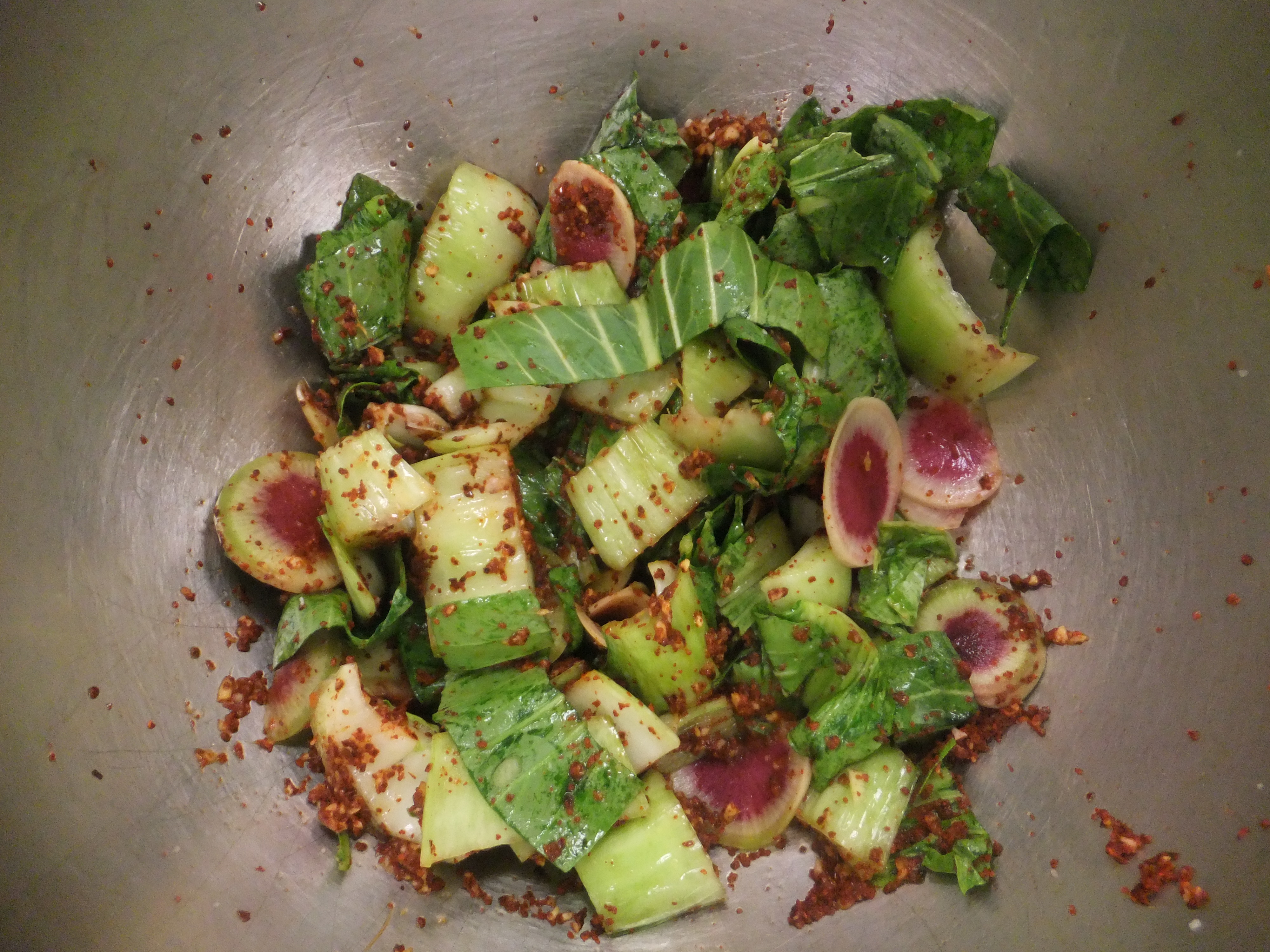
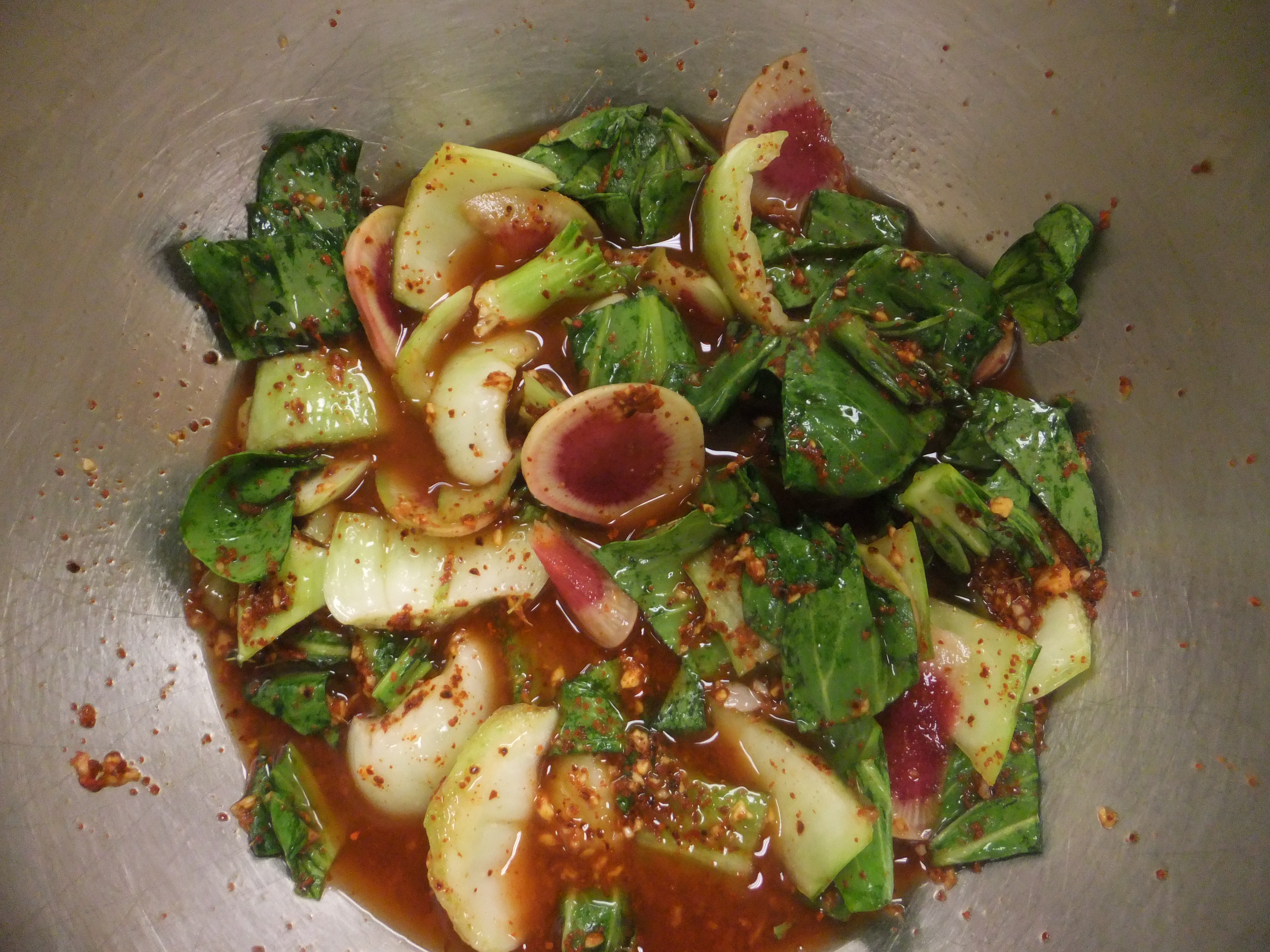
This is what kimchi looks like before it goes into the jar.

This is what kimchi looks like before it goes into the jar.

Pack kimchi into a quart-size sterilized mason jar, pressing down firmly to pack tightly and using a wooden spoon to release any air bubbles trapped in the bottom of the jar. This is important as your kimchi will be releasing its own amount of air bubbles as it ferments, so try to get as much excess air out as possible beforehand. Cover the kimchi entirely with its liquid, as the liquid is what protects the vegetables from succumbing to bad bacteria.

Jarred and ready to ferment.

Jarred and ready to ferment.

If there’s not enough liquid to completely cover the veggies, lay a clean leaf of lettuce or cabbage on top of them to help push them down.

Seal the jars tightly and allow them to sit at cool room temperature for 24 hours, then transfer to the refrigerator. Allow to ferment at least 1 week before eating. Kimchi will last for up to 1 month after opening. Alternatively, place directly in fridge after packing and taste daily starting after the first week until it’s as sour as you like it. (At this point, you can drain excess brine from your kimchi. A little liquid is good, but no one wants soggy kimchi.)

*Note: Korean red pepper powder is easily found in Asian markets. It comes in a bag larger than you think you’ll ever use, but it doesn’t cost a lot. Any errors in this recipe are Mama’s and not the nice lady’s who gave the workshop.


Leave a comment

“They look like sea shells!”

I helped Mama make stuffed shells. They’re really easy. Basically, I took a cooked pasta shell and, before handing it to her to stuff, I took a bite out of it.

Usually Mama makes a double batch of shells, bakes ones, and freezes the other in a disposable pan. But then you have a large “brick” (so she says) taking up freezer space, which’ll take longer to bake, and you’re left with acidic tomato sauce sitting in aluminum—and they don’t like each other very much.

Tonight, Mama tried a new approach: freeze the stuffed shells like she would berries. That is, spread them out on a baking sheet, freeze them until they’re solid, then bag them together in dinner-size groups. Then, when it’s time to use them, just take out a bag and arrange them in the baking pan with fresh sauce for dinner in no time at all.

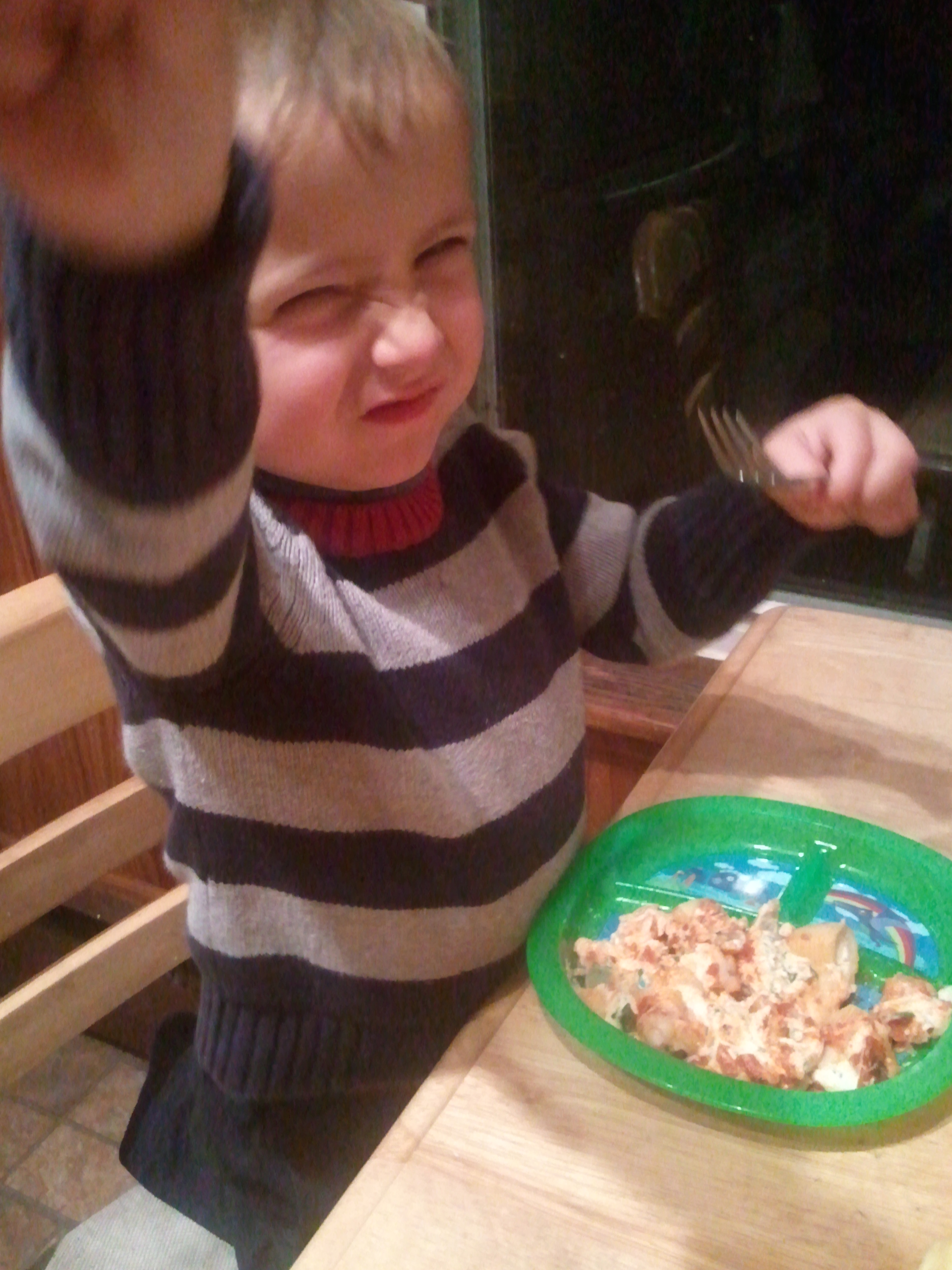
A nice side of veggies made this a meal fit for a kid like me.

A nice side of veggies made its way on the plate shortly after this was taken.

I like the shells very much. They’re cheesy and noodle-y, and they have lots of good sauce. And they really do look like sea shells.

Love, Jude

Stuffed Shells
(this makes a double batch, or enough for a few freezer-size portions)

2 boxes (12 oz each) jumbo shells
2 large containers ricotta cheese (we used part-skim)
3 cups grated Parmesan cheese
8 eggs
Chopped fresh herbs, if desired (we used parsley, chives, and oregano from the garden)
Salt and pepper
Chili flakes, if desired for heat
1 quart tomato sauce (we used homemade, but make this easy on yourself and used jarred if desired)
1 cup shredded mozzarella cheese (or more, as desired)

Preheat oven to 350°F.

In salted boiling water, par-cook the shells (you’ll probably need to do this in 2 batches). This means to cook them just until they become pliable, 5 or 6 minutes. Drain, quickly rinse to help cool them down, and toss with a little bit of olive oil. Set aside on a baking sheet.

Meanwhile, in a large bowl, mix together the ricotta, Parmesan, eggs, herbs, salt and pepper, and chili flakes if using. When the shells have cooled enough to handle, spoon the filling into them. Fill them as much or as little as you like. They’re your shells. Mama stuffs them enough to keep them open without too much filling piling out. (She used a large table spoon.)

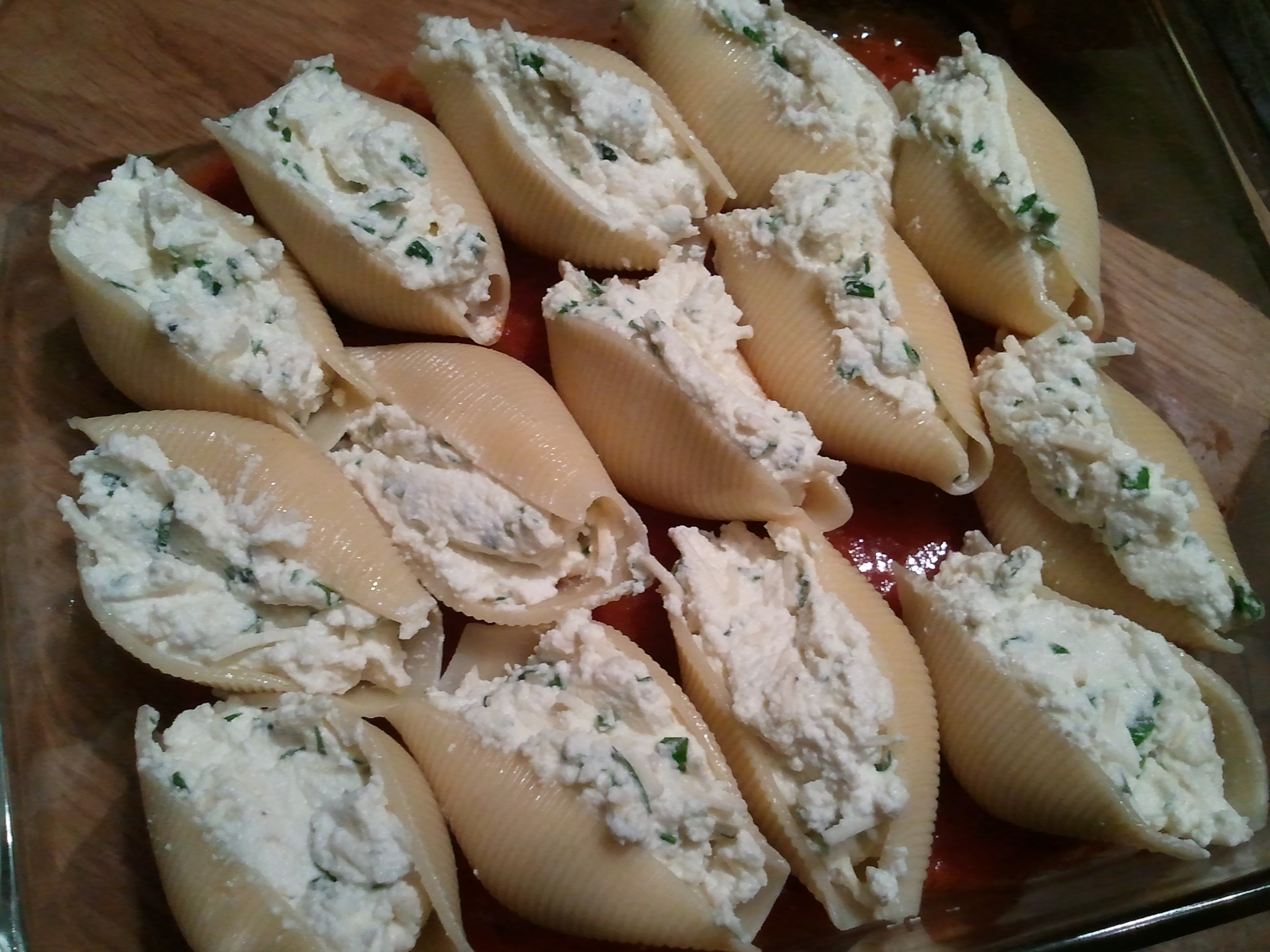
Spread 1 cup tomato sauce around the bottom of an 8 x 8” baking dish. Arrange 12 stuffed shells in it. (It’s okay that they touch.)

If you can fit a few more in there, go for it.

If you can fit a few more in there, go for it.

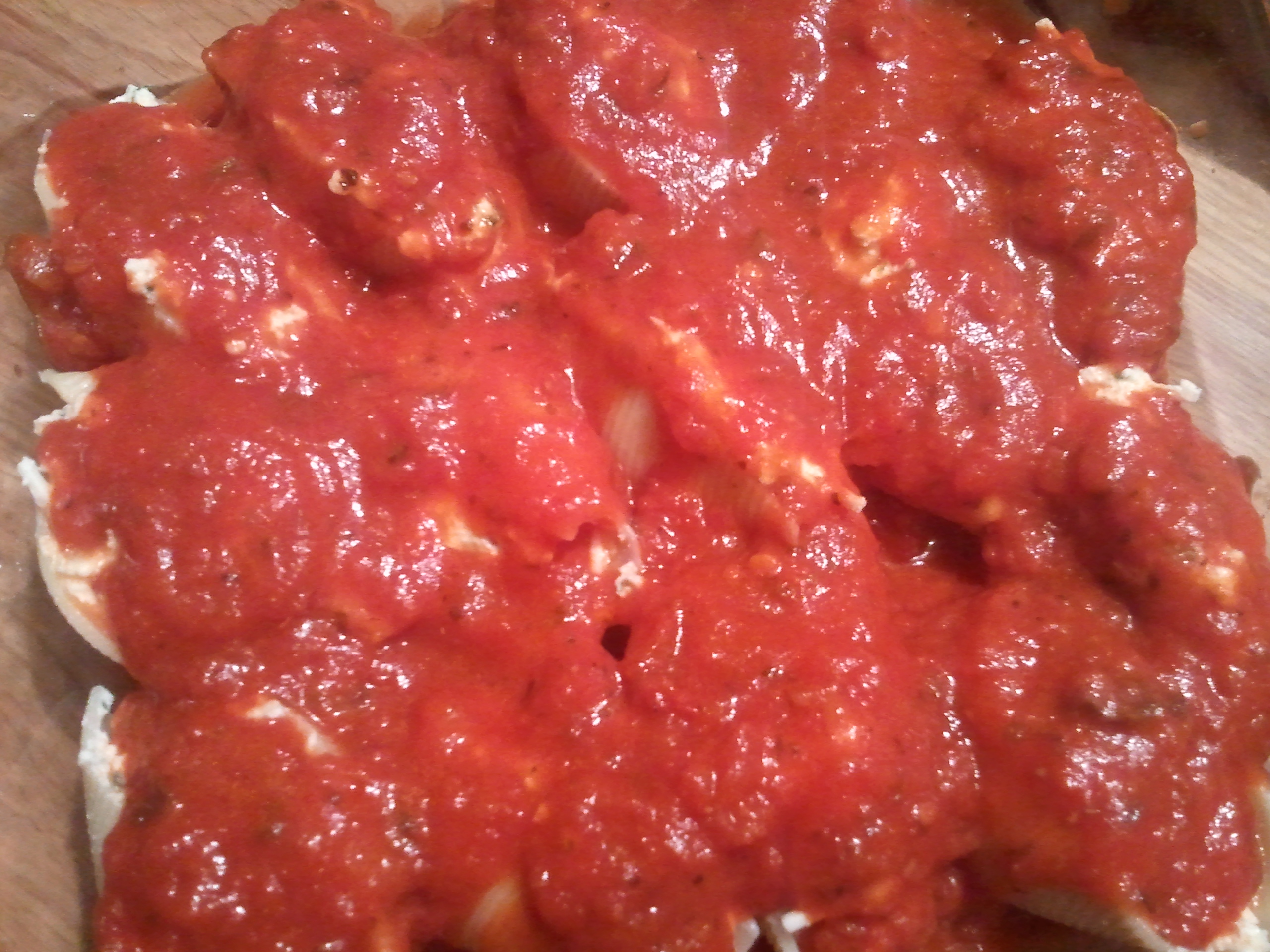
Pour the remaining sauce over the shells, making sure all the shells are completely covered, as they’ll need the moisture to finish cooking in the oven.

Don't be shy about the sauce.

Don’t be shy about the sauce.

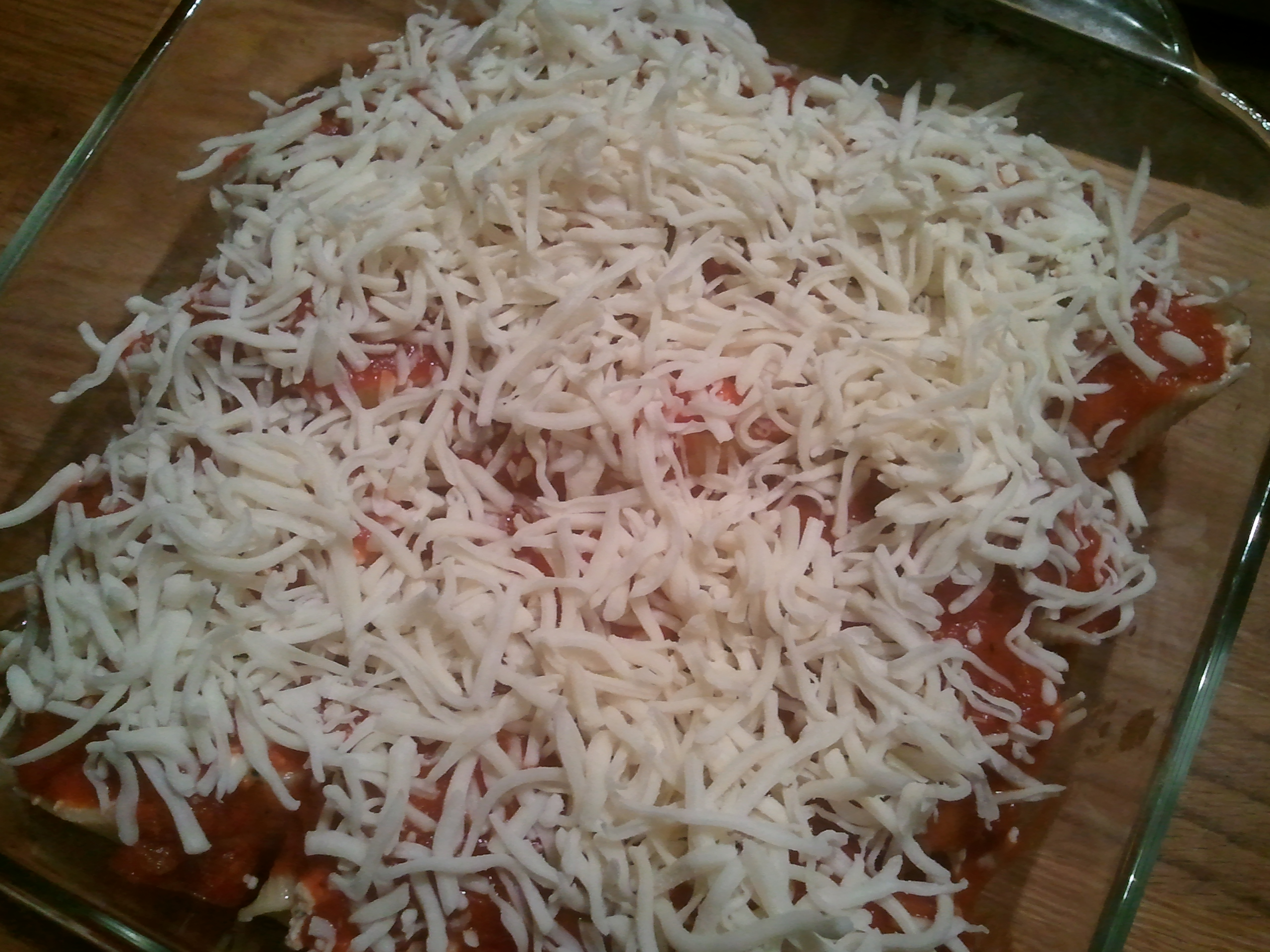
Sprinkle with mozzarella to cover.

Ready to be baked.

Ready to be baked.

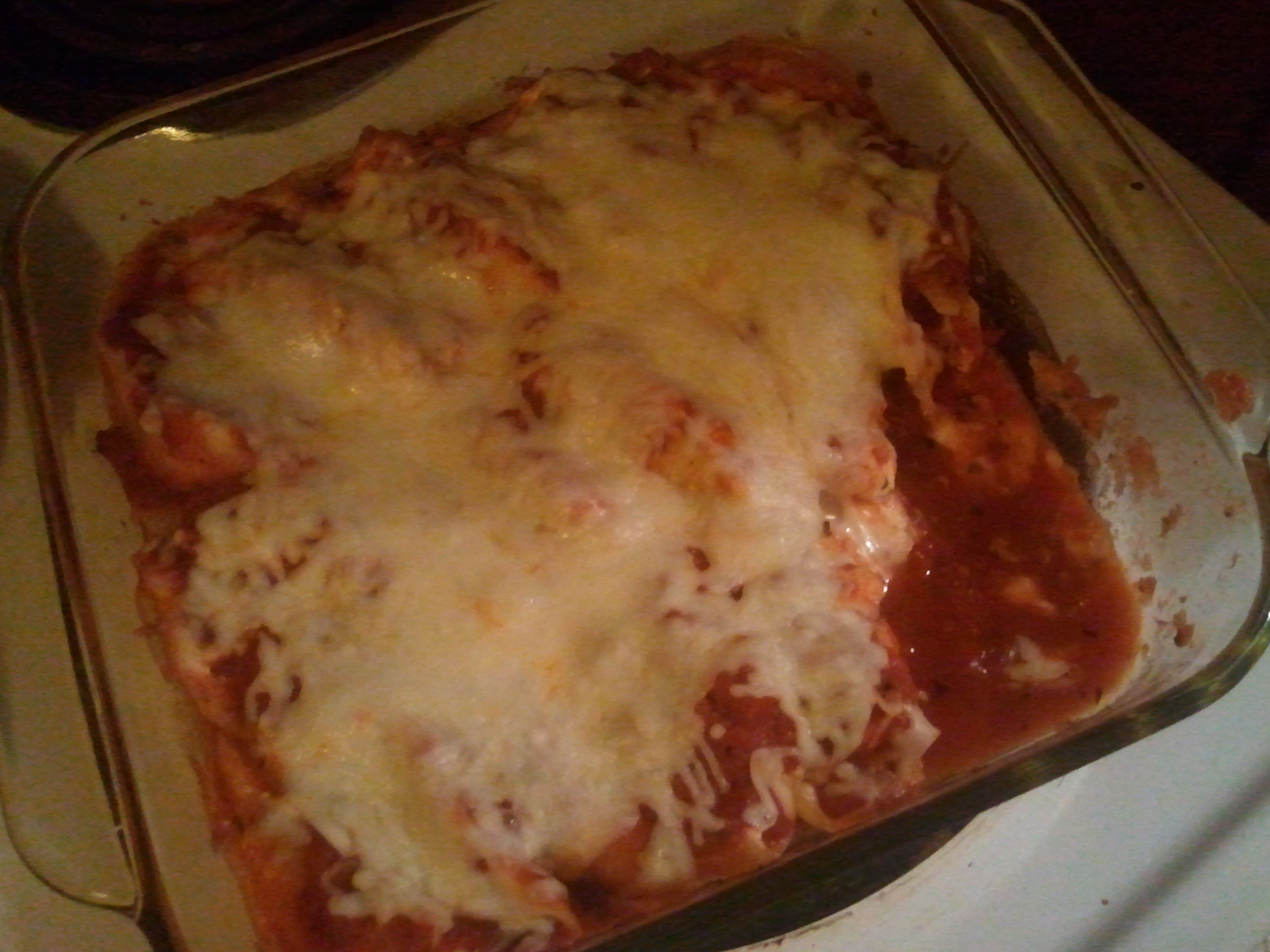
Bake, uncovered, for about 30 minutes. The mozzarella should be bubbling and golden, and the center should be hot. Let sit for 10 minutes to allow the cheeses to congeal.

Mama took out a couple right away for me so they could cool. It's a little runny in that corner as a result. Resist the urge to dig in right away!

Mama took out a few for me so they could cool. It’s a little runny in that corner as a result. Resist the urge to dig in right away!

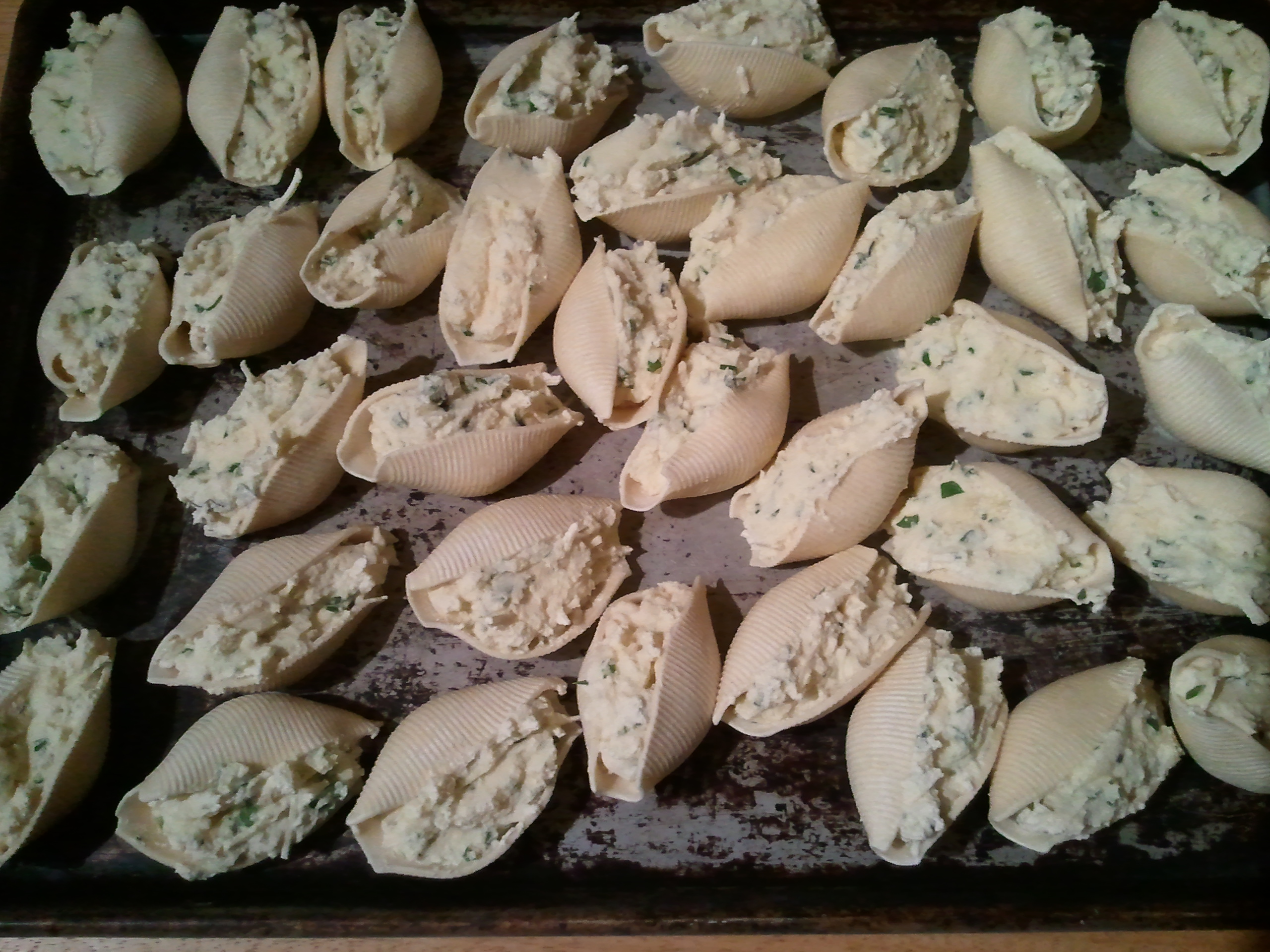
To freeze the remainder of the stuffed shells, arrange them on the lightly oiled baking sheet. Try to keep them from touching (but it’s okay if a couple do). Set in the freezer until frozen solid, at least 1 hour.

They really do look like sea shells.

They really do look like sea shells.

Remove from the freezer and bag in desired portions. Mama did baker’s dozens because that’s what fit in the bags; she got 4 bags (+ dinner). May also make a second assembled batch, with sauce, and freeze the whole thing. It can go right into the oven, but you should decrease the oven temp to 325°F, and bake until the center is hot.

Serves 3–4

Note: Feel free to bake off more than 12 in a larger size baking dish. You’ll need to increase the amount of sauce and mozzarella accordingly. If using jarred tomato sauce, consider livening it up by sautéing half an onion in olive oil until soft and golden; then add a clove or two of minced garlic a minute before adding the sauce to heat through.


Leave a comment

It’s applesauce day!

It’s cold outside today, but it’s warm and smelling of cinnamon and cloves inside. We made 12 pints of applesauce, and we barely made a dent in our apples!

Mama decided it was go much faster if we kept the peels on. They blend right up in the immersion blender.

Mama decided it would go much faster if we kept the peels on. They blend right up with the immersion blender.

Papa showed me a new way to eat applesauce: as something to dip my pork chop into. Yes, indeed!

Love, Jude


Leave a comment

A Gratin so Easy You Can Do It In Your Sleep

Mama didn’t feel like cooking dinner after a long weekend of chasing me around (don’t forget the 60 pounds of apples we picked). And she didn’t want to go to the store, either. She thought about what we had on hand, and voilà: a gratin was born.

Mama explained that gratins can be made out of pretty much any hardy vegetable: turnips, potatoes, fennel, squash, beets, even carrots. What makes them into a gratin is that they are layered with cream (and cheese, if desired) and then—this is the crucial step—topped with breadcrumbs, cheese, and butter to make it crunchy. Think of a gratin as savory crème brûlée: crispy on the top, creamy on the bottom. Each bite should have a bit of both, which is why gratin dishes are often shallow and oval, to provide more surface area for that wonderful crunch.

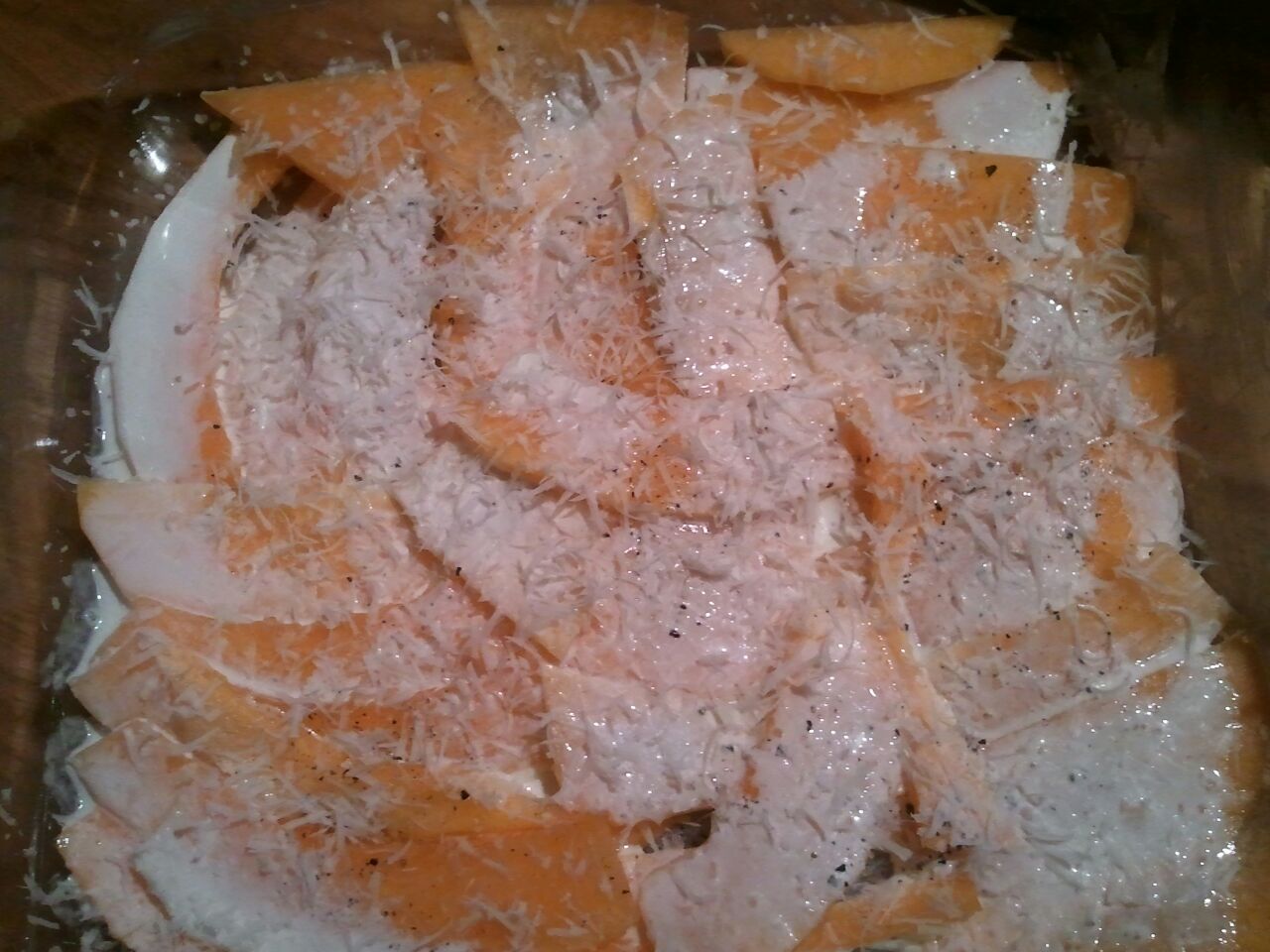
We’ve had a giant butternut squash sitting around for a while. Every couple of days, Mama hacks a hunk off its neck, peels it, and proceeds with dinner. For the gratin, she sliced it thinly (about ¼” thick) on the mandolin because the thinner the veggies, the quicker they’ll soften in the oven. We also had a couple organic russet potatoes on hand, which Mama also peeled and ran over the mandolin. (She said a food processor’s slicing blade would likely do a fine job, as well as a good ol’ sharp knife.)

As we don’t have a gratin dish, Mama opted for a regular 8” x 8” baking dish. (I promised I wouldn’t tell anyone.) She layered the squash, overlapping it slightly, and then sprinkled it with salt, pepper, and a few raspy shavings of Pecorino (because we had more of that than we did Parmesan). She drizzled it with heavy cream that was left over from a dish Papa made earlier in the week. She could’ve used her half-and-half or even my milk, but if you’re going for creamy, why not go whole hog?

We were starting to get down to the bulb portion of the squash, so there are a few funny pieces in there. It doesn't matter, so long as there's a full layer.

We were starting to get down to the bulb portion of the squash, so there are a few funny pieces in there. It doesn’t matter, so long as there’s a full layer.

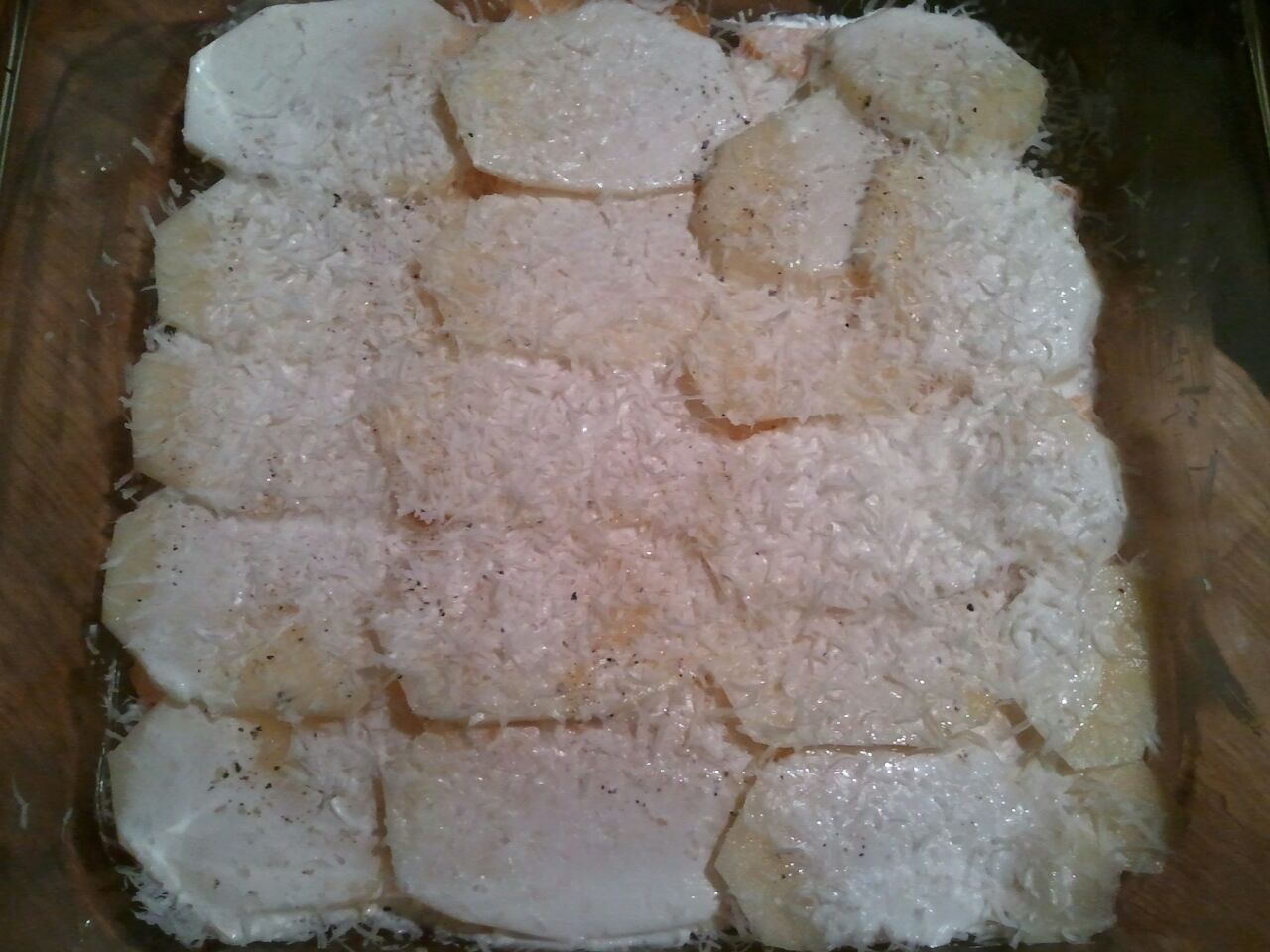
She did the same thing with the potatoes, then repeated each layer once more.

Little potatoes all nice in a row.

Little potatoes all nice in a row.

She used 2 potatoes and maybe a pound of squash (she’s estimating). The cream was whatever was left in the pint—about a cup, maybe a splash more. And the cheese was as much as we liked (but certainly enough to give a good covering to the veggies). Mama said she could have put some chopped sage in there, or steeped it in the cream, but she wasn’t feeling ambitious enough to walk outside to get some. (Sundays are like that sometimes.)

Jude on Food: If you run out of one vegetable, substitute something else. No one will notice that the layers aren’t exactly the same because they’ll be too busy eating. That’s why this dinner is so easy!

Before shaving cheese on the top layer, Mama gently pressed everything down. She said that making sure the layers are flat will help with the baking, and it will also help distribute the cream. She ended up adding a bit more cream because she said you want to be sure the top-most pieces are in moisture (though not swimming in it).

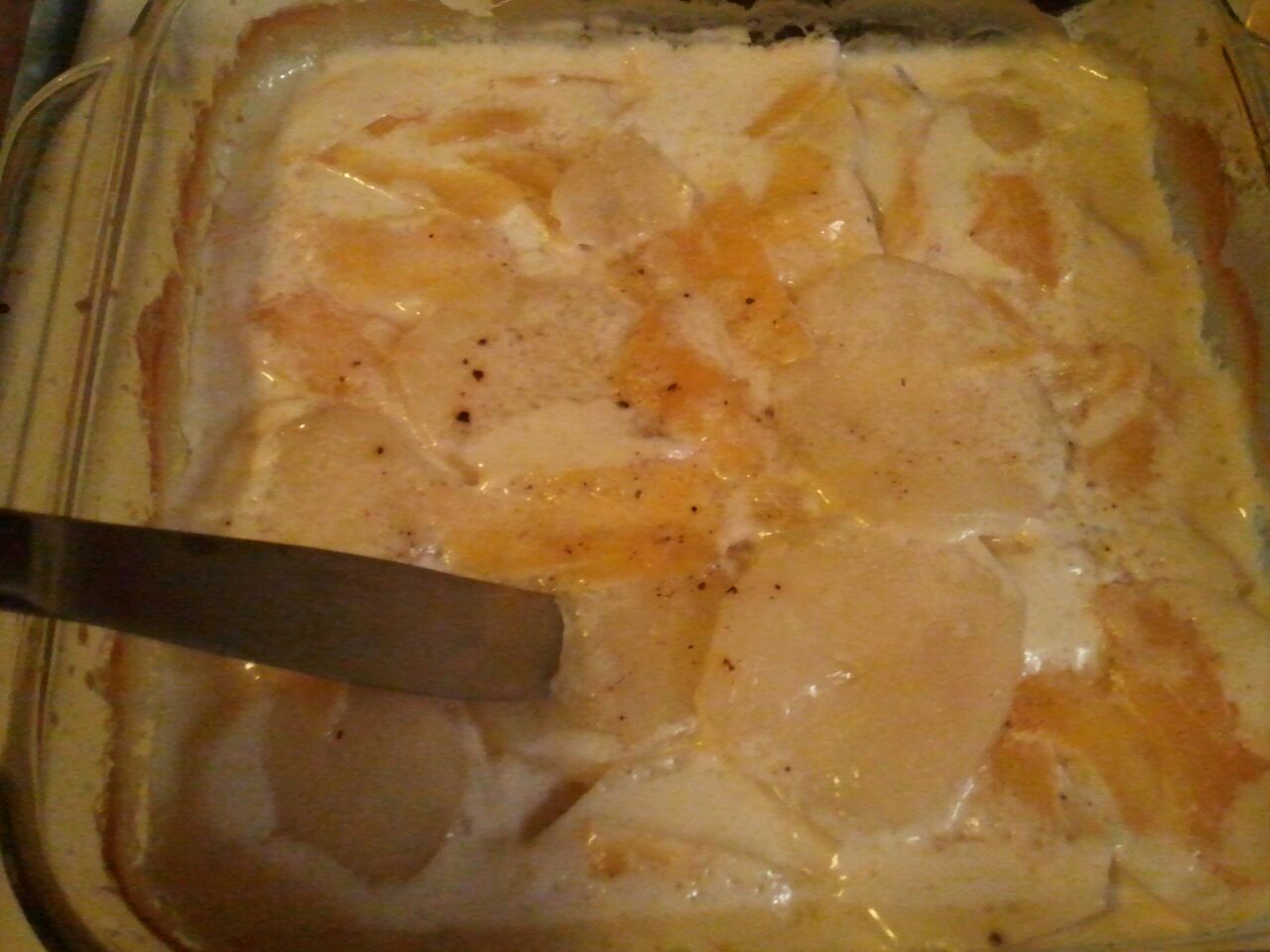
Then she shaved more cheese on top, covered it with foil, and put it in the oven, where it sat for a good hour. Remember what I said about gratins being creamy? Well, keep it in the oven until the vegetables are so soft, you could cut even the center ones with a butter knife or spoon. The cream will be bubbling too (and very hot!).

This butter knife went into the veggies as if they were...well, butter.

This butter knife went into the veggies as if they were…well, butter.

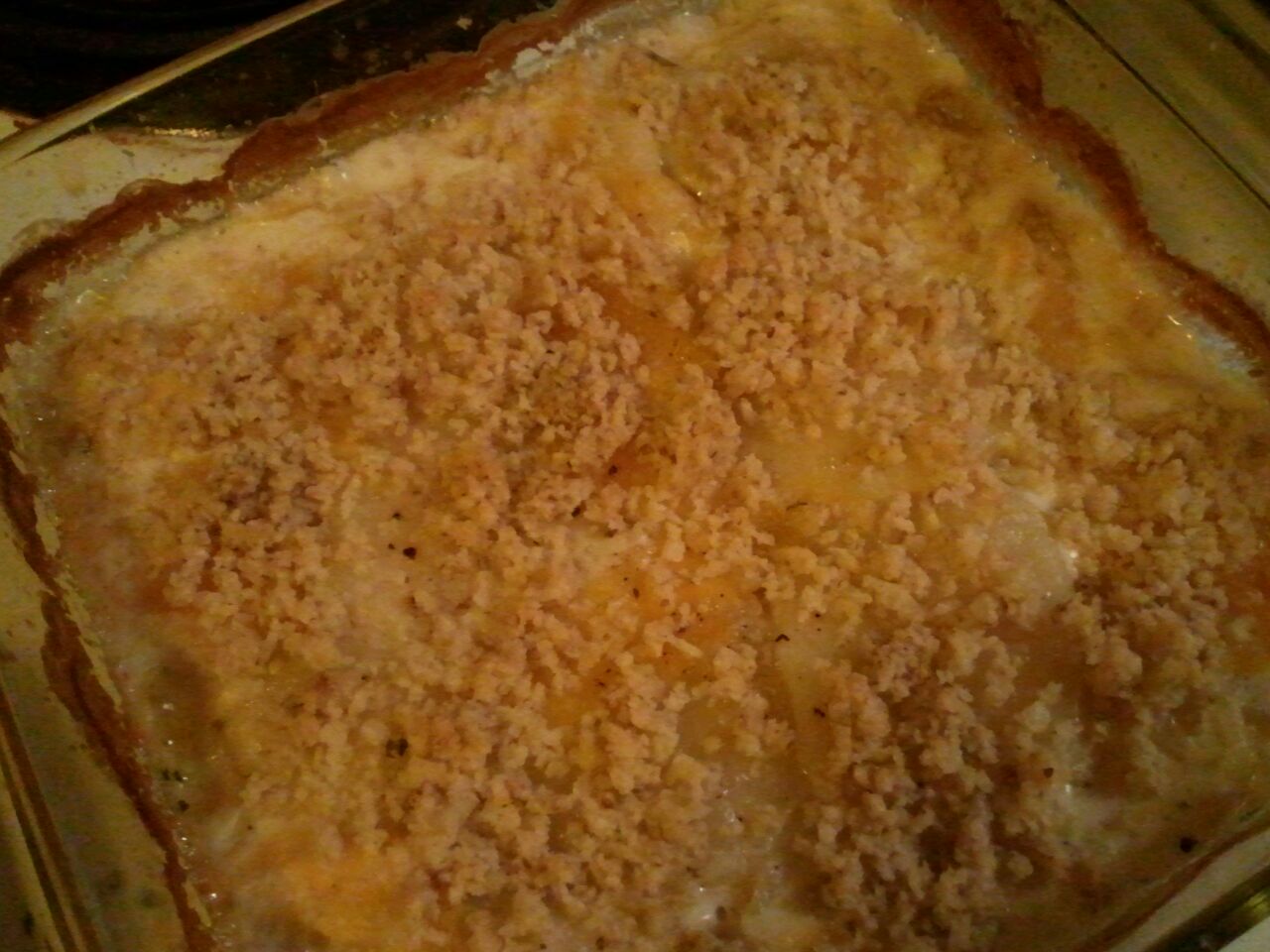
Now comes the pièce de résistance. In a small bowl, Mama combined a couple spoonfuls of panko breadcrumbs (because that’s what had; we’ve used them before) with an equal amount of finely chopped nuts that she pulled from the freezer. She thought they might have been hazelnuts, but she said pecans or walnuts would have been equally good, so she wasn’t too concerned about it. She mixed in a couple pats of melted butter, sprinkled this on top of the gratin, then put it back in the oven until it turned golden, about 10 minutes.

Golden and delicious!

Golden and delicious!

To be honest, I really did find this gratin to be delicious. It was silky and flavorful, and I liked the added texture. It reminded me of my morning granola. But I was in a mood, so I decided I wouldn’t eat any until I was promised a ghost story with firefighters.

Love, Jude

Winter Squash-Potato Gratin

1 pound peeled and seeded butternut squash, thinly sliced
2 russet potatoes, peeled and thinly sliced (about 2 pounds)
1 cup heavy cream, half-and-half, or milk
1/3 cup grated or shredded Pecorino or Parmesan cheese (Mama used a rasp, or Microplane)
Salt & pepper
2–3 Tbsp breadcrumbs or panko
2–3 Tbsp finely chopped nuts (hazelnuts, walnuts, pecans)
1–2 Tbsp butter, melted

Preheat the oven to 350°F.

Arrange the sliced squash on the bottom of a 2-quart glass baking dish (square, oval, or round), slightly overlapping. Season with salt and pepper, then sprinkle  cheese over. Drizzle heavy cream so that most of the squash slices have some moisture on them.

Repeat the layer using the potatoes. Then repeat each layer one more time. (If you don’t want your hands to be all cheesy, don’t add the cheese until after you do the next step.) Press down on the top layer to ensure the slices are flat and are touching cream. Add more cream if necessary. Sprinkle with a final bit of cheese.

Cover with foil and bake until the innermost vegetables are perfectly soft, 50–60 minutes. Meanwhile, combine the breadcrumbs, nuts, and melted butter. Sprinkle on top of the vegetables, then return to the oven, uncovered, until golden, about 10 minutes.

Allow to rest 15 minutes or so to allow the dish to come together a bit.

Note: You may certainly start with the potatoes and end with the squash. If you don’t want to add nuts to the topping, replace them with more cheese! Finally, the amounts of everything are approximate. Use enough veggies to cover 1 layer and enough cheese & cream to cover that. Finally, you can make this the night before, keep it in the fridge, then bake it the next day.


4 Comments

Let there be apples

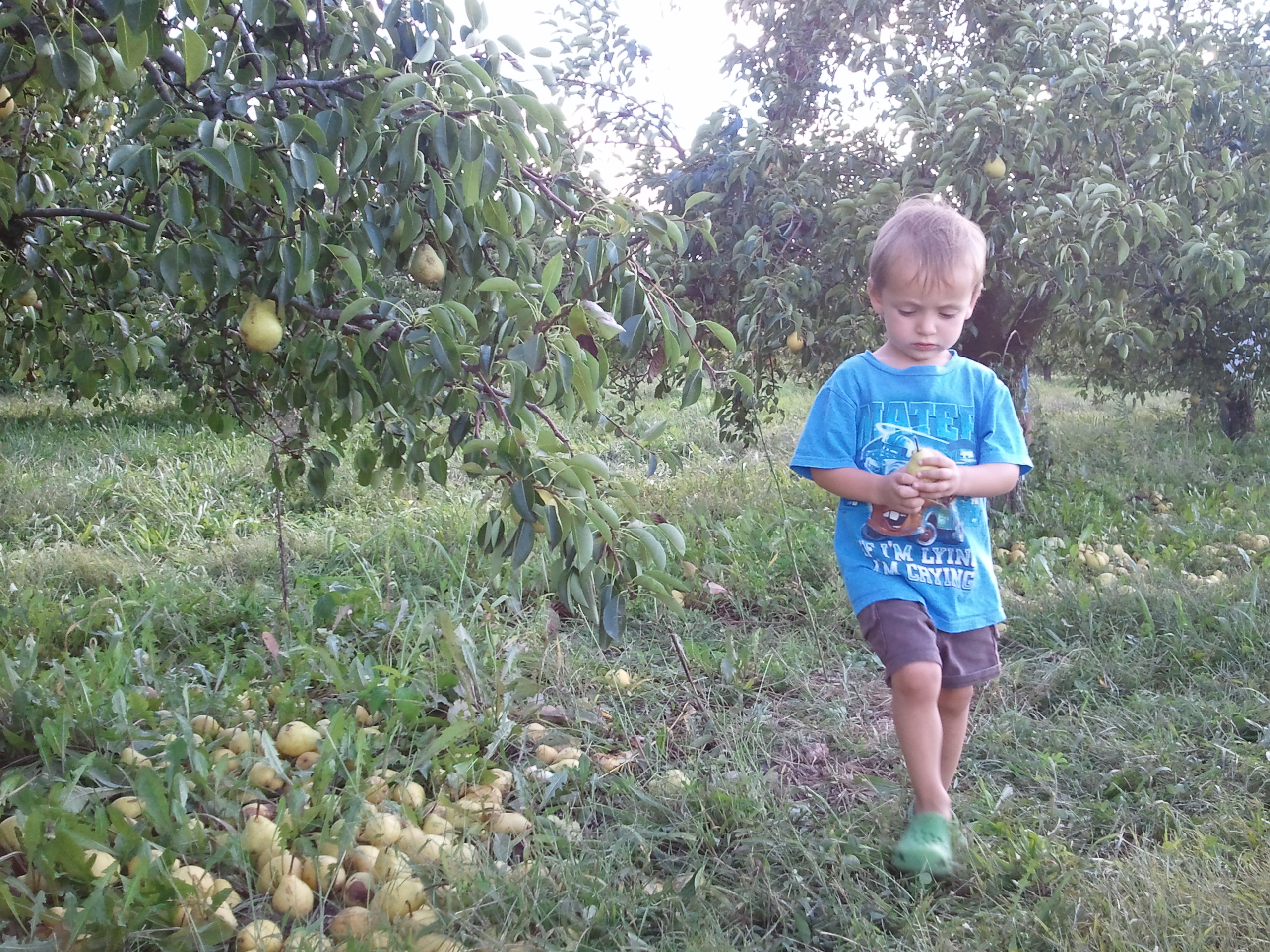
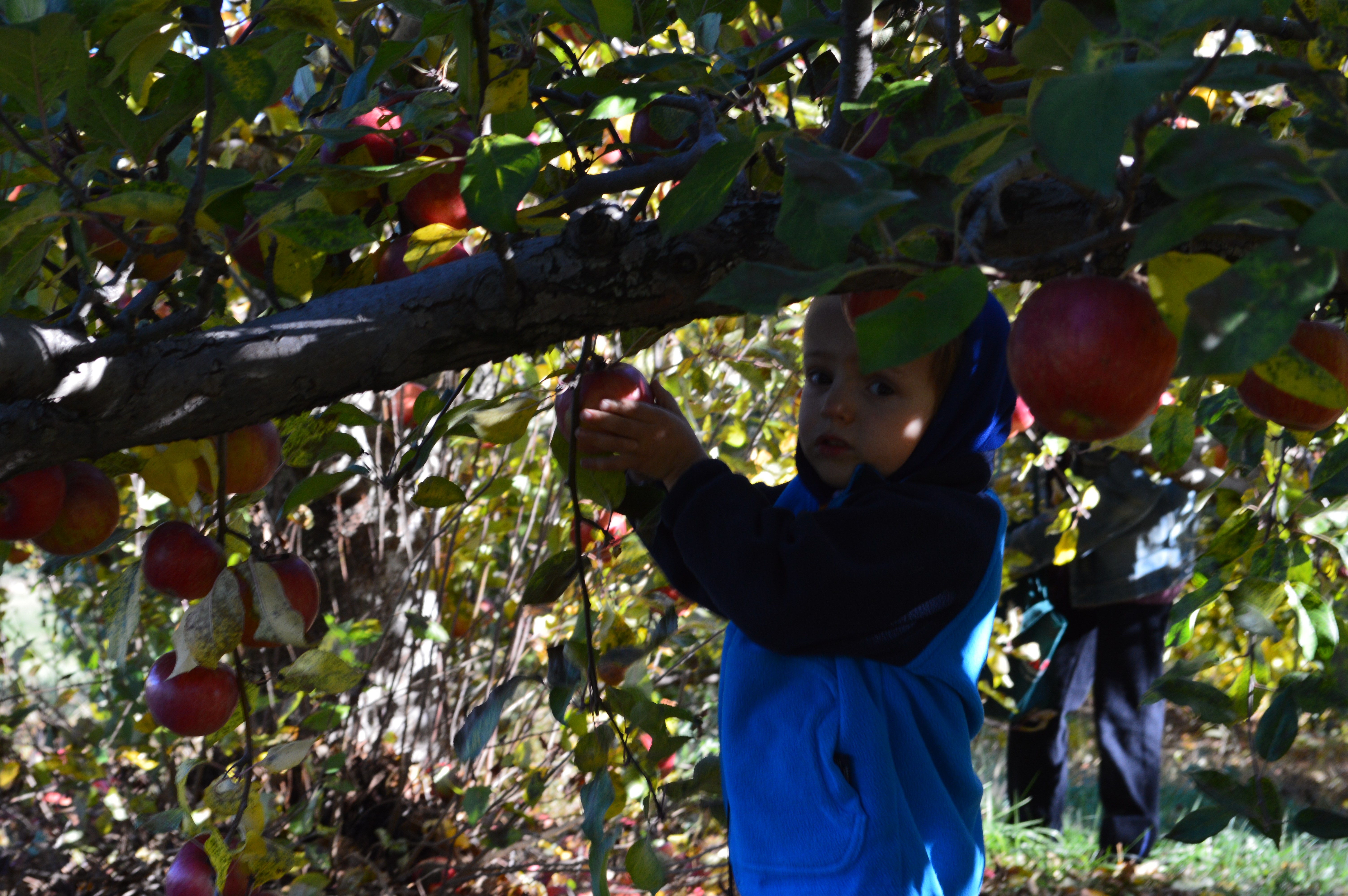
With the fall comes apples and apple picking. Being that it’s already past Halloween, we’ve gone a few times. We even picked pears in early September.

Imagine how much cider you could make with all those pears on the ground?

Imagine how much cider you could make with all those pears on the ground.

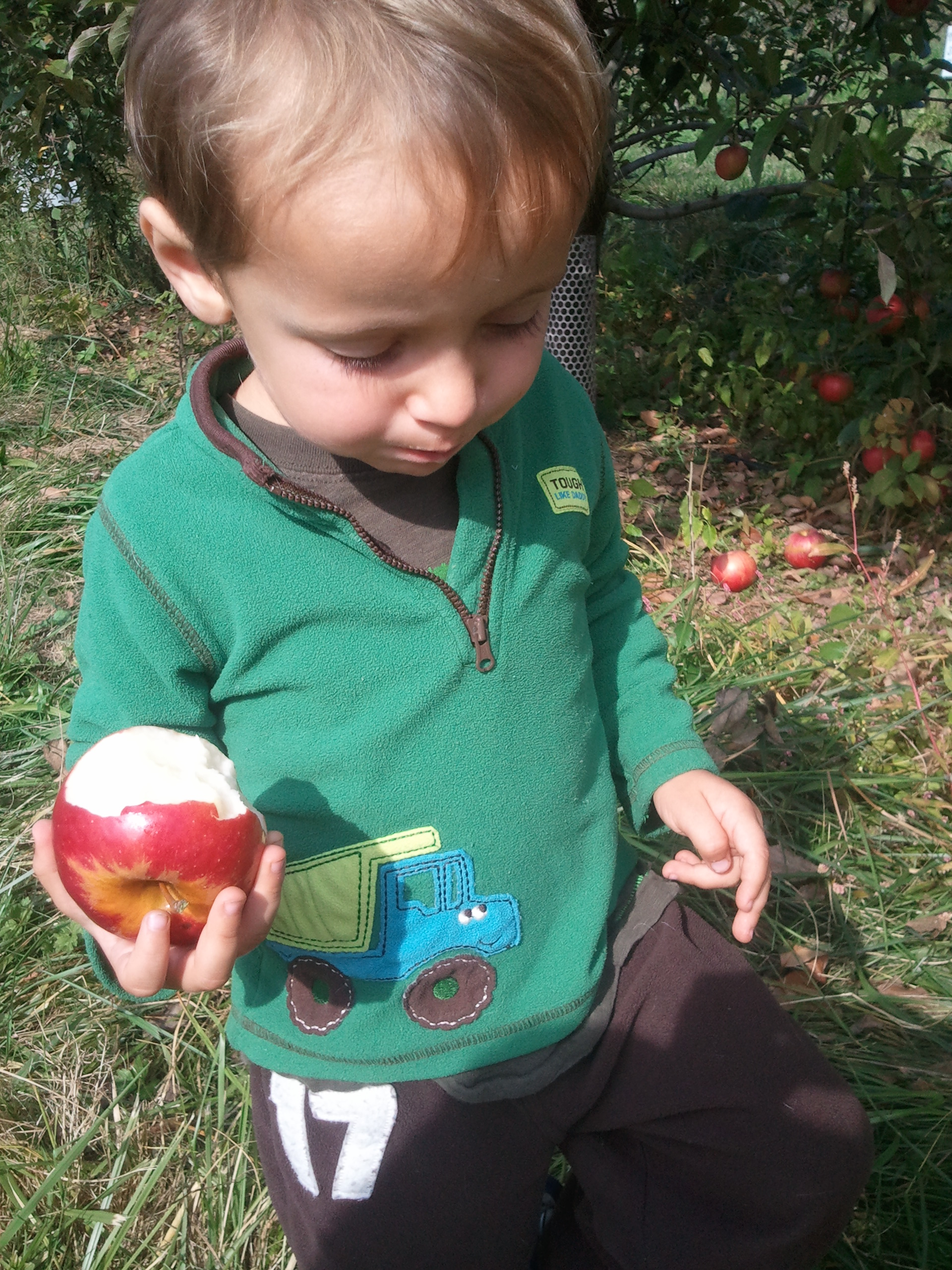
By now this apple picking thing is old hat for me. We pick the apples, and then we eat them. I sure do love apples.

I'm performing quality control on this apple.

I’m performing quality control on this apple. The brown on it means it’s russeted.

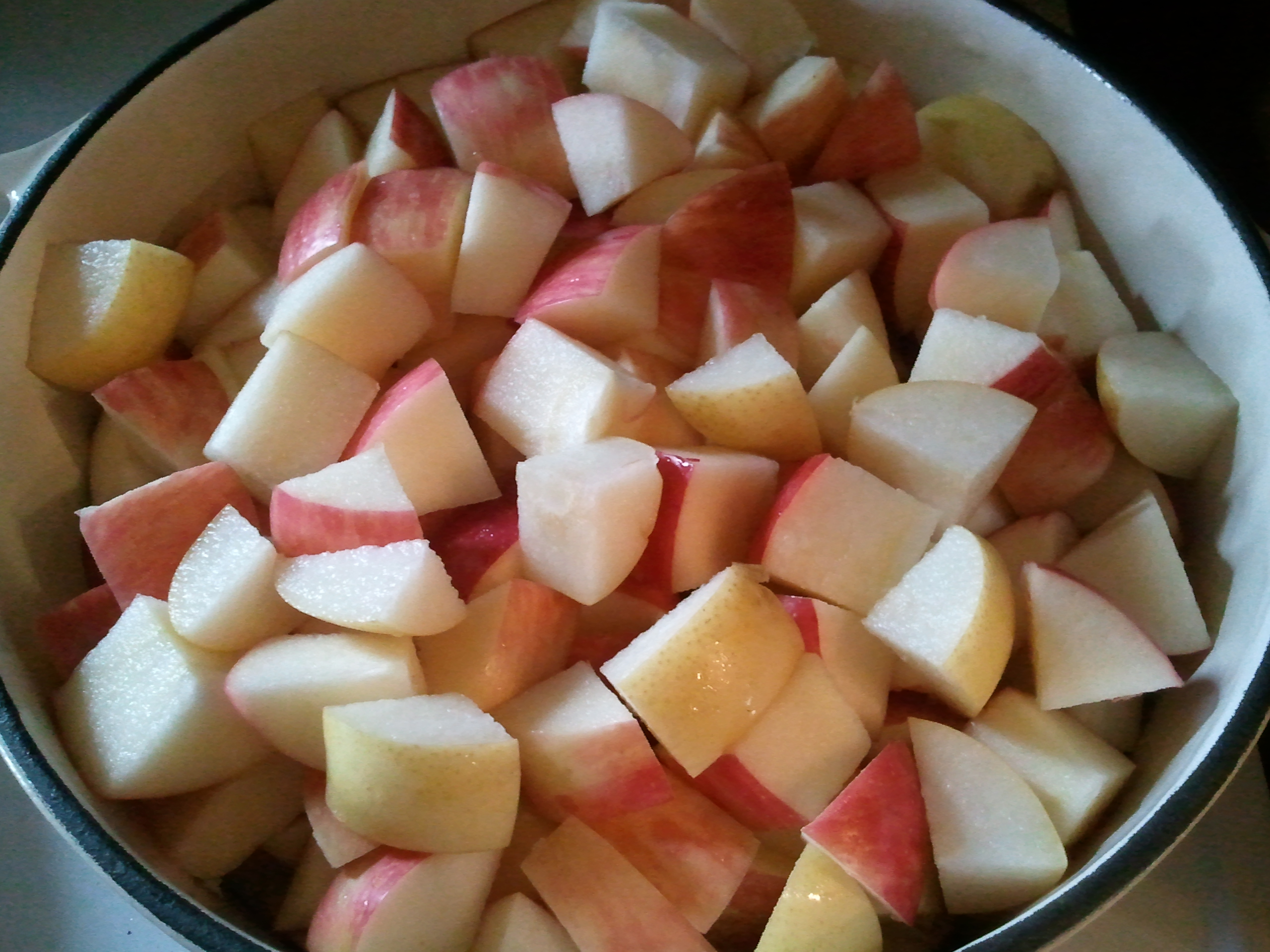
This past weekend, we picked more than 60 pounds! We’re stocking up for the winter, but we also want to make applesauce and apple pies. (Crumbles, rather, since they’re much easier to make than pies, as they don’t have a crust!)

It was sunny but really cold this day. The cold will be perfect for storing all the apples we picked.

It was sunny but really cold this day. The cold will be perfect for storing all the apples we picked until we can gobble them up.

I’m getting pretty good at making these apple crumbles. Mama hasn’t put in anything like raisins or cranberries or pomegranate arils, but don’t let that stop you from doing it. And don’t let anything keep you from making a crumble!

Love, Jude

Apple Crumble
(This is one of Mama’s loosey-goosey recipes, so feel free to improvise.)

4 or 5 apples (multi-variety*), peeled, cored, and sliced or chopped as desired
Brown sugar
Whole-wheat flour
Ground cinnamon
Ground cloves
Ground nutmeg
(other spices, as desired)
Rolled oats
2 tablespoons butter (or so)

Preheat oven to 350˚F.

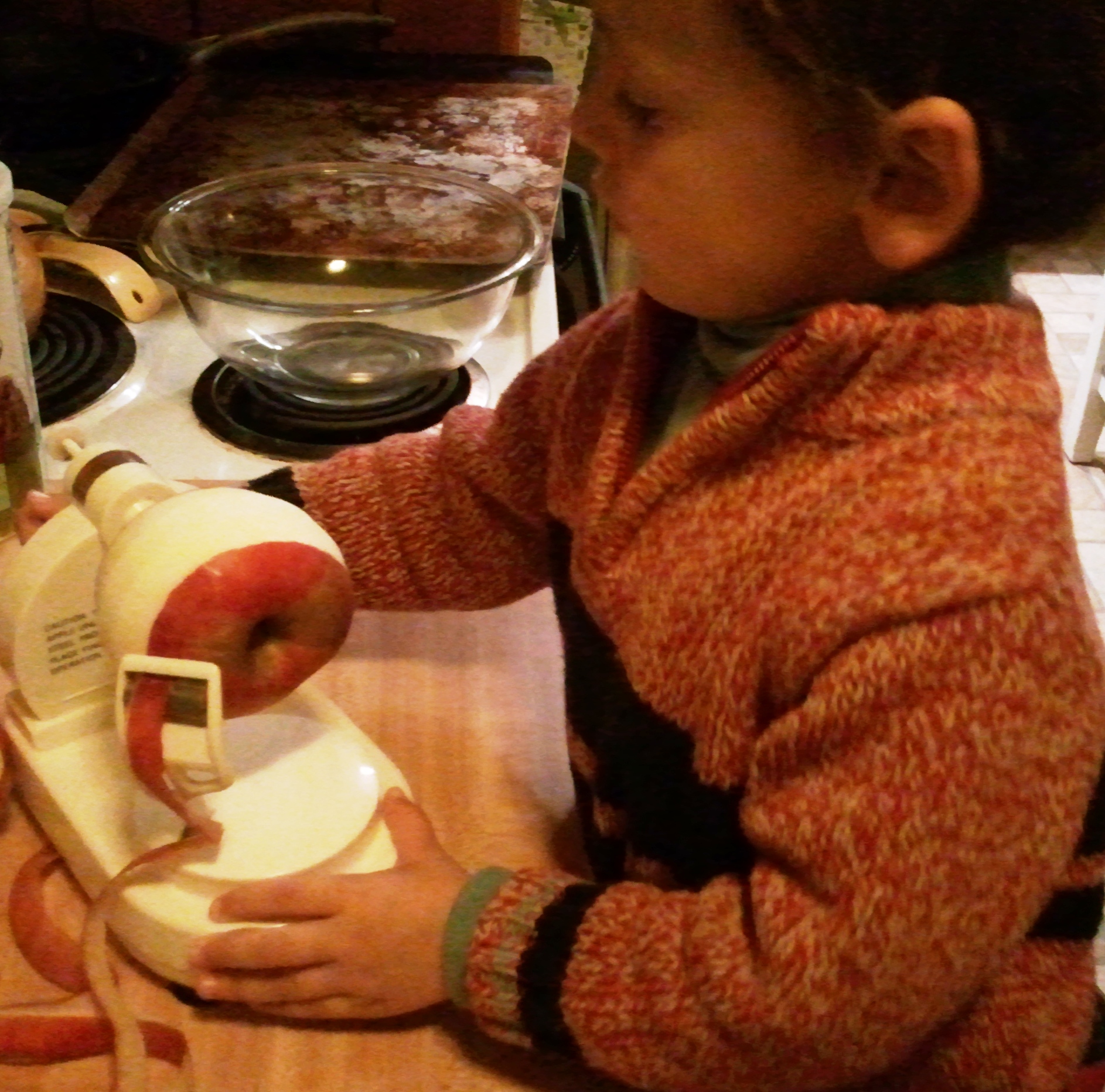
Prepare the apples. I like to use this nifty crank to peel the apples, and then Mama sometimes uses a fancy apple corer to break the apple apart.

I can only use this with supervision because Mama says the peeler is sharp.

I can only use this with supervision because Mama says the peeler is sharp.

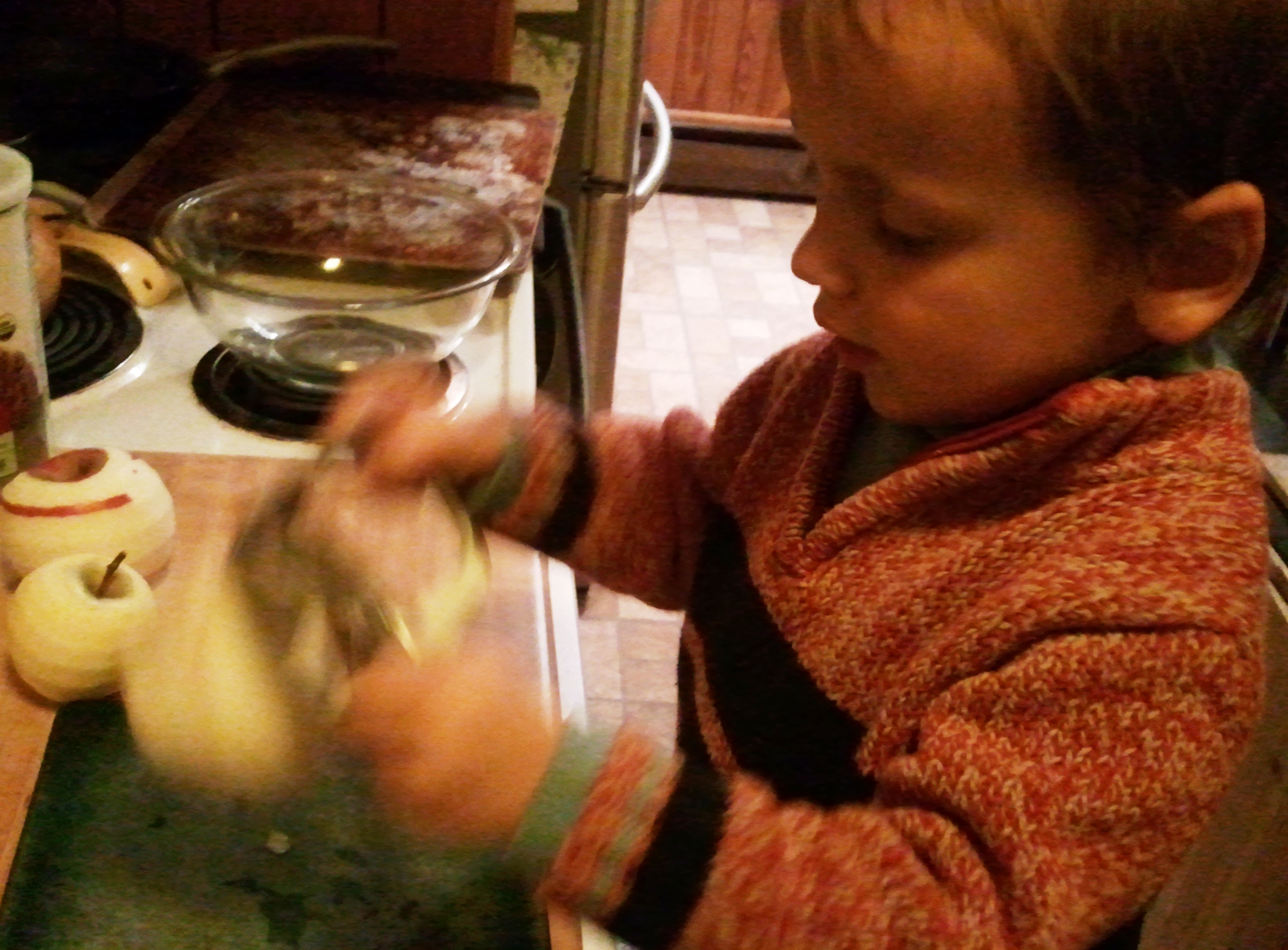
This corer is a lot harder to use than it looks.

This corer is a lot harder to use than it looks.

Once the apples are all sliced or chopped, put them in a bowl, and add some brown sugar (to taste), a handful of flour, and spices as desired. The flour will help thicken the juices as they seep out of the cooking apples.

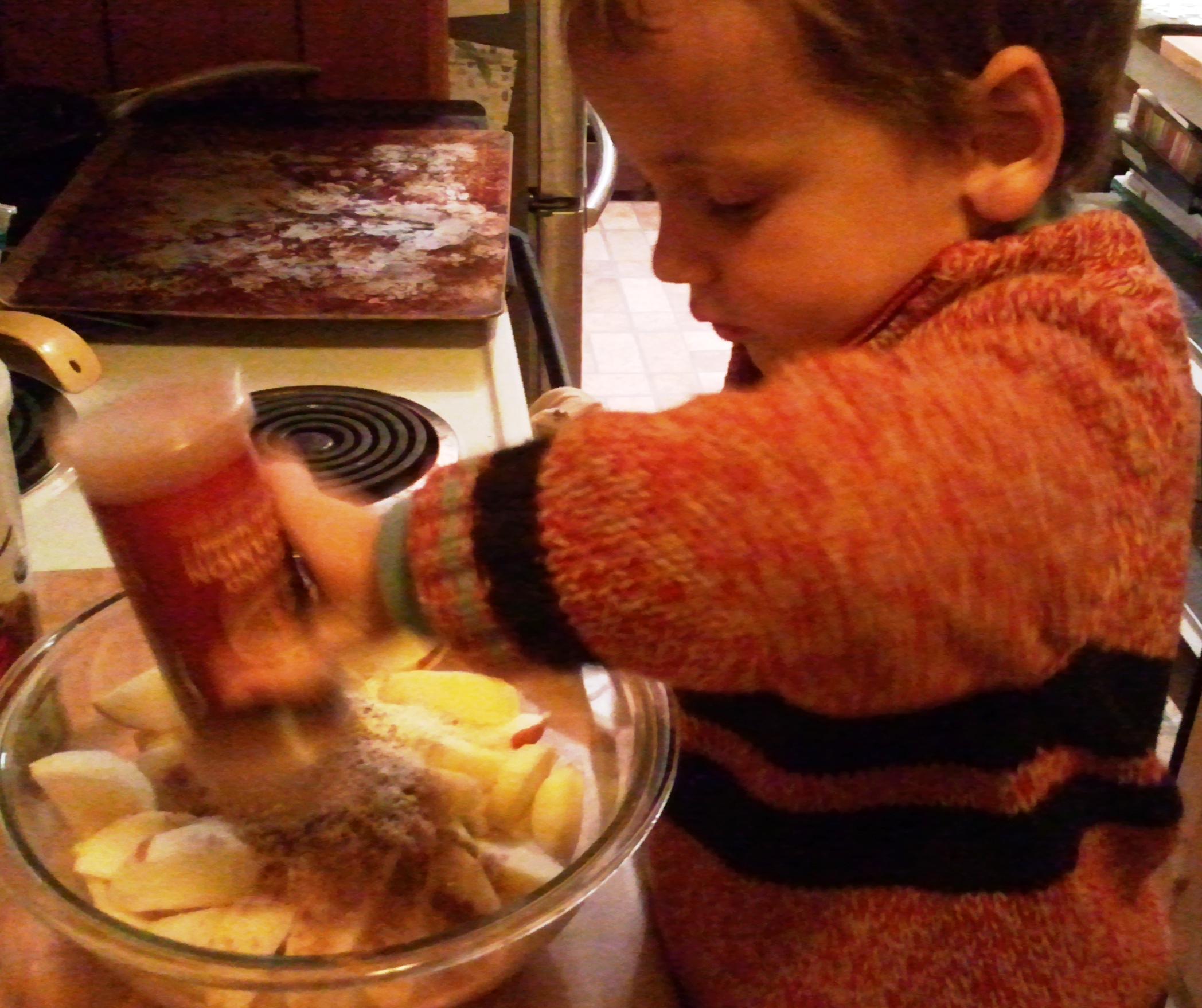
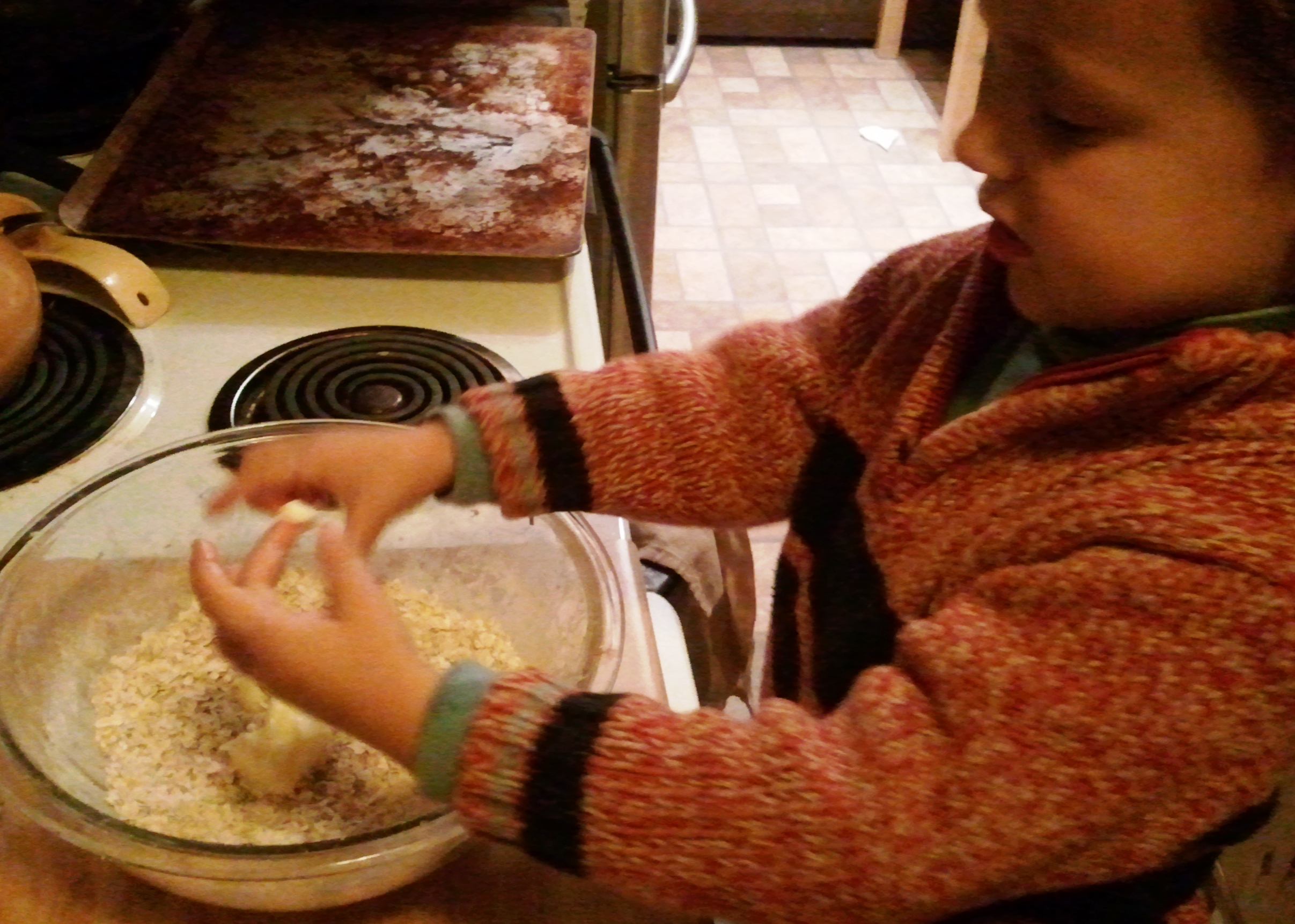
Mama lets me add the spices. I like cinnamon, so I gave it an extra shake.

Mama lets me add the spices. I like cinnamon, so I gave it an extra shake.

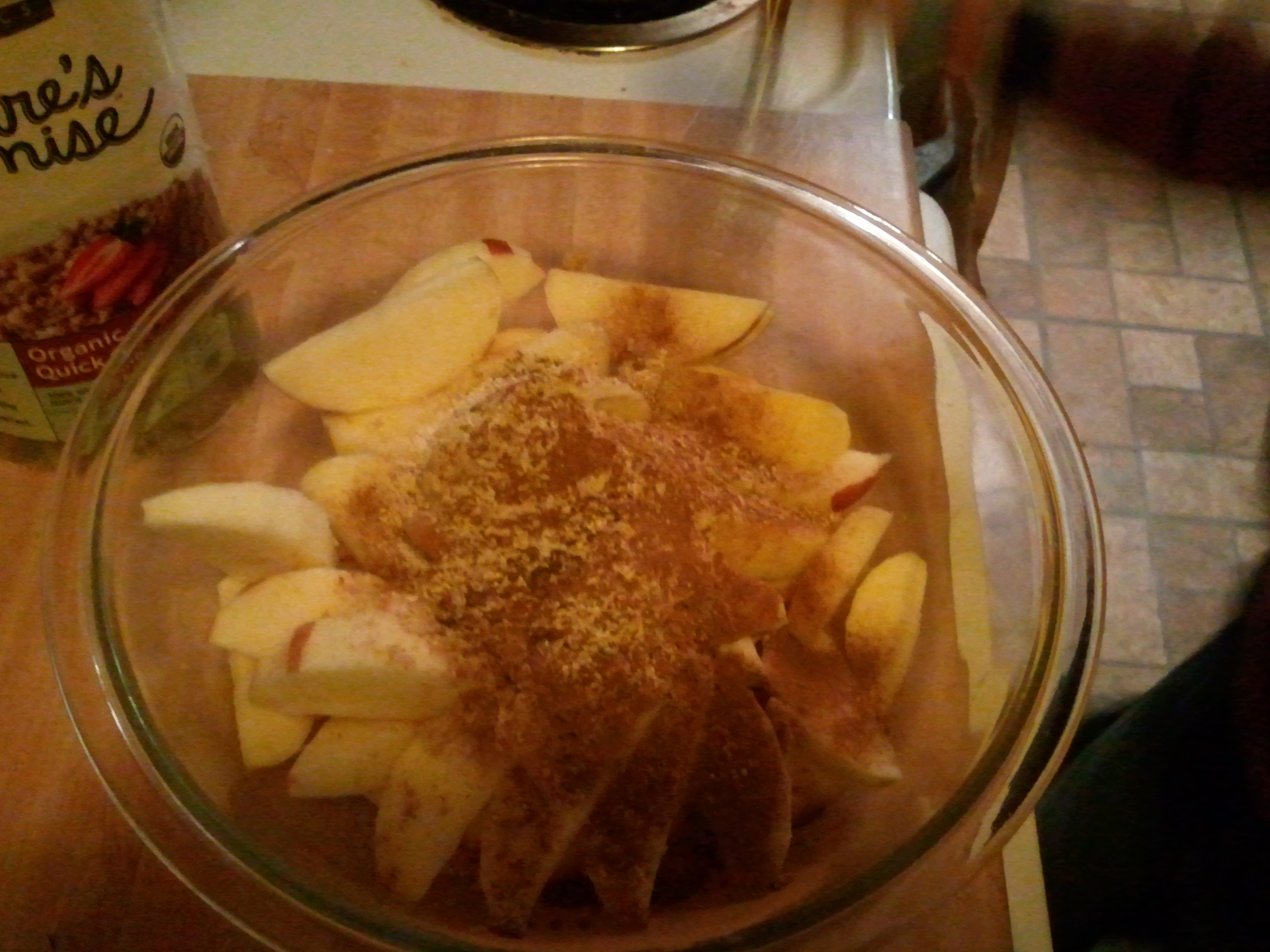
Maybe Mama shouldn't entrust me with the spices...

Maybe Mama shouldn’t entrust me with the spices…

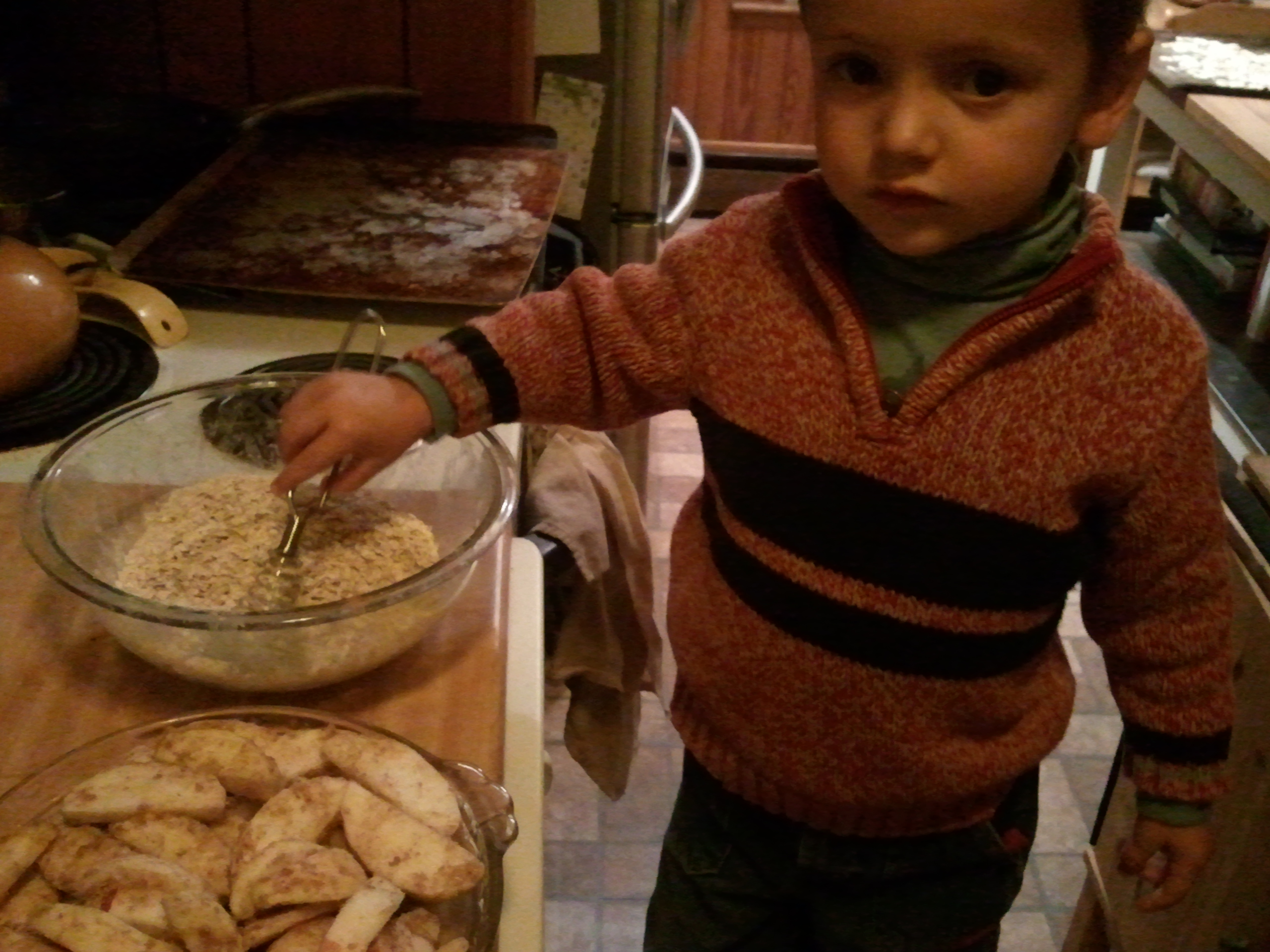
Mix with your hands or a large spoon. I had to wash my hands after doing this! Pour it all into a pie plate. Spread the apples so they lie relatively evenly. To the bowl, add more flour and brown sugar, a couple handfuls of oats, and more spices (if desired). Mama didn’t add any more cinnamon to our crumble topping. Stir it all up. (I happen to like using the whisk.

Get everything for the streusel good and blended.

Get everything for the streusel good and blended.

Now smoosh in the butter. Two tablespoons is just what we used. You can use more or less, but try to get at much butter covered by as much streusel mixture as you can. “I think I need to wash my hands again,” I told Mama.

Blend the butter into the topping any way you like. I didn't really care for getting butter all over my fingers.

Blend the butter into the topping any way you like. I didn’t really care for getting butter all over my fingers.

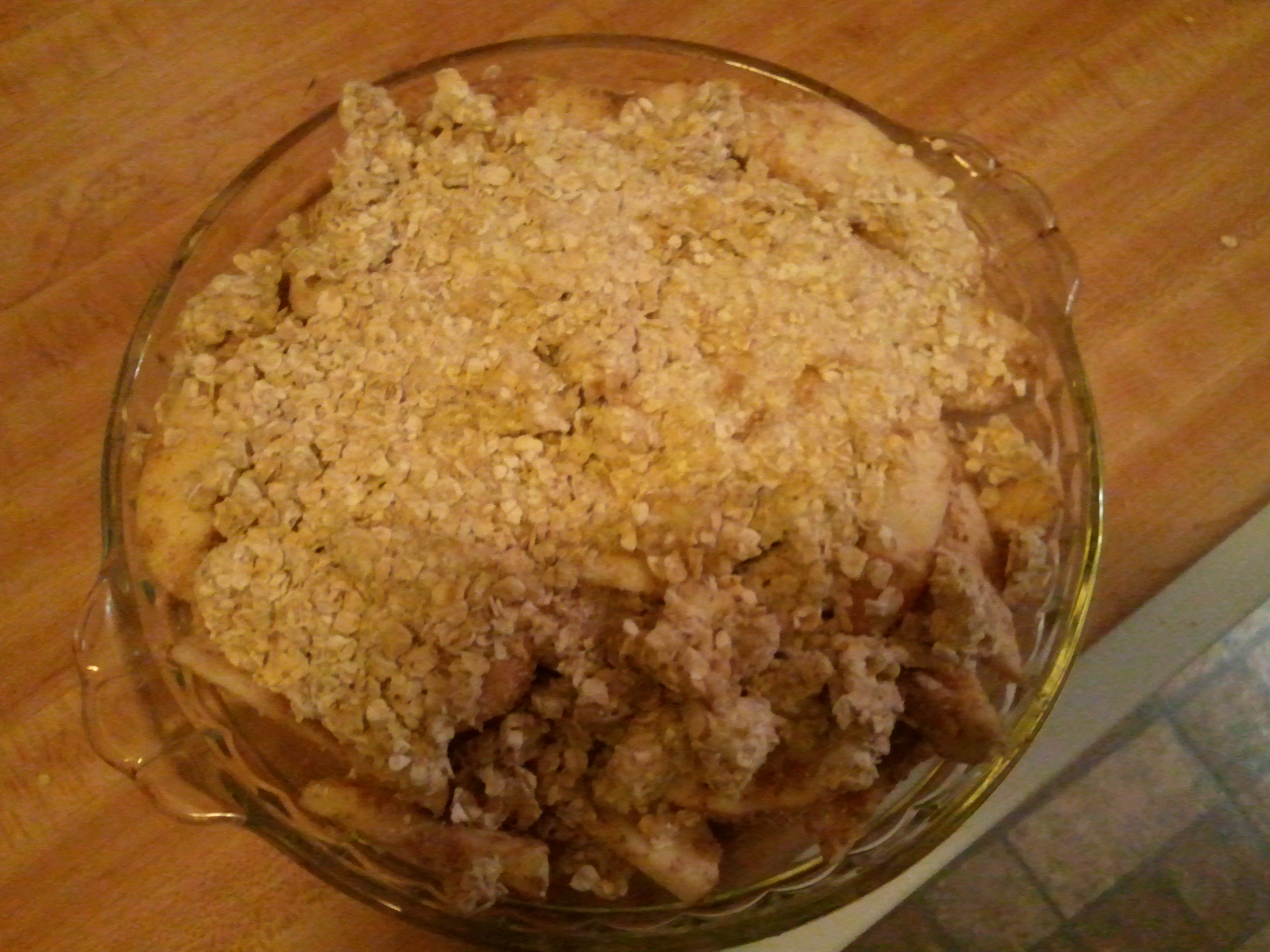
Then sprinkle the streusel topping over the fruit in an even layer.

I helped make this!

I helped make this!

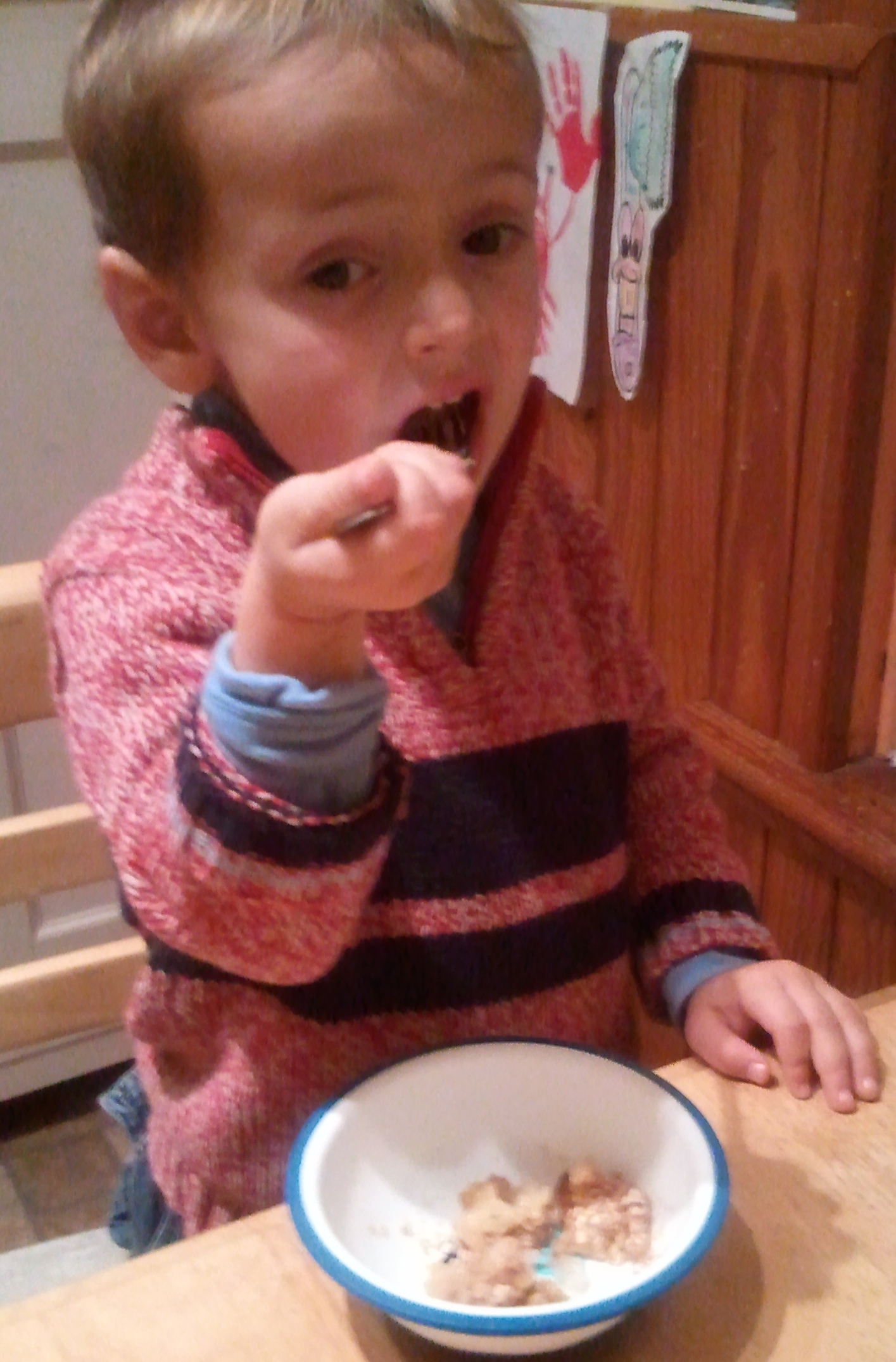
Bake until golden and the apples are soft, about 45 minutes. Allow to cool slightly before digging in. Serve with ice cream or whipped cream. And, whatever you do, don’t hold it hostage until your kid finishes his dinner. That’s just mean.

Mama and I high-fived and told each other, "Good pie!"

Mama and I high-fived and told each other, “Good pie!”

Note: Mama likes to use several varieties of apples in both her pies and her applesauce. The tarter ones balance out the sweeter ones, and the softer and crisper ones add texture.


Leave a comment

Cherries on the ground? Not quite.

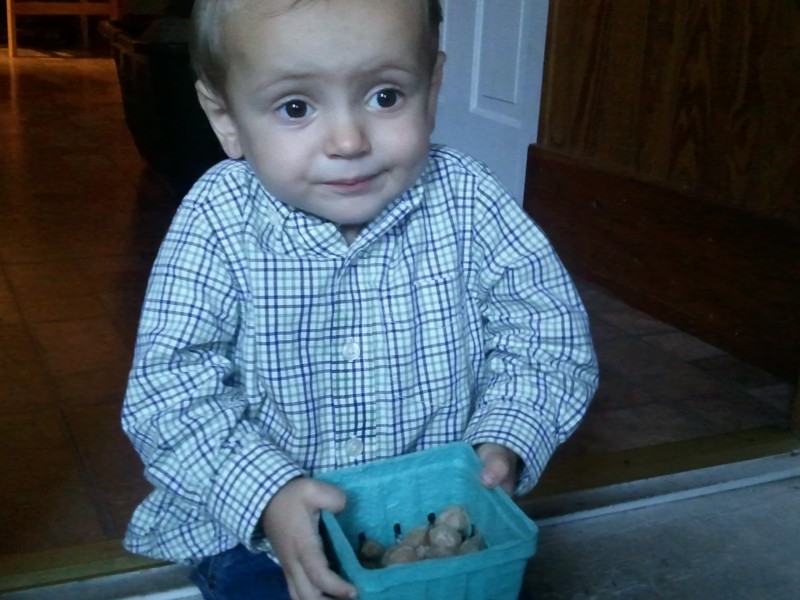
I think you know how we feel about cherries in my household, but have you ever heard of ground cherries? I hadn’t, until Mama brought some home last summer. She had intended to make jam with them, as they’re naturally high in pectin (which is what makes jams and fruit pies gel), but I had so much fun unwrapping them and eating them that she never had a chance.

This summer, however, Mama is growing ground cherries with a garden club where she works. Each week, she brings home tons of them! (They’re about as prolific as a cherry tomato plant, if that gives you any idea of their abundance.) I visited her and saw that the bush is shrubby with lots of strong vines that you have to pick up in order to harvest the cherries. As they’ve been ripening over the past couple months, Mama had again intended to make a double-cherry jam with regular cherries and these, but, as I noted, I really like to eat them on their own.

This is a photo from last year. Look how little I was!

This is a photo from last year. Look how little I was!

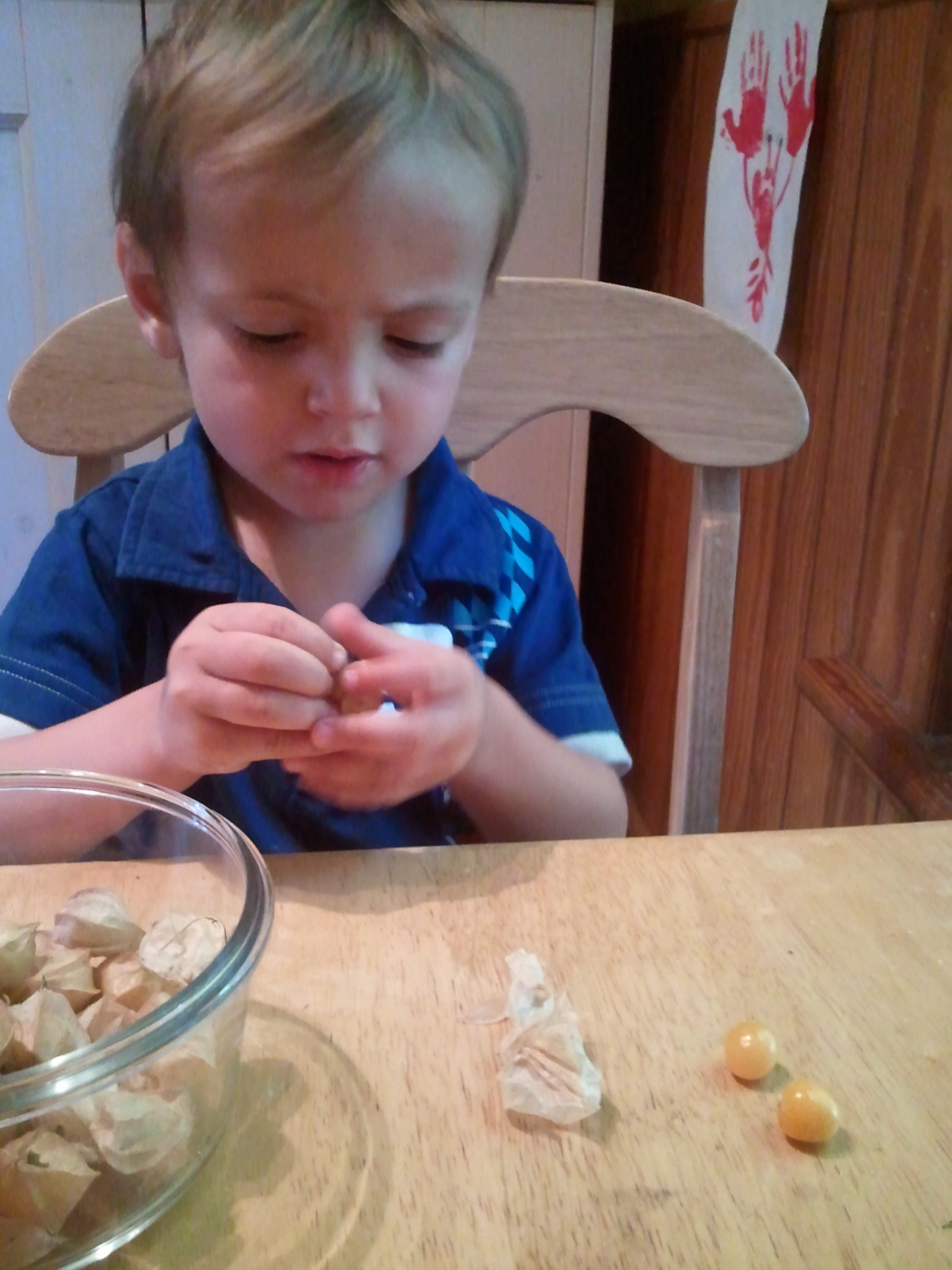
A ground cherry looks a lot like a tomatillo in that it grows in a papery husk. Unlike a tomatillo, however, you don’t want to eat a ground cherry when it’s green. Wait until it turns a nice golden orange, and you’ll taste a tiny bit of sunshine when you pop it in your mouth. They’re sort of sweet and sort of tart and sort of buttery.

Peeling them is half the fun.

Peeling them is half the fun.

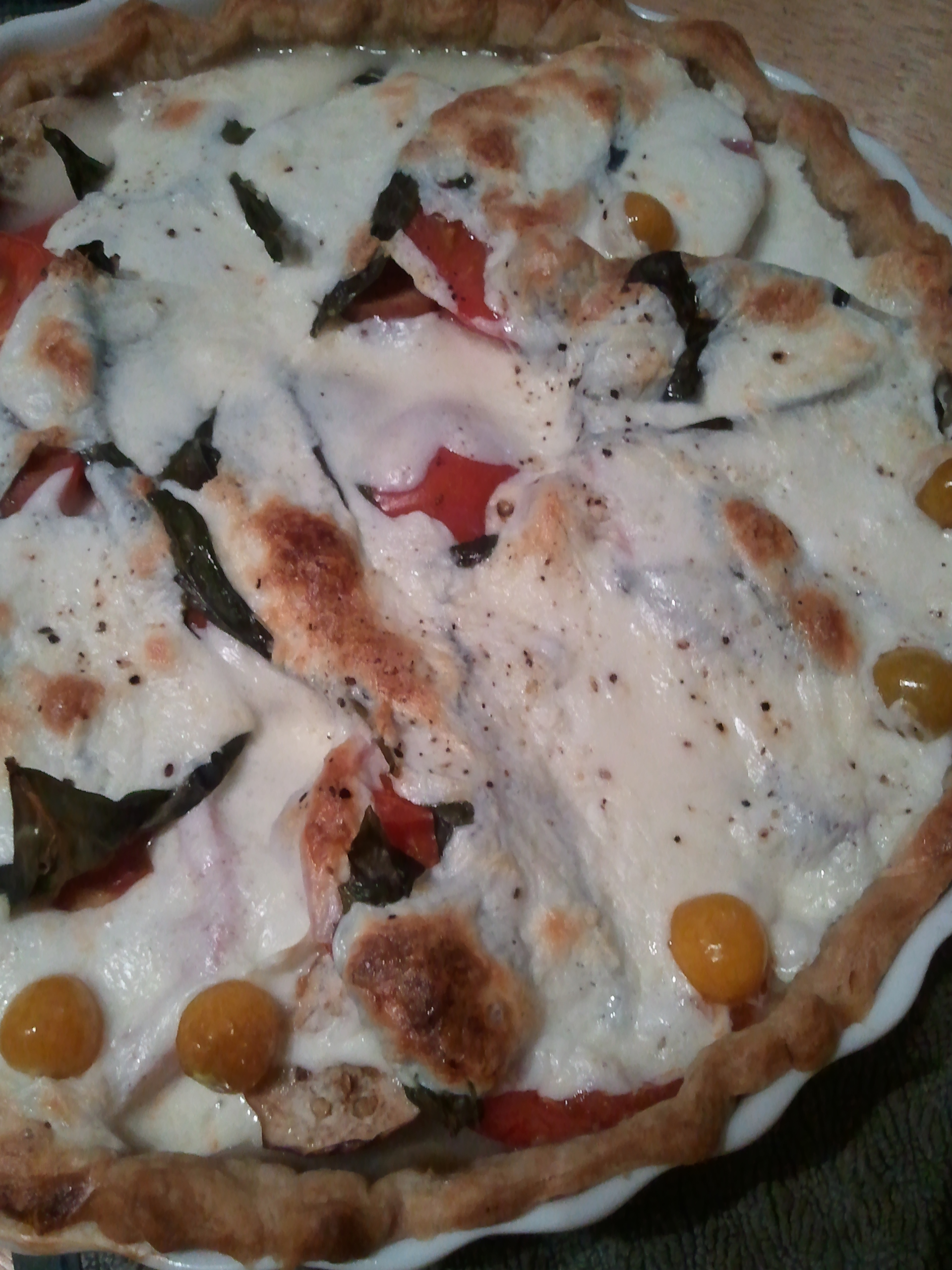
If all this is new to you, there’s still time to get a quart from your local farmers’ market. Mama adds them to fruit salads and tops green salads with them. Maybe she’ll get around to adding them to a tomato pie this week…but not if I get to them first.

Papa ended up putting a few ground cherries in this tomato pie. I did all the work peeling them, though.

Papa ended up putting a few ground cherries in this tomato pie. I did all the work peeling them, though.

Love, Jude

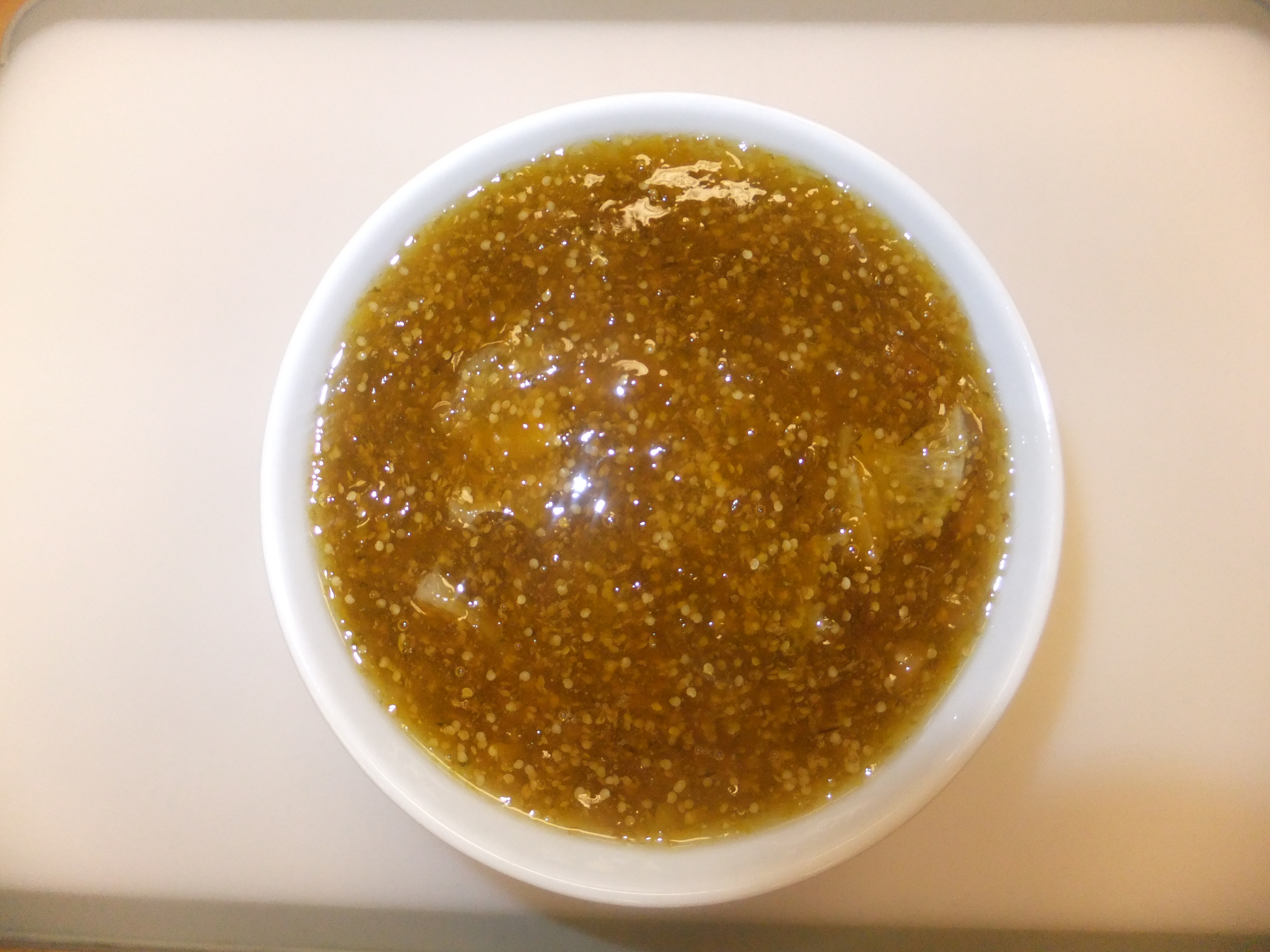
She eventually DID get around to making some!

Mama eventually DID get around to making some marmalade!


3 Comments

Conflict Kitchen (pre-school edition)

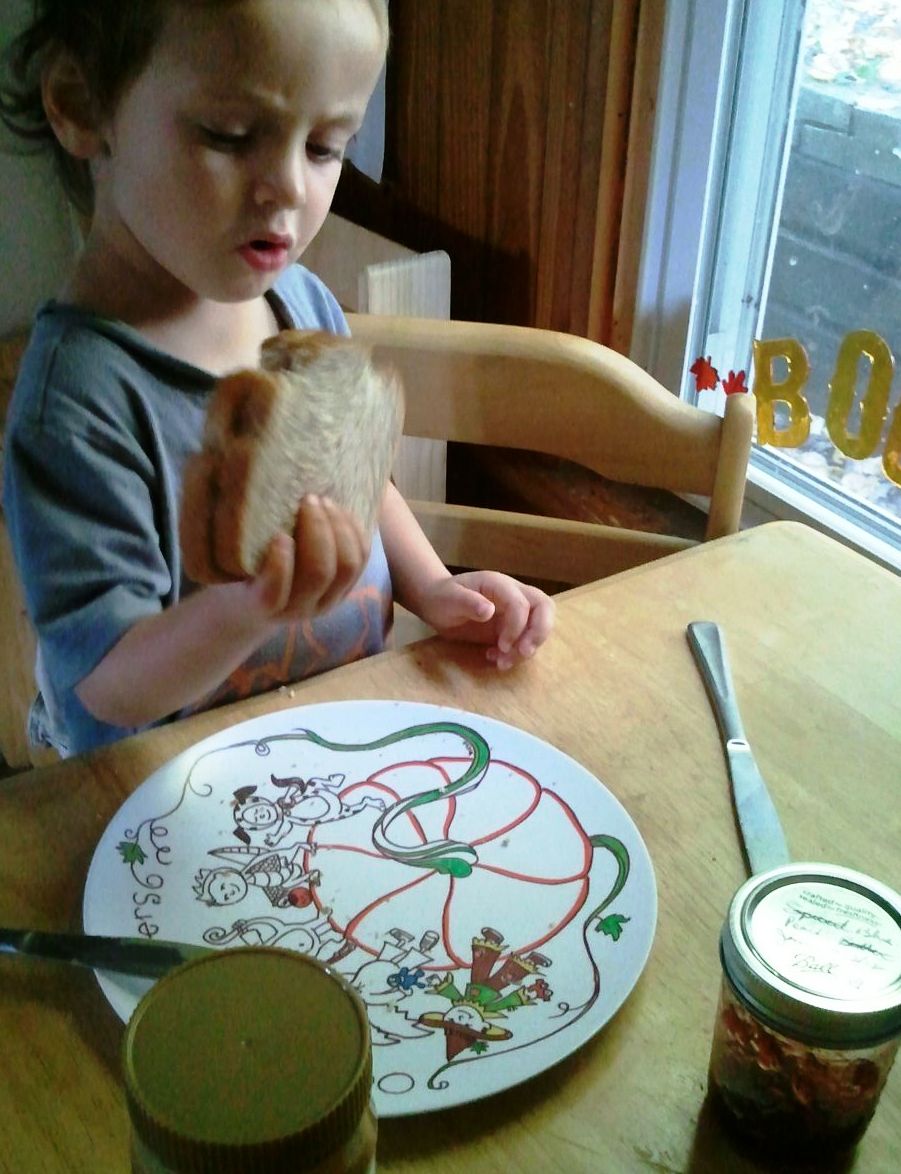
There’s a right way and a wrong way to make a sandwich. Mine is the right way, and Mama’s…well, she can’t be right all the time, can she?

We agree that you should lay out both pieces of bread or the two halves of a bun, whichever you prefer. We agree that you should gather your remaining ingredients before proceeding.

Where we differ has to do with how you apply those ingredients to said bread. Take, for example, a peanut butter and jelly sandwich (or, as I like to call it, a “hamburger sandwich” because, when you look at it from the side, it sort of looks like a hamburger is in there).

Sandwich bliss.

I eat all the crusts first, saving the soft inner sandwich for last.

Mama spreads either jam or peanut butter first on one half of the sandwich then wipes the butter knife on the clean half. No, no, no! She doesn’t realize that she’s just contaminated that half of the bread, and this is clearly unacceptable. Witness:

Oh, unspeakable horrors.

Oh, unspeakable horrors.

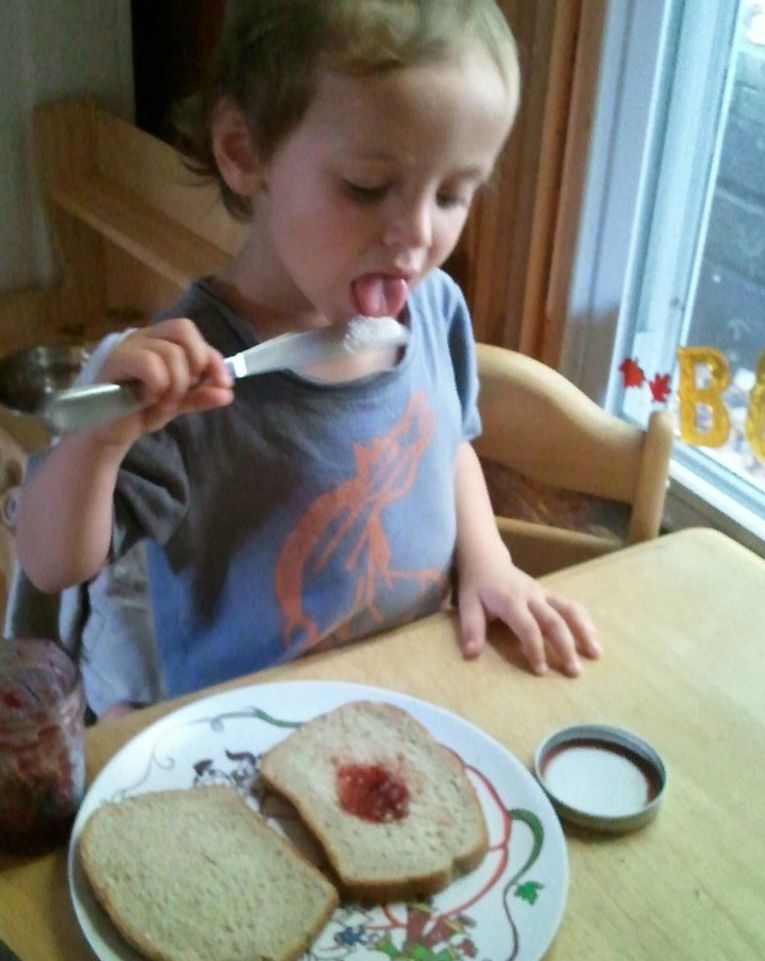
Now, you could use a clean knife for the other half of the sandwich, but I vastly prefer this method:

I won’t say who taught me this trick*, but I like it.

I won’t say who taught me this trick*, but I like its simplicity.

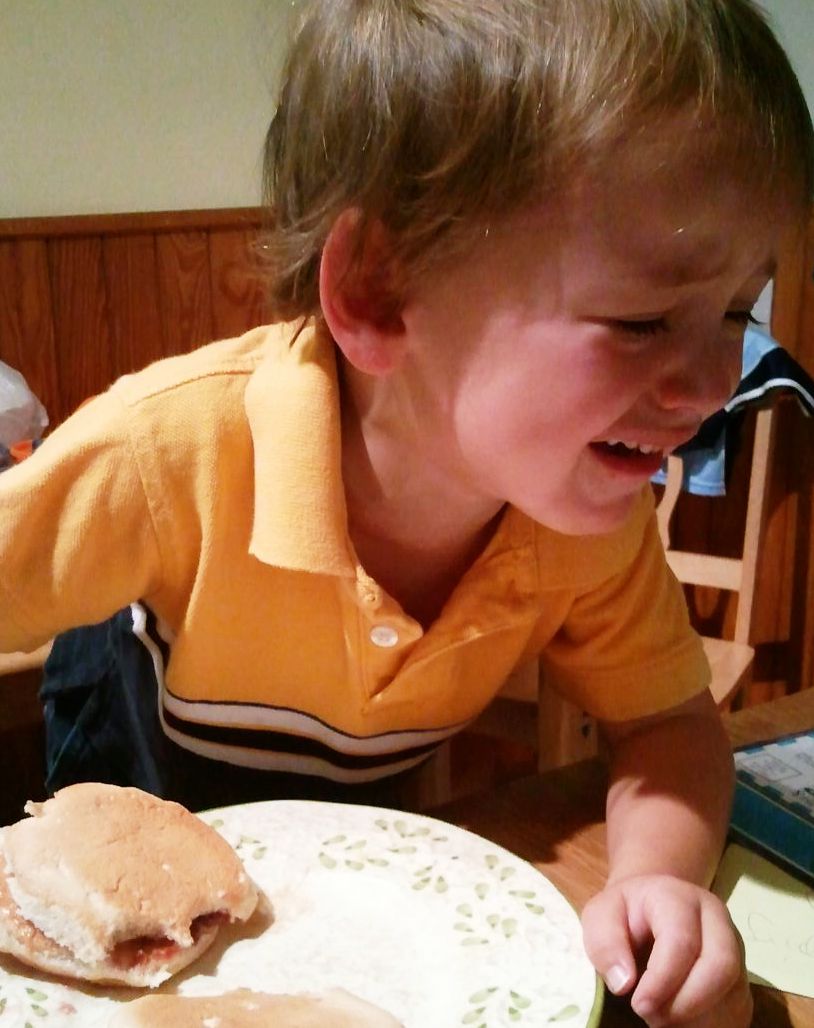
From there, Mama spreads jam or peanut butter on the other half and then puts the two halves together. Again, this is unacceptable, as sometimes, two jam halves are better than a half with peanut butter. Or maybe you don’t need anything on the second half. She doesn’t even ask first!

Feel my pain.

Feel my pain.

Sometimes I need help spreading the jam all the way to the edge of the bread, but I would still consider this the first meal I can make myself. And that’s not half bad, no matter how you slice it.

Love, Jude

*Mama would like me to point out that she does not condone the cleaning of even the dullest of knives with your tongue.