LittleJudeonFood

One kid's adventures in gastronomy


Leave a comment

“They look like sea shells!”

I helped Mama make stuffed shells. They’re really easy. Basically, I took a cooked pasta shell and, before handing it to her to stuff, I took a bite out of it.

Usually Mama makes a double batch of shells, bakes ones, and freezes the other in a disposable pan. But then you have a large “brick” (so she says) taking up freezer space, which’ll take longer to bake, and you’re left with acidic tomato sauce sitting in aluminum—and they don’t like each other very much.

Tonight, Mama tried a new approach: freeze the stuffed shells like she would berries. That is, spread them out on a baking sheet, freeze them until they’re solid, then bag them together in dinner-size groups. Then, when it’s time to use them, just take out a bag and arrange them in the baking pan with fresh sauce for dinner in no time at all.

A nice side of veggies made this a meal fit for a kid like me.

A nice side of veggies made its way on the plate shortly after this was taken.

I like the shells very much. They’re cheesy and noodle-y, and they have lots of good sauce. And they really do look like sea shells.

Love, Jude

Stuffed Shells
(this makes a double batch, or enough for a few freezer-size portions)

2 boxes (12 oz each) jumbo shells
2 large containers ricotta cheese (we used part-skim)
3 cups grated Parmesan cheese
8 eggs
Chopped fresh herbs, if desired (we used parsley, chives, and oregano from the garden)
Salt and pepper
Chili flakes, if desired for heat
1 quart tomato sauce (we used homemade, but make this easy on yourself and used jarred if desired)
1 cup shredded mozzarella cheese (or more, as desired)

Preheat oven to 350°F.

In salted boiling water, par-cook the shells (you’ll probably need to do this in 2 batches). This means to cook them just until they become pliable, 5 or 6 minutes. Drain, quickly rinse to help cool them down, and toss with a little bit of olive oil. Set aside on a baking sheet.

Meanwhile, in a large bowl, mix together the ricotta, Parmesan, eggs, herbs, salt and pepper, and chili flakes if using. When the shells have cooled enough to handle, spoon the filling into them. Fill them as much or as little as you like. They’re your shells. Mama stuffs them enough to keep them open without too much filling piling out. (She used a large table spoon.)

Spread 1 cup tomato sauce around the bottom of an 8 x 8” baking dish. Arrange 12 stuffed shells in it. (It’s okay that they touch.)
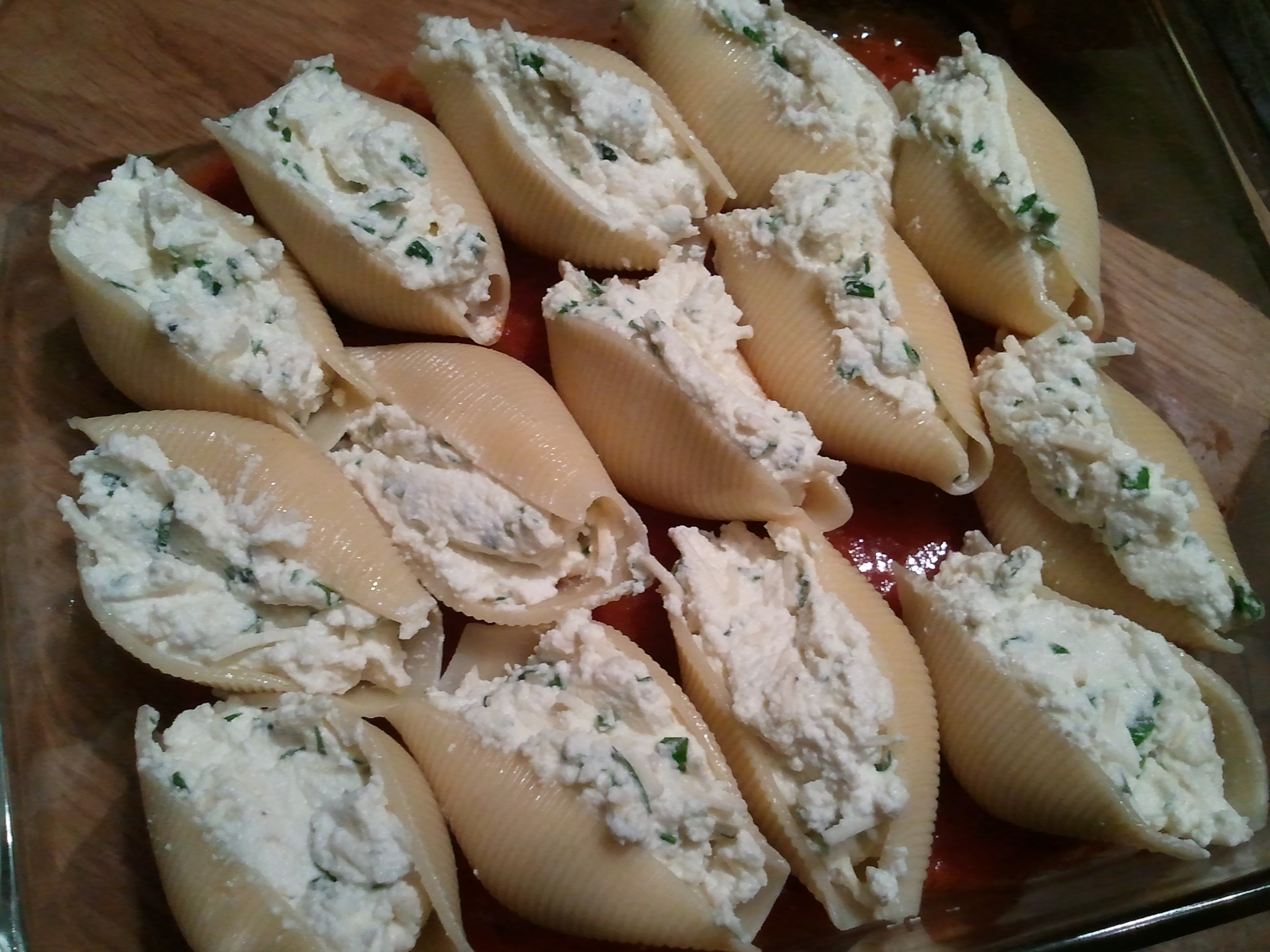
If you can fit a few more in there, go for it.

If you can fit a few more in there, go for it.

Pour the remaining sauce over the shells, making sure all the shells are completely covered, as they’ll need the moisture to finish cooking in the oven.
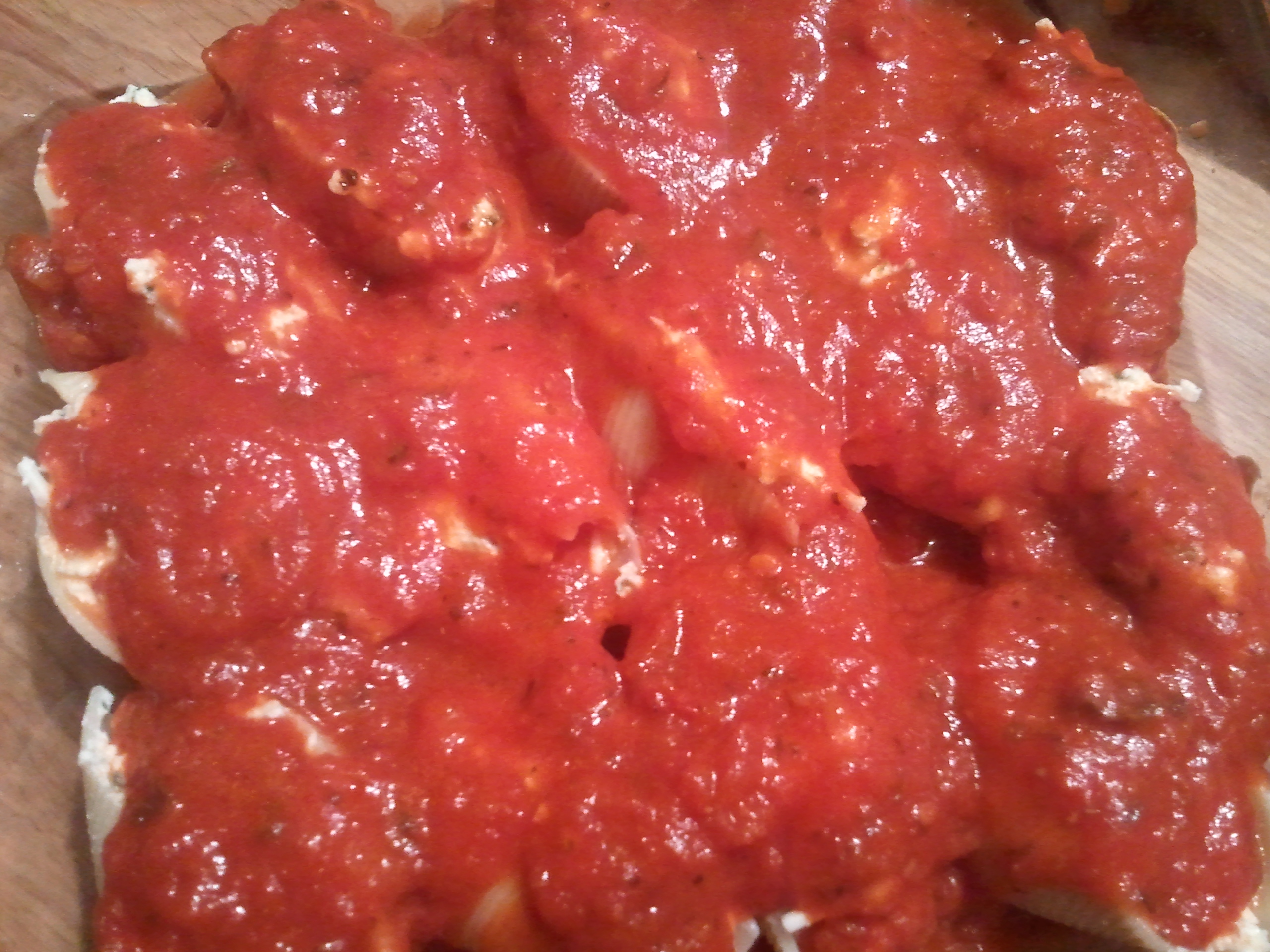
Don't be shy about the sauce.

Don’t be shy about the sauce.

Sprinkle with mozzarella to cover.
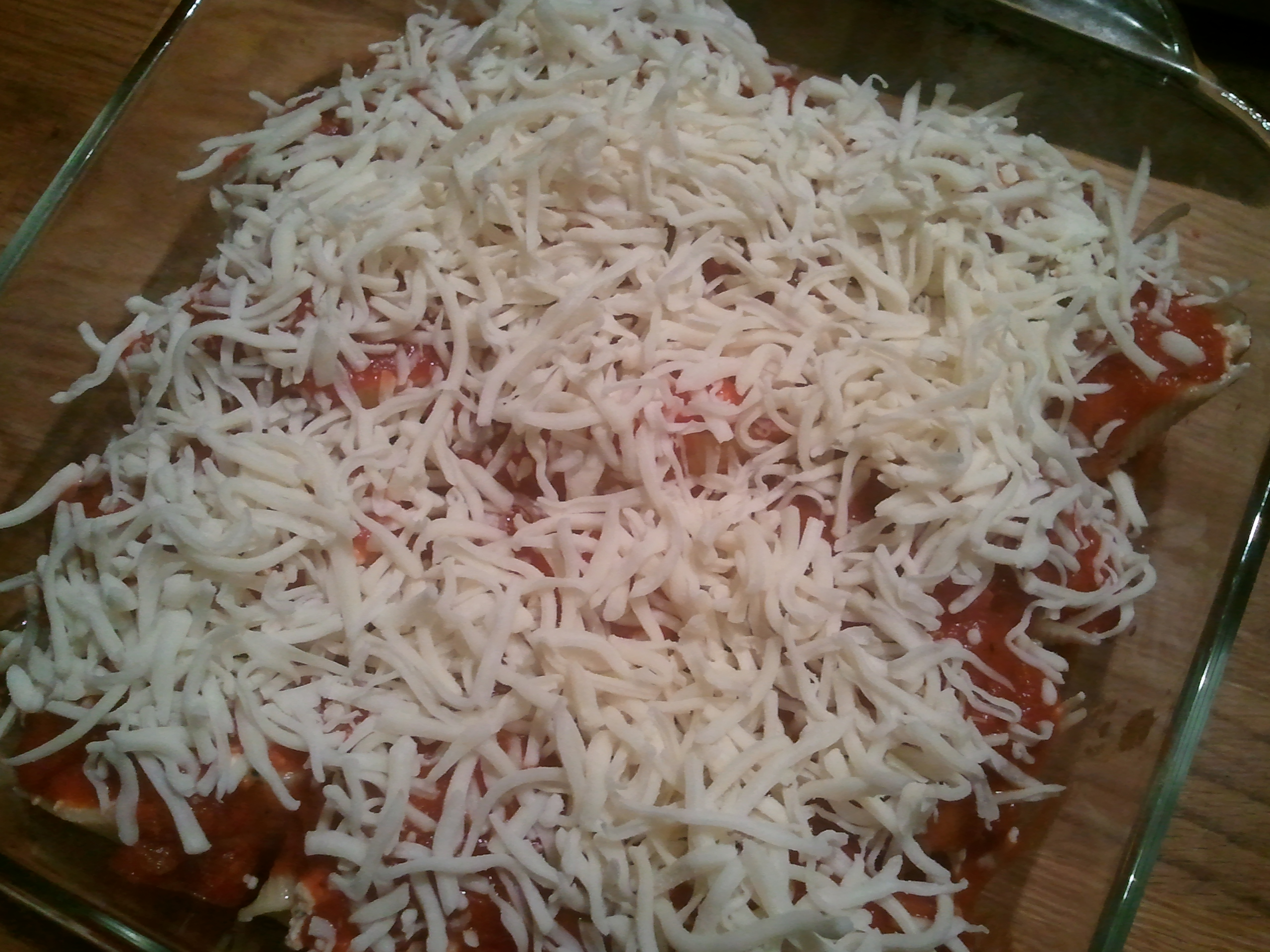
Ready to be baked.

Ready to be baked.

Bake, uncovered, for about 30 minutes. The mozzarella should be bubbling and golden, and the center should be hot. Let sit for 10 minutes to allow the cheeses to congeal.
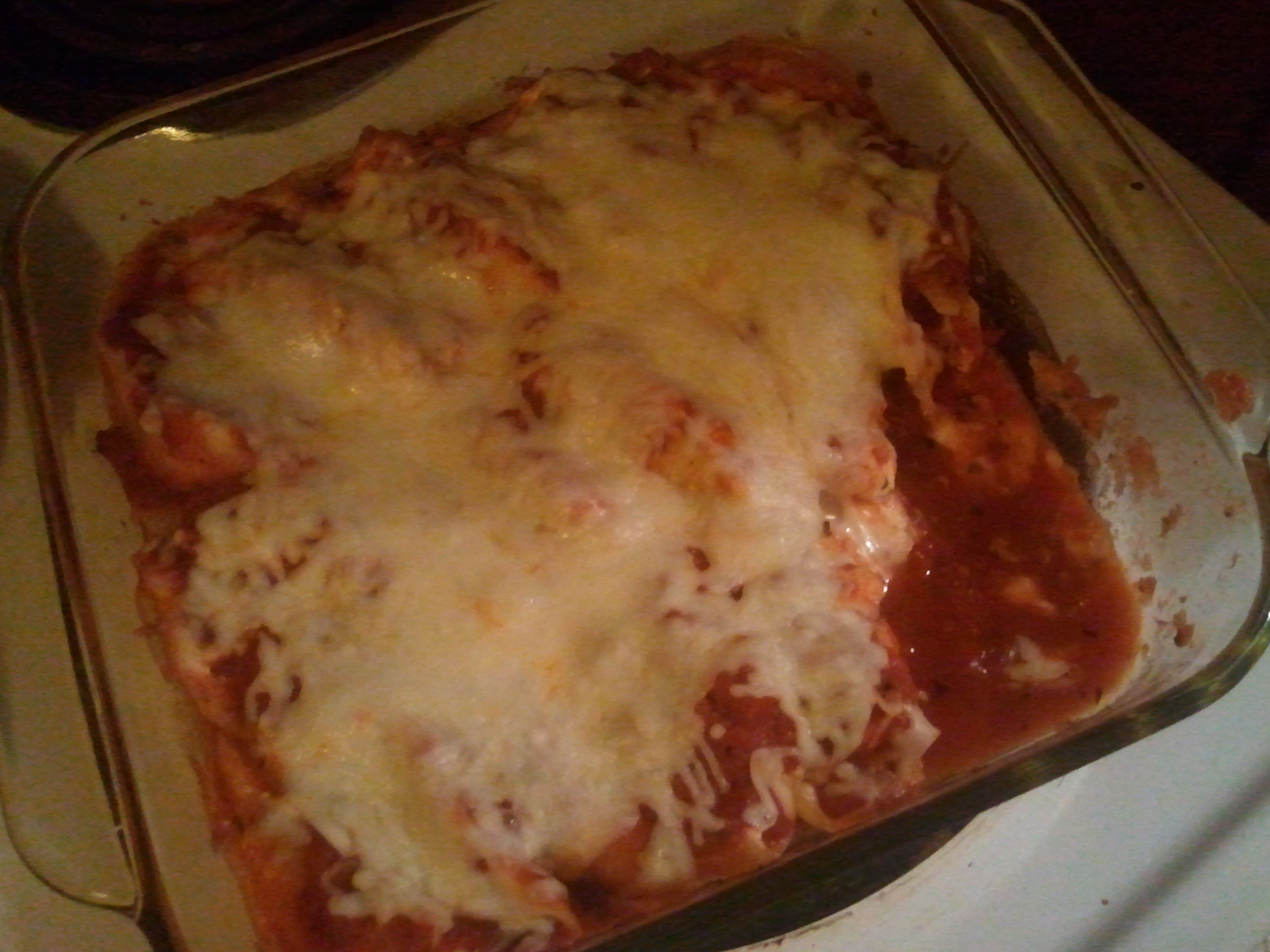
Mama took out a couple right away for me so they could cool. It's a little runny in that corner as a result. Resist the urge to dig in right away!

Mama took out a few for me so they could cool. It’s a little runny in that corner as a result. Resist the urge to dig in right away!

To freeze the remainder of the stuffed shells, arrange them on the lightly oiled baking sheet. Try to keep them from touching (but it’s okay if a couple do). Set in the freezer until frozen solid, at least 1 hour.
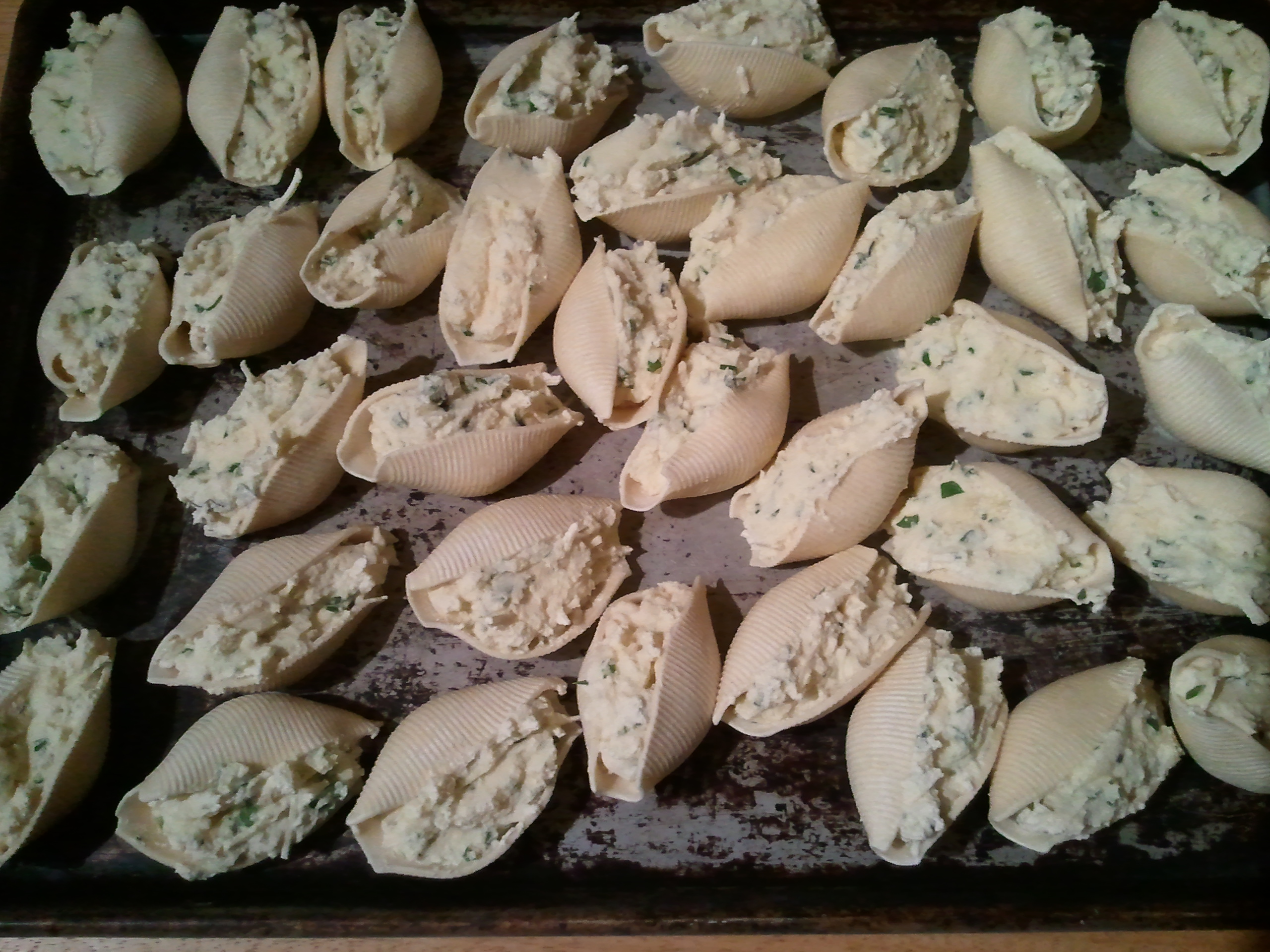
They really do look like sea shells.

They really do look like sea shells.

Remove from the freezer and bag in desired portions. Mama did baker’s dozens because that’s what fit in the bags; she got 4 bags (+ dinner). May also make a second assembled batch, with sauce, and freeze the whole thing. It can go right into the oven, but you should decrease the oven temp to 325°F, and bake until the center is hot.

Serves 3–4

Note: Feel free to bake off more than 12 in a larger size baking dish. You’ll need to increase the amount of sauce and mozzarella accordingly. If using jarred tomato sauce, consider livening it up by sautéing half an onion in olive oil until soft and golden; then add a clove or two of minced garlic a minute before adding the sauce to heat through.
Leave a comment

It’s applesauce day!

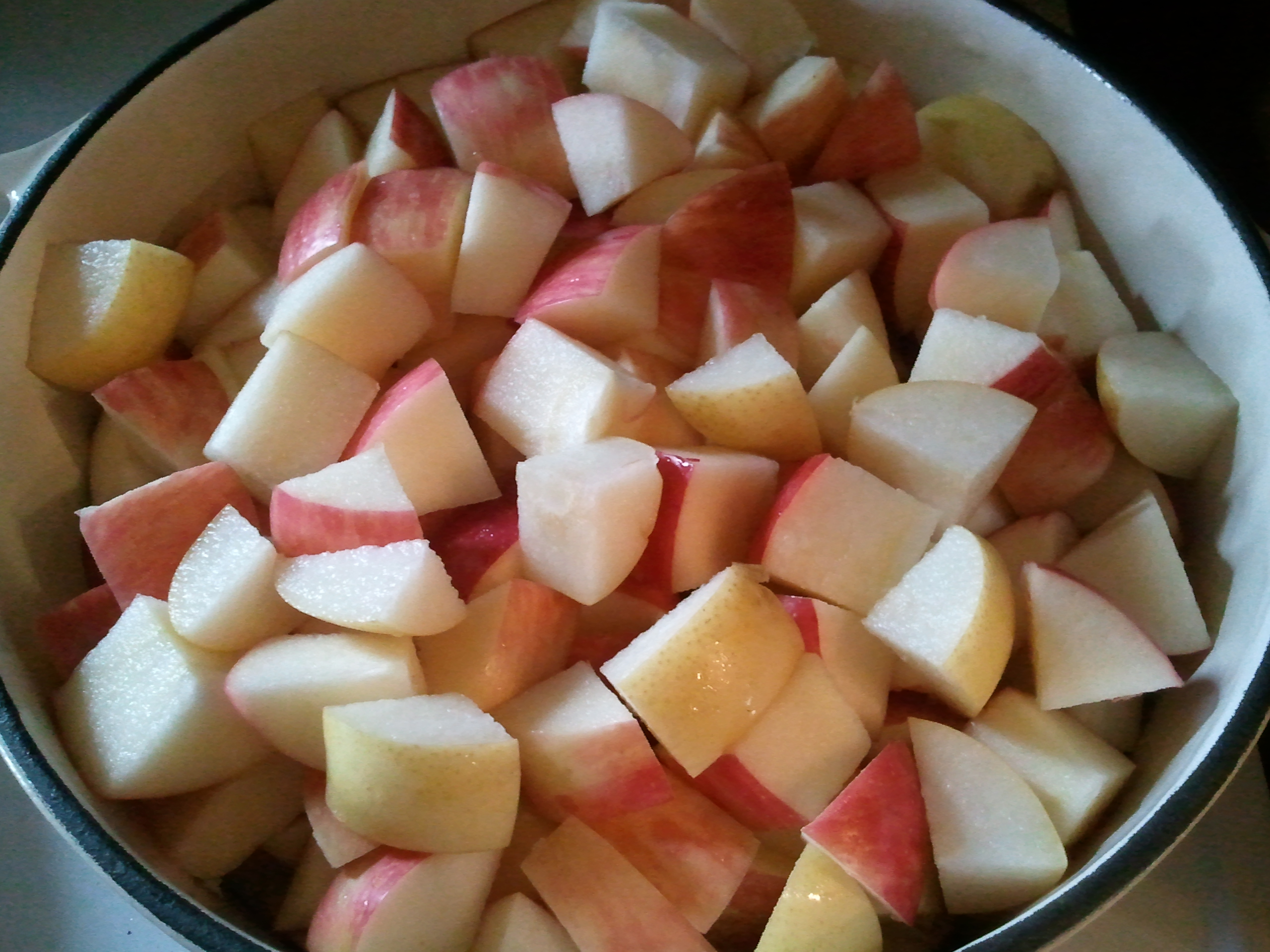
It’s cold outside today, but it’s warm and smelling of cinnamon and cloves inside. We made 12 pints of applesauce, and we barely made a dent in our apples!

Mama decided it was go much faster if we kept the peels on. They blend right up in the immersion blender.

Mama decided it would go much faster if we kept the peels on. They blend right up with the immersion blender.

Papa showed me a new way to eat applesauce: as something to dip my pork chop into. Yes, indeed!

Love, Jude


Leave a comment

A Gratin so Easy You Can Do It In Your Sleep

Mama didn’t feel like cooking dinner after a long weekend of chasing me around (don’t forget the 60 pounds of apples we picked). And she didn’t want to go to the store, either. She thought about what we had on hand, and voilà: a gratin was born.

Mama explained that gratins can be made out of pretty much any hardy vegetable: turnips, potatoes, fennel, squash, beets, even carrots. What makes them into a gratin is that they are layered with cream (and cheese, if desired) and then—this is the crucial step—topped with breadcrumbs, cheese, and butter to make it crunchy. Think of a gratin as savory crème brûlée: crispy on the top, creamy on the bottom. Each bite should have a bit of both, which is why gratin dishes are often shallow and oval, to provide more surface area for that wonderful crunch.

We’ve had a giant butternut squash sitting around for a while. Every couple of days, Mama hacks a hunk off its neck, peels it, and proceeds with dinner. For the gratin, she sliced it thinly (about ¼” thick) on the mandolin because the thinner the veggies, the quicker they’ll soften in the oven. We also had a couple organic russet potatoes on hand, which Mama also peeled and ran over the mandolin. (She said a food processor’s slicing blade would likely do a fine job, as well as a good ol’ sharp knife.)

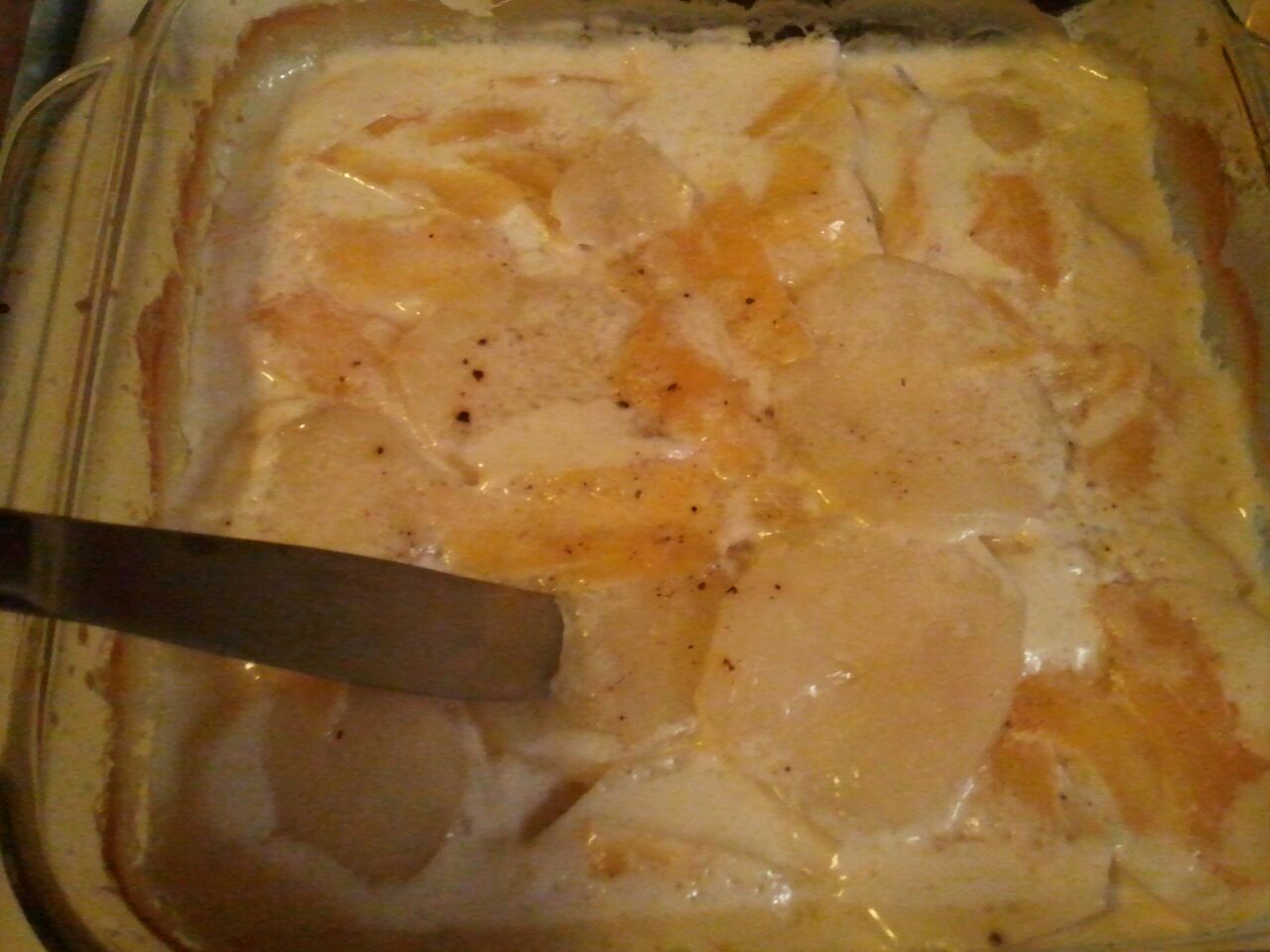
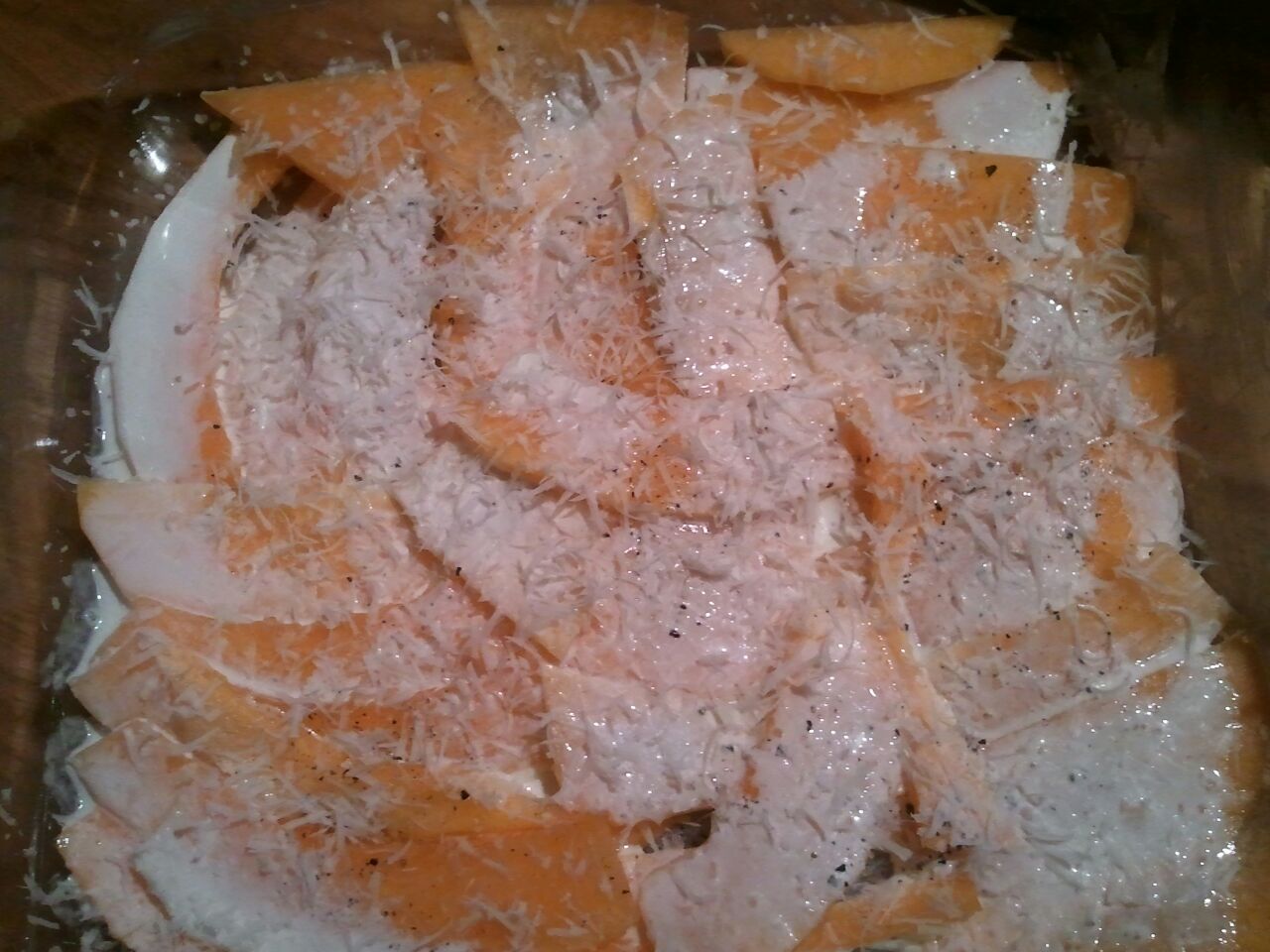
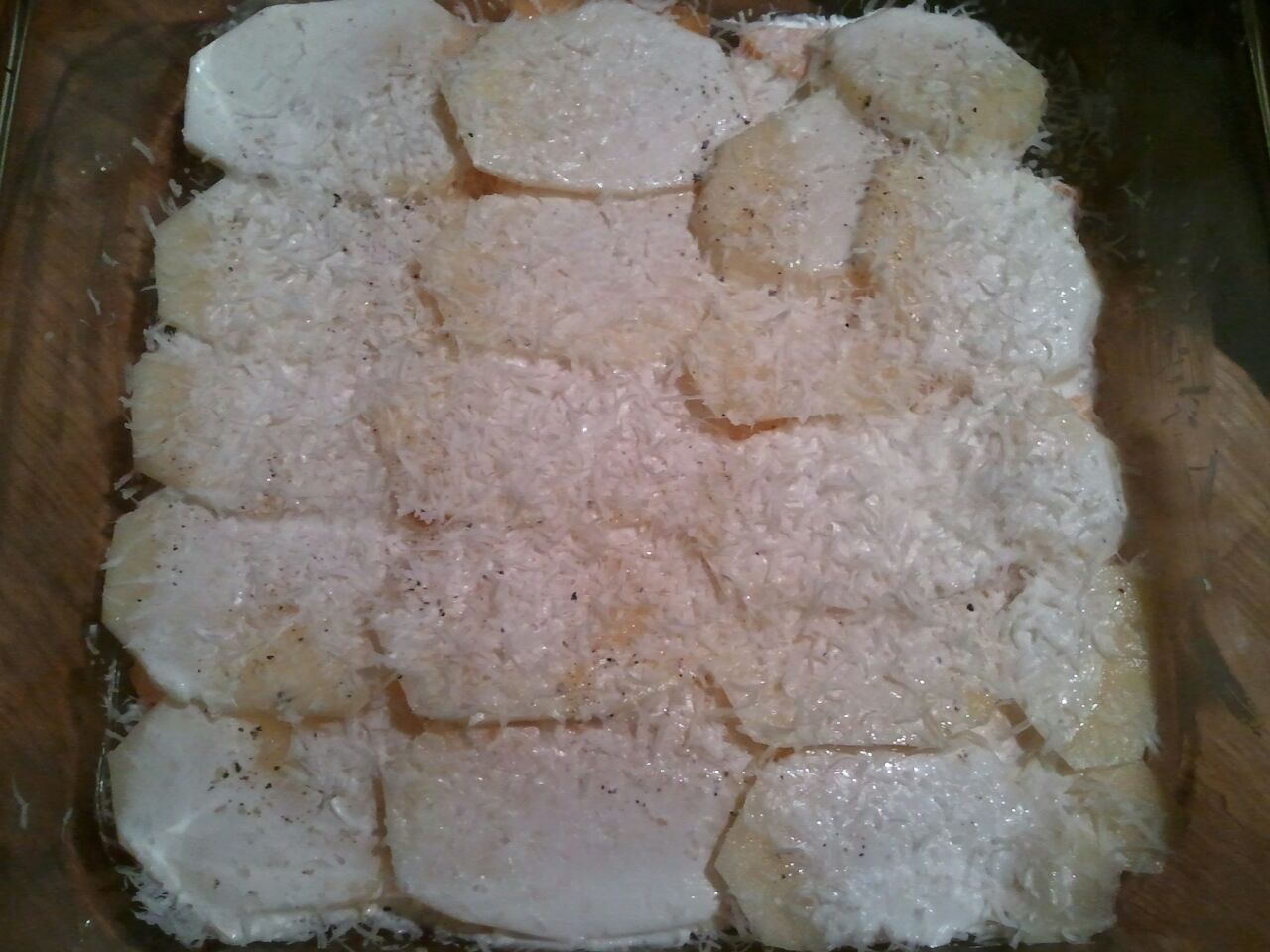
As we don’t have a gratin dish, Mama opted for a regular 8” x 8” baking dish. (I promised I wouldn’t tell anyone.) She layered the squash, overlapping it slightly, and then sprinkled it with salt, pepper, and a few raspy shavings of Pecorino (because we had more of that than we did Parmesan). She drizzled it with heavy cream that was left over from a dish Papa made earlier in the week. She could’ve used her half-and-half or even my milk, but if you’re going for creamy, why not go whole hog?

We were starting to get down to the bulb portion of the squash, so there are a few funny pieces in there. It doesn't matter, so long as there's a full layer.

We were starting to get down to the bulb portion of the squash, so there are a few funny pieces in there. It doesn’t matter, so long as there’s a full layer.

She did the same thing with the potatoes, then repeated each layer once more.

Little potatoes all nice in a row.

Little potatoes all nice in a row.

She used 2 potatoes and maybe a pound of squash (she’s estimating). The cream was whatever was left in the pint—about a cup, maybe a splash more. And the cheese was as much as we liked (but certainly enough to give a good covering to the veggies). Mama said she could have put some chopped sage in there, or steeped it in the cream, but she wasn’t feeling ambitious enough to walk outside to get some. (Sundays are like that sometimes.)

Jude on Food: If you run out of one vegetable, substitute something else. No one will notice that the layers aren’t exactly the same because they’ll be too busy eating. That’s why this dinner is so easy!

Before shaving cheese on the top layer, Mama gently pressed everything down. She said that making sure the layers are flat will help with the baking, and it will also help distribute the cream. She ended up adding a bit more cream because she said you want to be sure the top-most pieces are in moisture (though not swimming in it).

Then she shaved more cheese on top, covered it with foil, and put it in the oven, where it sat for a good hour. Remember what I said about gratins being creamy? Well, keep it in the oven until the vegetables are so soft, you could cut even the center ones with a butter knife or spoon. The cream will be bubbling too (and very hot!).

This butter knife went into the veggies as if they were...well, butter.

This butter knife went into the veggies as if they were…well, butter.

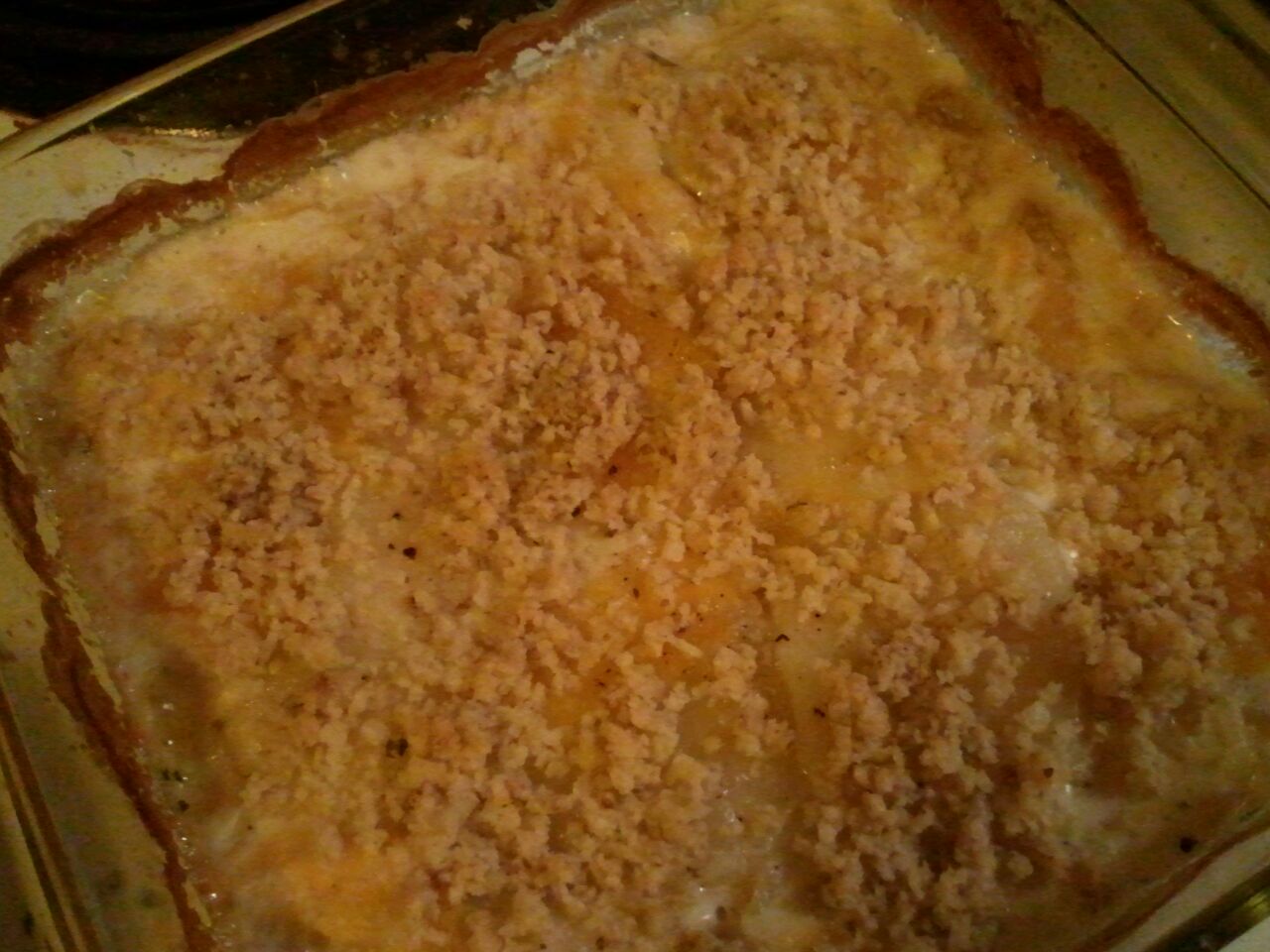
Now comes the pièce de résistance. In a small bowl, Mama combined a couple spoonfuls of panko breadcrumbs (because that’s what had; we’ve used them before) with an equal amount of finely chopped nuts that she pulled from the freezer. She thought they might have been hazelnuts, but she said pecans or walnuts would have been equally good, so she wasn’t too concerned about it. She mixed in a couple pats of melted butter, sprinkled this on top of the gratin, then put it back in the oven until it turned golden, about 10 minutes.

Golden and delicious!

Golden and delicious!

To be honest, I really did find this gratin to be delicious. It was silky and flavorful, and I liked the added texture. It reminded me of my morning granola. But I was in a mood, so I decided I wouldn’t eat any until I was promised a ghost story with firefighters.

Love, Jude

Winter Squash-Potato Gratin

1 pound peeled and seeded butternut squash, thinly sliced
2 russet potatoes, peeled and thinly sliced (about 2 pounds)
1 cup heavy cream, half-and-half, or milk
1/3 cup grated or shredded Pecorino or Parmesan cheese (Mama used a rasp, or Microplane)
Salt & pepper
2–3 Tbsp breadcrumbs or panko
2–3 Tbsp finely chopped nuts (hazelnuts, walnuts, pecans)
1–2 Tbsp butter, melted

Preheat the oven to 350°F.

Arrange the sliced squash on the bottom of a 2-quart glass baking dish (square, oval, or round), slightly overlapping. Season with salt and pepper, then sprinkle  cheese over. Drizzle heavy cream so that most of the squash slices have some moisture on them.

Repeat the layer using the potatoes. Then repeat each layer one more time. (If you don’t want your hands to be all cheesy, don’t add the cheese until after you do the next step.) Press down on the top layer to ensure the slices are flat and are touching cream. Add more cream if necessary. Sprinkle with a final bit of cheese.

Cover with foil and bake until the innermost vegetables are perfectly soft, 50–60 minutes. Meanwhile, combine the breadcrumbs, nuts, and melted butter. Sprinkle on top of the vegetables, then return to the oven, uncovered, until golden, about 10 minutes.

Allow to rest 15 minutes or so to allow the dish to come together a bit.

Note: You may certainly start with the potatoes and end with the squash. If you don’t want to add nuts to the topping, replace them with more cheese! Finally, the amounts of everything are approximate. Use enough veggies to cover 1 layer and enough cheese & cream to cover that. Finally, you can make this the night before, keep it in the fridge, then bake it the next day.


Leave a comment

Cherries on the ground? Not quite.

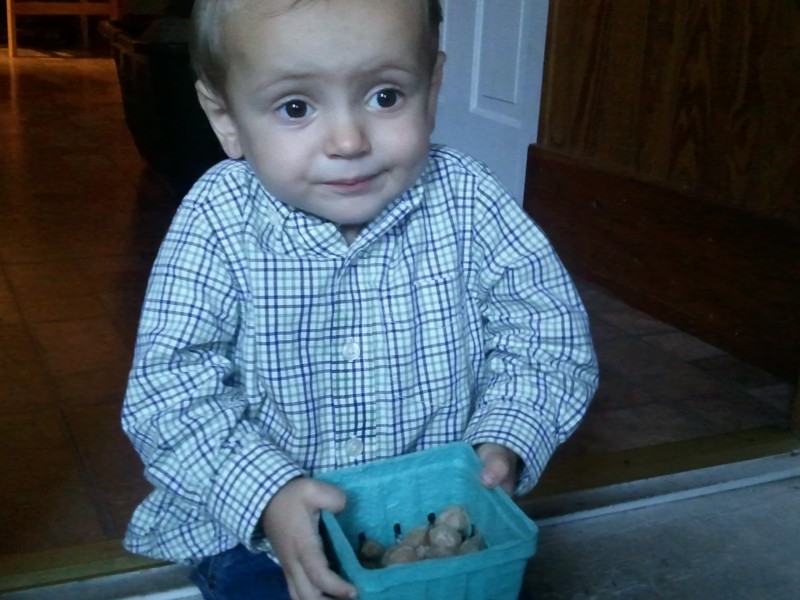
I think you know how we feel about cherries in my household, but have you ever heard of ground cherries? I hadn’t, until Mama brought some home last summer. She had intended to make jam with them, as they’re naturally high in pectin (which is what makes jams and fruit pies gel), but I had so much fun unwrapping them and eating them that she never had a chance.

This summer, however, Mama is growing ground cherries with a garden club where she works. Each week, she brings home tons of them! (They’re about as prolific as a cherry tomato plant, if that gives you any idea of their abundance.) I visited her and saw that the bush is shrubby with lots of strong vines that you have to pick up in order to harvest the cherries. As they’ve been ripening over the past couple months, Mama had again intended to make a double-cherry jam with regular cherries and these, but, as I noted, I really like to eat them on their own.

This is a photo from last year. Look how little I was!

This is a photo from last year. Look how little I was!

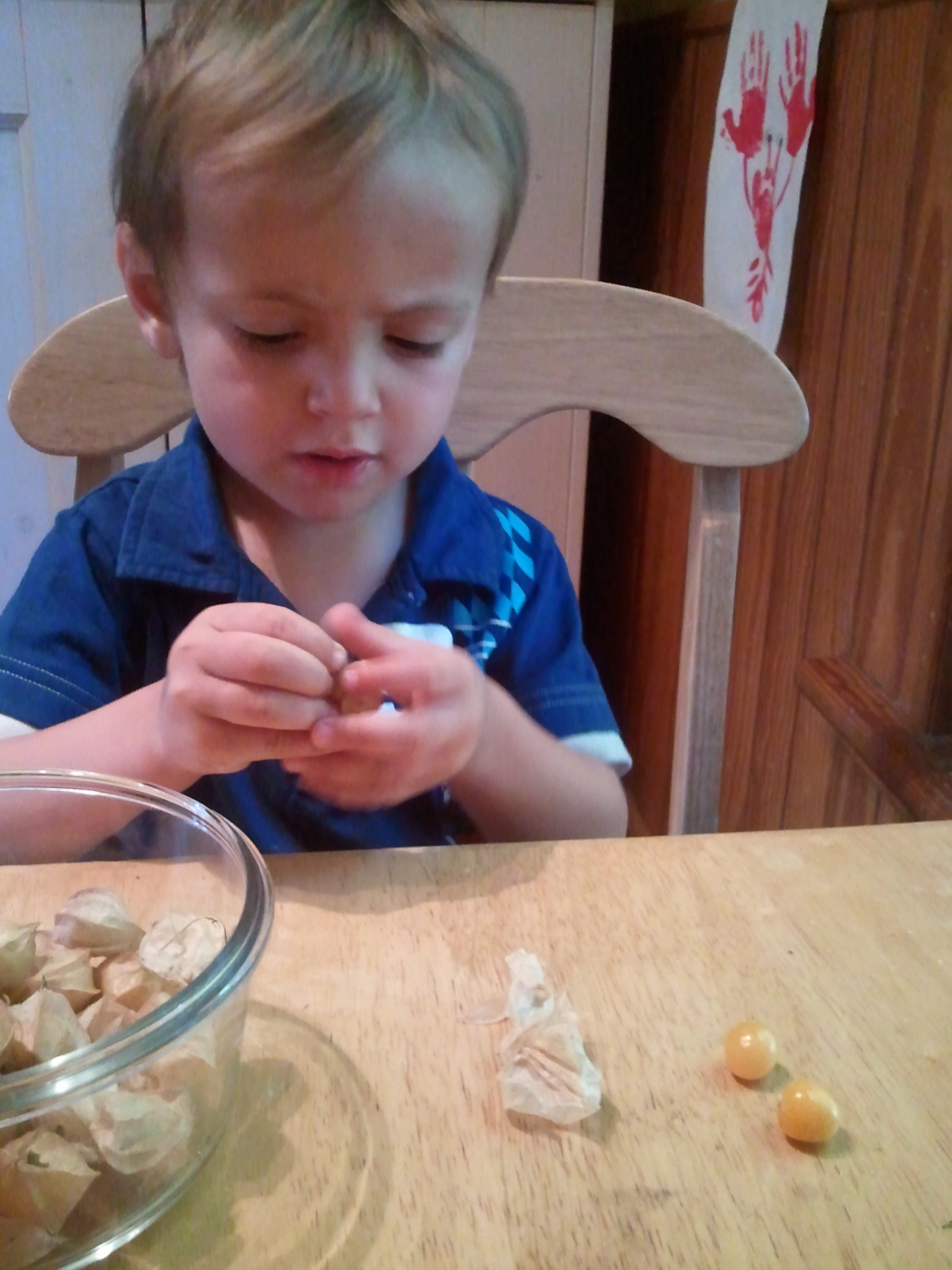
A ground cherry looks a lot like a tomatillo in that it grows in a papery husk. Unlike a tomatillo, however, you don’t want to eat a ground cherry when it’s green. Wait until it turns a nice golden orange, and you’ll taste a tiny bit of sunshine when you pop it in your mouth. They’re sort of sweet and sort of tart and sort of buttery.

Peeling them is half the fun.

Peeling them is half the fun.

If all this is new to you, there’s still time to get a quart from your local farmers’ market. Mama adds them to fruit salads and tops green salads with them. Maybe she’ll get around to adding them to a tomato pie this week…but not if I get to them first.

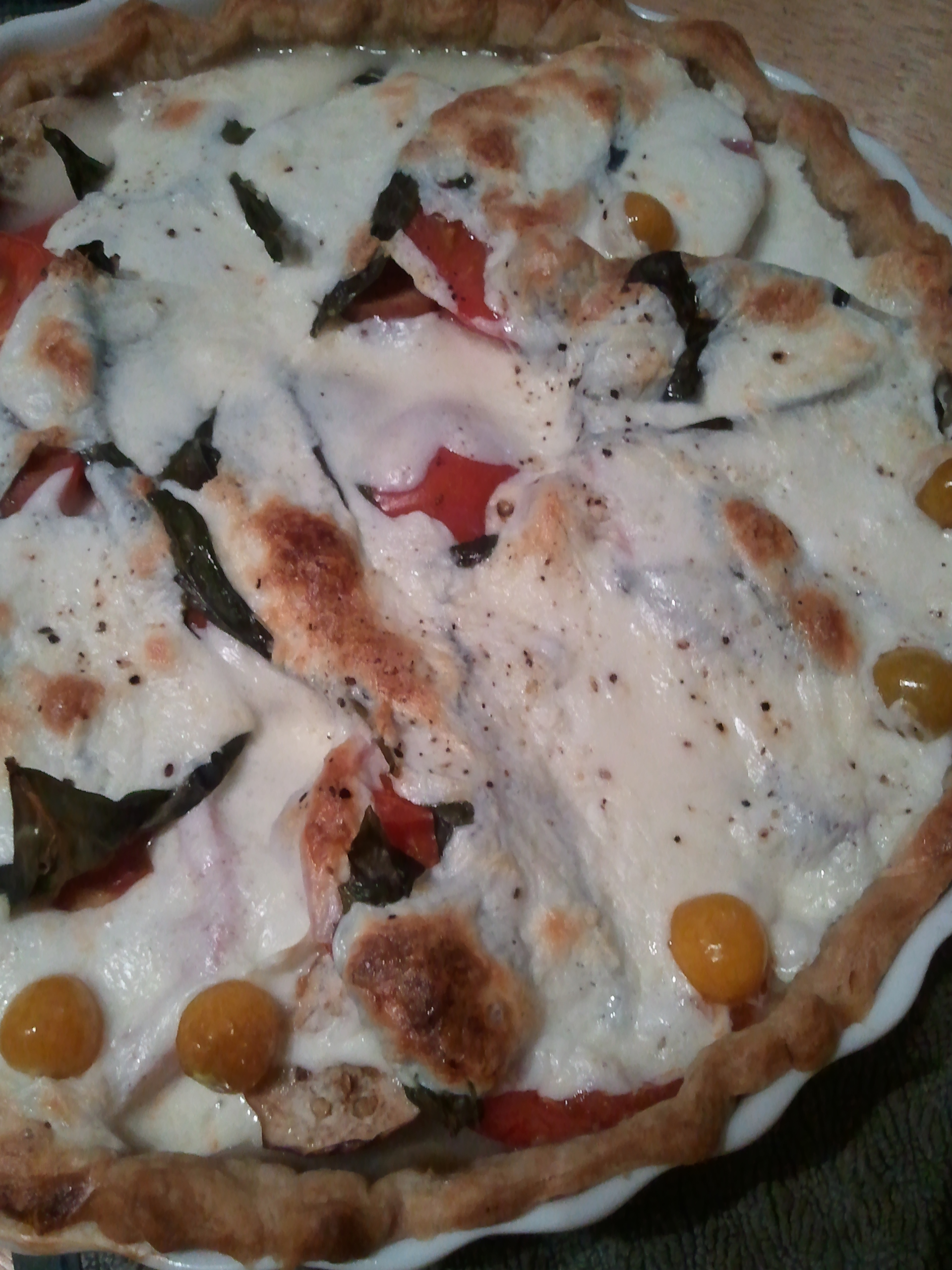
Papa ended up putting a few ground cherries in this tomato pie. I did all the work peeling them, though.

Papa ended up putting a few ground cherries in this tomato pie. I did all the work peeling them, though.

Love, Jude

She eventually DID get around to making some!

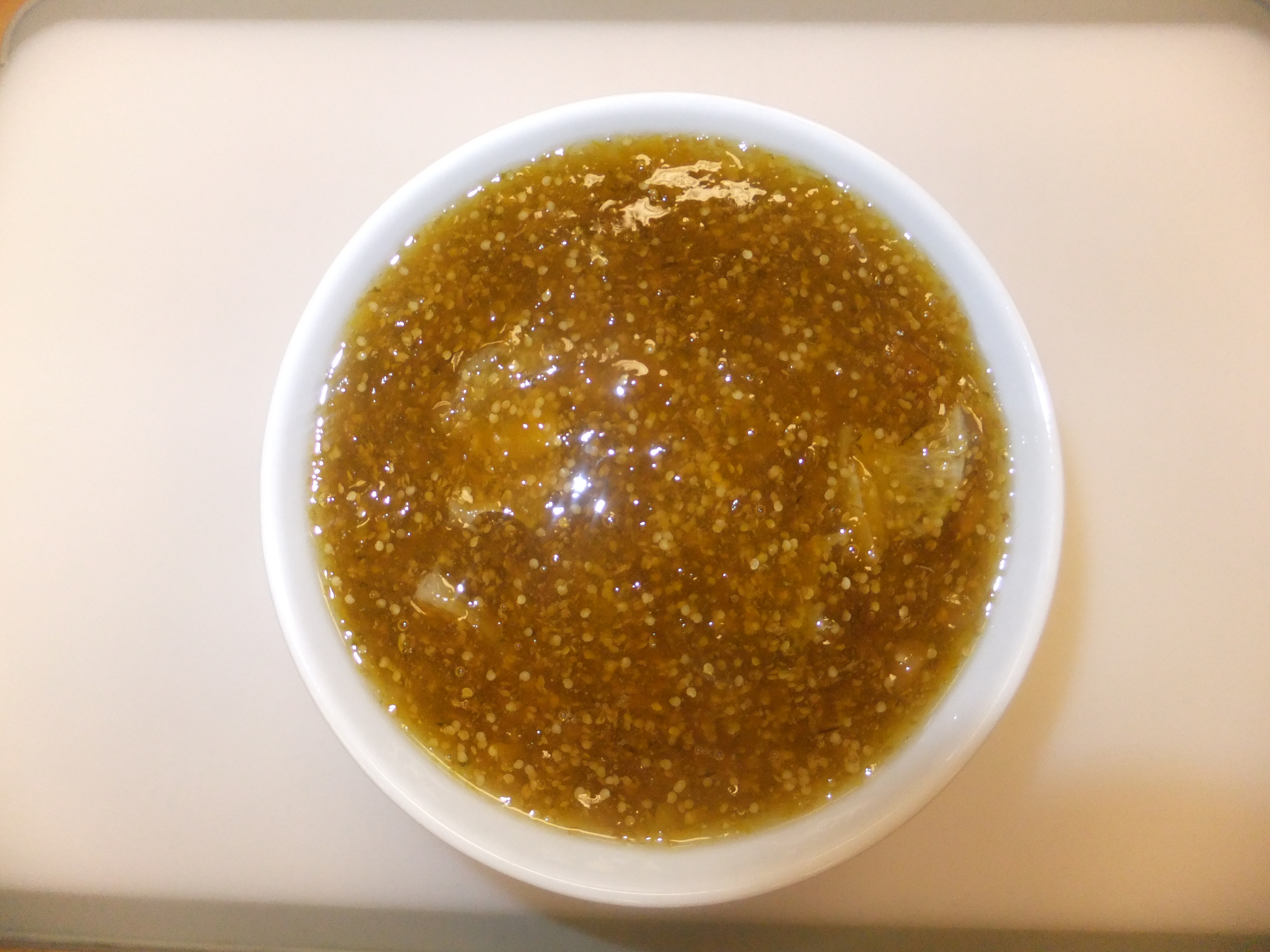
Mama eventually DID get around to making some marmalade!


1 Comment

Tomatoes’ Last Hurrah

Mama says it’s funny that we pine 10 months out of the year for vine-ripened tomatoes only to bemoan their abundance come August and September. Since we don’t grow them at home (as I tend to pick them too early… I just can’t help myself!), Mama brought home a nice big box of organic heirlooms. In it were Rutgers, Moscovich, Brandywines, Cherokee purples, and Japanese Trifles, which are apparently a hot commodity in Russia. Mama roasted a few dozen, and then she made sauce.

Mama tells me that you’re going to find as many variations of tomato, or marinara, sauce as there are tomatoes. There are quick tomato sauces and slow tomato sauces. Some stay on the stove, while others are tucked into the oven. Some rely on fresh garden produce, while others punch up the flavor by adding sugar or balsamic vinegar. Because she was asked, here’s how Mama does a quick, fresh tomato sauce:

Finely chop 1 yellow or sweet onion and sauté it in olive oil until soft. Add 1–2 minced garlic cloves and sauté 1 minute. Add 2, 3, 4, or 5 chopped tomatoes and cook until tomatoes break down and are heated through. Add salt and pepper, to taste, and stir in chopped fresh herbs (basil or oregano, but whatever you like). Done. Use immediately.
If you have more time, however, why not cook a little bit of summer in a pot that you can freeze for delectable dining come December?

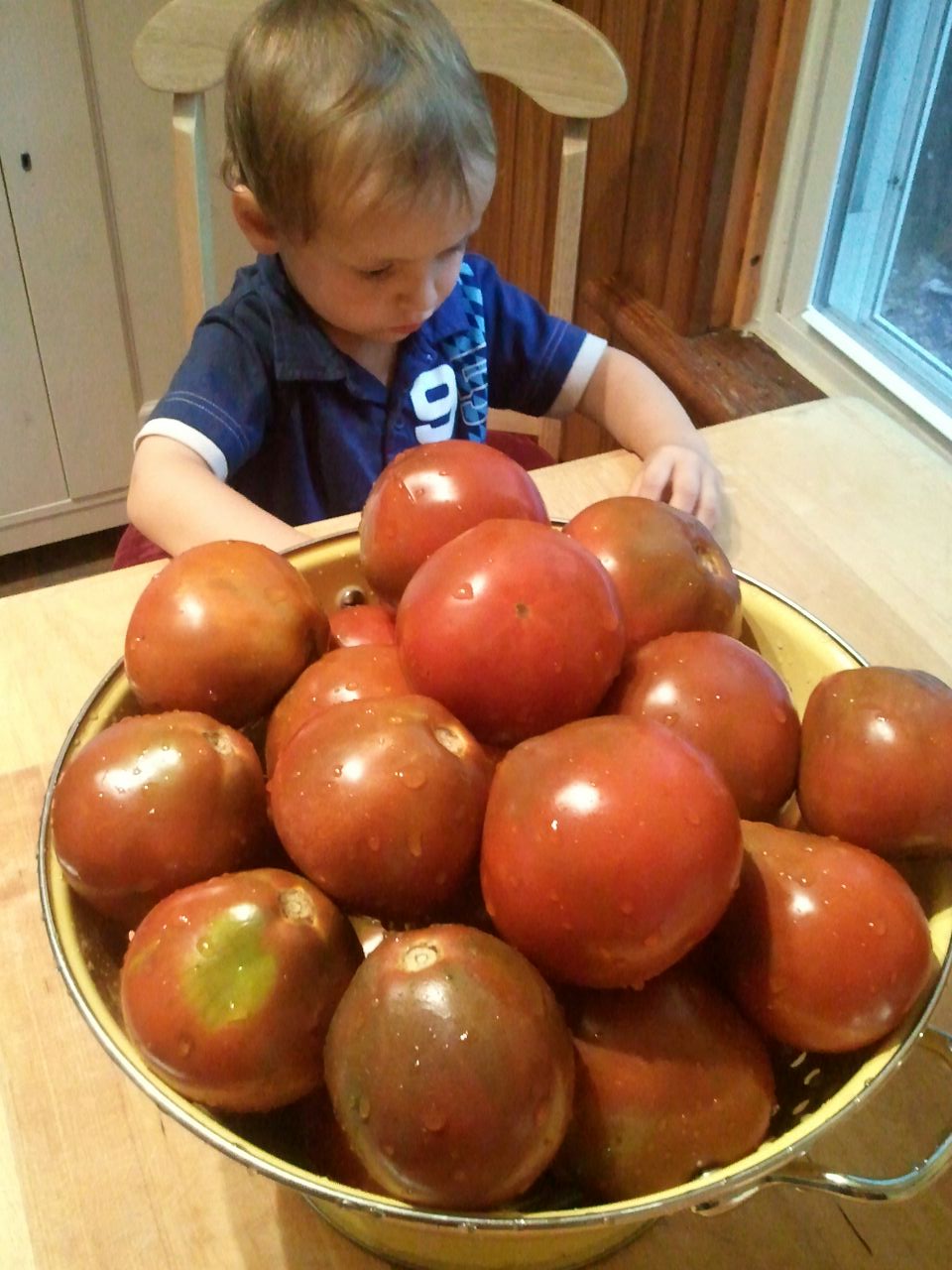
This isn’t even remotely close to half of what Mama brought home. Sheesh.

This isn’t even remotely close to half of what Mama brought home. Sheesh.

Regarding peels: They’re fine in a fresh sauce, but you don’t want them in your long-cooked sauce. Peel ripe tomatoes by hand, or try this method: core them (or lop off the top), cut a small X in the bottom, dunk in boiling water for 20–30 seconds, then plunge into ice water. Alternatively, you can run your finished sauce through a food mill, which will remove the seeds and skins. (While some folks feel the seeds turn bitter with prolonged cooking, Mama doesn’t mind them, so she doesn’t use a food mill.)

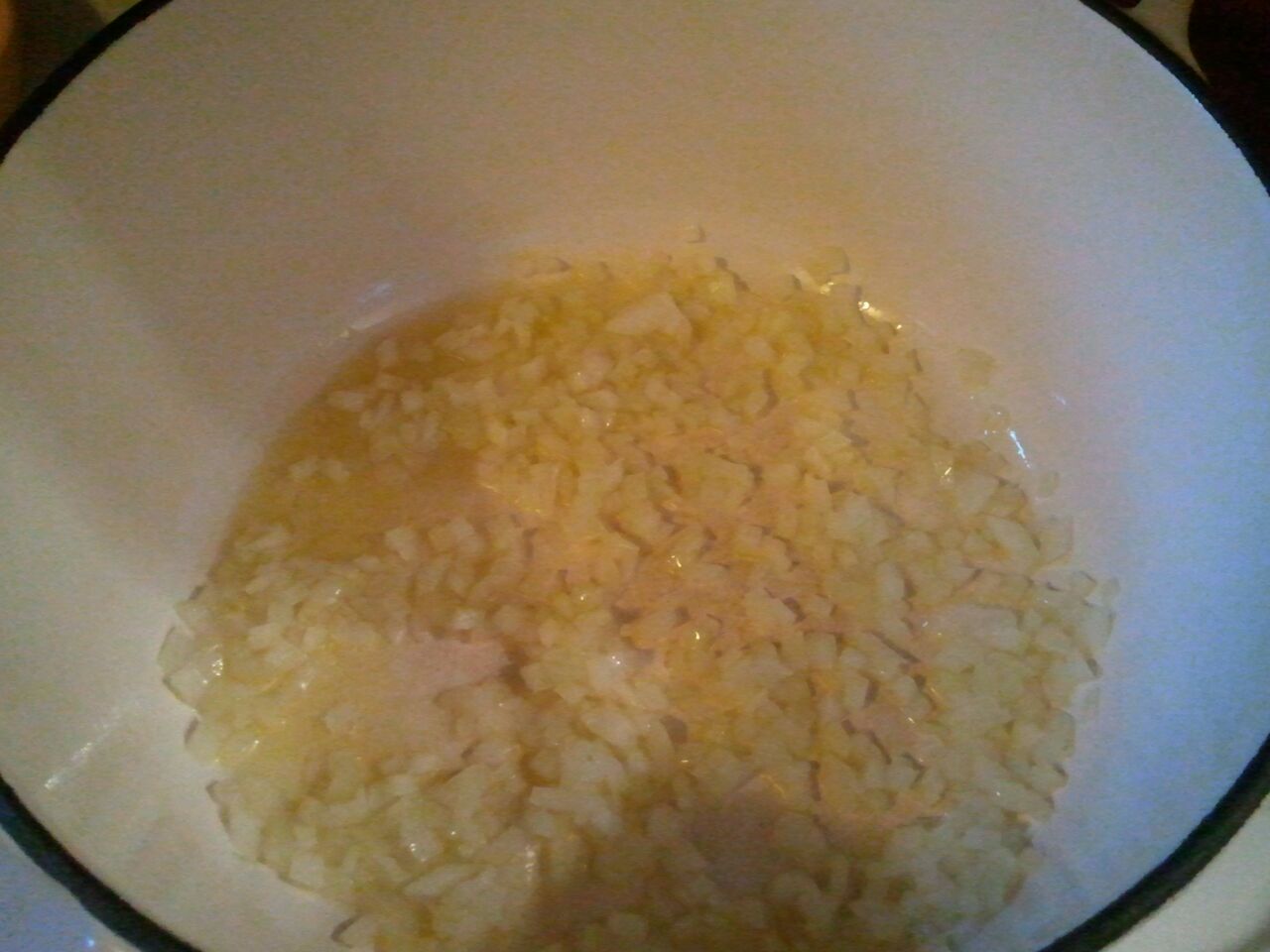
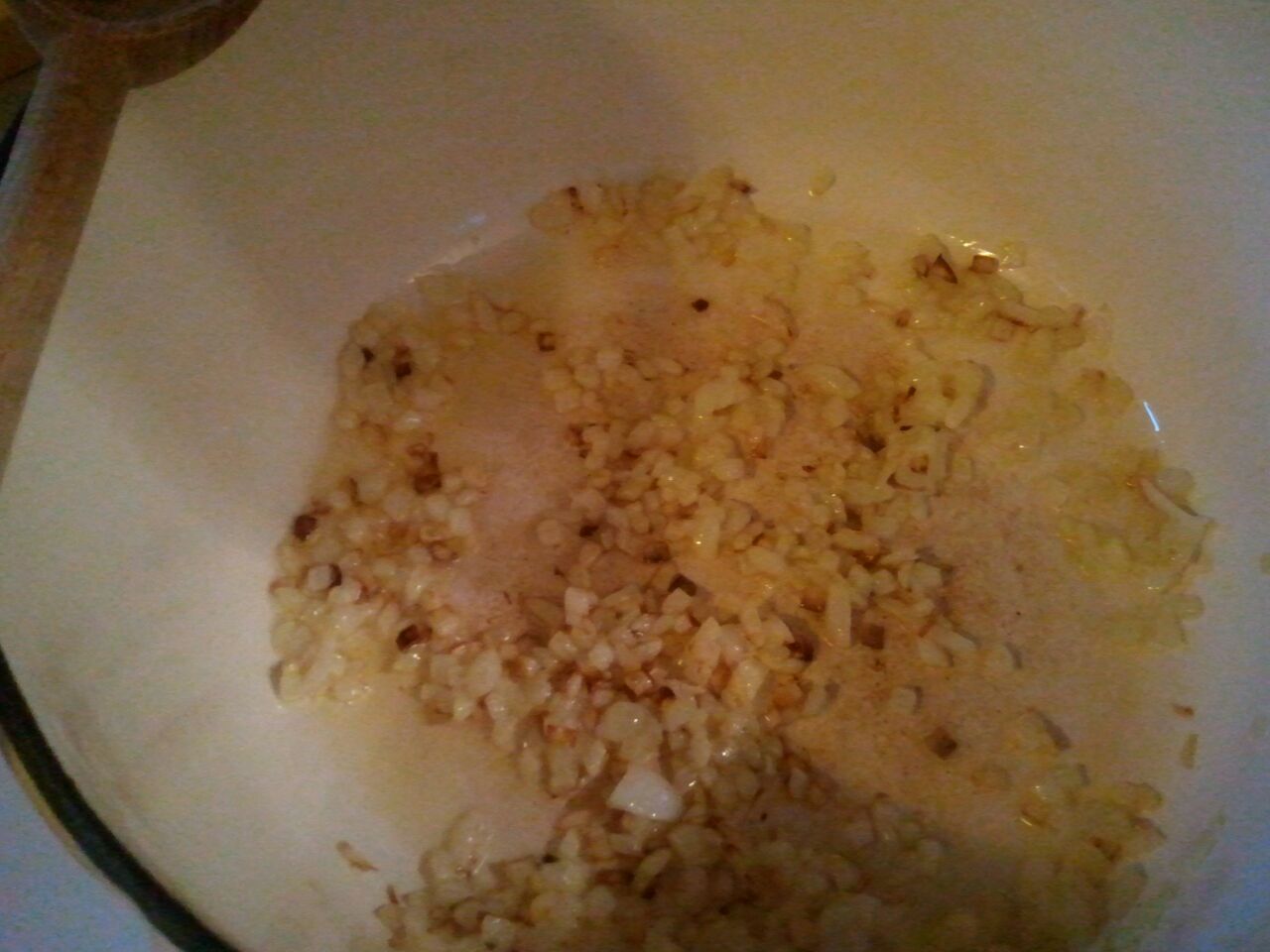
As with most things delicious, Mama insists on starting with a good base of sautéed onions and garlic in olive oil. Depending on personal preference, you can keep the heat low and cook them until tender, or you can raise the heat a bit and cook them until soft and caramelized (that’s when they turn brown). In either case, start with a big pot, and don’t add the garlic until the onions are where you want them (otherwise it’ll burn).

Even if you don’t like to eat onions, you would notice they’re missing if you skip them.

Even if you don’t like to eat onions, you would notice their absent flavor if you skipped them.

The darker you brown the onions, the more flavor they’ll have.

The darker you brown the onions, the more flavor they’ll have.

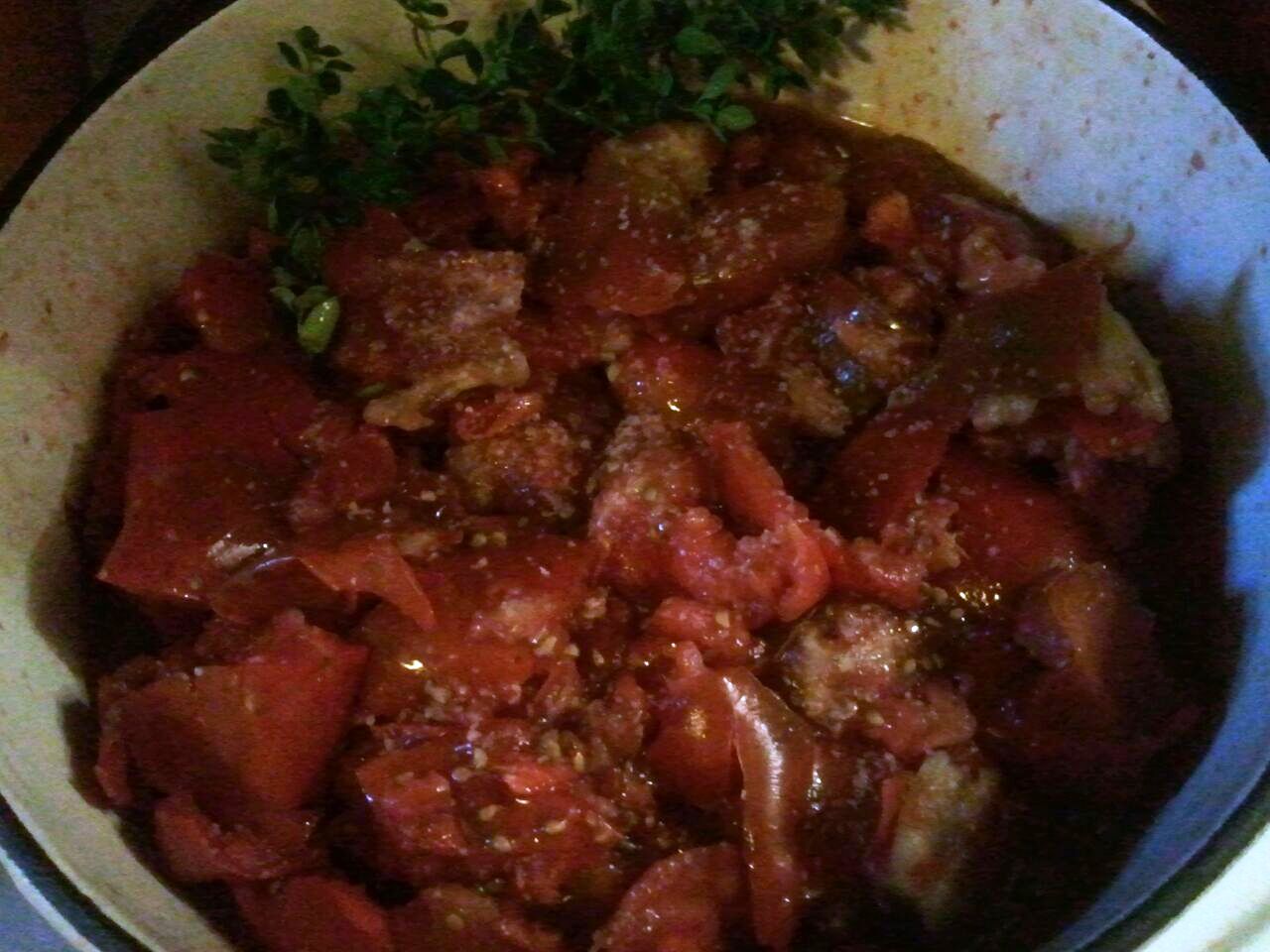
Mama chose to deglaze the pot with some red wine since she happened to have some on hand. No red wine? No problem. Just add the roughly halved tomatoes. But here’s the catch: You have to squish them. This is a great thing for a kid like me to do! Lower the heat, and begin simmering. Give them a good dose of kosher or sea salt and toss in sprigs of fresh herbs.

Mama clipped some oregano from the garden. (She’ll add the basil later, since it’s more delicate.)

Mama clipped some oregano from the garden. (She’ll add the basil later, since it’s more delicate.) You should’ve seen the mess these tomatoes made on the walls!

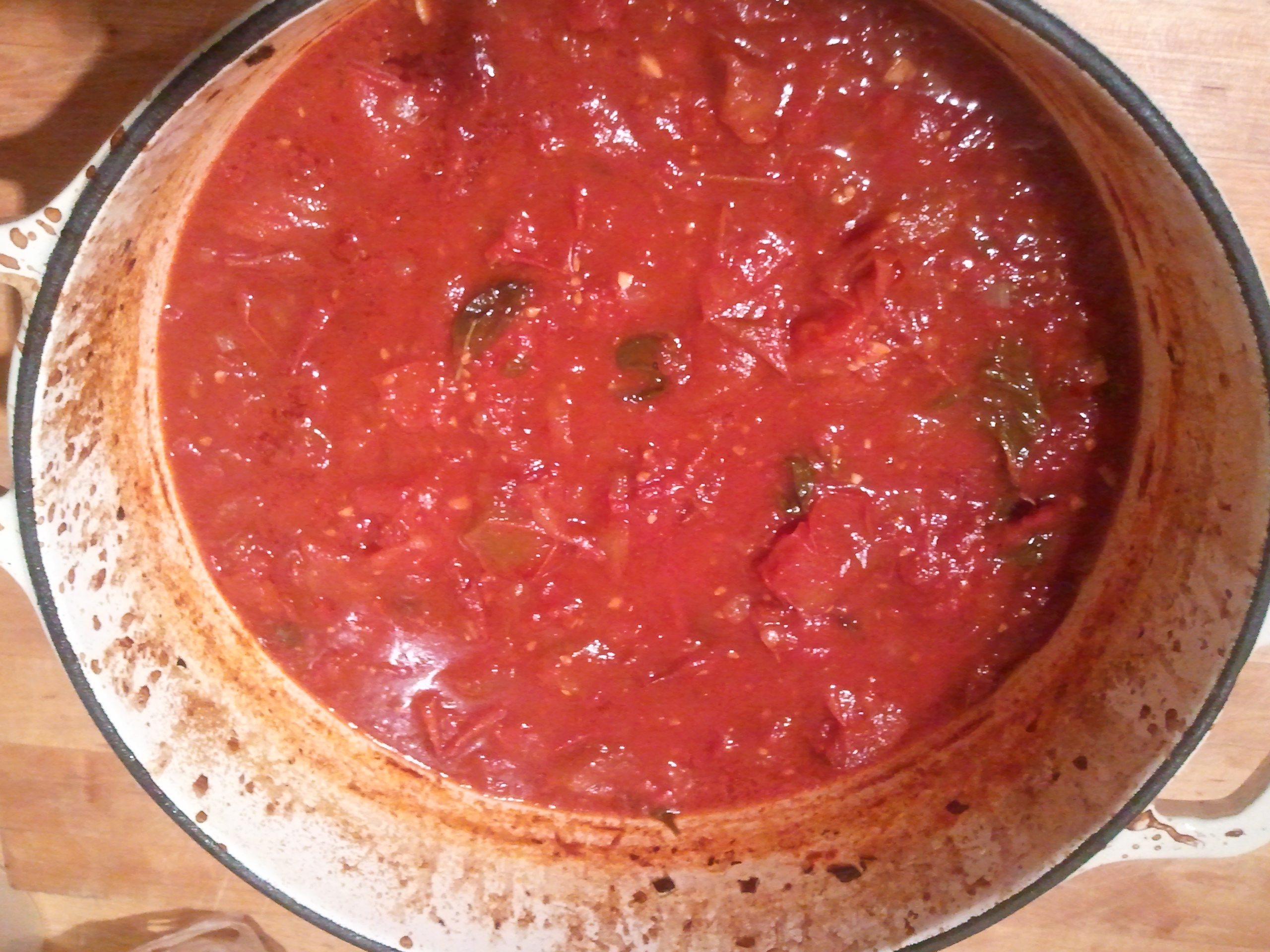
Once the tomatoes cook down, they’re going to release all their delicious juices. To add a bit of body (and to give the sauce a fighting chance of sticking to pasta), Mama did add a small can of organic tomato paste. When everything was good and bubbly, she put the whole pot, lid and all, in the oven on a lowish heat, about 300°F, and forgot about it. Well, not really. Every now and then she left me to play on the porch while she stirred the sauce, and the heavenly sweet smell would waft through the windows to where I sat. She cooked it until it reduced to a thickness she liked and the flavor was concentrated enough to be considered “awesome.”

What do you think was for dinner?

What do you think was for dinner?

If you prefer a smoother sauce, run it through a food mill, or take an immersion blender to it. We happen to prefer a little heft to our sauce. Set some aside for dinner, then allow the rest of the sauce to cool before portioning it into jars or zip-top freezer bags.

Poor Papa. He wanted to take a bag out of the freezer a few days after Mama made it, and she said he wasn’t allowed! It doesn’t matter that she froze several quarts. She doesn’t want to run out before the end of the year. Which is a shame, since I could see eating this every day.

Love, Jude

Oven-Roasted Tomato Sauce

Extra-virgin olive oil
1 (or 2) yellow or sweet onion, finely chopped (depending on how many tomatoes you have)
2–4 cloves garlic, minced (depending on how garlicky you like it)
Red wine (optional)
12–15 pounds fresh tomatoes, peeled* and roughly halved (crosswise preferred)
Kosher or sea salt
6 ounces tomato paste
Several sprigs fresh herbs, as desired

Preheat oven to 300°F.

Coat the bottom of a large, oven-safe pot or Dutch with olive oil and heat it over medium heat. Add the onion and sauté, stirring occasionally, until very soft and beginning to caramelize, about 10 minutes. Add the garlic and sauté 1 minute more. If desired, deglaze the pot with a healthy splash of red wine. Carefully add the tomatoes in batches, squishing them with your hands as you go. Mama supposes you could skip the squishing step, but it gets the juices released a bit quicker. Alternatively, you could give them a few pulses in a food processor to speed things up. But we’re not talking fast here, are we?

Get the tomatoes going at a low simmer. Add a generous helping of salt and stir in the tomato paste. Toss in a few sprigs of hearty herbs like oregano. Just put the whole thing in; you can fish it out later or catch it in the food mill. Cover and put in the oven for a couple hours, stirring occasionally. Towards the end, add more delicate herbs, like basil.

*May also reserve peeling for after the sauce is cooked, either by hand (tedious!) or with a food mill.


4 Comments

A pie for all seasons

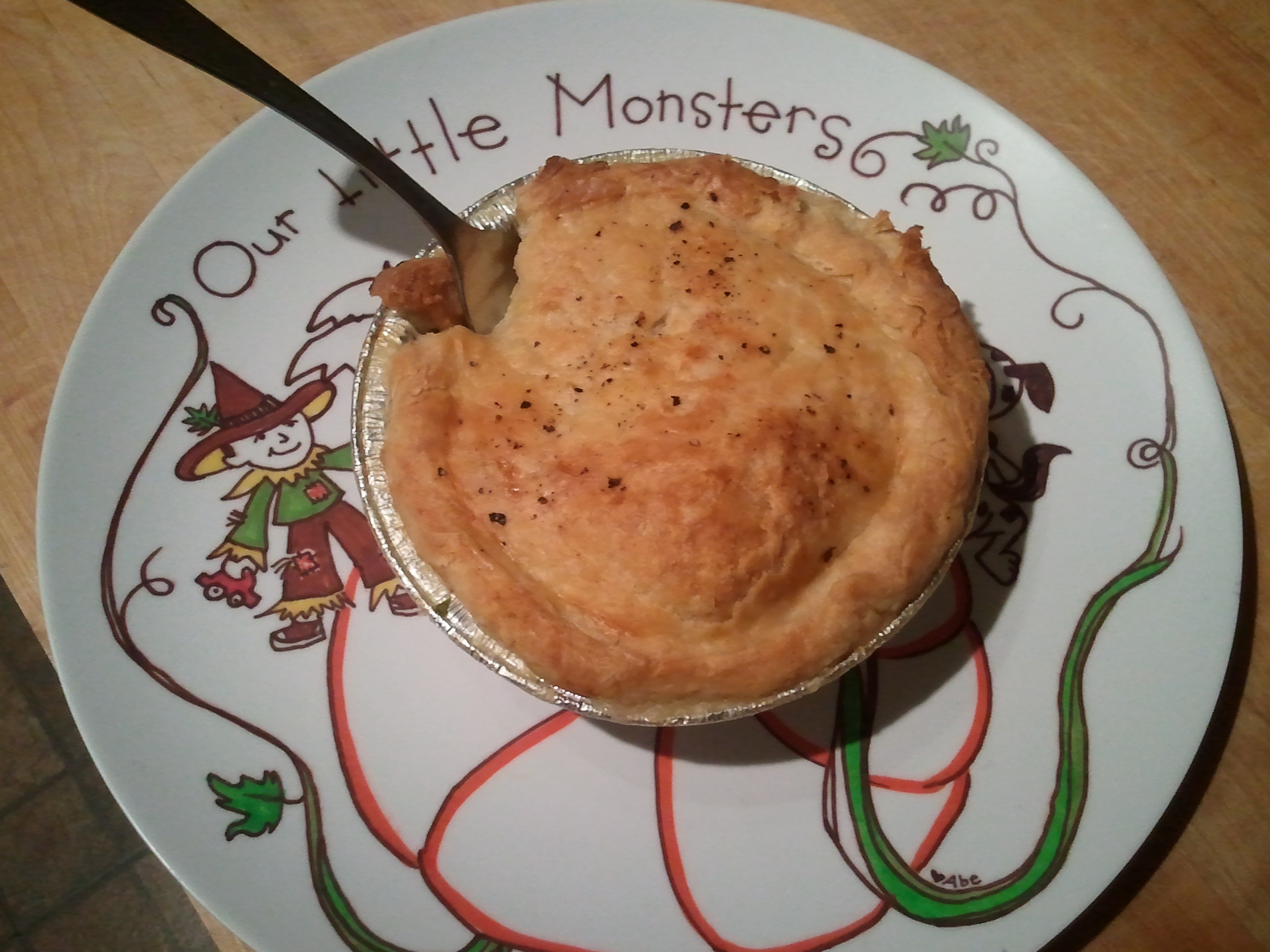
Mama likes to add the word “pie” to certain things. She thinks this will get me to eat them…and she’s often right. There’s tomato pie, for instance. And now I’ve been introduced to the “pot pie.” Specifically, a tiny little Jude-size pie filled with all kinds of savory yumminess.

Don't you just want to dig in?

Don’t you just want to dig in?

When Mama decides to make pot pies, she makes single-serving ones, and she makes two versions: a veggie one for herself and a chicken one for Papa (and I suppose me). While it seems like a lot of work—and it does take a few hours, or in our case, two nights after work—once the pot pies are done, they freeze well, and you’ll have 8 dinners on tap. Mama makes a few alterations to the recipes, and she has a couple tips for making both recipes at the same time.

First, make the dough for both. It’s easy enough to make one batch, then the next. The bits of dough left on the blade of the food processor after batch 1 aren’t going to affect batch 2, so don’t even bother cleaning it. (You could also make both batches together, if your food processor can handle the volume.) Wrap the dough disks and let them chill in the fridge. Mama says that’s so they can relax before we roll them. She also uses all butter, rather than half shortening.

Second, chop all your vegetables together. Even though you need chopped onions for the chicken pie and sliced onions for the veggie one, you can still prepare the onions all at once. Get your crying out of the way, Mama says. (Whatever that means.) Look over the recipes to see what can go together, and set out the appropriate bowls or containers. For example, for the veggie pie, the fennel and the onions go into the pot together, so Mama sliced them and set them aside in one bowl. Ditto the carrots, asparagus, and squash.

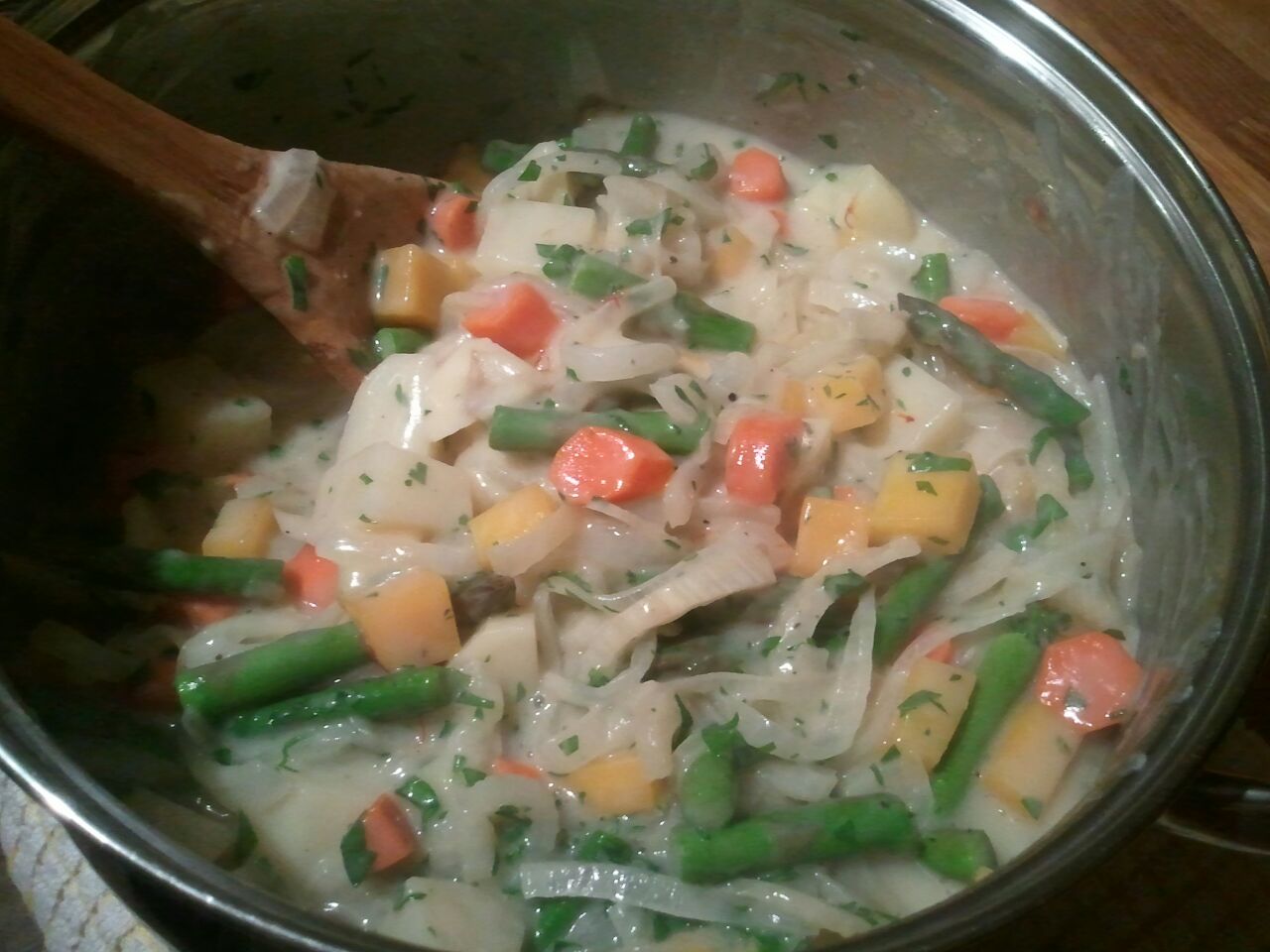
This is the veggie filling. Papa nicked some for a snack before Mama could finish making her pies.

This is the veggie filling. Papa nicked some for a snack before Mama could finish making her pies.

Third, both recipes make 8 larger pies, or about a dozen of the smaller ones. When you roll the dough, you probably won’t be able to get all 8 out of the first roll.

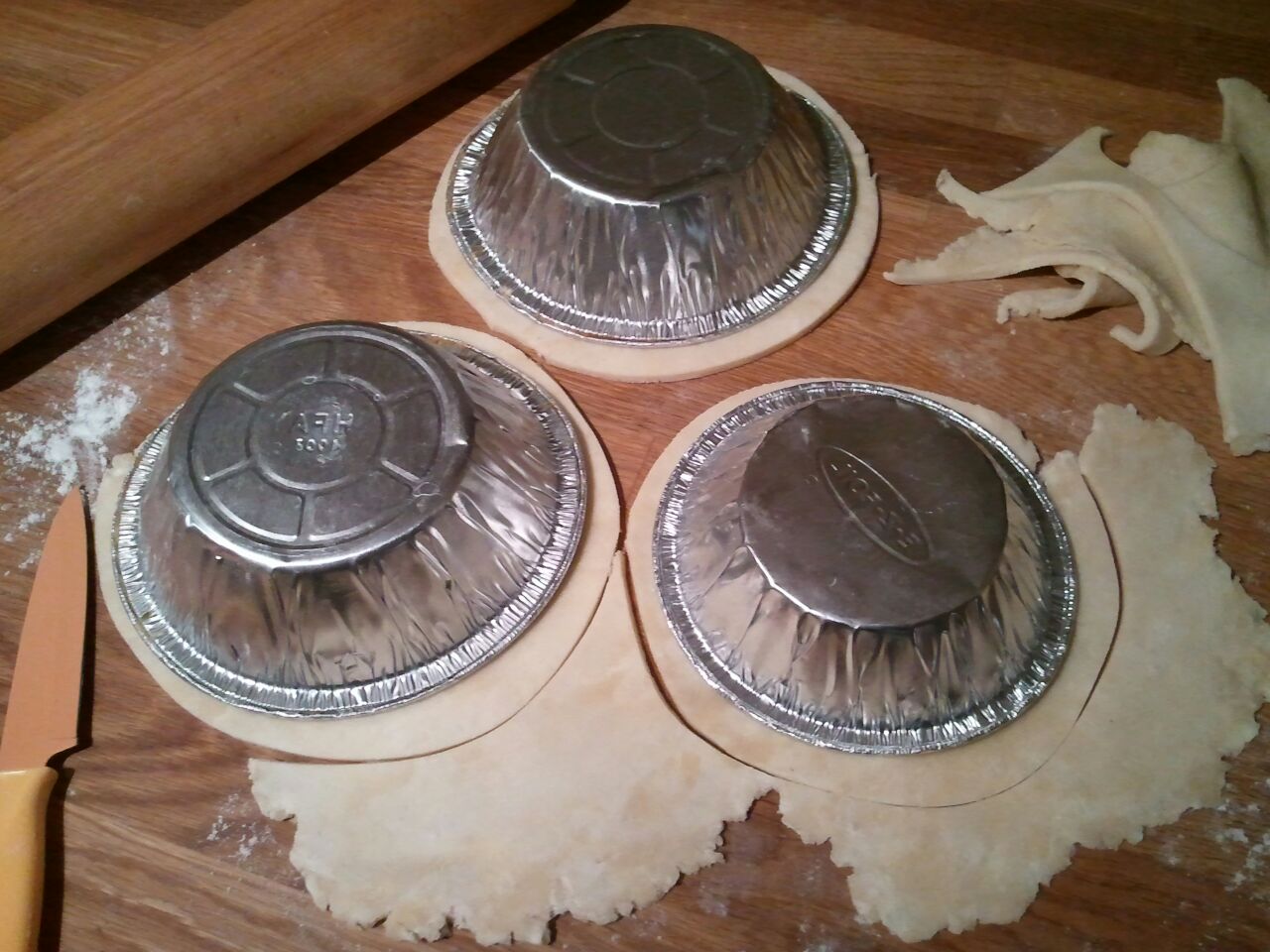
Turn a pie tin over onto the dough and cut the circles a little larger than that.

Turn a pie tin over onto the dough and cut the circles a little larger than that.

Gather the scraps, gently smoosh them together, and set the wad aside. Prepare as many pies as you have crusts for while the dough relaxes again. (Mama showed me how it just springs back to a little circle when you try to roll it again right away.)

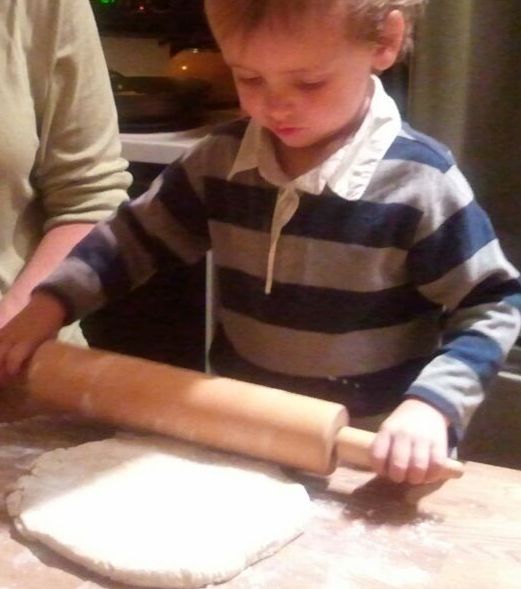
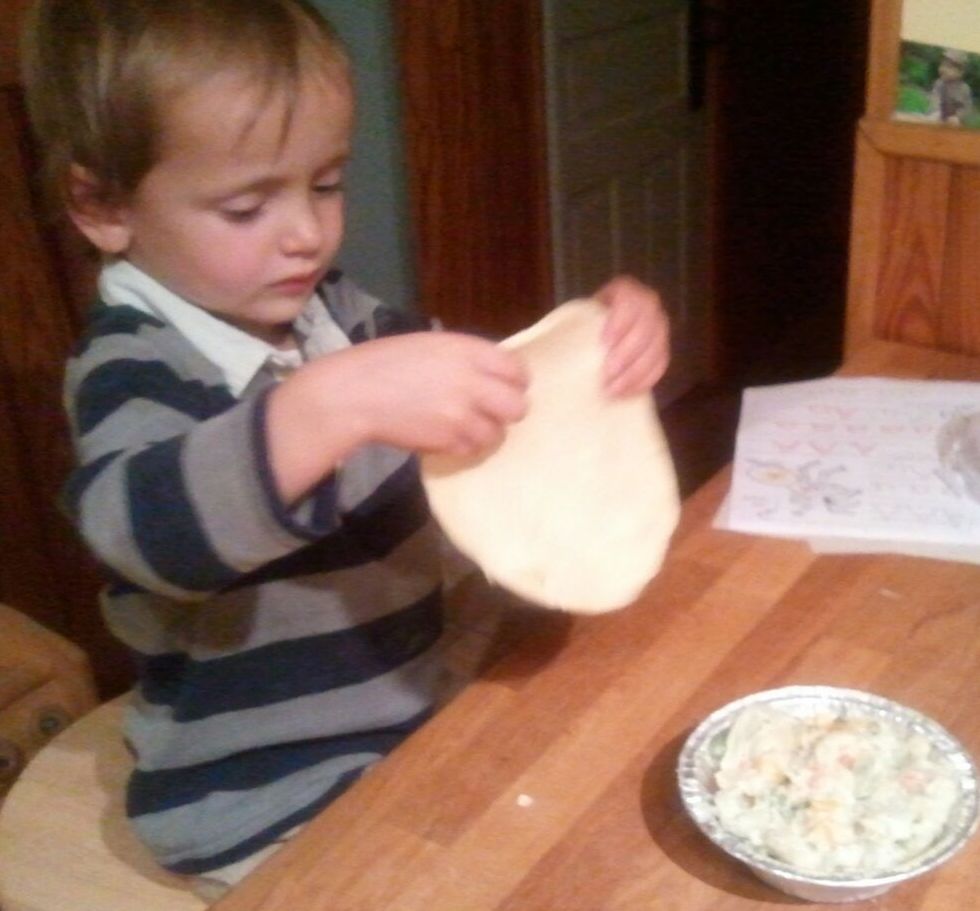
This is a freshly rested disk of dough. It’s such a lovely, stretchy dough that even I could roll it fairly easily (though Mama did help).

This is a freshly rested disk of dough. It’s such a lovely, stretchy dough that even I could roll it fairly easily (though Mama did help).

As for the recipes, Mama skipped the Pernod in the veggie recipe, and it goes without saying that she used homemade veggie stock instead of chicken. And instead of par-cooking the veggies in water, she does it in the stock. You not only get extra-flavorful veggies, she says, but the stock gets an added boost, as well. Start with about 3 cups stock for the veggie version.

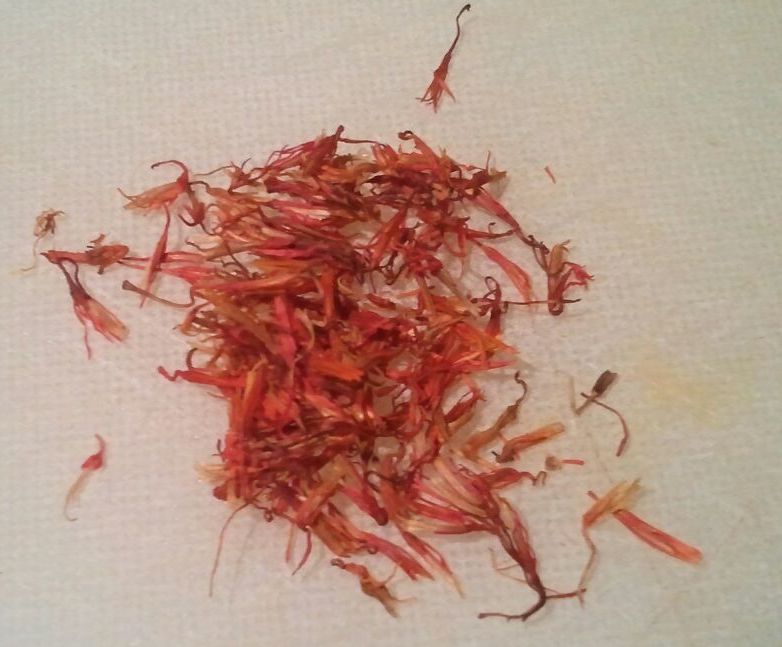
Don’t scrimp on the saffron. It’s a pricier spice, but Mama suggests going to an ethnic market, where items like this are often more reasonably priced.

Don’t scrimp on the saffron. It’s a pricier spice, but Mama suggests going to an ethnic market, where items like this are often more reasonably priced.

For the chicken pie, Mama didn’t pour in all 5 cups stock at once when she finished the sauce. It can get a little soupy, so she started with a quart and gauged what the thickness was like before proceeding.

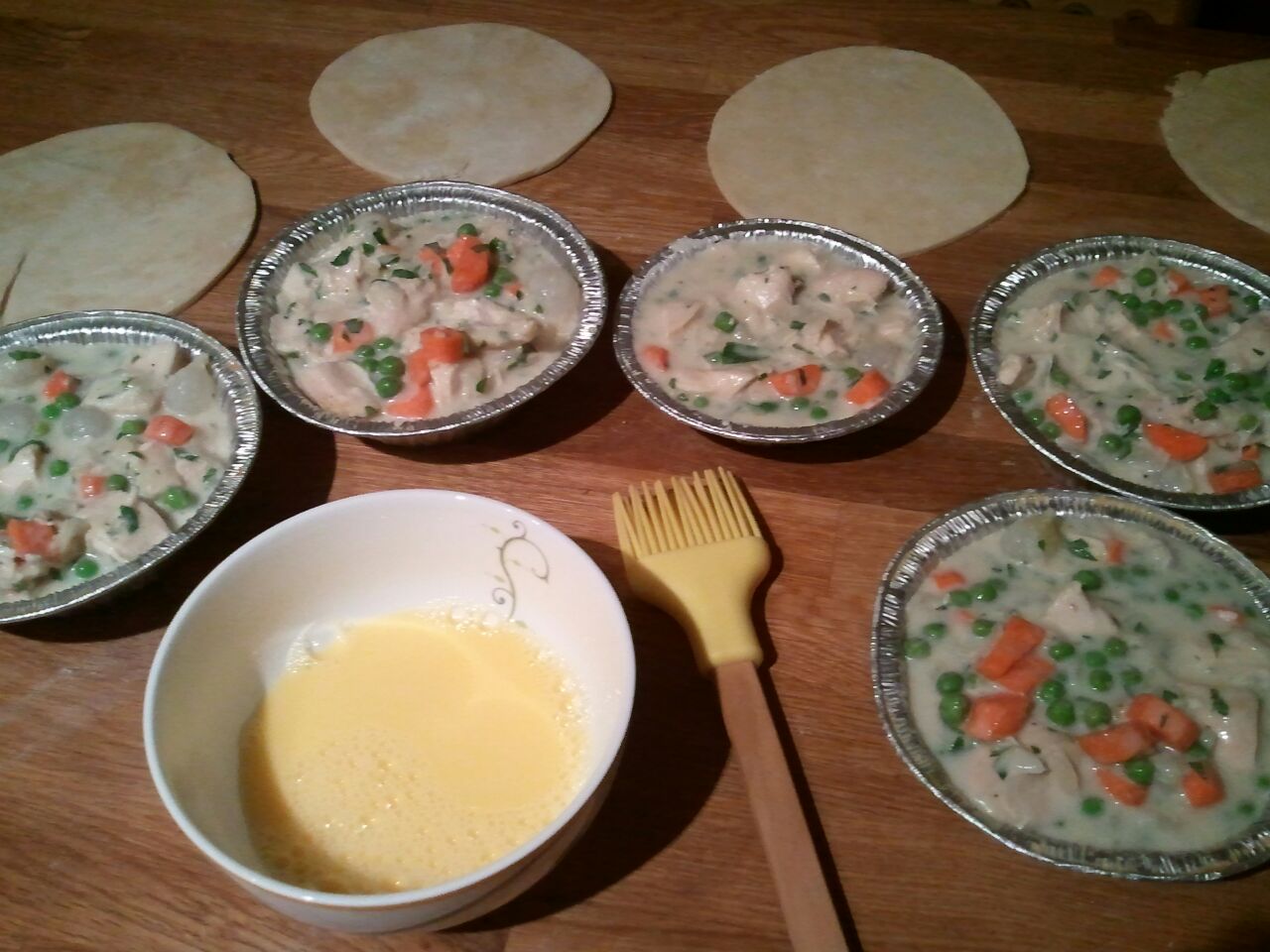
This is the chicken filling. Fill one pie to see how much you want it filled, then stick with that amount for each pie. While the dough rests before its second re-roll, go ahead and egg-wash the rims of the pie plates and finish the pies.

This is the chicken filling. Fill one pie to see how much you want it filled, then stick with that amount for each pie. While the dough rests before its second re-roll, go ahead and egg-wash the rims of the pie plates and finish the pies.

The dough stretches a little bit, but not too much. It fits nicely over the bitty pot pie. Once the rims are egg-washed, it’s a matter of laying the dough on top and crimping the edges shut.

The dough stretches a little bit, but not too much. It fits nicely over the bitty pot pie. Once the rims are egg-washed, it’s a matter of laying the dough on top and crimping the edges shut.

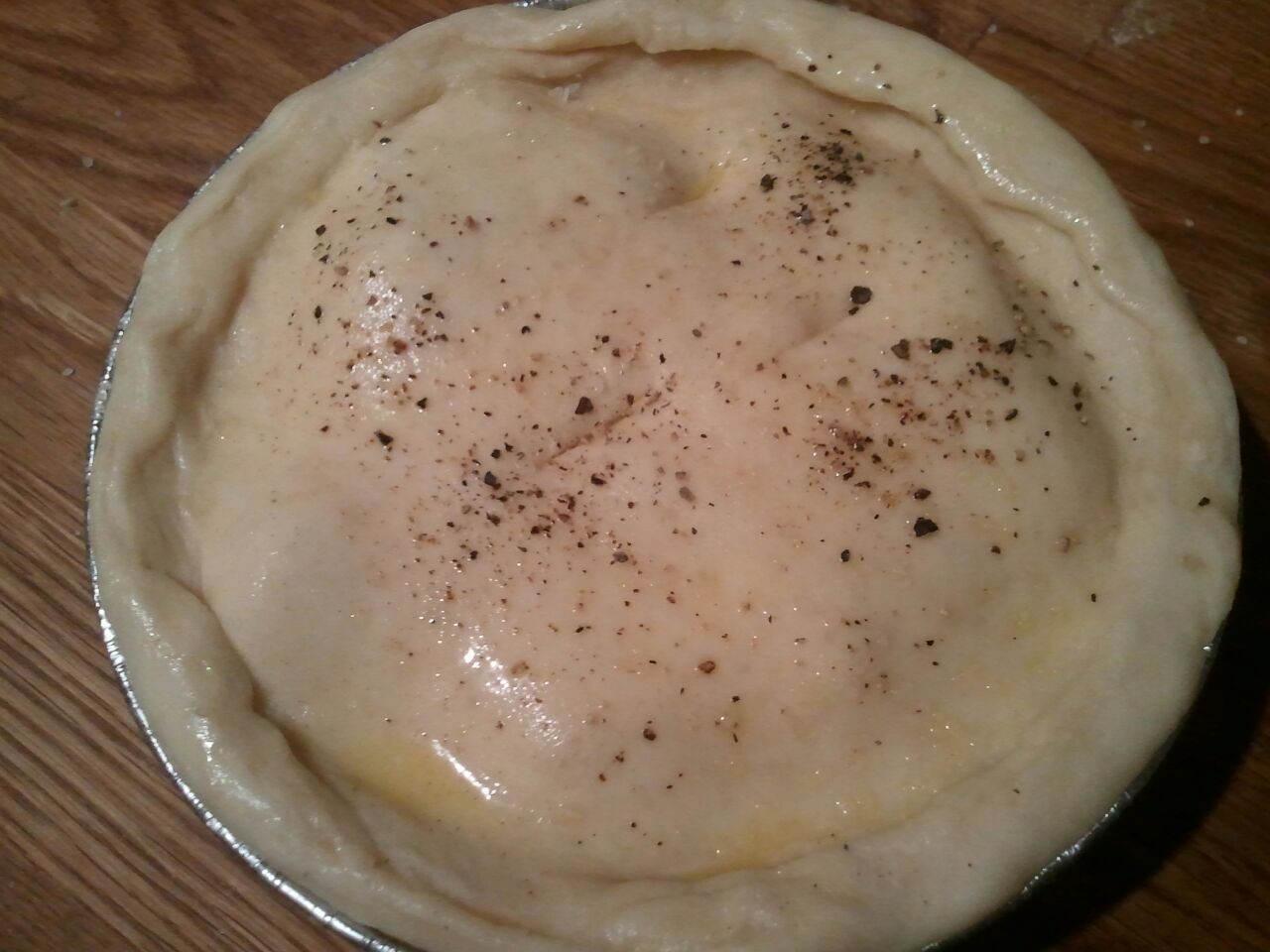
Don’t forget to egg-wash the top, cut steam vents in the dough, and sprinkle with salt and pepper. Mama says that’s the best part.

Don’t forget to egg-wash the top, cut steam vents in the dough, and sprinkle with salt and pepper. Mama says that’s the best part.

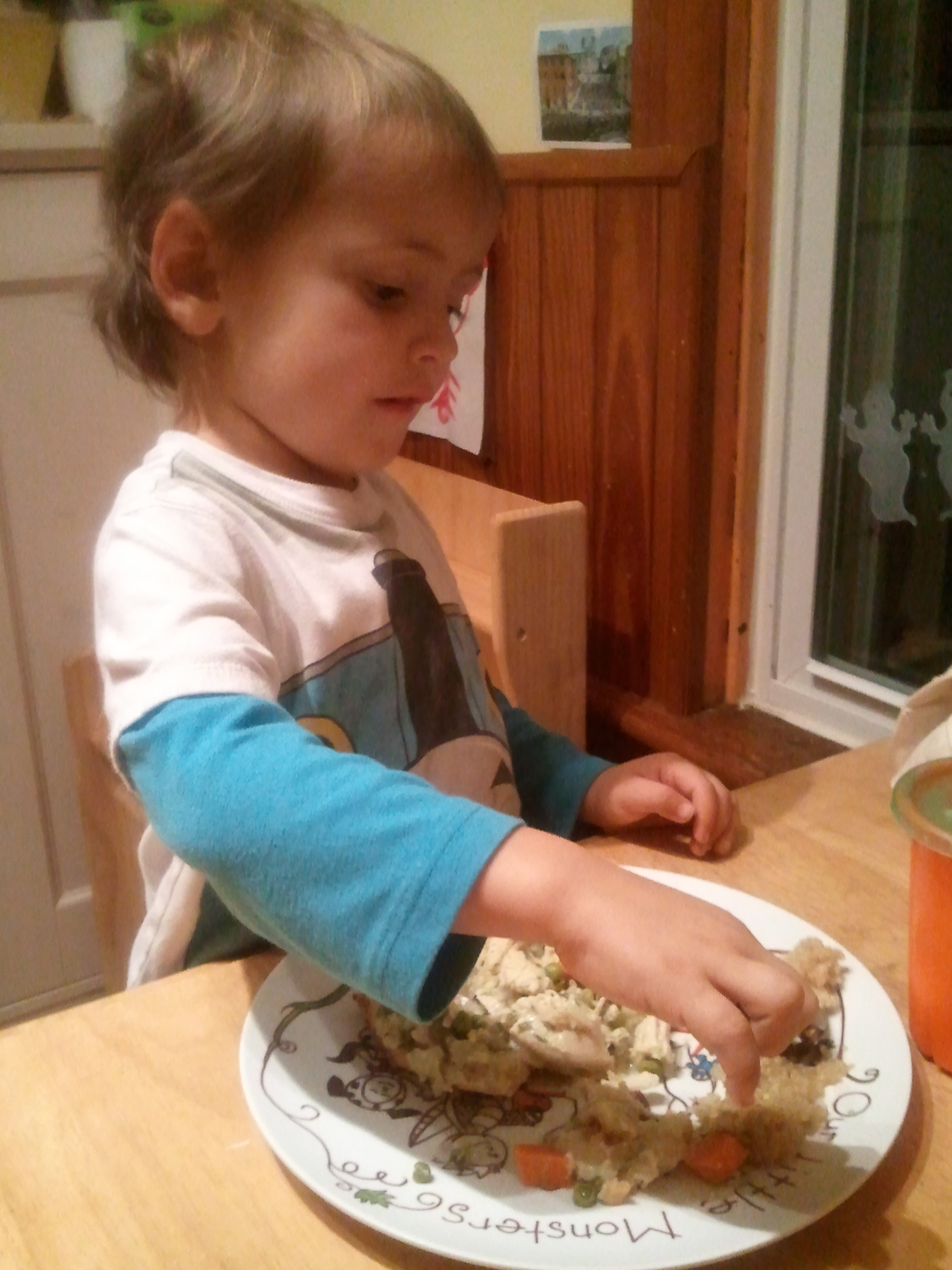
To freeze, Mama covers the pies in both plastic wrap and foil. She sets them on a baking sheet and places them in the freezer that way. Once frozen, then she puts them in a ziptop plastic bag for storage. To bake, she puts them on a baking sheet in a 375°F oven, with the foil on, for half an hour to get the insides heated, then uncovers them for the final 45 to 60 minutes, to get the crust golden and flaky. To serve, Mama cooks brown rice or quinoa, but she says any grain would be a lovely addition. She likes to flip the pie over into a bowl of quinoa and mix it up that way. That sounds kind of yucky, though. And I don’t really like quinoa. But I do like these little pot pies.

I like it!

I like it!

Love, Jude


1 Comment

What do you do with a TON of basil?

Our basil was slow to start this year, but it decided to spring up while we were on vacation. Now the plants are almost as big as me! In order to keep the plants lush and producing big flavorful leaves, Mama picks off the flowers. She says otherwise, the basil will get woody. “Woody?” I ask. “Woody,” she confirms. (I was being too much of a stinker to let Mama get a good picture of me with the basil, but you can see how tall the plants are here.)

She also has to harvest the stems and leaves if she wants to keep using the plants. It sounds funny to me that you have to take off leaves to get more, but Mama is sometimes right about things, so I’ll trust her on this one.

Aside from tossing chiffonade basil (that’s thin ribbons) into salads and over tomatoes & mozzarella, Mama likes to make pesto. Though pesto is decidedly of Italian origin, Mama told me she first had fresh pesto while in college on a visit to a friend in Germany (she says I’m not allowed to say how long ago that was ). She wrote down her friend’s mother’s recipe in her little journal and used that recipe for many years. Now she makes her own, and you’ll see that it’s not only simple to prepare but simple to store—and so much tastier than the oily stuff that comes in jars.

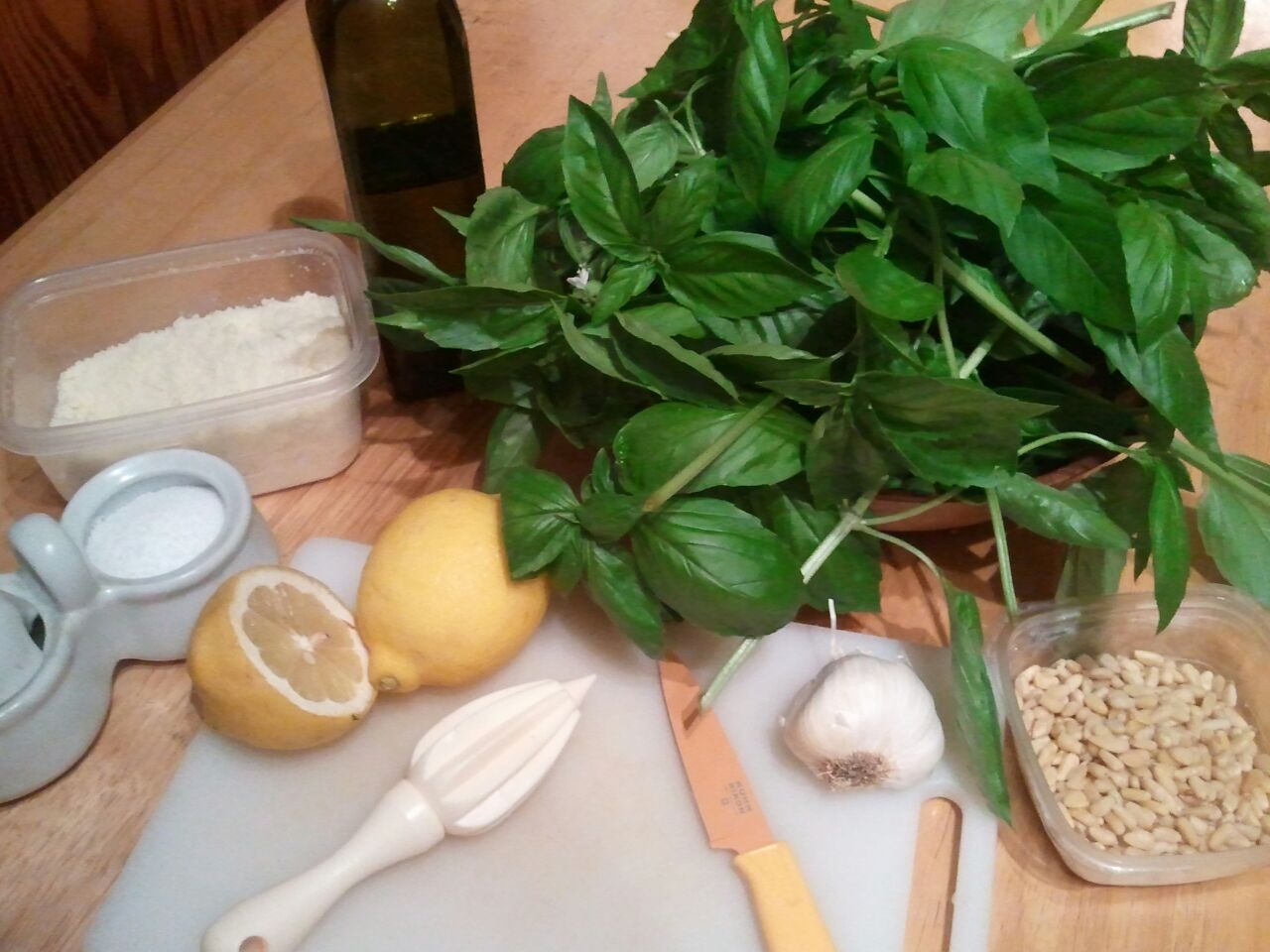
Gather everything together before you start, and you'll be done with your pesto in no time.

Gather everything together before you start, and you’ll be done with your pesto in no time.

Mama showed me how she whirrs everything in a food processor. She usually does it to taste, which is helpful when you don’t have a recipe handy. She said if you want to keep your pesto looking as bright as the day you made it, blanch the basil leaves in boiling water for all of 20 seconds, then plunge them in ice water and squeeze dry. Otherwise, if you don’t really care that the color fades, skip the extra step.

The last thing I’ll tell you about pesto is that you can use just about any green, like kale, cilantro, or parsley, as well as just about any nut or seed, such as walnuts or pumpkin seeds. If you find yourself with a bunch of herbs or a head of greens, try making your own variation on a classic pesto.

Now, I told Mama, “I don’t like pesto,” but she and Papa claim I’ve eaten it before. I’m not so sure, so I’ll give this one both a “hit” and a “miss.”

Love, Jude

What would enjoy a dab of pesto? What wouldn’t?!

Potato salad
Various pastas
Peas/green beans/asparagus
Béchamel (white sauce)
Meatloaf, burgers, meatballs (add to the mix or serve as a topping)
Scrambled eggs
Egg salad
On top of grilled portabellas or eggplant with mozzarella & tomatoes
Pizza (spread on pizza crust or a pita or anything else you’d consider a “pizza”)
Mix with softened butter and slathered on corn on the cob
Sandwich spread
Aïoli
Bruschetta with roasted red peppers
Broiled or grilled chicken or fish
Hummus or white bean mash
Chickpeas
Thinned with a bit of balsamic vinegar and use it as a vinaigrette

Basil Pesto

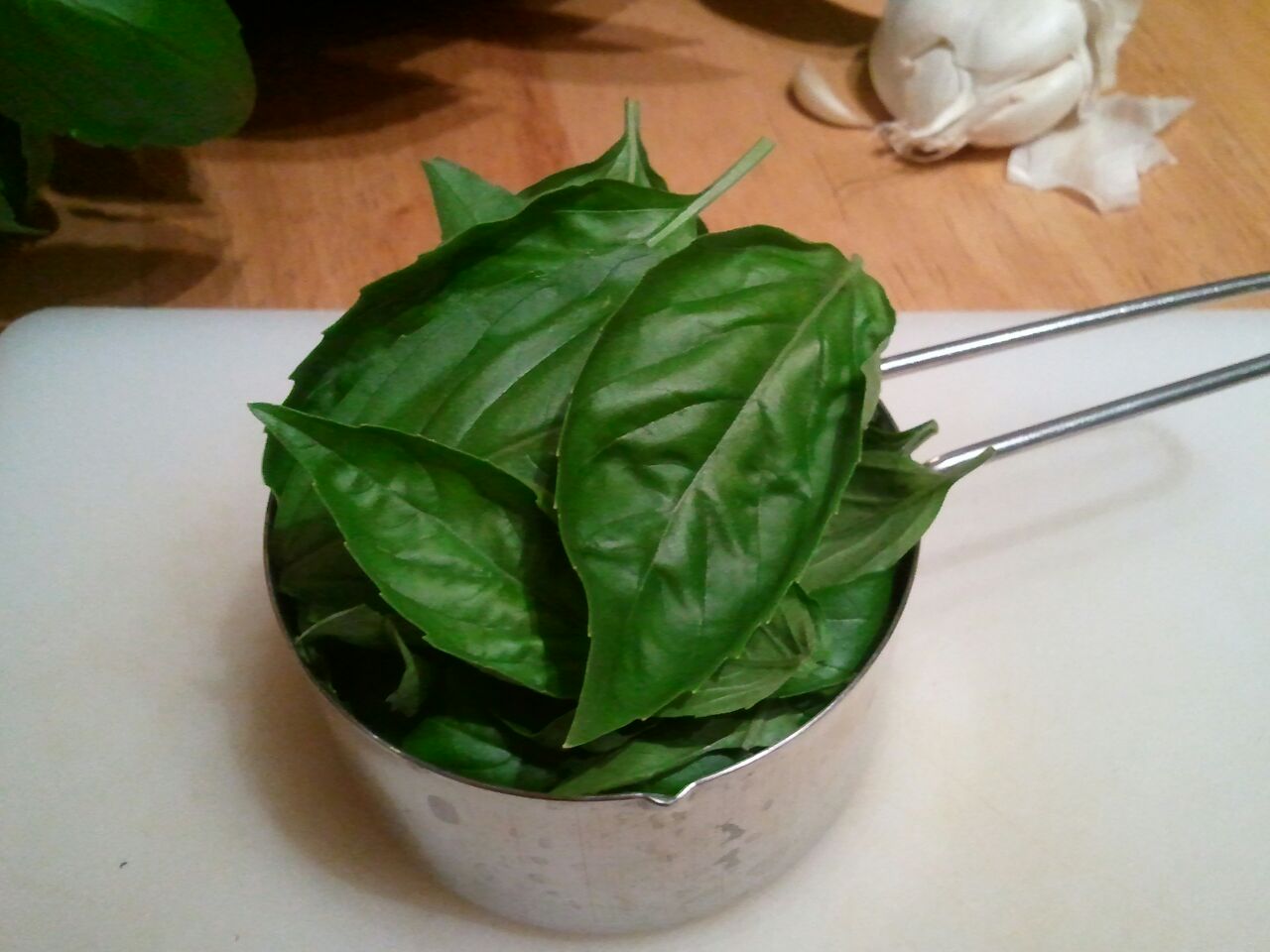
1 cup packed basil leaves
2 tablespoons pine nuts (Mama uses raw, but go ahead and use toasted if that’s what you have)
2 cloves garlic, roughly chopped
1/3 cup olive oil (extra-virgin, if you like)
¼ cup grated pecorino Romano or Parmesan (Parm is more traditional, and lends a nuttier taste, but Mama likes to change it up and likes the subtle sweetness of the sheep’s milk cheese. That, and she had pecorino and didn’t feel like running out for Parm.)
¼ teaspoon sea salt
few grinds of black pepper
½ tablespoon fresh lemon juice

This is a packed cup of basil. I couldn't fit more leaves in there if I tried. (By the way, picking leaves off a basil plant is a great task for someone like me!)

This is a packed cup of basil. I couldn’t fit more leaves in there if I tried. (By the way, picking leaves off a basil plant is a great task for someone like me!)

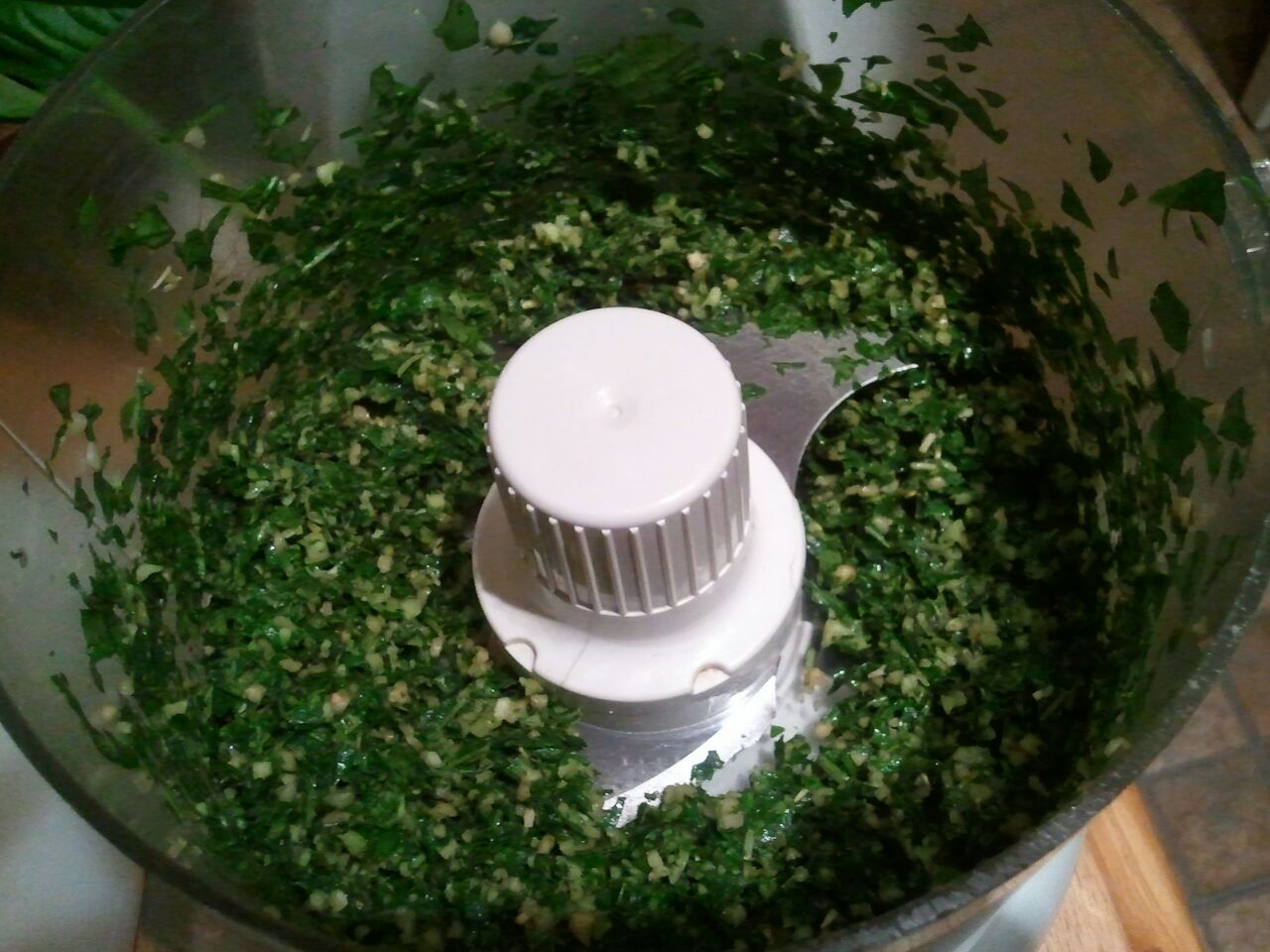
In a food processor, process the basil, pine nuts, and garlic into a paste.

Your pesto really doesn't need to look just like this, but it gives you an idea.

Your pesto really doesn’t need to look just like this, but it gives you an idea.

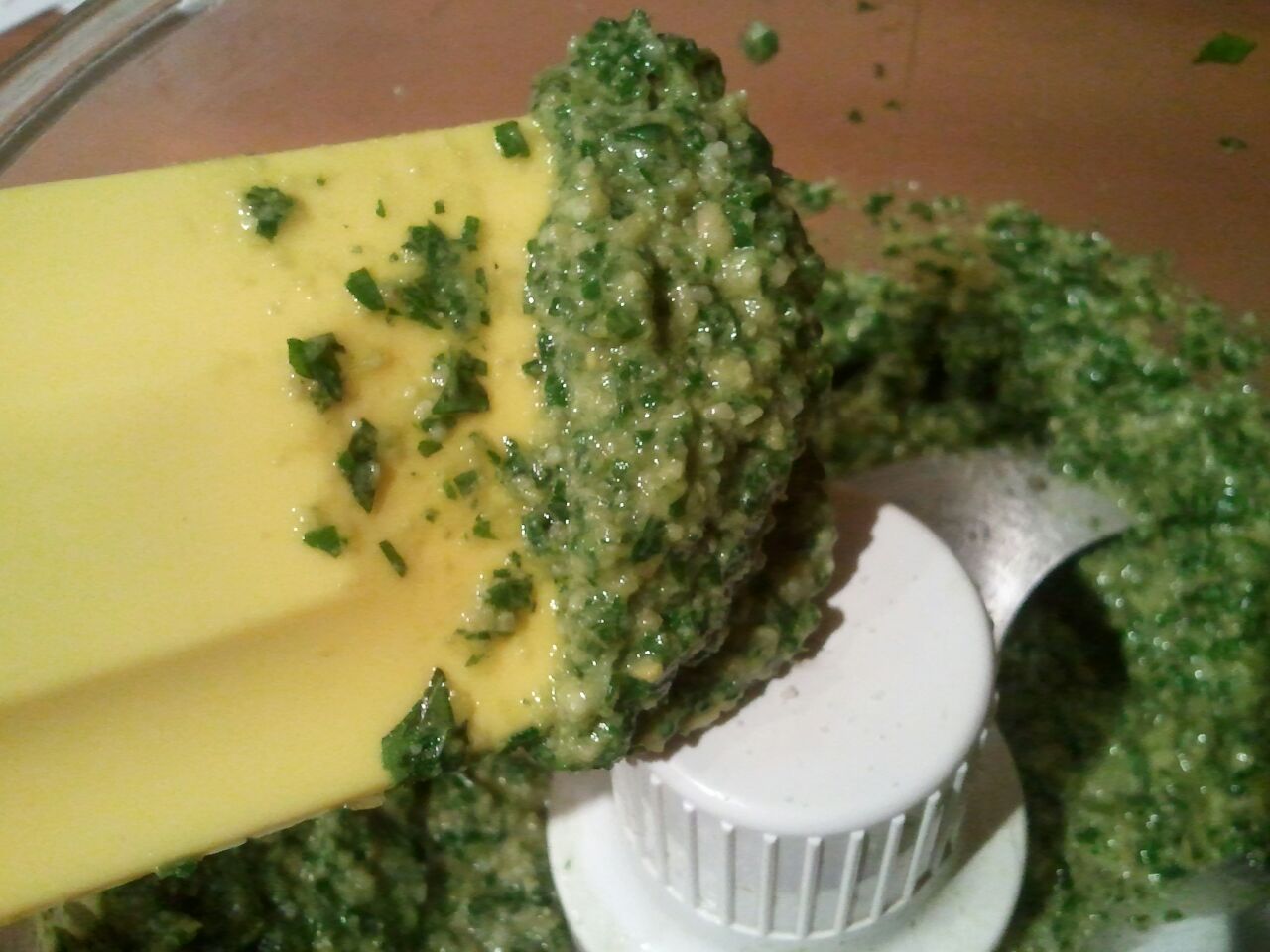
Add the oil, cheese, salt, pepper, and lemon juice and process  until well blended. If you want to be able to drizzle your pesto, add more oil or cut back on the cheese.

This is a good consistency for pesto, but you can certainly make it thinner with more oil.

This is a good consistency for pesto, but you can certainly make it thinner with more oil.

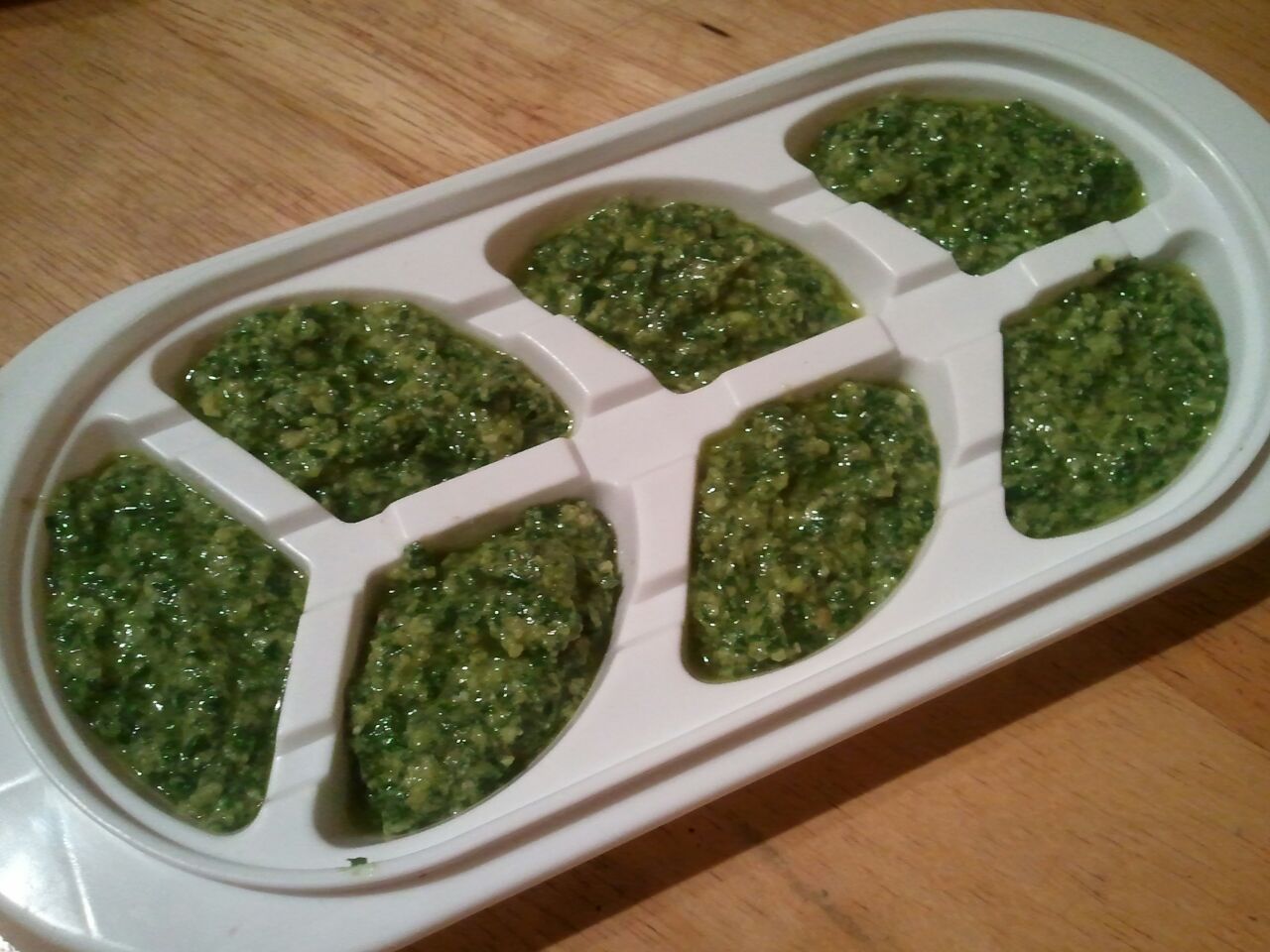
A little goes a long way, so it pays to experiment with how much you prefer on pasta, etc. Pesto will keep in the fridge for at least a week; or, freeze in ice cube trays, then store cubes in zip-top plastic freezer bags for a few months.

Mama put my old baby food freezer trays to good use!

Mama put my old baby food freezer trays to good use!

Note: Mama says this pesto will taste salty, which is a good thing as it generally tops plain pasta. If you’re concerned about the salt, start with a little less—or use kosher salt. The bigger grains cause you to use less of it.


Leave a comment

Refrigerator Pickles, Part Deux

I sure love pickles. Not sweet or bread & butter pickles, mind you, but dill. I especially like when they’re crunchy.

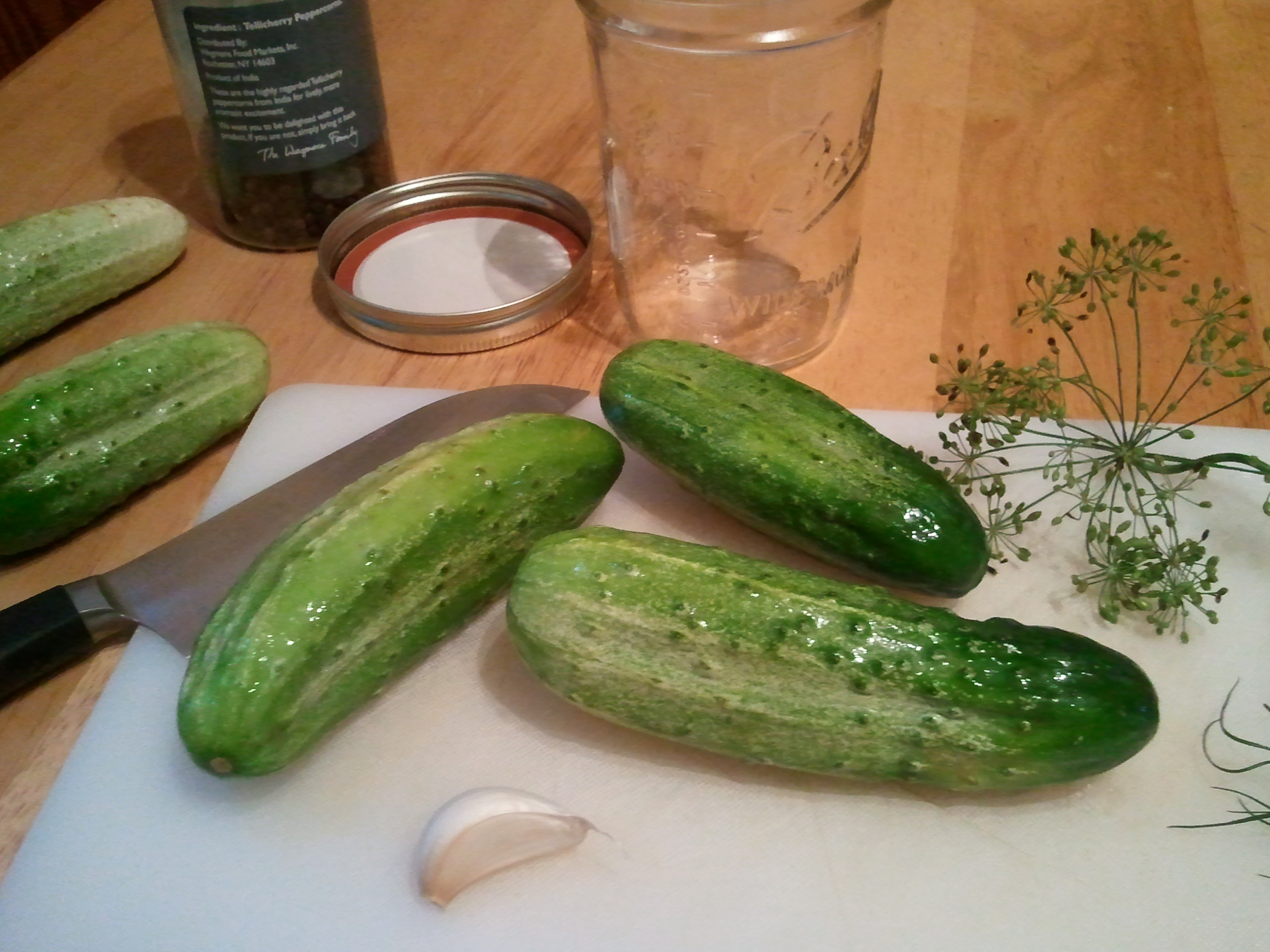
I’ve made pickles before, and it’s really quite simple. Mama found a new recipe that she thought we could try, and it was a perfect chance to use the garden dill before it goes entirely to seed.

These little cucs are the perfect size for a pint jar.

These little cucs are the perfect size for a pint jar.

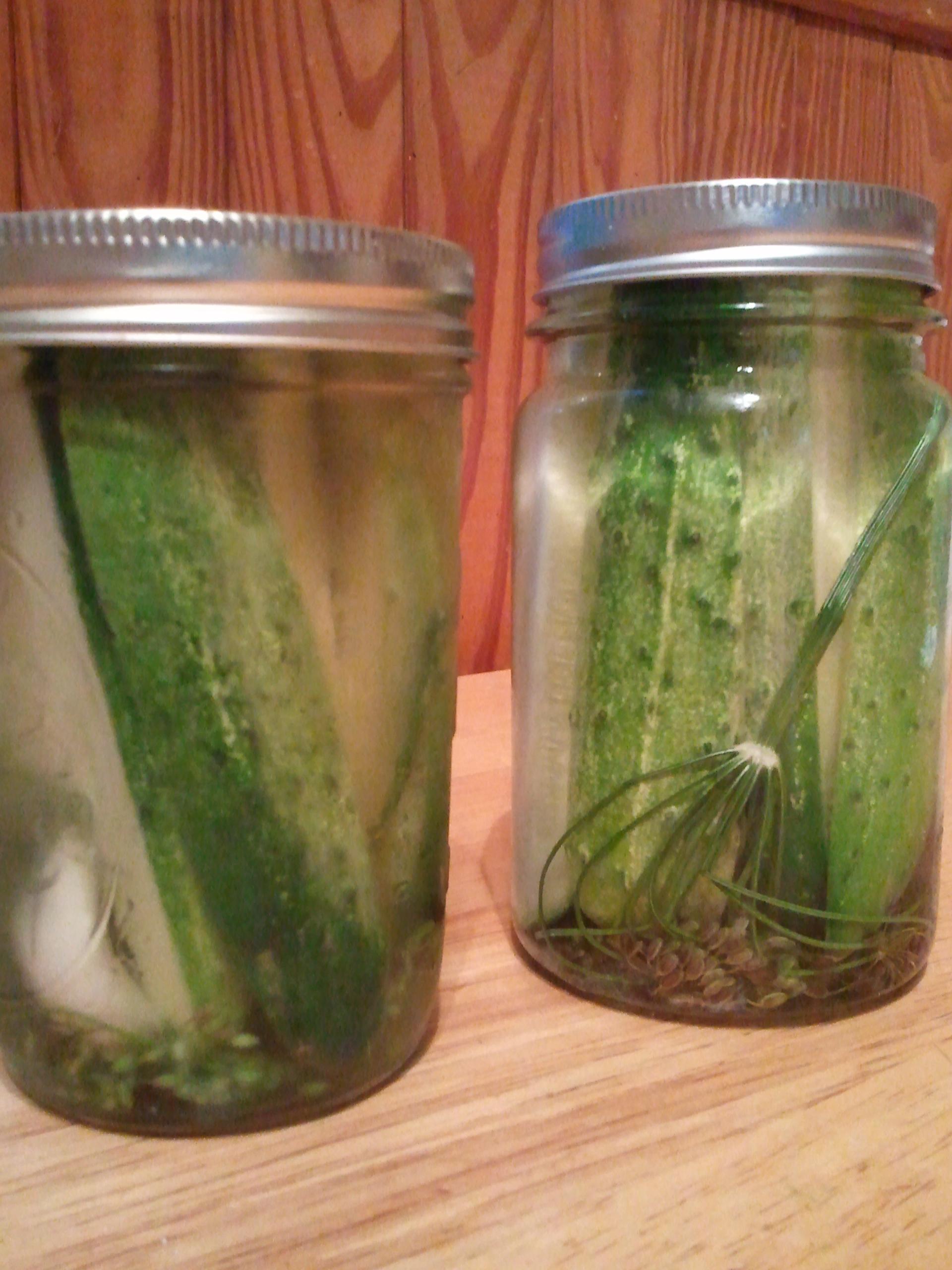
We have to wait a few days before we can eat them, but no doubt they’ll be worth it.

If you're mouth's not watering just looking at these, then... you mustn't like pickles very much.

If your mouth’s not watering just looking at these, then… you mustn’t like pickles very much.

Love, Jude


1 Comment

A quick dinner for a mild spring night

Though the nights have been cool, the days are starting to warm up. I continue to stupefy Mama and Papa at the lengths I will go to to escape the confines of our yard. (You should see me climb!) There’s lots of yard work to be done, and even though I don’t help with it at all, I’m pretty hungry come dinner time. Mama and Papa both wanted something light and fresh, while I just wanted something in my belly.

Mama went to an easy stand-by recipe, one of those she says everyone should know how to make: chicken piccata. There are probably as many variations on this dish as there are on any other, but Mama likes it for its simplicity—it’s all cooked in one pan—and Papa likes it because it’s delicious. I like it for the capers. But, as you might recall, Mama doesn’t eat chicken, and pasta’s just as easy as anything to make (you know we eat a lot of it). So she got the water boiling and set to work on the veggies she was going to serve it with. Mama and Papa ate it up, but I scarfed the pasta almost exclusively (the exception being a few orange segments). When Mama asked me to take a bite of the zucchini, I said, “No way, José,” followed by a swift, “No, thank you.” Can you believe this actually worked, and I didn’t have to eat it?

Love, Jude

Chicken Piccata
(This one’s real loosey-goosey, but it’s pretty tough to screw up.)

Chicken breasts (for however many you’re cooking for)
Flour (whatever kind you have on hand)
Salt and pepper
Olive oil (to coat the pan)
About 1/4 cup chicken or vegetable stock (optional)
About 1/4 cup white wine
Juice of 1 lemon
1 large clove garlic, minced
About 2 Tbsp capers
Pat of butter
Parsley (a small handful, chopped)

Put the chicken in a large zip-top plastic bag, seal it, then pound the chicken with a meat mallet until uniform in thickness, about 1/2″. Toss in a handful or two of flour and some s&p. Reseal the bag, then shake it all up to coat the chicken.

Heat a skillet (of ample size to hold your chicken without crowding) over medium heat. Add about 1 Tbsp oil (a couple swirls around the pan—just enough for a thin coat) and wait until it’s hot before carefully adding the chicken (shake off the excess flour first). If you don’t want to be cleaning your stovetop and nearest wall for the rest of the night, put a lid on the pan. Cook until chicken is golden brown (5 or so minutes), then flip, and cook until golden on the other side and the chicken is cooked through. Remove chicken to a plate and loosely cover with foil to keep warm.
Deglaze the skillet with stock, if using, and/or wine. Scrape up the bits on the bottom of the pan, then add the lemon juice, garlic, and capers. Cook until reduced and slightly thickened, a few minutes. Add more s&p, if desired. Add the pat of butter (dredge it in flour first, if desired, to give a slight bit more oomph to your sauce) and continue cooking until melted and shiny. Sprinkle in the parsley, then pour the sauce over the chicken.

Rotini with Fennel, Squash, Tomato, and Orange de Provençe

12 oz whole-grain rotini (or any pasta you have on hand—and use a whole box, even if it’s a pound)
Olive oil
Salt & pepper
1 bulb fennel, stalks removed, cored, and thinly sliced
1 large tomato, large diced
1 small-to-medium zucchini, cut into “ribbons” with a veggie peeler
1 clove garlic, minced
About 1/4 cup vegetable stock
2 oranges, segmented (squeeze & reserve the juice from the inner membranes)
Herbes de Provençe (a couple teaspoons, maybe a Tbsp)

Cook the pasta according to package directions, then drain.

Meanwhile, heat a medium-to-large lidded skillet over medium-high heat. Add the oil, about a tbsp. (enough to coat the pan), then add the fennel and s&p. Cover and allow to sweat for a few minutes. (You can actually prepare the remaining ingredients in stages, if you like, rather than having them all prepped and ready to go before you begin cooking.) Add the tomato and the garlic and sweat some more, stirring occasionally (keep covered). The fennel won’t take on much color, but it will get soft. Once it is, add the zucchini, some s&p, and the veg stock. (Add enough stock to make the veggies wet but not soupy. This is going to be your pasta’s sauce, remember.) Cover and allow to cook until ribbons are soft, just a couple minutes. Add the orange segments and their reserved juice, and the herbes. Stir to incorporate, taste for seasoning, then combine with the pasta and serve.


1 Comment

You can have your fun and eat your dinner too

Because it was so warm and sunny outside when Mama picked me up from daycare, she took me to the river so I could throw rocks in it. (I like to pick up the biggest rocks I can carry.) Needless to say, it was already past dinnertime by the time we walked in the door, wet feet and all. Mama chose to make a dinner that practically cooked itself.

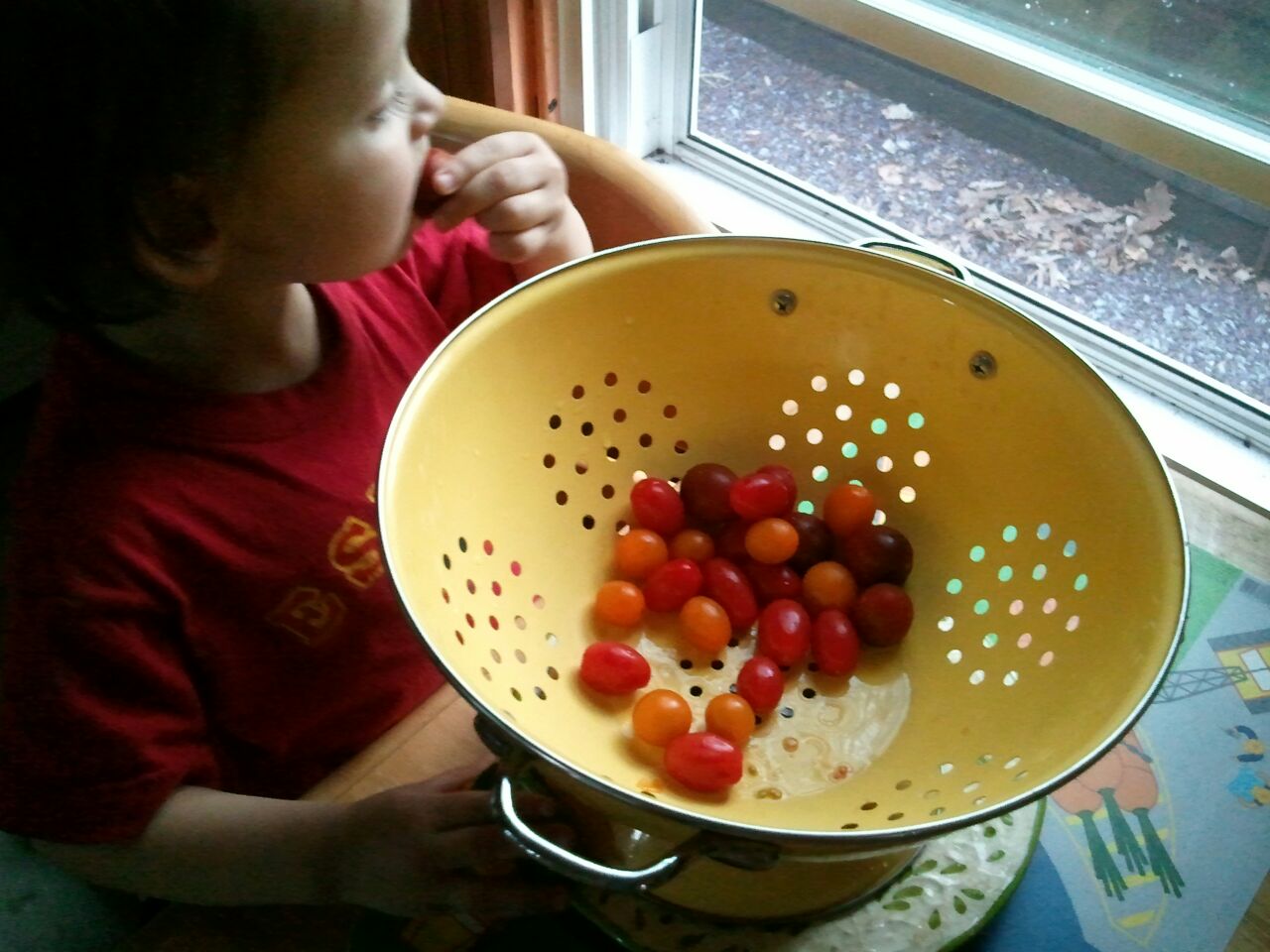
First, she put a pot of salty water on the stove to boil and set the oven to 400°. Then she rinsed and prepped the veggies: snapped the bottom ends off the asparagus, cut the broccoli into florets, cut some basil into ribbons, and sliced the colorful little tomatoes in half (I helped). She put the tomatoes and basil in a large bowl and the broccoli and asparagus on a baking sheet and tossed them with olive oil and salt & pepper.

I sure love teeny tomatoes.

I sure love teeny tomatoes.

Then she showed me the funny little pasta we would be eating, called Israeli couscous. It looks like couscous that grew up to be big and strong. Mama said that even though it looks like a grain, it’s really just a pasta. I ate a few of them raw—crunchy! Once the water came to a rolling boil, Mama poured in the couscous and gave it a good stir. Did you know that the proper way to cook pasta involves plenty of boiling water for the pasta to move around in? She also put the asparagus & broccoli in the oven, on the lower rack.

You would think Mama would’ve stopped there, but instead she took out a pound of beautiful Pacific salmon. She gave it a quick rinse, then set it on a baking sheet, skin-side down, and patted the flesh dry. She drizzled olive oil on it then sprinkled it with salt and pepper, and into the oven it went, on the upper rack. While dinner cooked, we had time to wash our feet in the tub. Do you have any idea what a river does to kid feet?

I'm trying to eat around the basil.

I’m trying to eat around the basil.

Israeli couscous cooks quicker than regular pasta (it’s really small), so when that was tender, Mama drained it and added it to the bowl with the tomatoes. She added—you guessed it—olive oil, salt, pepper, lemon juice, a bunch of freshly grated Parmesan (I helped), and some leftover roasted garlic. (This is even easier to make: Cut off the top of an entire garlic bulb, drizzle about 1/2 tsp olive oil over it, wrap it in foil, then bake at 375°F for about 45 minutes, or until very soft and oh-so-yummy.) Gently, she mixed it all up and set it out for yours truly to devour. I loved those little baby balls of pasta, but I had to pick around the basil, which slowed me down. The fish and veggies were done at about the same time (veggies starting to brown, fish just opaque in the center), about 10 minutes all told.

This was my plate! (Just kidding.)

This was my plate! (Just kidding.)

Do you think I tried everything on my plate? You bet I did. The fish was succulent, almost creamy. The veggies were toasty and fragrant and full of flavor (and Mama grated some more cheese on them). Then I discovered how fun it was to toss the Israeli couscous….and that was the end of my dinner.

Love, Jude

Israeli Couscous with Tiny Tomatoes

1 cup Israeli couscous
1 pint cherry or grape tomatoes, halved
4 or 5 cloves roasted garlic (or 1 or 2 cloves fresh, minced)
5 or 6 basil leaves, chiffonade (cut into ribbons)
Juice of 1/2 lemon
Salt & pepper to taste
Olive oil
Parmesan cheese

Cook the pasta according to package directions. Drain and add to a bowl, along with the tomatoes, garlic, basil, and lemon juice. Add salt and pepper to taste, along with a healthy drizzle of olive oil. (Mama says you don’t want to drown your pasta, you just want to moisten it.) Top it with freshly grated Parmesan cheese, if desired. Serve warm or cold.