LittleJudeonFood

One kid's adventures in gastronomy


1 Comment

Tomatoes’ Last Hurrah

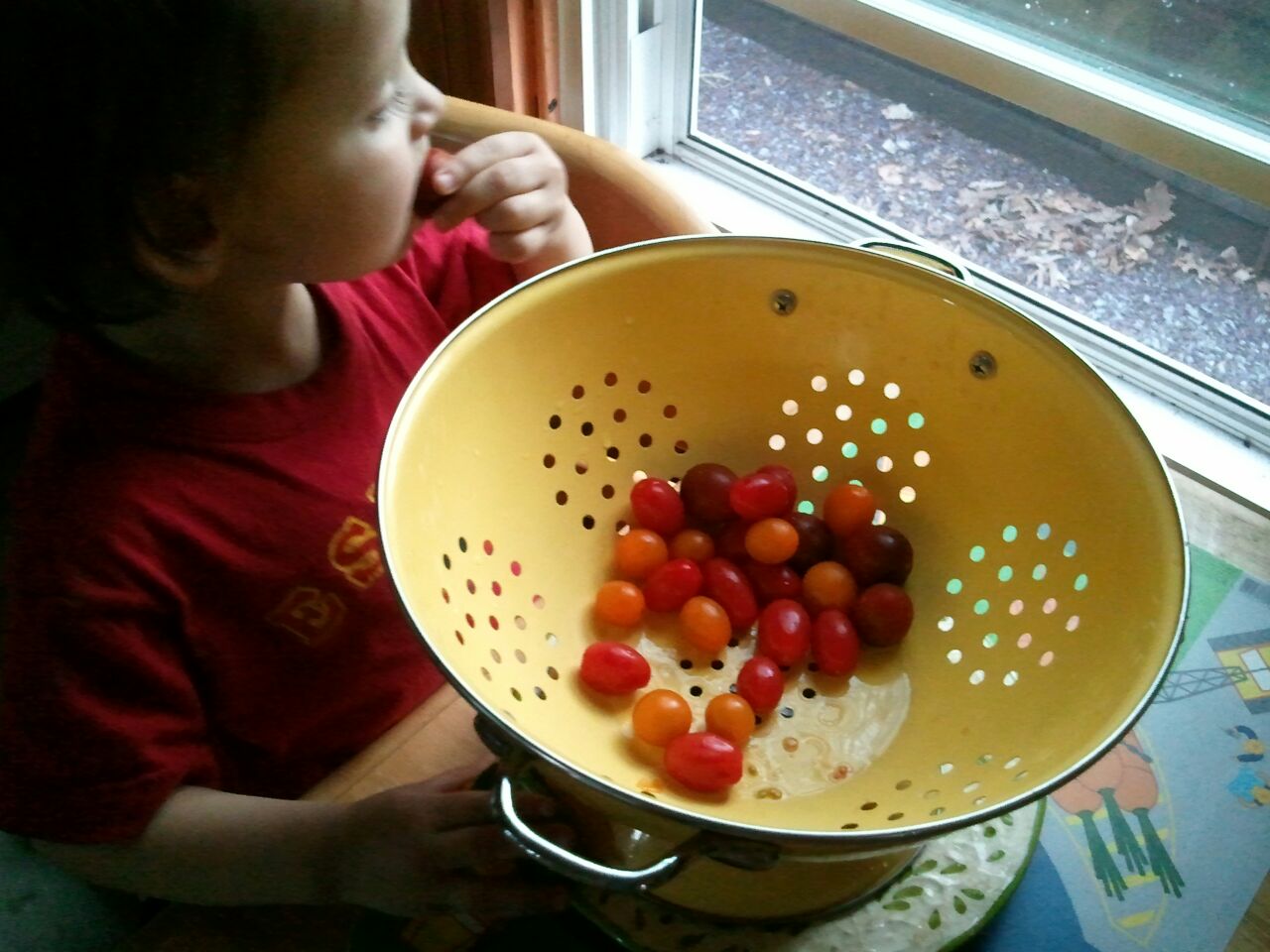
Mama says it’s funny that we pine 10 months out of the year for vine-ripened tomatoes only to bemoan their abundance come August and September. Since we don’t grow them at home (as I tend to pick them too early… I just can’t help myself!), Mama brought home a nice big box of organic heirlooms. In it were Rutgers, Moscovich, Brandywines, Cherokee purples, and Japanese Trifles, which are apparently a hot commodity in Russia. Mama roasted a few dozen, and then she made sauce.

Mama tells me that you’re going to find as many variations of tomato, or marinara, sauce as there are tomatoes. There are quick tomato sauces and slow tomato sauces. Some stay on the stove, while others are tucked into the oven. Some rely on fresh garden produce, while others punch up the flavor by adding sugar or balsamic vinegar. Because she was asked, here’s how Mama does a quick, fresh tomato sauce:

Finely chop 1 yellow or sweet onion and sauté it in olive oil until soft. Add 1–2 minced garlic cloves and sauté 1 minute. Add 2, 3, 4, or 5 chopped tomatoes and cook until tomatoes break down and are heated through. Add salt and pepper, to taste, and stir in chopped fresh herbs (basil or oregano, but whatever you like). Done. Use immediately.

If you have more time, however, why not cook a little bit of summer in a pot that you can freeze for delectable dining come December?
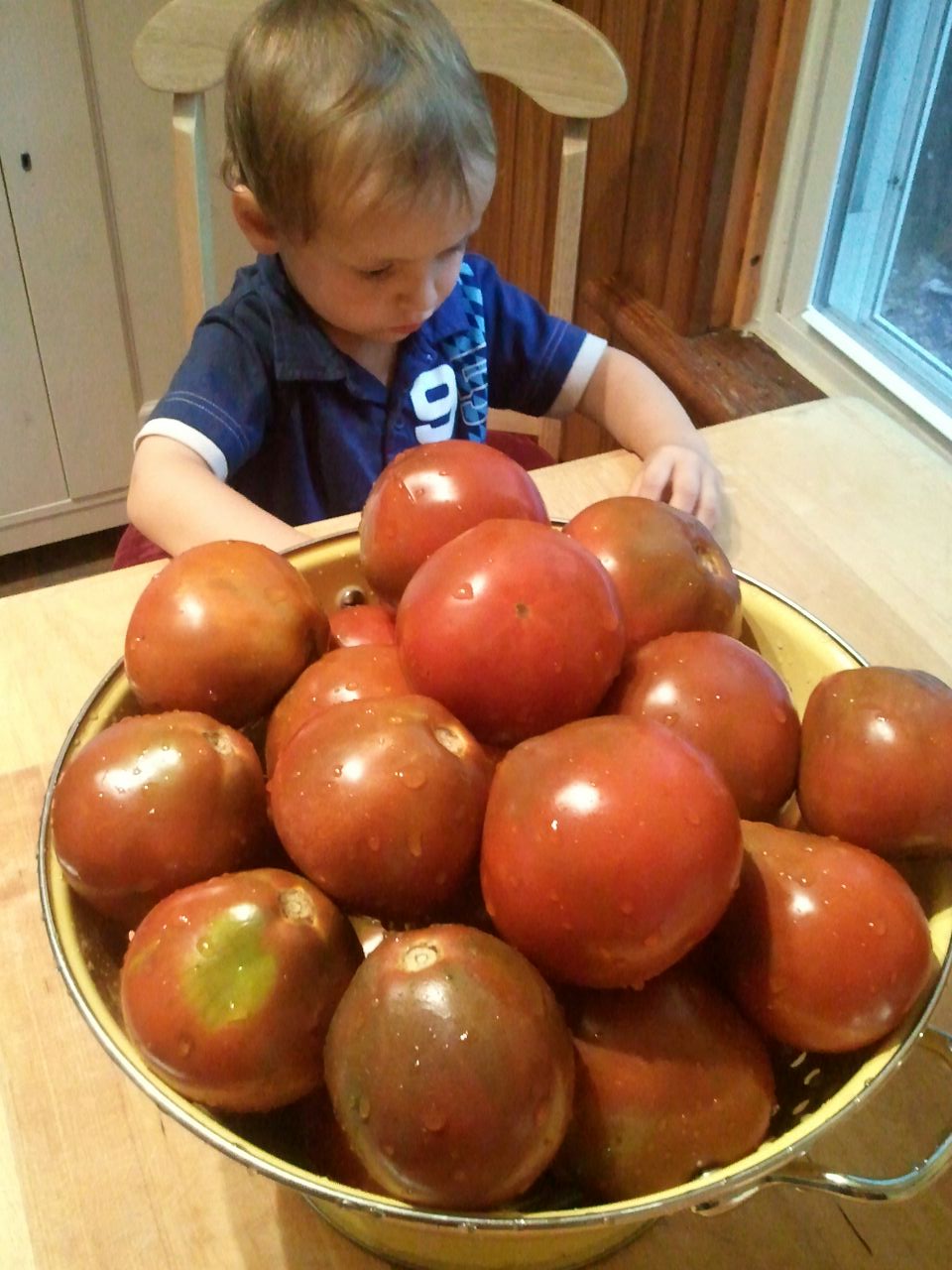
This isn’t even remotely close to half of what Mama brought home. Sheesh.

This isn’t even remotely close to half of what Mama brought home. Sheesh.

Regarding peels: They’re fine in a fresh sauce, but you don’t want them in your long-cooked sauce. Peel ripe tomatoes by hand, or try this method: core them (or lop off the top), cut a small X in the bottom, dunk in boiling water for 20–30 seconds, then plunge into ice water. Alternatively, you can run your finished sauce through a food mill, which will remove the seeds and skins. (While some folks feel the seeds turn bitter with prolonged cooking, Mama doesn’t mind them, so she doesn’t use a food mill.)

As with most things delicious, Mama insists on starting with a good base of sautéed onions and garlic in olive oil. Depending on personal preference, you can keep the heat low and cook them until tender, or you can raise the heat a bit and cook them until soft and caramelized (that’s when they turn brown). In either case, start with a big pot, and don’t add the garlic until the onions are where you want them (otherwise it’ll burn).
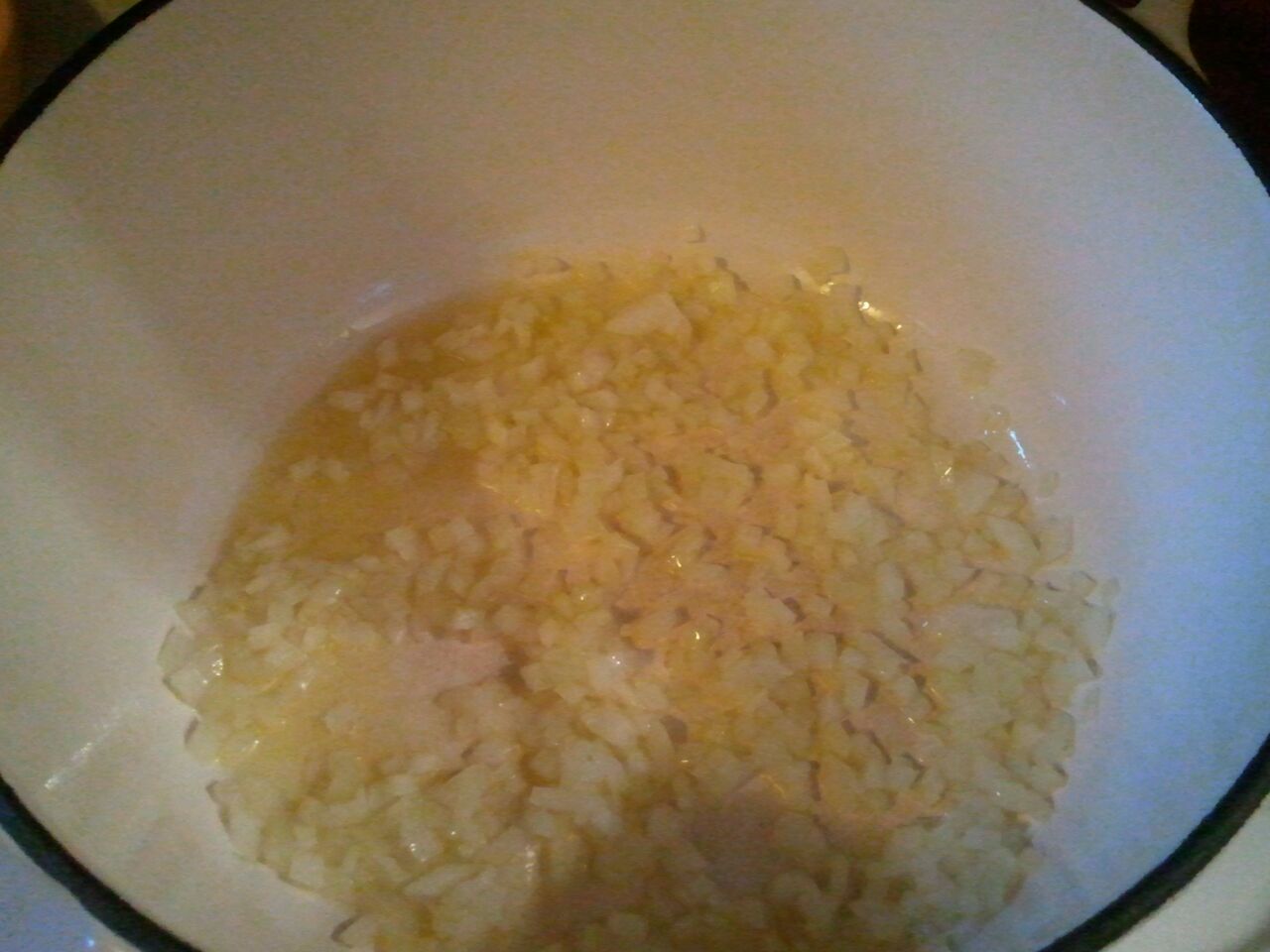
Even if you don’t like to eat onions, you would notice they’re missing if you skip them.

Even if you don’t like to eat onions, you would notice their absent flavor if you skipped them.
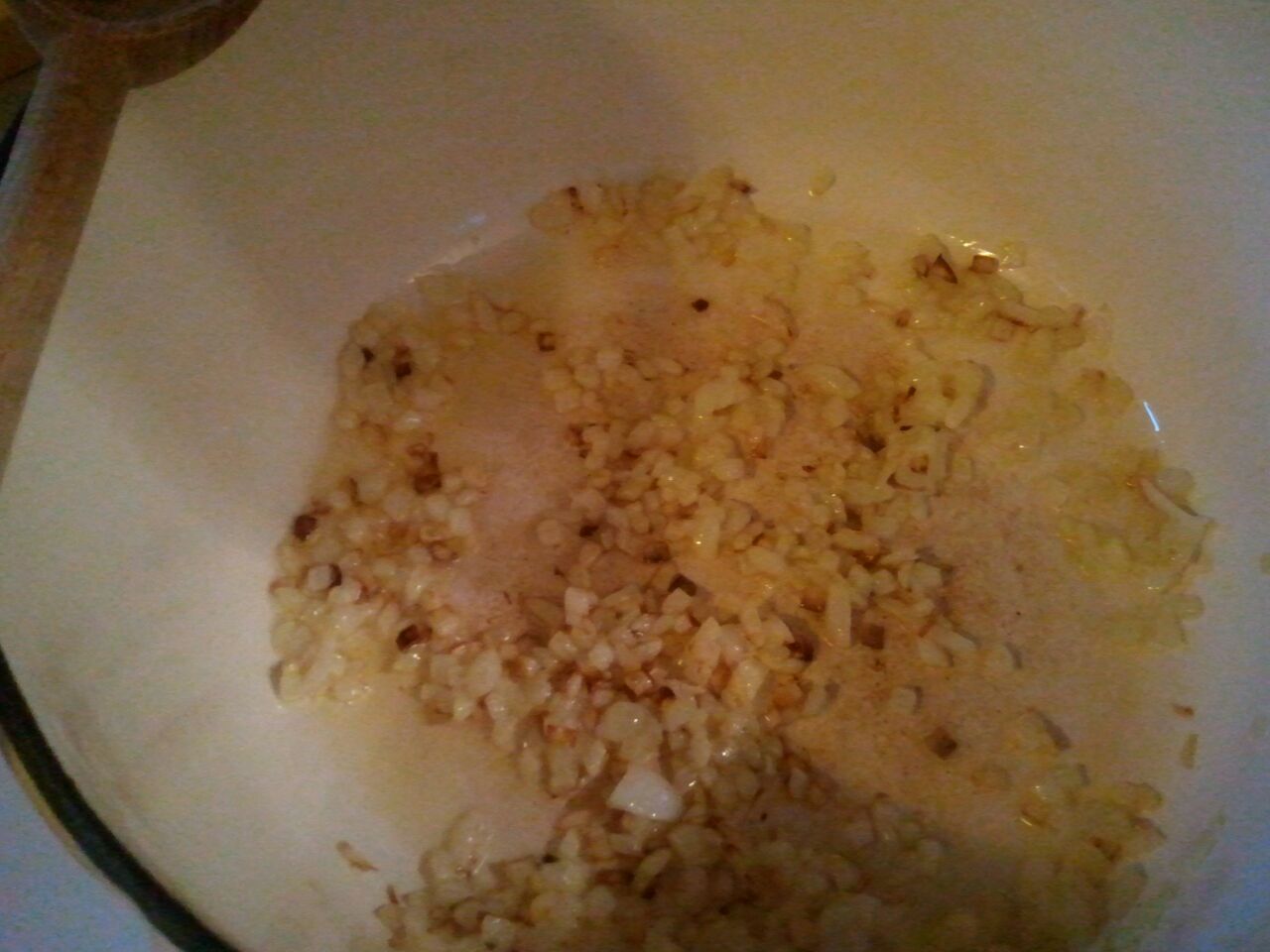
The darker you brown the onions, the more flavor they’ll have.

The darker you brown the onions, the more flavor they’ll have.

Mama chose to deglaze the pot with some red wine since she happened to have some on hand. No red wine? No problem. Just add the roughly halved tomatoes. But here’s the catch: You have to squish them. This is a great thing for a kid like me to do! Lower the heat, and begin simmering. Give them a good dose of kosher or sea salt and toss in sprigs of fresh herbs.
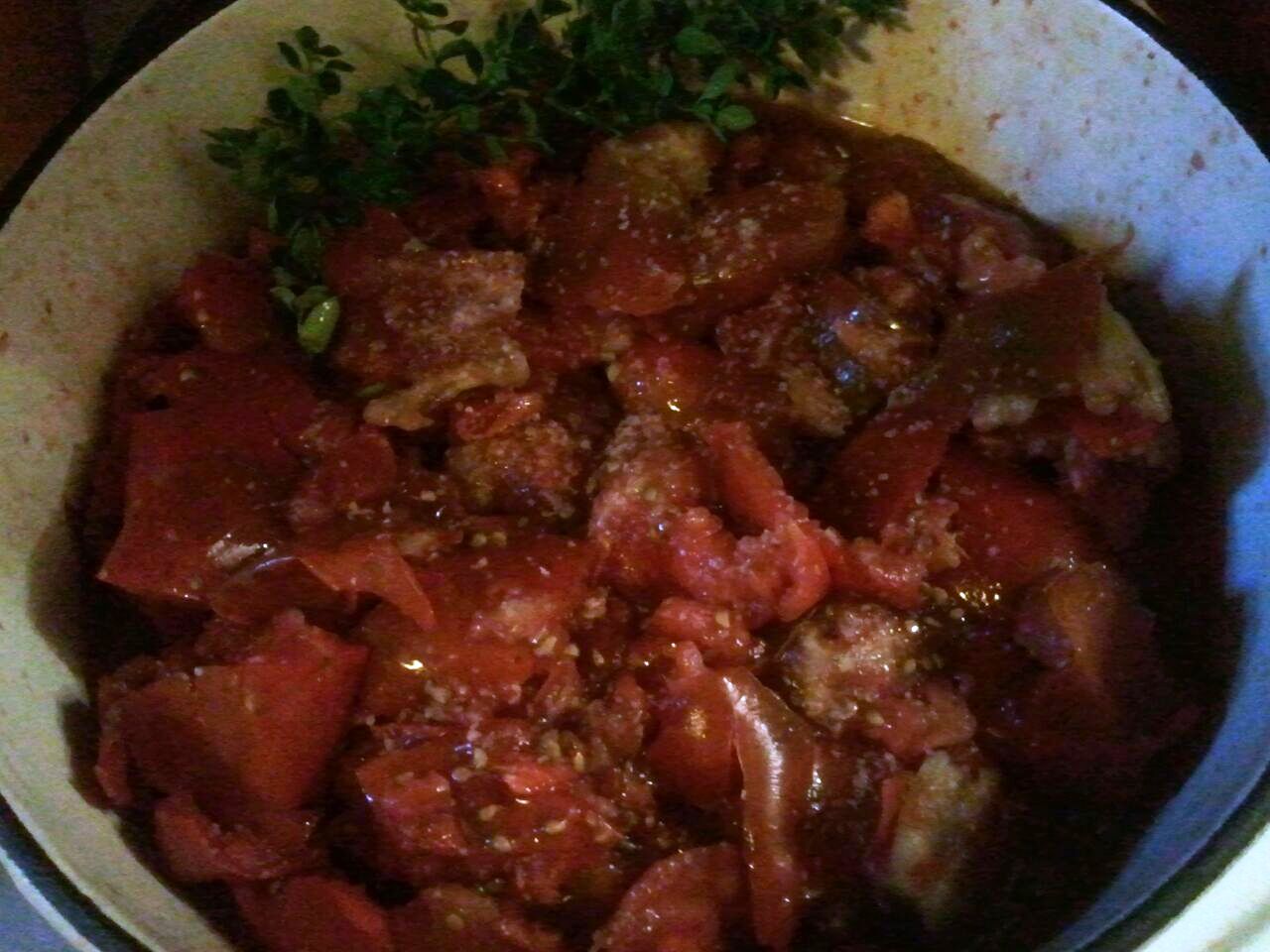
Mama clipped some oregano from the garden. (She’ll add the basil later, since it’s more delicate.)

Mama clipped some oregano from the garden. (She’ll add the basil later, since it’s more delicate.) You should’ve seen the mess these tomatoes made on the walls!

Once the tomatoes cook down, they’re going to release all their delicious juices. To add a bit of body (and to give the sauce a fighting chance of sticking to pasta), Mama did add a small can of organic tomato paste. When everything was good and bubbly, she put the whole pot, lid and all, in the oven on a lowish heat, about 300°F, and forgot about it. Well, not really. Every now and then she left me to play on the porch while she stirred the sauce, and the heavenly sweet smell would waft through the windows to where I sat. She cooked it until it reduced to a thickness she liked and the flavor was concentrated enough to be considered “awesome.”
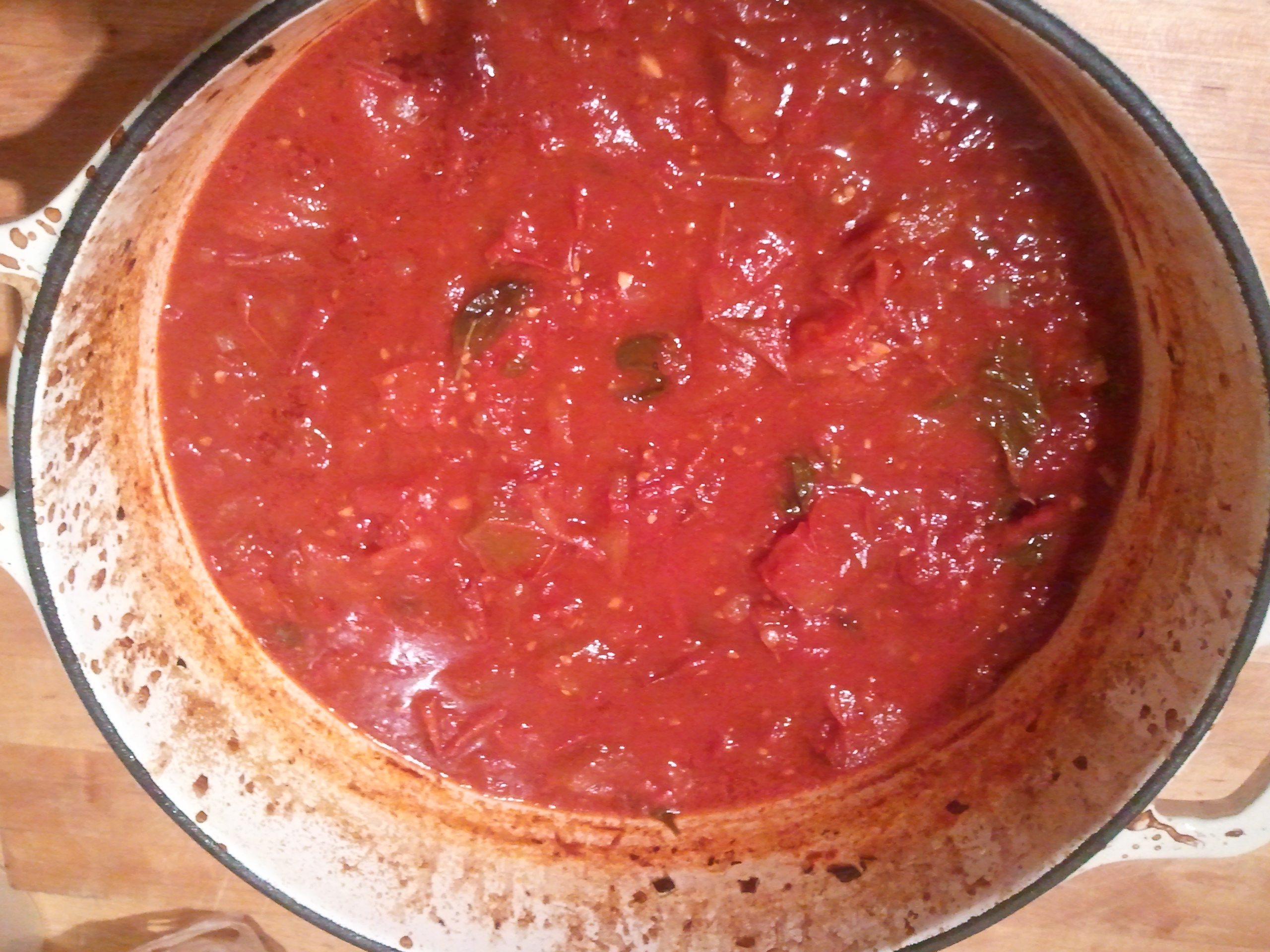
What do you think was for dinner?

What do you think was for dinner?

If you prefer a smoother sauce, run it through a food mill, or take an immersion blender to it. We happen to prefer a little heft to our sauce. Set some aside for dinner, then allow the rest of the sauce to cool before portioning it into jars or zip-top freezer bags.

Poor Papa. He wanted to take a bag out of the freezer a few days after Mama made it, and she said he wasn’t allowed! It doesn’t matter that she froze several quarts. She doesn’t want to run out before the end of the year. Which is a shame, since I could see eating this every day.

Love, Jude

Oven-Roasted Tomato Sauce

Extra-virgin olive oil
1 (or 2) yellow or sweet onion, finely chopped (depending on how many tomatoes you have)
2–4 cloves garlic, minced (depending on how garlicky you like it)
Red wine (optional)
12–15 pounds fresh tomatoes, peeled* and roughly halved (crosswise preferred)
Kosher or sea salt
6 ounces tomato paste
Several sprigs fresh herbs, as desired

Preheat oven to 300°F.

Coat the bottom of a large, oven-safe pot or Dutch with olive oil and heat it over medium heat. Add the onion and sauté, stirring occasionally, until very soft and beginning to caramelize, about 10 minutes. Add the garlic and sauté 1 minute more. If desired, deglaze the pot with a healthy splash of red wine. Carefully add the tomatoes in batches, squishing them with your hands as you go. Mama supposes you could skip the squishing step, but it gets the juices released a bit quicker. Alternatively, you could give them a few pulses in a food processor to speed things up. But we’re not talking fast here, are we?

Get the tomatoes going at a low simmer. Add a generous helping of salt and stir in the tomato paste. Toss in a few sprigs of hearty herbs like oregano. Just put the whole thing in; you can fish it out later or catch it in the food mill. Cover and put in the oven for a couple hours, stirring occasionally. Towards the end, add more delicate herbs, like basil.

*May also reserve peeling for after the sauce is cooked, either by hand (tedious!) or with a food mill.
Leave a comment

It’s not too late to make popsicles!

I’d wanted to write about popsicles for some time, but Mama kept me pretty busy during the summer. Since I just finished the very last one, I thought better late than never. And you can still get good cantaloupes from your farmers’ market, so why not make a bunch of popsicles to enjoy on those Indian summer days that are still to come?

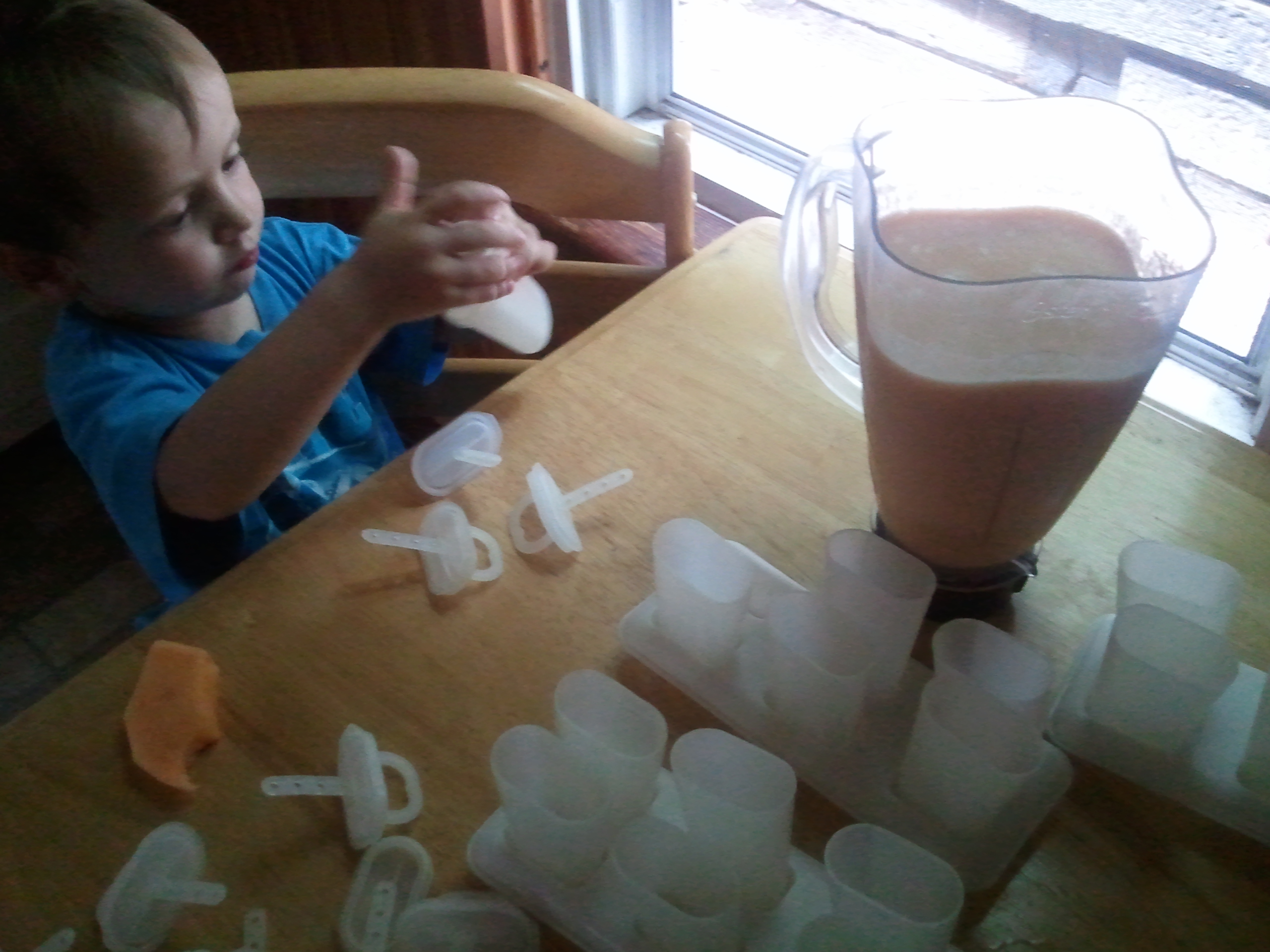
I’m sure you know how much I love frozen treats, whether they’re gelati or popsicles. I especially liked making these with Mama! She showed me how she cuts the cantaloupe, and then I put the pieces in the blender. Mama added the juice of a fat juicy lime and a bit of sweetened condensed milk (she thought this might make it more like a creamsicle). Then I covered my ears so she could whir it.

Jude on Food: You need a little bit of sugar in your popsicles to keep the melon from freezing solid.

We tasted it to see if it needed more S.C.M. (it did), and she whirred it some more.

Mama gave me a big slice of melon to munch on while I figured out these popsicle molds--they're from when Mama was a kid!

Mama gave me a big slice of melon to munch on while I figured out these popsicle molds. They’re from when Mama was a kid!

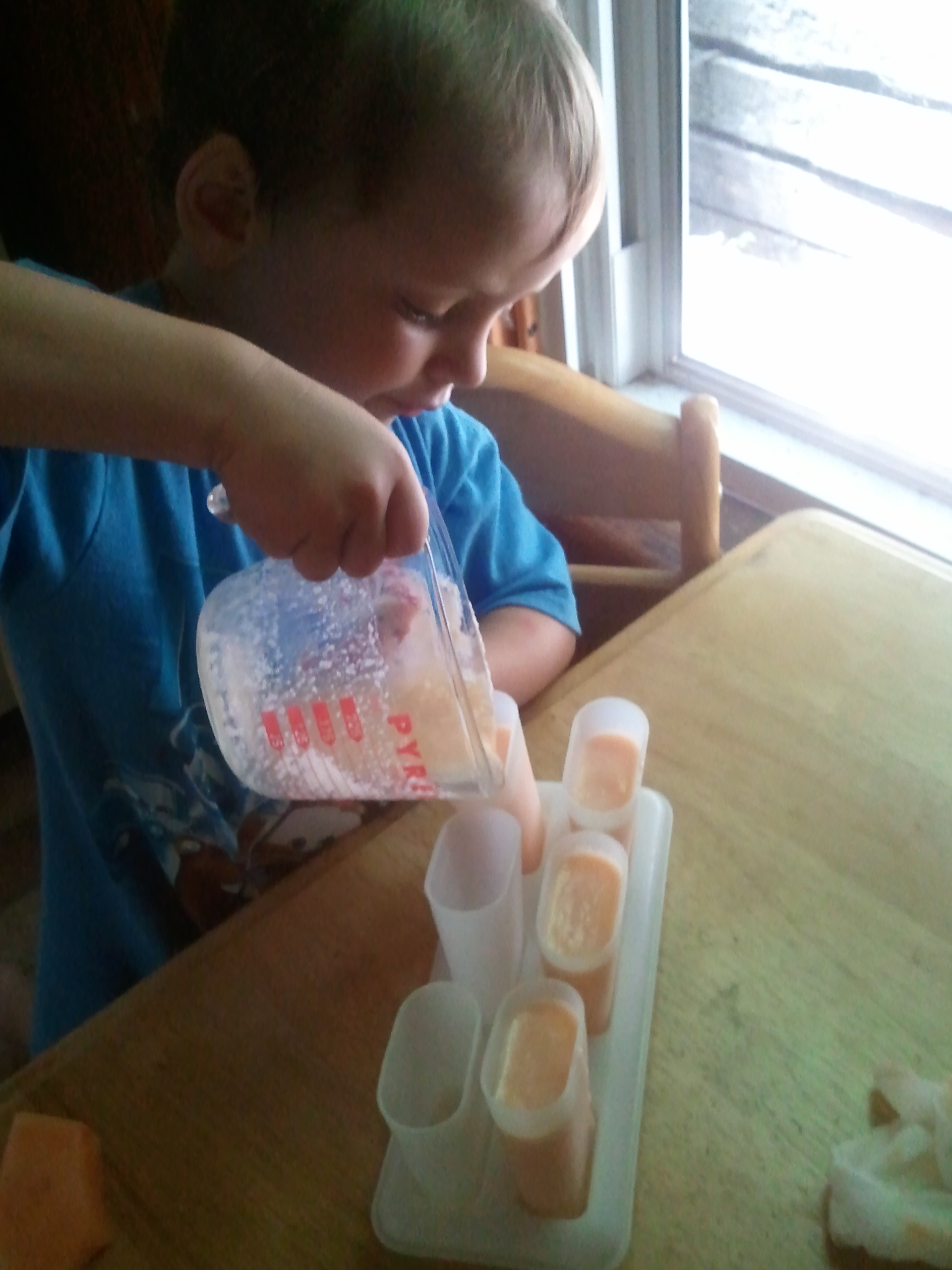
I helped pour the popsicle mixture into the molds. Mama had to take a few deep breaths, as I tended to miss the molds, but I did a pretty good job overall, she said.

It's amazing what a little kid can do when you take a deep breath and just let him.

It’s amazing what a little kid can do when you take a deep breath and just let him.

The hardest part was waiting for them to freeze…and then getting them out of the deep freezer, once Mama moved them from our kitchen freezer after I started helping myself.

Love, Jude

Cantaloupe Popsicles

1 lovely ripe cantaloupe, peeled, seeded, and chopped
Juice of 1 lime (or 2, if you prefer)
1/2 small can sweetened condensed milk (more or less, to taste)

Combine ingredients in a blender and blend until smooth and frothy. Pour into popsicle molds and freeze until set.


1 Comment

What do you do with a TON of basil?

Our basil was slow to start this year, but it decided to spring up while we were on vacation. Now the plants are almost as big as me! In order to keep the plants lush and producing big flavorful leaves, Mama picks off the flowers. She says otherwise, the basil will get woody. “Woody?” I ask. “Woody,” she confirms. (I was being too much of a stinker to let Mama get a good picture of me with the basil, but you can see how tall the plants are here.)

She also has to harvest the stems and leaves if she wants to keep using the plants. It sounds funny to me that you have to take off leaves to get more, but Mama is sometimes right about things, so I’ll trust her on this one.

Aside from tossing chiffonade basil (that’s thin ribbons) into salads and over tomatoes & mozzarella, Mama likes to make pesto. Though pesto is decidedly of Italian origin, Mama told me she first had fresh pesto while in college on a visit to a friend in Germany (she says I’m not allowed to say how long ago that was ). She wrote down her friend’s mother’s recipe in her little journal and used that recipe for many years. Now she makes her own, and you’ll see that it’s not only simple to prepare but simple to store—and so much tastier than the oily stuff that comes in jars.

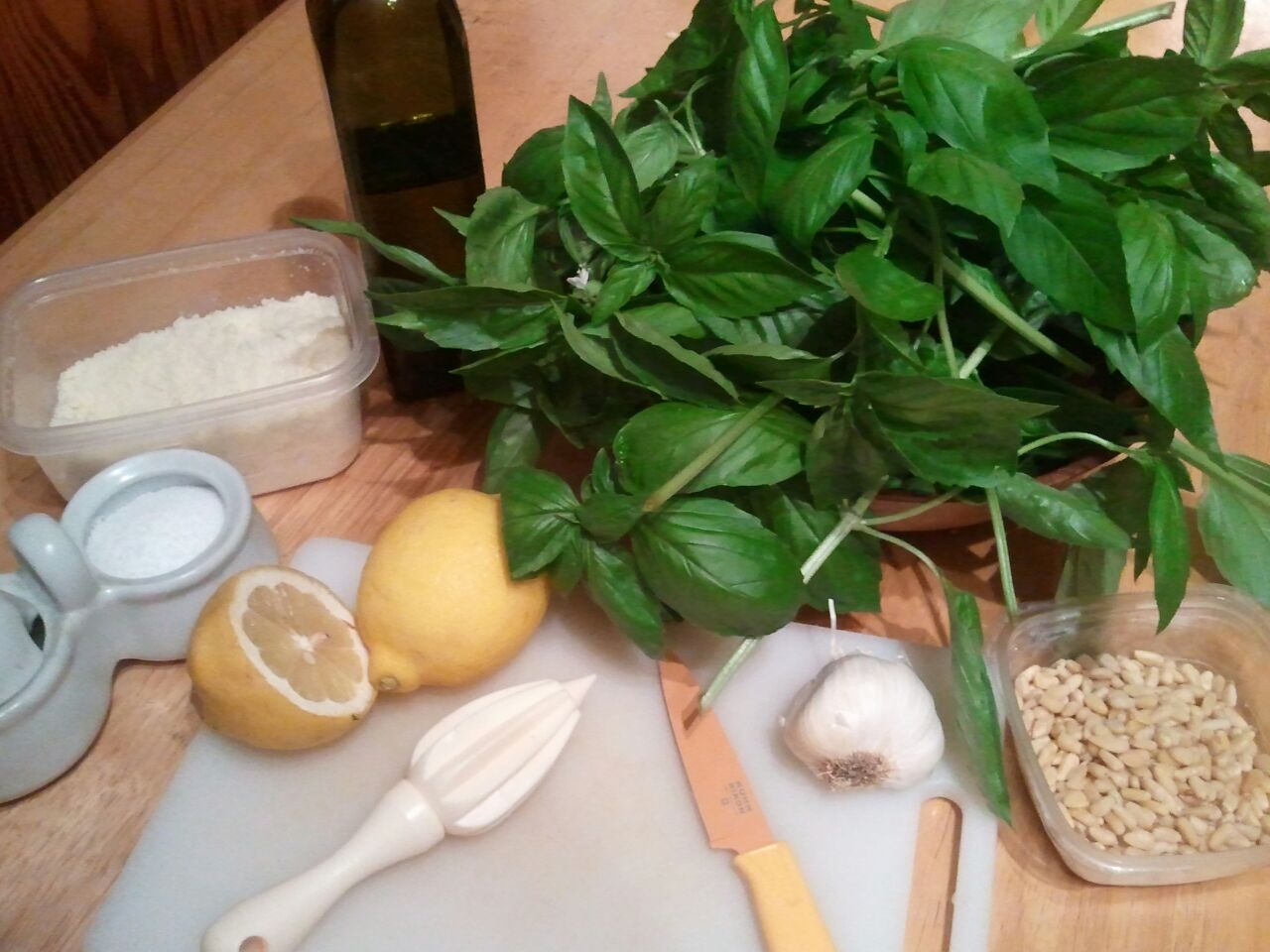
Gather everything together before you start, and you'll be done with your pesto in no time.

Gather everything together before you start, and you’ll be done with your pesto in no time.

Mama showed me how she whirrs everything in a food processor. She usually does it to taste, which is helpful when you don’t have a recipe handy. She said if you want to keep your pesto looking as bright as the day you made it, blanch the basil leaves in boiling water for all of 20 seconds, then plunge them in ice water and squeeze dry. Otherwise, if you don’t really care that the color fades, skip the extra step.

The last thing I’ll tell you about pesto is that you can use just about any green, like kale, cilantro, or parsley, as well as just about any nut or seed, such as walnuts or pumpkin seeds. If you find yourself with a bunch of herbs or a head of greens, try making your own variation on a classic pesto.

Now, I told Mama, “I don’t like pesto,” but she and Papa claim I’ve eaten it before. I’m not so sure, so I’ll give this one both a “hit” and a “miss.”

Love, Jude

What would enjoy a dab of pesto? What wouldn’t?!

Potato salad
Various pastas
Peas/green beans/asparagus
Béchamel (white sauce)
Meatloaf, burgers, meatballs (add to the mix or serve as a topping)
Scrambled eggs
Egg salad
On top of grilled portabellas or eggplant with mozzarella & tomatoes
Pizza (spread on pizza crust or a pita or anything else you’d consider a “pizza”)
Mix with softened butter and slathered on corn on the cob
Sandwich spread
Aïoli
Bruschetta with roasted red peppers
Broiled or grilled chicken or fish
Hummus or white bean mash
Chickpeas
Thinned with a bit of balsamic vinegar and use it as a vinaigrette

Basil Pesto

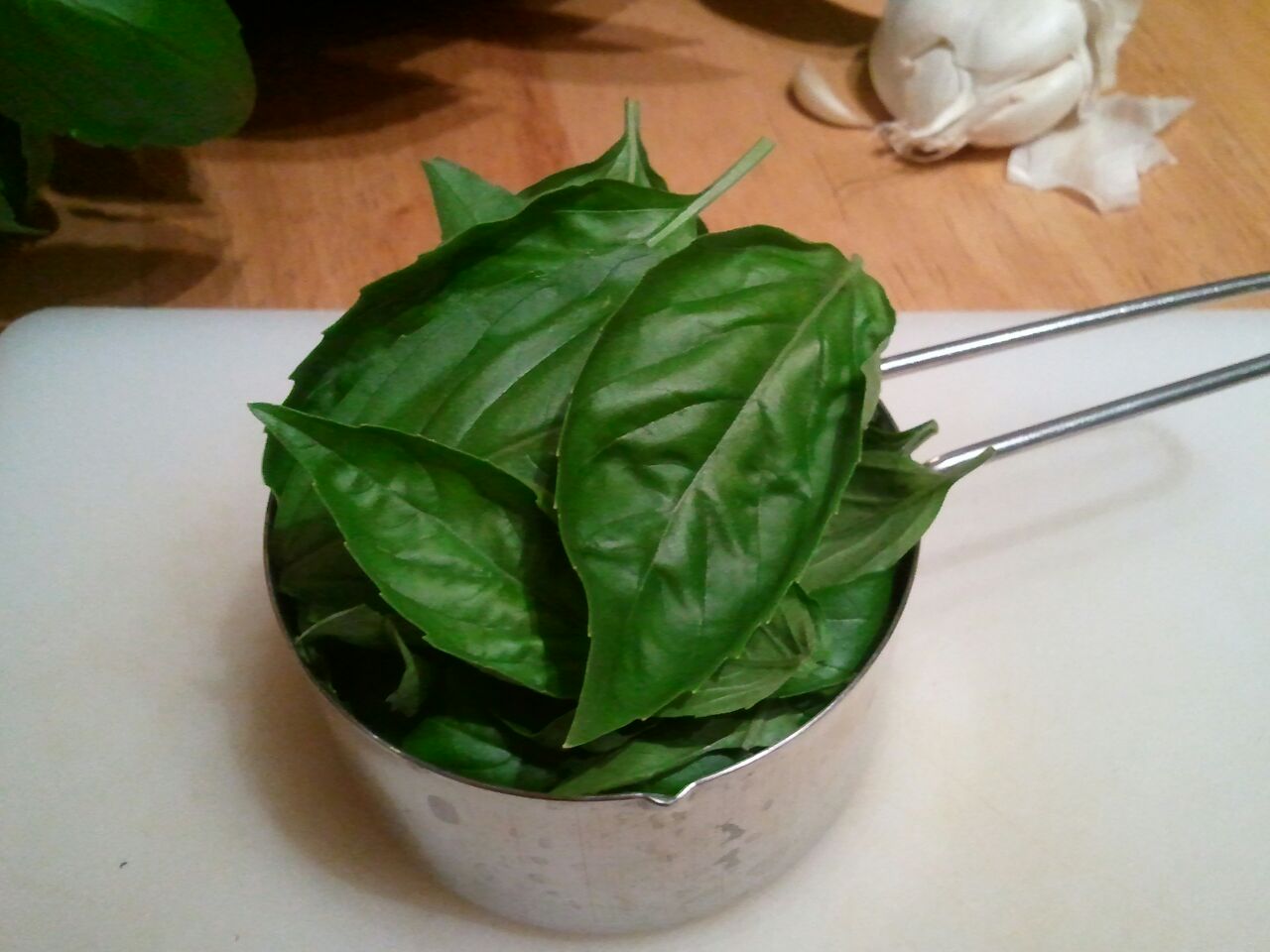
1 cup packed basil leaves
2 tablespoons pine nuts (Mama uses raw, but go ahead and use toasted if that’s what you have)
2 cloves garlic, roughly chopped
1/3 cup olive oil (extra-virgin, if you like)
¼ cup grated pecorino Romano or Parmesan (Parm is more traditional, and lends a nuttier taste, but Mama likes to change it up and likes the subtle sweetness of the sheep’s milk cheese. That, and she had pecorino and didn’t feel like running out for Parm.)
¼ teaspoon sea salt
few grinds of black pepper
½ tablespoon fresh lemon juice

This is a packed cup of basil. I couldn't fit more leaves in there if I tried. (By the way, picking leaves off a basil plant is a great task for someone like me!)

This is a packed cup of basil. I couldn’t fit more leaves in there if I tried. (By the way, picking leaves off a basil plant is a great task for someone like me!)

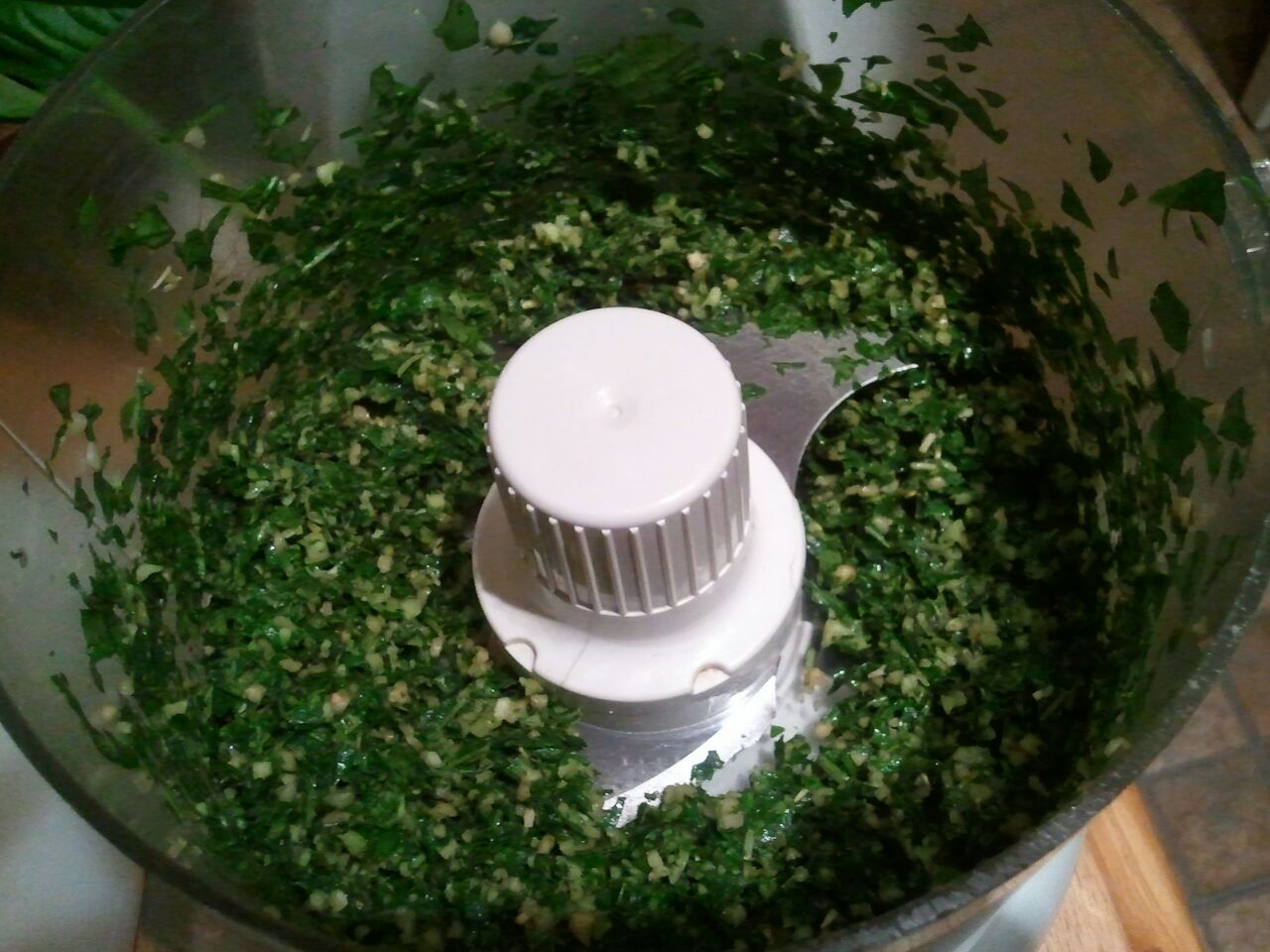
In a food processor, process the basil, pine nuts, and garlic into a paste.

Your pesto really doesn't need to look just like this, but it gives you an idea.

Your pesto really doesn’t need to look just like this, but it gives you an idea.

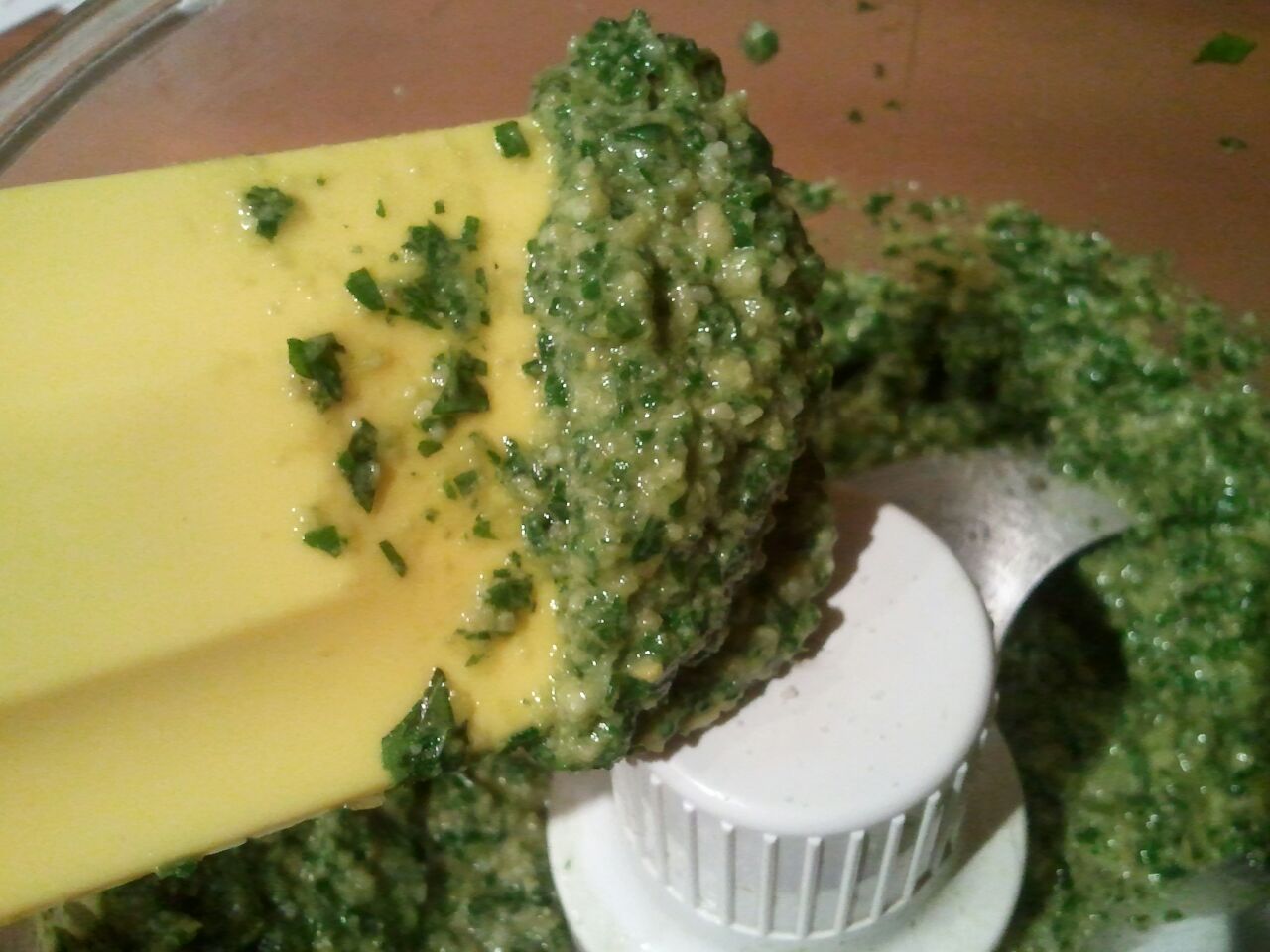
Add the oil, cheese, salt, pepper, and lemon juice and process  until well blended. If you want to be able to drizzle your pesto, add more oil or cut back on the cheese.

This is a good consistency for pesto, but you can certainly make it thinner with more oil.

This is a good consistency for pesto, but you can certainly make it thinner with more oil.

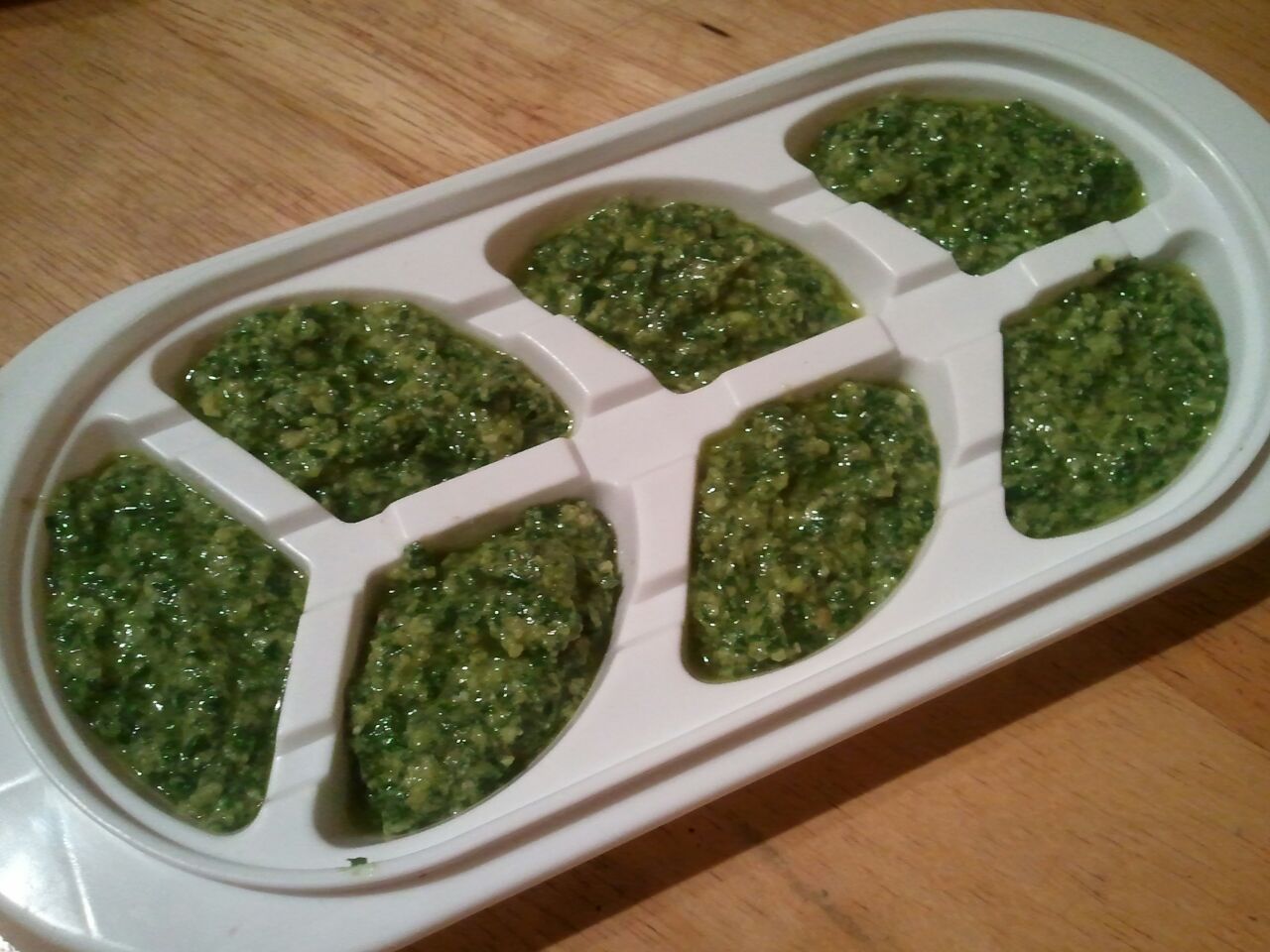
A little goes a long way, so it pays to experiment with how much you prefer on pasta, etc. Pesto will keep in the fridge for at least a week; or, freeze in ice cube trays, then store cubes in zip-top plastic freezer bags for a few months.

Mama put my old baby food freezer trays to good use!

Mama put my old baby food freezer trays to good use!

Note: Mama says this pesto will taste salty, which is a good thing as it generally tops plain pasta. If you’re concerned about the salt, start with a little less—or use kosher salt. The bigger grains cause you to use less of it.


Leave a comment

Lemonade’s not just for heat waves

Well, the heat wave finally broke, but it’s still awfully hot. Mama decided it was time for some lemonade. You won’t believe how easy it is to make.

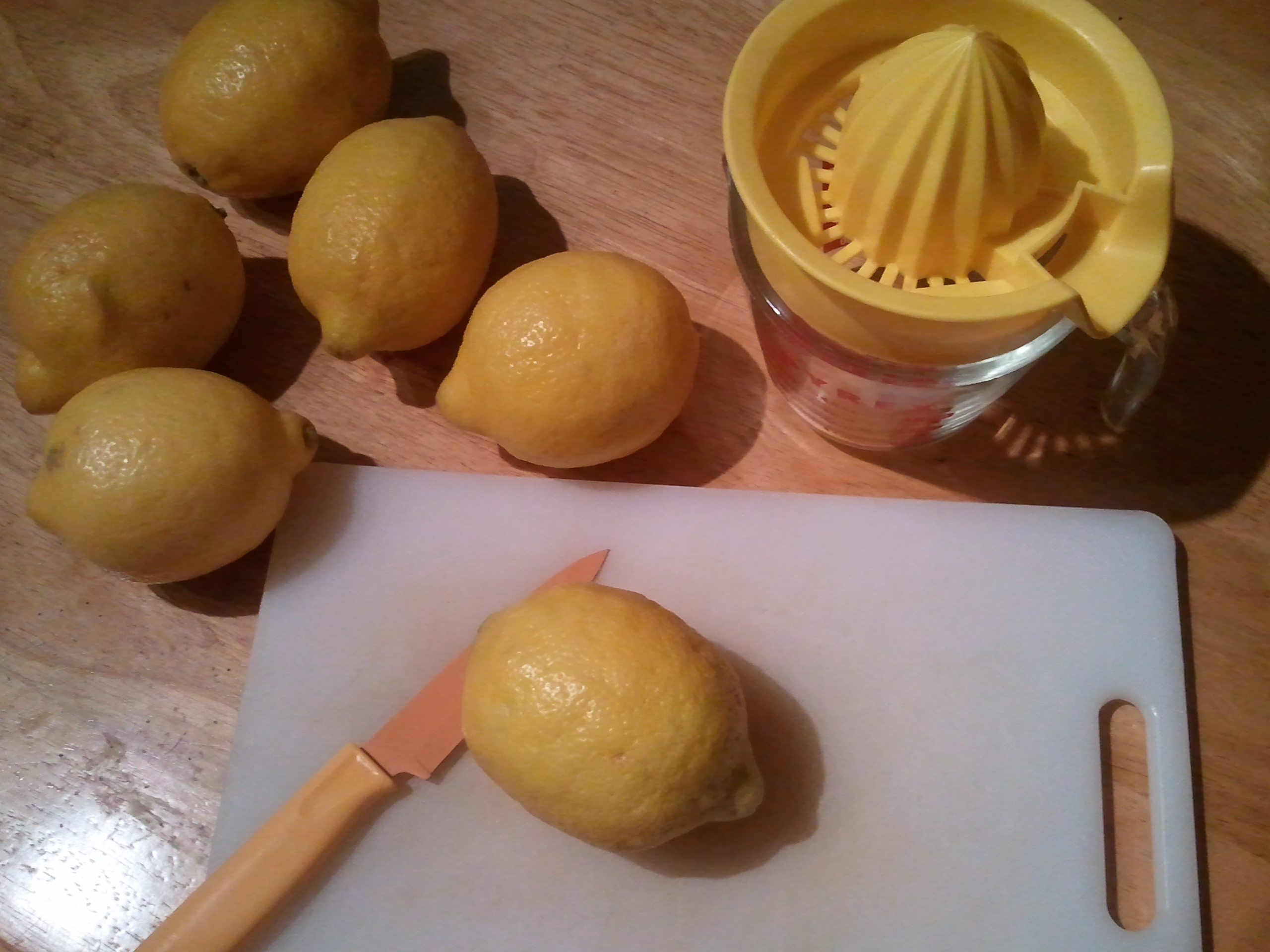
Get together your lemons, juicer or reamer, knife, and cutting board.

Get together your lemons, juicer or reamer, knife, and cutting board.

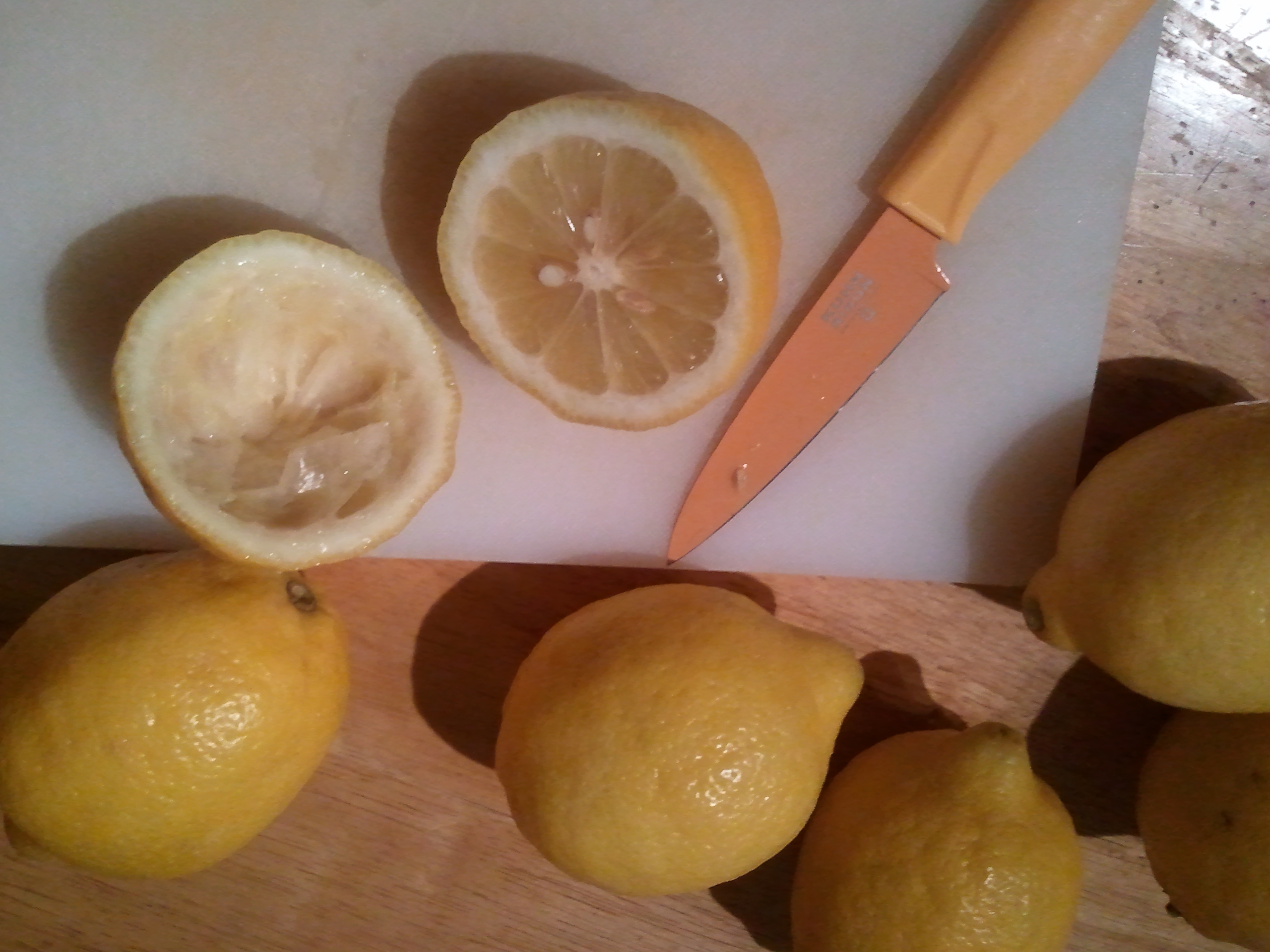
Since these were large lemons, Mama used a regular hand juicer rather than her electric one. She took out 6 lemons, as that’s about what it takes to get 1 cup of lemon juice. She ended up needing only 4 of them, though.

I tried juicing a lemon, but  I could either press or twist, not both at the same time.

I tried juicing a lemon, but I could either press or twist, not both at the same time.

Juicing the lemons is probably the toughest part. After that, it’s a matter of combining everything, and choosing how you want to serve it. I like lemonade very much, especially the way it makes my face pucker. Mama likes making it herself because she can control the sweetness. And really, it’s not an expensive drink to make, even if you get a hankering for the stuff once the heat wave passes.

Love, Jude

Lemonade

Juice of 4 to 6 lemons (1 cup)
1 cup sugar (or more or less, to taste)
6 cups cold water

In a pitcher, combine the lemon juice and sugar. Stir to start dissolving the sugar. Add the water, then stir until the sugar dissolves. Serve straight, over ice, or with a pick of frozen fruit for garnish.

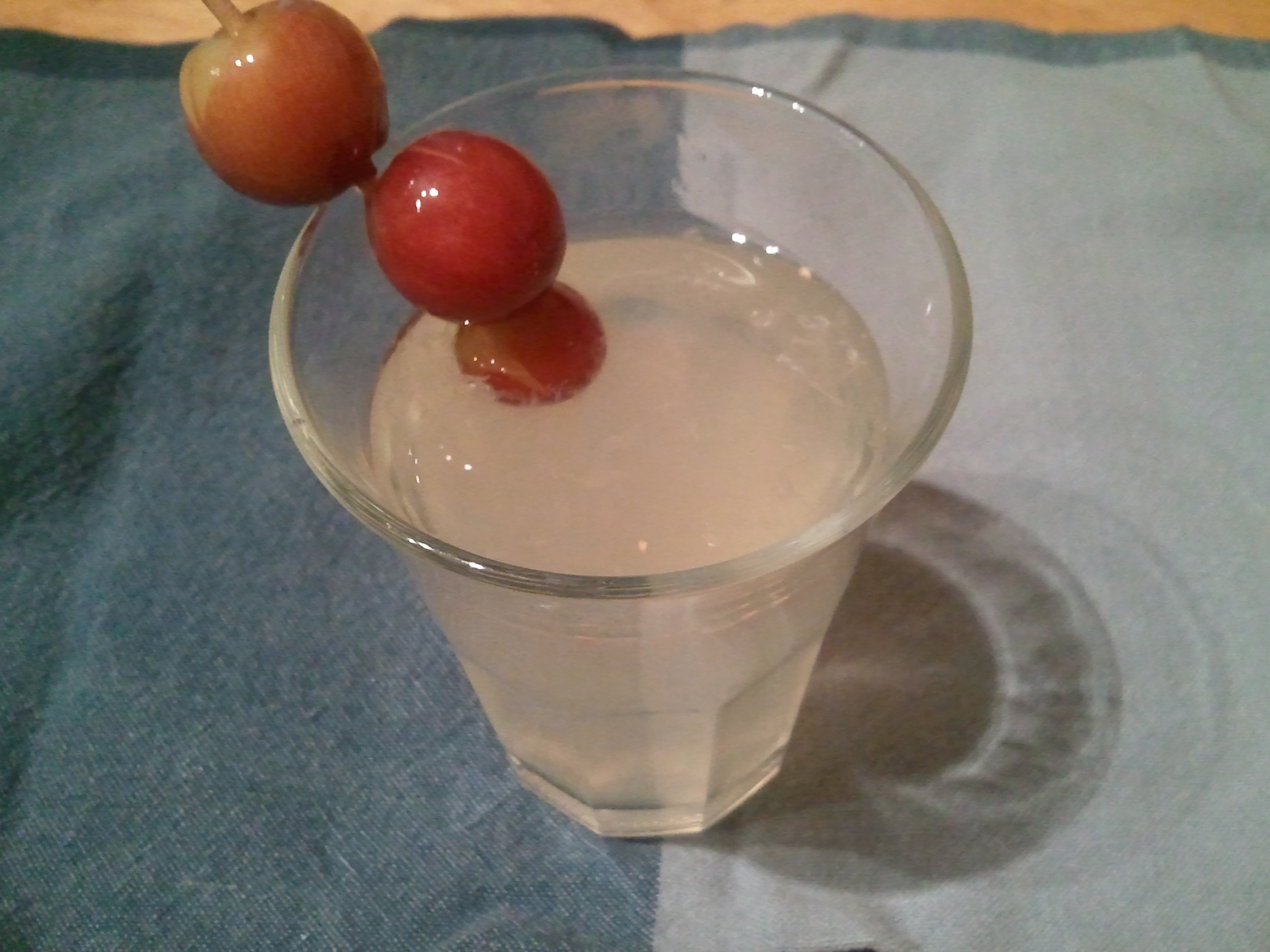
These frozen grapes make a terrific and refreshing complement to the lemonade.

These frozen grapes make a terrific and refreshing complement to the lemonade.

Makes about 7 cups.

Variations: Instead of a pick of frozen fruit, toss a handful of strawberries, raspberries, or blueberries into the lemonade as it sits in the fridge. Or add a few sprigs of mint, thyme, basil, or lemon verbena. Instead of mixing the sugar with the lemon juice, pulse it in a food processor or coffee grinder with 2 Tbsp lavender flowers until powdery, then add that to the lemon juice and water. (Alternatively, make a simple syrup by combining the sugar and 1 cup of the water in a saucepan over medium heat, until the sugar is melted. Add the lavender flowers and steep until the mixture cools. Discard the flowers, chill the syrup, then proceed with the rest of the recipe.) Or try two of Mama’s favorite ways to have this lemonade: as an Arnold Palmer (50/50 with unsweetened iced tea) or mixed with limoncello (she says it’s lemonade for adults).


3 Comments

Dessert on the grill?

Yes!

Mama went and made that bluecherry pie, and the house has been hot ever since. She brought home some lovely, luscious apricots from a farm stand, and she decided it would be worthwhile to adapt a simple oven recipe to the grill (since she was using it to cook dinner anyway).

Apricots are at their peak right now. In fact, they’re probably on their way out in most places. Mama will be lucky if she can get any more this weekend (but she sure put up a heckofa lot of them). The little ones you get in grocery stores in early June don’t have anything on the sweetness and suppleness of those freshly picked from the tree. And they’re the perfect size for me to hold as I munch around the center stone, which actually comes out fairly easily. (But whether I throw said stone or give it to Mama to throw away is anyone’s guess.)

Mama says you can grill fruit directly on the hot grates. She lightly oils or sprays either the fruit or the grates. Sometimes she mixes a bit of honey with something sour like lemon or lime juice and brushes that on the cut side of the fruit. And that’s it. Grill it until it has grill marks on it and gets somewhat soft. If you want to push it until it’s very soft with deep grill marks, that’s up to you!

For this recipe, however, Mama used foil and closed the lid of the grill to simulate the inside of an oven. The foil caught the fruit juices, as well as the melted butter and brown sugar, so there was no mess to clean up afterward.

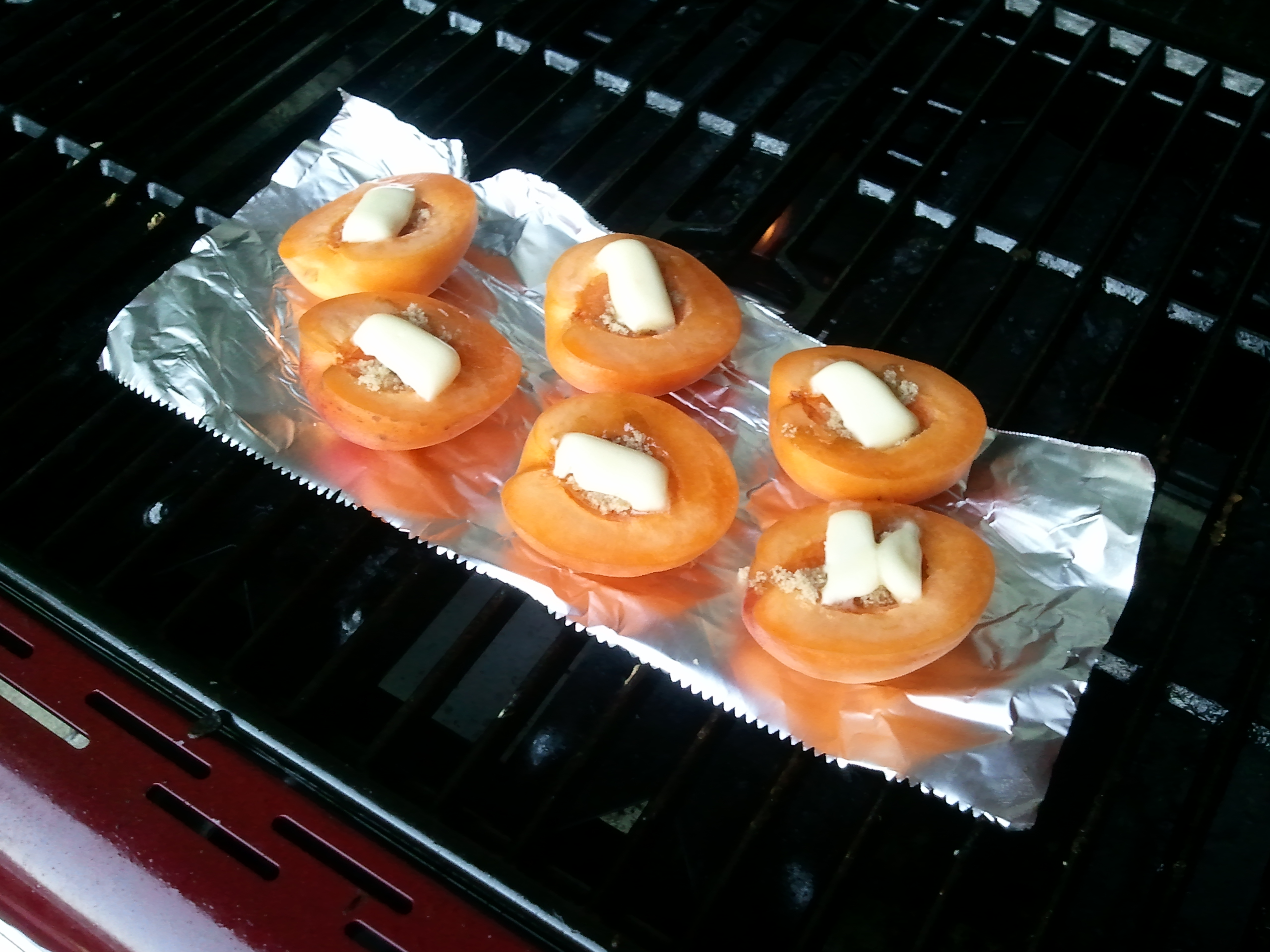
A pat of butter, a spoon of brown sugar, and a hot grill are all these little apricots need to become just a little more special.

A pat of butter, a spoon of brown sugar, and a hot grill are all these little apricots need to become just a little more special.

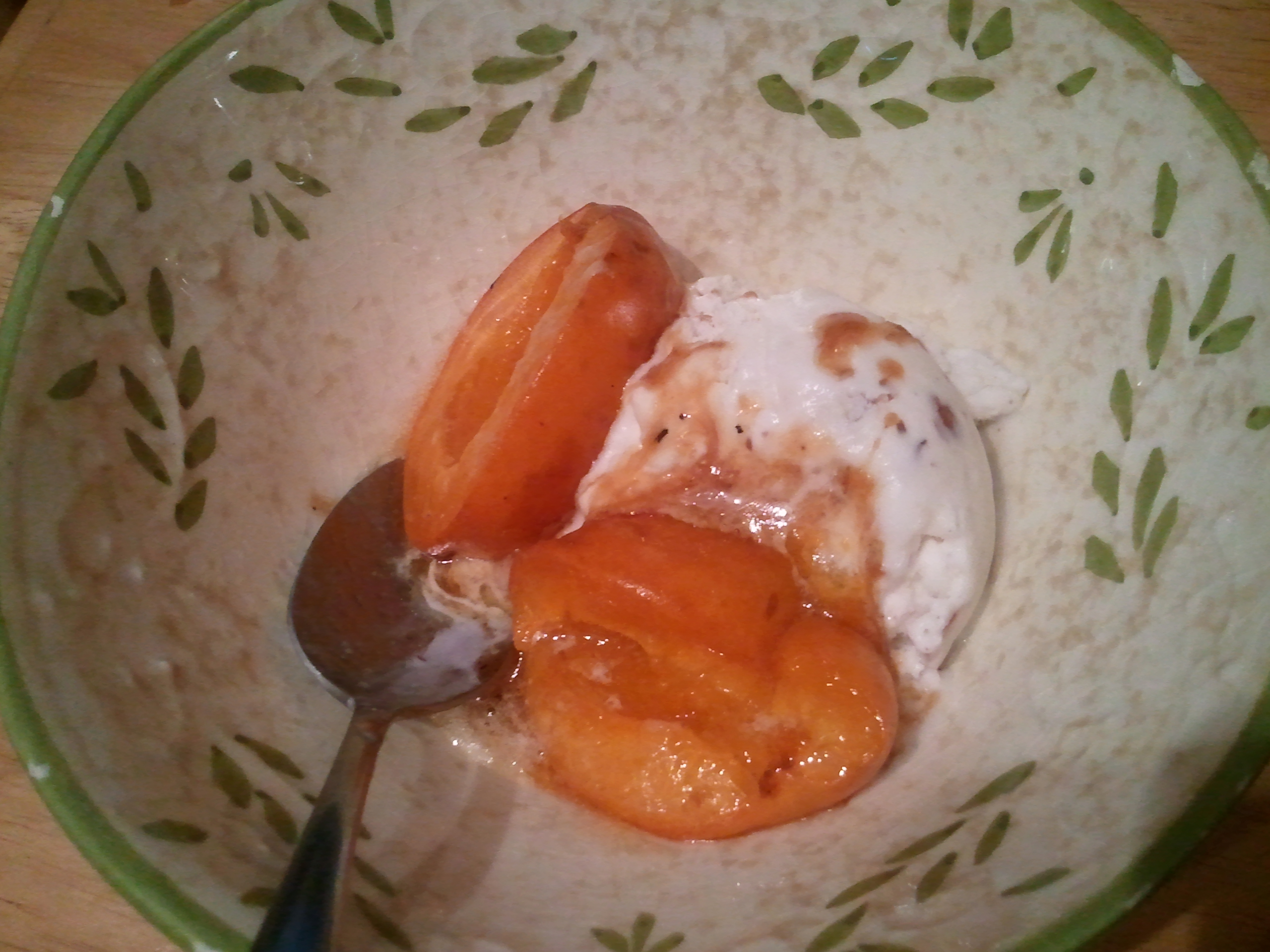
The good news: I got to enjoy these with ice cream!! (The secret news: I would’ve eaten them without it, they were so scrumptious.)

The warm apricots started melting the pecan ice cream. Mmm....

The warm apricots started melting the pecan ice cream. Mmm….

Go ahead an try this with any type of stone fruit–plums, peaches, nectarines. But don’t forget to try it with apricots.

Love, Jude

Grilled Sweet Apricots

3 apricots, halved & pitted
1 tablespoon butter, cut into 6 pieces
1 tablespoon brown sugar

Get your grill going. Ours is gas, and Mama had it on medium-low, but it still got up to about 400°F. Place apricot halves, cut side up, on a sheet of aluminum foil. (You can do this directly on the grill, as Mama did, or prepare them ahead of time and transfer the entire sheet of foil to the grates.) Add 1 piece of butter and ½ teaspoon brown sugar to the center of each apricot. Close the lid of the grill and cook until butter & sugar are melted and apricots are soft and gooey, 10–15 minutes. Perfect as a treat on their own, or even better with ice cream. Be sure you eat all those sugary, buttery juices, too.

Serves 3 people.

Note: You don’t have to be exact about the measurements, and clearly, you can increase and decrease the amounts for as many apricots as you like. If you want to make these in the oven, lightly spray your baking pan and bake at 350°F for 15 minutes, or until they’re soft and starting to turn golden.


6 Comments

The Sours Are Here!

Mama sure loves her some sour cherries. She waits all year for them, and it’s often hit or miss because we’re usually traveling during the 1 or 2 weeks they’re available (around July 4th where we live). One year, she was so desperate for them, she bought them from a farm stand off the turnpike as we went on vacation. Last year, it was so hot that the farmer she usually buys them from told her they practically melted off the trees. Needless to say, they were both very sad about this, as was Papa, who counts Mama’s sour cherry pie among his favorites.

As usual, Mama was in a panic this year. We would once again be traveling, headed to a place with a growing season that’s at least a couple weeks behind ours. (I don’t know what that means, but it seemed to matter to Mama.) Then, Mama spied a sign that read “sour cherries.” It put her into hyperdrive. She saw the sign while taking Papa to the airport in the morning, then she went to work, drove all the way back home to pick me up from daycare and let out the dog, took us back to the orchard to pick the cherries before a thunderstorm hit, washed and froze a few quarts, then packed us up for our trip to visit my grandparents. Apparently sours are that important to her. And they should be to you too!

Life is like a ....

Life is like a ….

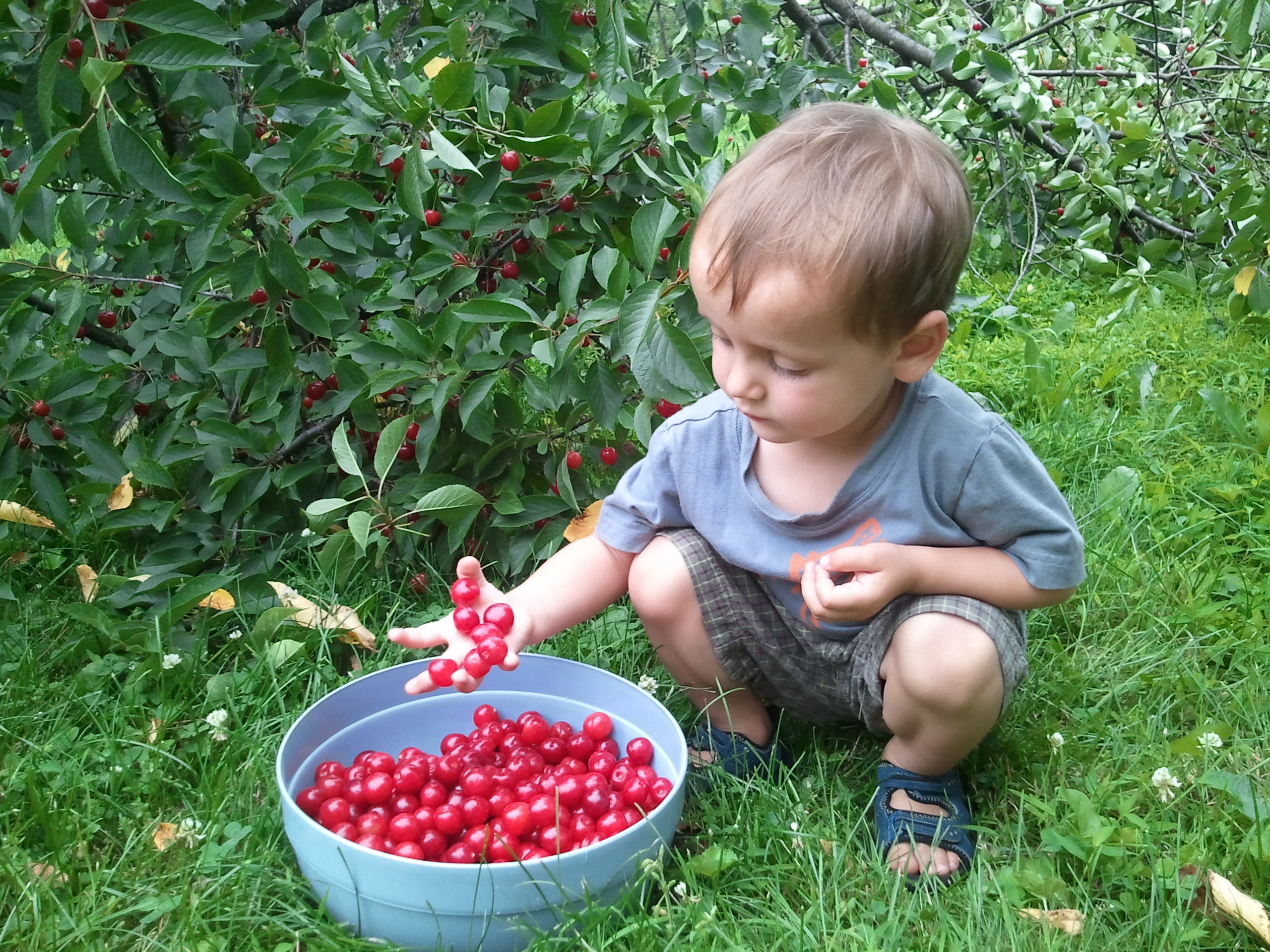
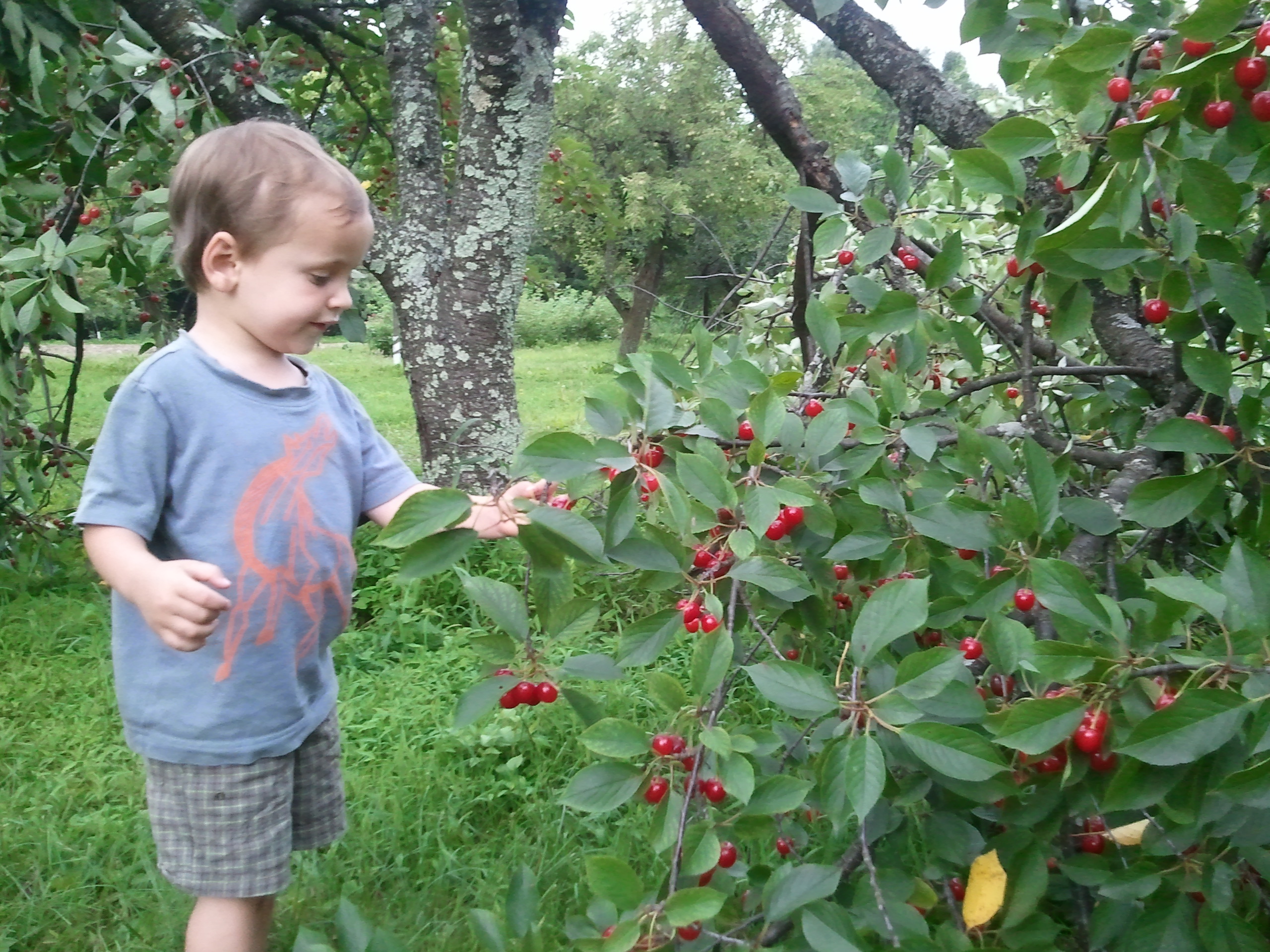
I had never been cherry picking before (though I have picked other things), and it just so happened that the particular tree we picked from had split and some of its boughs hung all the way to the ground. They were perfect Jude-height for me to pick from! Mama bit a cherry for me so she could take out the pit, and she warned me that it would be sour like a lemon. And it was! I was expecting it to be sweet like the cherries I just started to enjoy, and even though I like lemons, I wasn’t too crazy about these bright red little gems.

These cherries are just the right height for me to pick.

These cherries are just the right height for me to pick.

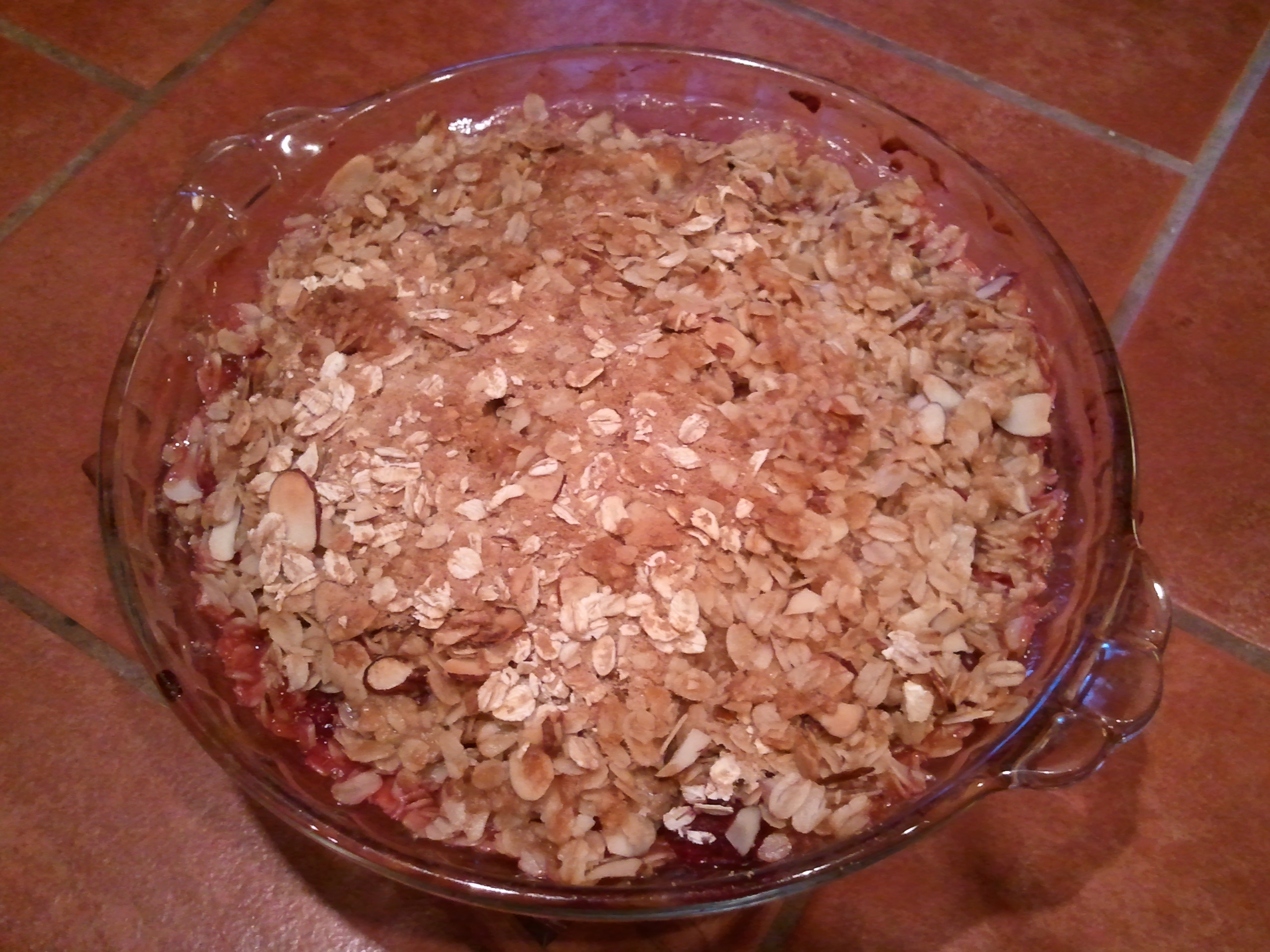
But Mama showed me how yummy they can be with a few simple additions. Because we’re looking for easy here, she made a crumble. She explained that if she didn’t use any oats in the topping, we could call it a crisp instead. Are you confused yet? Both a crisp and a crumble are a jumble of fruit that is topped with a loose mixture (called a streusel) of brown sugar, butter, spices, maybe a bit of flour, and sometimes nuts or oats, then baked. A cobbler is the same idea, except with biscuits dropped on top of the fruit in place of the streusel.

Mama likes crisps and crumbles because they’re easy—you really can’t screw them up, she says. And I like them because I can use my hands to make the topping! You can use any kind of fruit and bake it in any size pan—a pie plate, an 8 x 8” dish, or even individual ramekins. And because they’re not neat like a slice of pie, you don’t have to bother with getting the fruit to gel and hold together. The beauty of these desserts is that the fruit is meant to mix with the topping.

Jude on Food: Freeze your cherries before pitting them. Mama found that they splatter a lot less, and the stones pop out much easier!

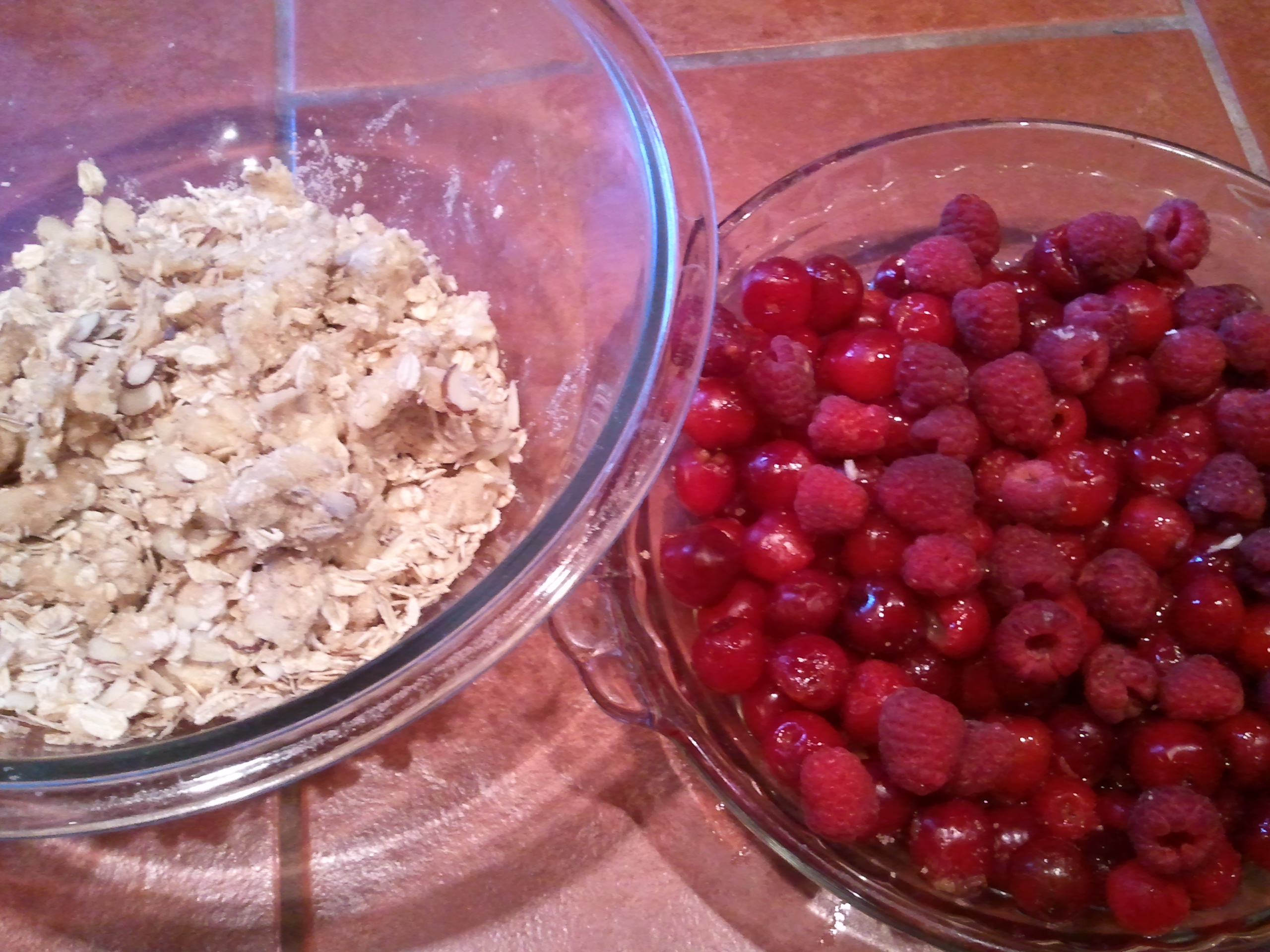
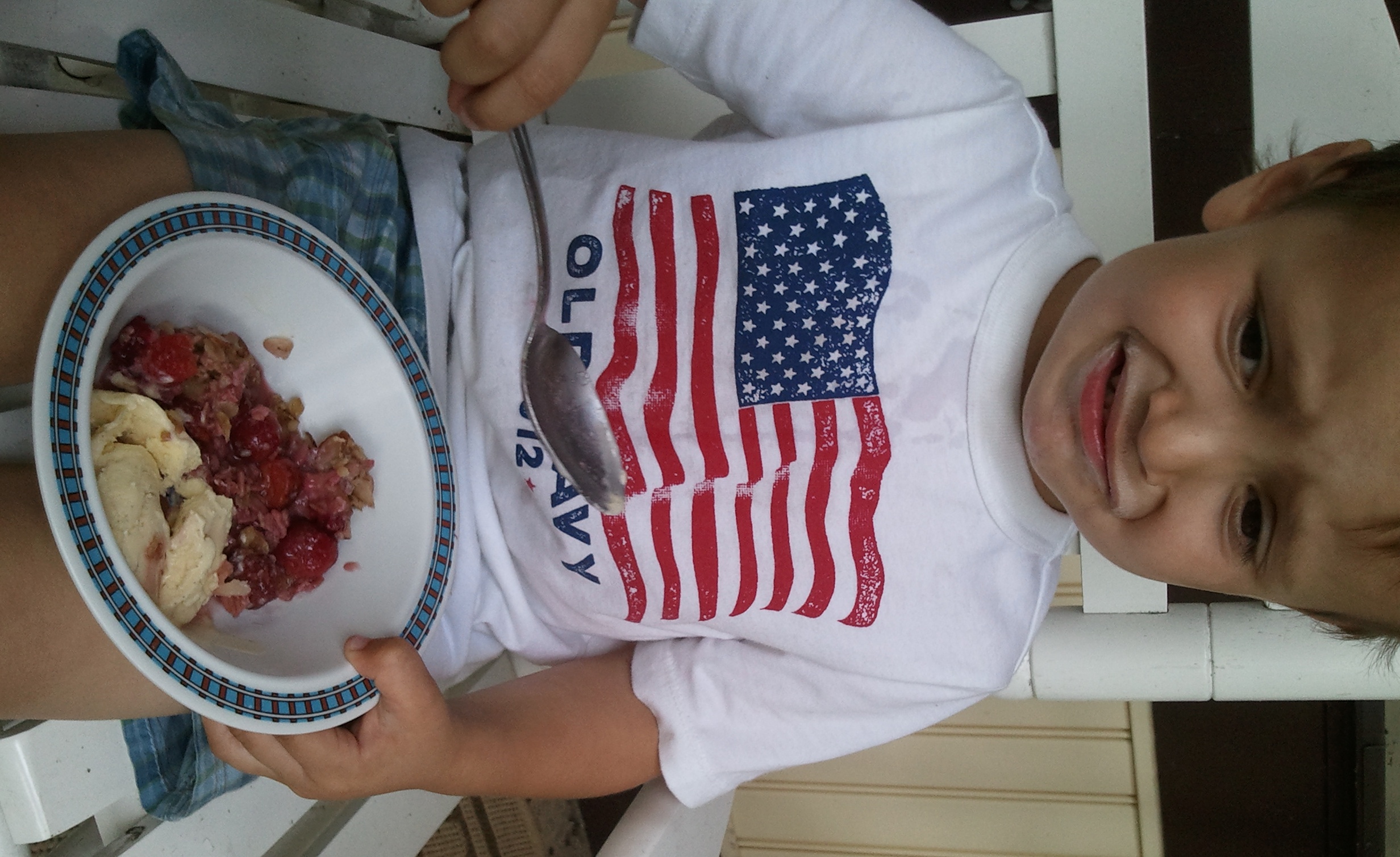
Mmm, mmm. We made this at my friend Walter’s house. His Mama had some recently picked raspberries that she added to it. Mama didn’t put too much sugar in with the cherries because the streusel was quite sweet, so I was still able to get that bit of pucker mouth when I ate it. And the topping was crispy yet buttery. All in all, it was worth it to turn the oven on on such a hot day!

Love, Jude

Sour Cherry Crumble

About a quart or so of sour cherries, pitted (add a handful of raspberries or blueberries, if you want)
1/3 to 1/2 cup brown sugar (or more, if you really want to sweeten it up)
About 1 cup old-fashioned oats
Whole-wheat or all-purpose flour (optional)
1/2 to 1 tsp spices such as cinnamon or cardamom, if desired
1/2 cup chopped or sliced nuts, if desired (Since cherries and almonds like each other, Mama added a handful of sliced almonds.)
4 to 5 Tbsp butter (you can be like Mama and put in a whole stick if you really want to)

Preheat the oven 375°F. Put the cherries in a bowl and toss with a a couple tablespoons of the brown sugar. (You have to cut some of that sourness!) Toss in a tablespoon or so of flour, if you like, to thicken up your filling, but you certainly don’t have to. Pour the cherries into a pie plate or other baking dish.

Mama says the worst part is pitting the cherries. But once that's done, the rest is easy-peasy.

Mama says the worst part is pitting the cherries. But once that’s done, the rest is easy-peasy.

In a separate bowl, combine the oats, remaining brown sugar, spices (if using), and nuts (if using). Cut the butter into chunks and toss it into the bowl of dry ingredients. Use your fingers to mash it all together, so you get some glops of buttery oatmeal. Evenly sprinkle the mixture on top of the cherries, then bake in the center of the oven for 35 to 45 minutes. The topping should start to brown, and you’ll see the cherries bubbling.

I think the worst part is waiting for it to cool.

I think the worst part is waiting for it to cool.

If you’re allowed, add a scoop of vanilla ice cream when the crumble has had a chance to cool from the oven but is still warm.

I'm crying because I can't get my ice cream to stay on the spoon.

I’m crying because I can’t get my ice cream to stay on the spoon.


1 Comment

The Apple Doesn’t Fall Very Far…

There are many food preferences I have in common with my folks. On the Mama side, I like olives (even as Papa cries, “Yucky!”), yogurt, and eggs. On the Papa side, I like hot dogs, chicken piccata, sausage pizza, and pork chops. (I once told Papa, “JuJu like pork chop.”) And all three of us love fish.

Other than pasta, fish nights are the one dinner we can all eat together. You might remember that Mama is vegetarian, but she does eat some sustainable, wild-caught fish. (She feels they have a fighting chance, but also, she grew up eating it a few times a week, and you can’t just turn your back on history.) Probably the best fish we eat, however, is the kind my GeeGee catches. He lives near the ocean! (Mama says it’s really a Great Lake, but to me, it may as well be the ocean.)

See what I mean? That sure looks like an ocean.

See what I mean? That sure looks like an ocean.

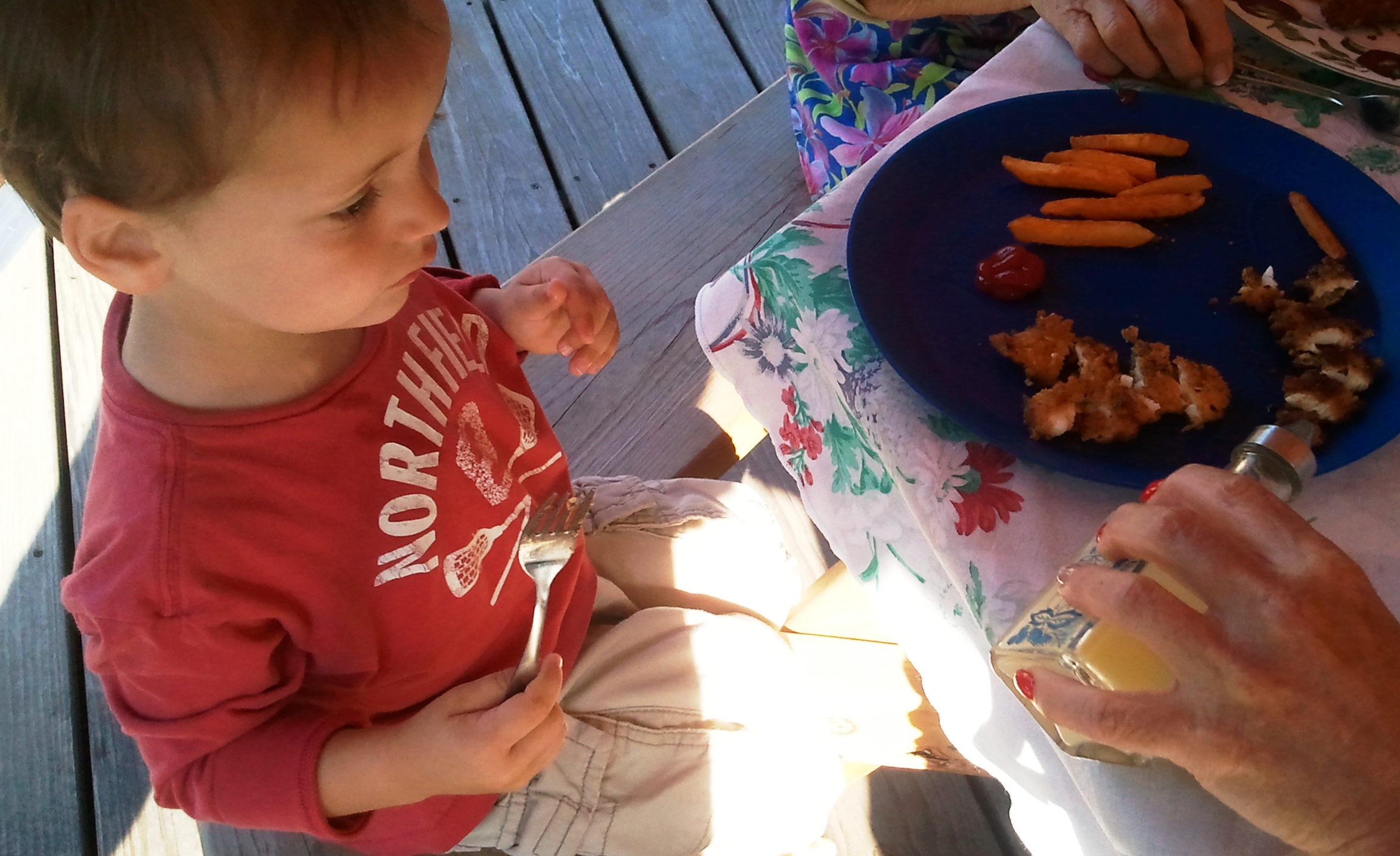
When we visit GeeGee and Grandma Rita, like we did last week, we eat almost as much salmon, walleye, rainbow or brown trout, perch, crappie (“crah-pee”), whitefish, and bluegills as can fit in our bellies. (But not every night because poor Grandma doesn’t like it.) I could spend the next few weeks telling you all the different ways we eat it, but our favorite way is breaded and panfried. I didn’t watch Grandma make it, but Mama makes it quite often (and I can tell you it’s not as good).

Jude on Food: Some fish contain dangerous levels of mercury and other toxins. Some fish take years and years to reach maturity. And some are simply overfished. I can’t read yet, but you can easily learn about which seafood are your best options.

The key is in the breading. Grandma’s always favored Saltine cracker crumbs, but Mama says you can use anything you prefer. And the way to get that yummy breading to stick to your fish is to coat the fish with a beaten egg. You would think that slimy egg would slip right off the fish, but it doesn’t. You can even coat your fish in flour first (Mama says this is called “standard breading procedure.”) When you bread your fish, Mama suggests using one hand to do the “dirty work,” rather than using one hand for the egg and one hand for the cracker. Why dirty two hands?

When you cook fish this way, the coating gets crispy and the fish doesn’t dry out. It also doesn’t mask the fish’s flavor. It’s win-win.

Love, Jude

I'm about to dig in to my fish (but I'm waiting for my Auntie to put lemon juice on it). Sweet potato fries are waiting in the wings.

I’m about to dig in to my fish (but I’m pausing for my Auntie to put lemon juice on it). Sweet potato fries are waiting in the wings.

Grandma Rita’s Butter-Fried Crappie

1 egg
1 cup Saltine or Ritz cracker crumbs (or panko breadcrumbs) + more as needed
A few hefty pats of butter
1 pound crappie fillets (or other small lake fish), patted dry if necessary
Salt and pepper
A few shakes of bottled lemon juice (or lemon wedges) and/or white vinegar

In a pie plate or bowl, lightly beat the egg with a fork. Grandma doesn’t season the egg, but Mama tosses in some salt & pepper. (She also seasons her fish, but Grandma waits until it’s all in the pan.) Set cracker crumbs on a plate. In a large skillet, over medium-low to medium heat, melt the butter. (Grandma uses a large electric frying pan so she can do it all at once, and she doesn’t have to clean the stove afterward.)

Dip the fillets in the egg, shake off the excess, then dredge in the cracker crumbs. Lay the coated fillets in the pan of melted butter. Repeat until all the fillets are in the pan, or the pan is full. (Mama warns not to overcrowd, but Grandma puts them pretty close without touching.) Season liberally. Fry the fish until they’re tantalizingly golden brown, then flip. Add more butter, if needed, and watch your heat. If they’re overbrowning or browning too quickly, lower it a tad. These aren’t done quickly, so take your time. Trust me, they’re worth it.

Serve with a sprinkle of lemon juice and/or vinegar. Grandma and GeeGee usually serve these with homemade coleslaw and/or oven fries. And if you happen to have any leftover (because maybe Grandma made a lot), these little fillets are great in a bun for lunch the next day.

Note: Mama says it’s easy to make cracker crumbs—just put a few crackers in a ziptop plastic bag, seal it, then roll a rolling pin over it a few times. You can also use a meat mallet to crush them. They don’t have to be powder-fine, but they should be crumb-y enough to give an even, thorough coating.


1 Comment

A quick dinner for a mild spring night

Though the nights have been cool, the days are starting to warm up. I continue to stupefy Mama and Papa at the lengths I will go to to escape the confines of our yard. (You should see me climb!) There’s lots of yard work to be done, and even though I don’t help with it at all, I’m pretty hungry come dinner time. Mama and Papa both wanted something light and fresh, while I just wanted something in my belly.

Mama went to an easy stand-by recipe, one of those she says everyone should know how to make: chicken piccata. There are probably as many variations on this dish as there are on any other, but Mama likes it for its simplicity—it’s all cooked in one pan—and Papa likes it because it’s delicious. I like it for the capers. But, as you might recall, Mama doesn’t eat chicken, and pasta’s just as easy as anything to make (you know we eat a lot of it). So she got the water boiling and set to work on the veggies she was going to serve it with. Mama and Papa ate it up, but I scarfed the pasta almost exclusively (the exception being a few orange segments). When Mama asked me to take a bite of the zucchini, I said, “No way, José,” followed by a swift, “No, thank you.” Can you believe this actually worked, and I didn’t have to eat it?

Love, Jude

Chicken Piccata
(This one’s real loosey-goosey, but it’s pretty tough to screw up.)

Chicken breasts (for however many you’re cooking for)
Flour (whatever kind you have on hand)
Salt and pepper
Olive oil (to coat the pan)
About 1/4 cup chicken or vegetable stock (optional)
About 1/4 cup white wine
Juice of 1 lemon
1 large clove garlic, minced
About 2 Tbsp capers
Pat of butter
Parsley (a small handful, chopped)

Put the chicken in a large zip-top plastic bag, seal it, then pound the chicken with a meat mallet until uniform in thickness, about 1/2″. Toss in a handful or two of flour and some s&p. Reseal the bag, then shake it all up to coat the chicken.

Heat a skillet (of ample size to hold your chicken without crowding) over medium heat. Add about 1 Tbsp oil (a couple swirls around the pan—just enough for a thin coat) and wait until it’s hot before carefully adding the chicken (shake off the excess flour first). If you don’t want to be cleaning your stovetop and nearest wall for the rest of the night, put a lid on the pan. Cook until chicken is golden brown (5 or so minutes), then flip, and cook until golden on the other side and the chicken is cooked through. Remove chicken to a plate and loosely cover with foil to keep warm.

Deglaze the skillet with stock, if using, and/or wine. Scrape up the bits on the bottom of the pan, then add the lemon juice, garlic, and capers. Cook until reduced and slightly thickened, a few minutes. Add more s&p, if desired. Add the pat of butter (dredge it in flour first, if desired, to give a slight bit more oomph to your sauce) and continue cooking until melted and shiny. Sprinkle in the parsley, then pour the sauce over the chicken.

Rotini with Fennel, Squash, Tomato, and Orange de Provençe

12 oz whole-grain rotini (or any pasta you have on hand—and use a whole box, even if it’s a pound)
Olive oil
Salt & pepper
1 bulb fennel, stalks removed, cored, and thinly sliced
1 large tomato, large diced
1 small-to-medium zucchini, cut into “ribbons” with a veggie peeler
1 clove garlic, minced
About 1/4 cup vegetable stock
2 oranges, segmented (squeeze & reserve the juice from the inner membranes)
Herbes de Provençe (a couple teaspoons, maybe a Tbsp)

Cook the pasta according to package directions, then drain.

Meanwhile, heat a medium-to-large lidded skillet over medium-high heat. Add the oil, about a tbsp. (enough to coat the pan), then add the fennel and s&p. Cover and allow to sweat for a few minutes. (You can actually prepare the remaining ingredients in stages, if you like, rather than having them all prepped and ready to go before you begin cooking.) Add the tomato and the garlic and sweat some more, stirring occasionally (keep covered). The fennel won’t take on much color, but it will get soft. Once it is, add the zucchini, some s&p, and the veg stock. (Add enough stock to make the veggies wet but not soupy. This is going to be your pasta’s sauce, remember.) Cover and allow to cook until ribbons are soft, just a couple minutes. Add the orange segments and their reserved juice, and the herbes. Stir to incorporate, taste for seasoning, then combine with the pasta and serve.


1 Comment

You can have your fun and eat your dinner too

Because it was so warm and sunny outside when Mama picked me up from daycare, she took me to the river so I could throw rocks in it. (I like to pick up the biggest rocks I can carry.) Needless to say, it was already past dinnertime by the time we walked in the door, wet feet and all. Mama chose to make a dinner that practically cooked itself.

First, she put a pot of salty water on the stove to boil and set the oven to 400°. Then she rinsed and prepped the veggies: snapped the bottom ends off the asparagus, cut the broccoli into florets, cut some basil into ribbons, and sliced the colorful little tomatoes in half (I helped). She put the tomatoes and basil in a large bowl and the broccoli and asparagus on a baking sheet and tossed them with olive oil and salt & pepper.

I sure love teeny tomatoes.

I sure love teeny tomatoes.

Then she showed me the funny little pasta we would be eating, called Israeli couscous. It looks like couscous that grew up to be big and strong. Mama said that even though it looks like a grain, it’s really just a pasta. I ate a few of them raw—crunchy! Once the water came to a rolling boil, Mama poured in the couscous and gave it a good stir. Did you know that the proper way to cook pasta involves plenty of boiling water for the pasta to move around in? She also put the asparagus & broccoli in the oven, on the lower rack.

You would think Mama would’ve stopped there, but instead she took out a pound of beautiful Pacific salmon. She gave it a quick rinse, then set it on a baking sheet, skin-side down, and patted the flesh dry. She drizzled olive oil on it then sprinkled it with salt and pepper, and into the oven it went, on the upper rack. While dinner cooked, we had time to wash our feet in the tub. Do you have any idea what a river does to kid feet?

I'm trying to eat around the basil.

I’m trying to eat around the basil.

Israeli couscous cooks quicker than regular pasta (it’s really small), so when that was tender, Mama drained it and added it to the bowl with the tomatoes. She added—you guessed it—olive oil, salt, pepper, lemon juice, a bunch of freshly grated Parmesan (I helped), and some leftover roasted garlic. (This is even easier to make: Cut off the top of an entire garlic bulb, drizzle about 1/2 tsp olive oil over it, wrap it in foil, then bake at 375°F for about 45 minutes, or until very soft and oh-so-yummy.) Gently, she mixed it all up and set it out for yours truly to devour. I loved those little baby balls of pasta, but I had to pick around the basil, which slowed me down. The fish and veggies were done at about the same time (veggies starting to brown, fish just opaque in the center), about 10 minutes all told.

This was my plate! (Just kidding.)

This was my plate! (Just kidding.)

Do you think I tried everything on my plate? You bet I did. The fish was succulent, almost creamy. The veggies were toasty and fragrant and full of flavor (and Mama grated some more cheese on them). Then I discovered how fun it was to toss the Israeli couscous….and that was the end of my dinner.

Love, Jude

Israeli Couscous with Tiny Tomatoes

1 cup Israeli couscous
1 pint cherry or grape tomatoes, halved
4 or 5 cloves roasted garlic (or 1 or 2 cloves fresh, minced)
5 or 6 basil leaves, chiffonade (cut into ribbons)
Juice of 1/2 lemon
Salt & pepper to taste
Olive oil
Parmesan cheese

Cook the pasta according to package directions. Drain and add to a bowl, along with the tomatoes, garlic, basil, and lemon juice. Add salt and pepper to taste, along with a healthy drizzle of olive oil. (Mama says you don’t want to drown your pasta, you just want to moisten it.) Top it with freshly grated Parmesan cheese, if desired. Serve warm or cold.


Leave a comment

Fajitas are fa-easy

You know that Mama makes quesadillas and fish tacos on occasion, but did you know she also makes fajitas? A lot of people cook a marinated skirt steak or chicken breast, then thinly slice it for the fajita filling, but Mama made ours minus the meat. And they’re really simple—but not necessarily quick, like a quesadilla. Mama said the more thinly the vegetables are sliced, the quicker they’ll cook and soften, so that part’s really up to you.
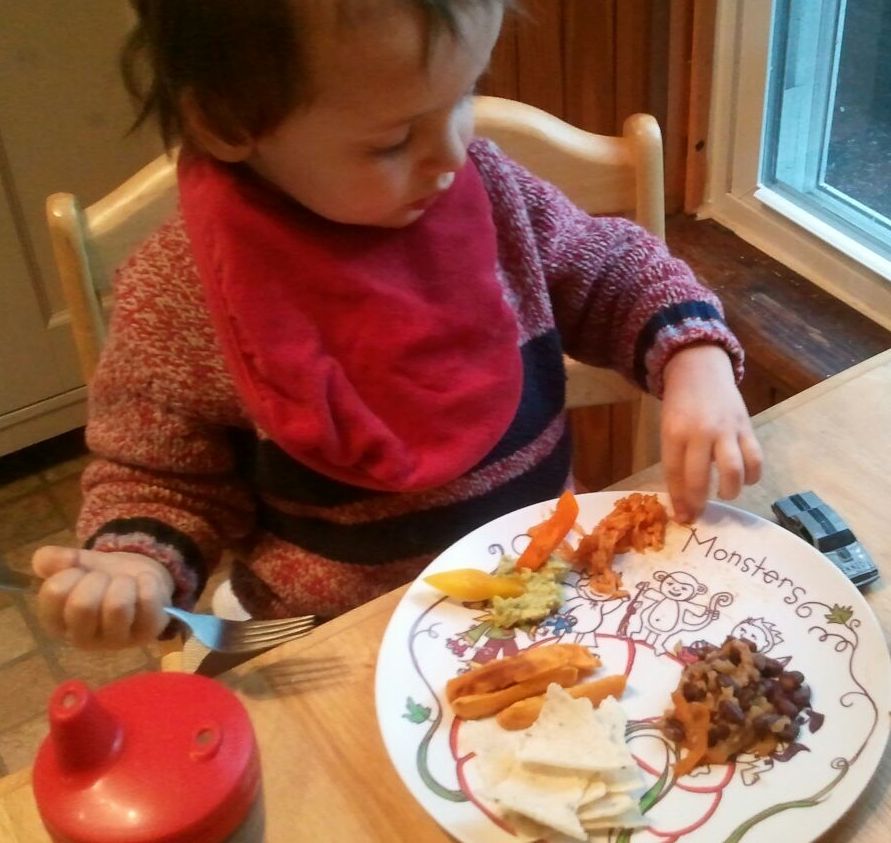
You can also change up the veggies and spices you use. Try zucchini and carrot ribbons with fresh mint or cilantro. You can even dress them like a taco salad with tomatoes, lettuce, sour cream, and cheese. And if you don’t want to use a corn tortilla (Mama and Papa say they’re pretty bland, but I ate mine), use an alternative kind. You can serve it with salsa, refried beans, Spanish rice, or whatever else you prefer. Mama whipped up a quick guacamole. Normally, I love avocados, but tonight, I just wasn’t feeling the guac. I tried everything (I’m getting very clever about the size of my “no thank you” bite), but I stuck with the Spanish rice.
Love, Jude
Mama deconstructed my fajita for me, but she needn't have bothered. I was all about the rice.

Mama deconstructed my fajita for me, but she needn’t have bothered. I was all about the rice.

Easy Veggie Fajitas
Canola oil
½ Spanish or sweet onion, thinly sliced
1 red, yellow, or orange bell pepper, thinly sliced
½–1 jalapeño or Serrano pepper, minced (optional)
1 or 2 cloves garlic, minced
1 can black beans, drained & rinsed
½ tsp cumin
Salt and pepper, to taste
Juice of 1 lime
6” corn or flour tortillas
In a large skillet, heat the oil over moderate heat. Add the onion and pepper and sauté until browned and very tender. Add the garlic, and sauté 1–2 minutes more. Add the beans, cumin, s&p, and lime juice, and stir to combine and heat the beans. Remove the pan from the heat. Heat tortillas according to package directions. Spoon about ½ cup filling into each and serve.
Note: Mama says you can add a tropical twist to this fajita filling by finely chopping up a small amount of pineapple or mango and adding that along with the beans. (Even with the pineapple in ours, I still didn’t want to eat more than 1 bite.) And if you’re adding meat, cook that separately.